Kransekake
In its own language: kransekage
A towering almond ring cake central to Scandinavian wedding and holiday traditions.

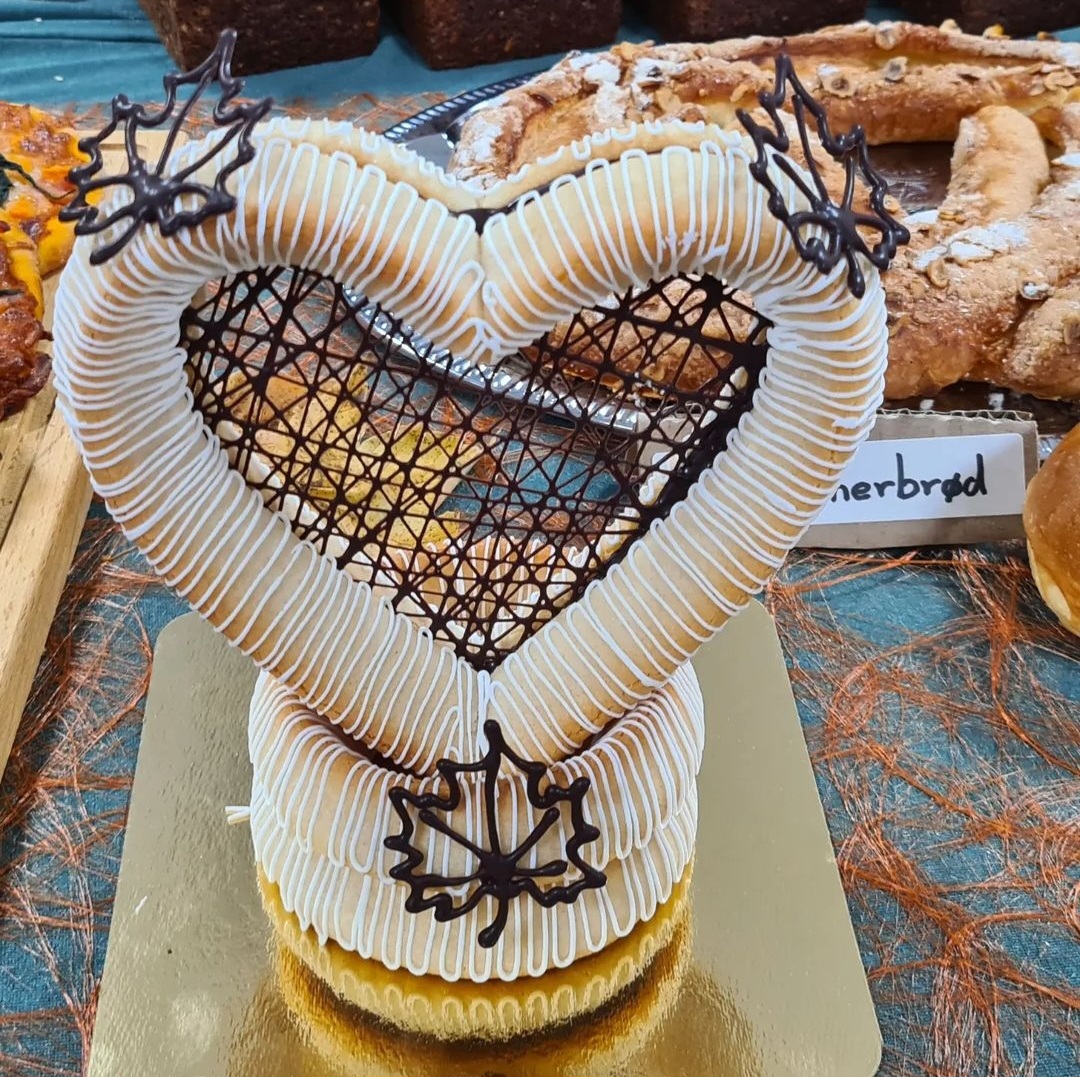
The kransekake is a traditional confection from Denmark and Norway, consisting of stacked almond meringue rings. It serves as a centerpiece at weddings and baptisms, where it symbolizes prosperity and future family size through specific lifting rituals.
When is Kransekake kept?
Kransekake is kept at weddings, baptisms, Constitution Day, and New Year celebrations.
The kransekake stands as a towering symbol of celebration in Scandinavia. This intricate dessert features concentric almond rings stacked into a cone shape. Couples lift the top layer at weddings to predict their number of children. The cake reflects historical wealth and continues to mark major life events across Denmark and Norway.
Origins and history
Bakers in Copenhagen created this confection during the eighteenth century. Almonds carried a high price tag at that time, making the almond-heavy recipe a display of affluence for wealthy families. The steep slope of the stacked rings became an iconic visual marker of status and festivity. Over time, the practice spread beyond the capital to become a staple across the region.
Construction and ingredients
Artisans pipe batter made from almonds, sugar, and egg whites into circular forms. These rings are baked separately and then stacked using white icing as adhesive. The structure typically rises eighteen layers or more, forming a tall, narrow cone. The texture remains firm on the outside while staying soft and chewy within. Decorative icing often crowns the peak.
Wedding customs and luck
Guests separate individual rings from the tower to share. A specific ritual involves the bride and groom lifting the uppermost section together. The number of rings that adhere to the top piece predicts how many children the couple will have. Variations like the overflødighedshorn fill the center with treats, wine, or flags to enhance the festive atmosphere.
Holiday variations
In Denmark, the cake marks New Year festivities, while Norwegians serve it for Constitution Day and Christmas. Smaller rod-shaped versions called kransekakestenger appear during winter holidays. Mass-produced bars offer year-round access, though fresh towers remain essential for significant personal milestones like baptisms and nuptials.
How Kransekake is kept
The baker pipes almond batter into rings and bakes them individually. They stack the cooled rings using icing to form a tall cone. At the reception, the couple lifts the top section to test how many rings stick, predicting their future family size. Guests then break off pieces to eat. Variations may include filling the hollow center with chocolates or placing a bottle of spirits inside.
When and where
It appears at weddings, baptisms, Constitution Day in Norway, and New Year in Denmark. The date depends on the specific event being celebrated rather than a fixed calendar month.
The custom originates in Denmark and extends throughout Norway and Iceland. Copenhagen holds historical significance as the birthplace of the recipe. Oslo hosts records for the tallest cakes, showing strong regional pride.
What Kransekake means
The height of the cake represents prosperity and success. The lifting ritual specifically forecasts fertility and the size of the future household. Sharing the rings signifies community support for the new union. The expensive almond ingredients historically signaled the family's social standing.
Who takes part
- the baker: pipes and bakes the individual almond rings
- the couple: lifts the top layer to predict children count
- the guests: breaks off rings to share and eat
If you are a guest
Attendees wait for the couple to perform the lifting ritual before taking their portion. They break off individual rings from the tower rather than cutting slices. Guests may also enjoy the filled variations that contain sweets or drinks placed in the center hole.
Then and now
Mass production has made the cake available year-round in stores. Traditionalists still prefer handcrafted towers for major events. The lifting prediction game remains a popular interactive element at modern Scandinavian weddings.
On the wedding table
- kransekake: The main almond ring tower served at celebrations
- overflødighedshorn: A cornucopia-shaped variation filled with treats and drinks
- kransekakestenger: Smaller rod-shaped versions prepared for Christmas
Symbols: The colour white The ring The wedding cake Wine and the shared cup



Questions people ask about Kransekake
When is Kransekake kept?
Kransekake is kept at weddings, baptisms, Constitution Day, and New Year celebrations.
What is the kransekake?
It is a traditional Scandinavian dessert made of stacked almond meringue rings. The tower shape serves as a centerpiece at weddings and holidays across Denmark and Norway.
What does the lifting ritual mean?
The couple lifts the top rings to see how many stick. This number predicts how many children the couple will have in the future.
Is it legal to serve this cake?
Yes, serving the kransekake is a standard cultural tradition with no legal restrictions. It is a widely accepted part of Scandinavian hospitality.
See also
 WimpelA linen sash made from a baby boy's circumcision cloth that binds the Torah scroll.OwanbeThe extravagant Yoruba celebration where music, fashion, and money spraying mark life's milestones.
 QuaichA shallow two-handled cup used in Scottish weddings to share a drink and symbolise union.
 KenduriA communal feast and prayer gathering held by Javanese and Malay communities to mark life events.
Good reading and sources
- Kransekage on WikipediaEncyclopedia
- More photos on Wikimedia CommonsPhotos and video
- Wikidata recordOpen data
The facts on this page come from the Wikipedia article "Kransekage", written by its contributors and used under the CC BY-SA 4.0 licence, and from its Wikidata record (CC0). EveryShaadi rewrote the text in its own words, with AI assistance, and compares every page with the article to make sure no passage is copied. It may be reused under the same CC BY-SA 4.0 licence with a link back.
It may contain mistakes. Wedding customs differ from one family, village and community to the next, and the people who keep them know them best. If something is wrong, tell us. Last refreshed 2026-10-05.
More from Denmark
All the traditions of Denmark
🇩🇪 Hamburg, Germany and 3 moreWimpelווימפל
A linen sash made from a baby boy's circumcision cloth that binds the Torah scroll.Adornment · The weeks before
 🇬🇧 United Kingdom and 4 moreCountry dance
A social partner dance from England where couples follow a caller through repeated figures in long lines or squares.Performance · Reception, dance and gifts
🇪🇬 Egypt and 1 moreWedding music
The songs and instruments that mark the arrival of the couple and set the mood for the celebration.Performance · The weeks before
🇬🇧 United Kingdom and 4 moreCountry dance
A social partner dance from England where couples follow a caller through repeated figures in long lines or squares.Performance · Reception, dance and gifts
🇪🇬 Egypt and 1 moreWedding music
The songs and instruments that mark the arrival of the couple and set the mood for the celebration.Performance · The weeks before
 🇩🇪 Germany and 5 moreMorganatic marriageEhe zur linken Hand
A union between people of unequal rank that bars the spouse and children from inheriting titles or throne rights.Vow · Engagement and betrothal
🇩🇪 Germany and 5 moreMorganatic marriageEhe zur linken Hand
A union between people of unequal rank that bars the spouse and children from inheriting titles or throne rights.Vow · Engagement and betrothal
The same idea elsewhere
Luck, omens and protection on the day compared 🇸🇿 Ludzidzini Royal Village, Eswatini and 1 moreUmhlanga
The annual Swazi and Zulu gathering where young women cut reeds to preserve chastity and offer tribute labour.Rite · The eve
🇮🇩 Indonesia and 2 moreKenduri
A communal feast and prayer gathering held by Javanese and Malay communities to mark life events.Feast custom · The weeks before
🇸🇿 Ludzidzini Royal Village, Eswatini and 1 moreUmhlanga
The annual Swazi and Zulu gathering where young women cut reeds to preserve chastity and offer tribute labour.Rite · The eve
🇮🇩 Indonesia and 2 moreKenduri
A communal feast and prayer gathering held by Javanese and Malay communities to mark life events.Feast custom · The weeks before
 🇳🇪 In-Gall, Niger and 2 moreGuérewol
A week-long courtship dance where Wodaabe men display their beauty to win the attention of marriageable women.Rite · The weeks before
🇳🇪 In-Gall, Niger and 2 moreGuérewol
A week-long courtship dance where Wodaabe men display their beauty to win the attention of marriageable women.Rite · The weeks before
 🇲🇲 MyanmarMarriage in Myanmar
A blend of Buddhist rites, astrological timing, and family negotiations that defines union across Myanmar's diverse ethnRite · Finding a match
🇲🇲 MyanmarMarriage in Myanmar
A blend of Buddhist rites, astrological timing, and family negotiations that defines union across Myanmar's diverse ethnRite · Finding a match