Ceremony and sacred ritesSouth AsiaHindu
Tulasi Vivah
In its own language: तुलसी विवाह (Tulasī Vivāha)
A symbolic Hindu wedding uniting the holy basil plant with a stone representing Vishnu.

Tulasi Vivah is a ritual observed by Hindus to mark the start of the marriage season. It involves a ceremonial union between a tulasi plant and a shaligrama stone or amla branch. This event takes place during the lunar month of Kartika, typically in October or November.
When is Tulasi Vivah marked?
Tulasi Vivah is kept as part of Dev Uthani Ekadashi, which is on Friday, 20 November 2026.
Tulasi Vivah is a Hindu ceremony that symbolizes the marriage of the sacred tulasi plant to Lord Vishnu. Devotees perform this ritual to celebrate the end of the rainy season and the commencement of auspicious wedding dates. The rite mirrors traditional nuptials, using a plant as the bride and a stone or branch as the groom.
The divine legend
Hindu scriptures like the Skanda Purana tell of Vrinda, a devoted wife whose fidelity protected her husband Jalandhara. When Vishnu deceived Vrinda to break her power, she cursed him to be separated from his own wife. Grieving, Vishnu refused to leave her funeral pyre until nature intervened. Three plants grew from the site, one being tulasi. In another version, Vishnu marries tulasi on Prabodhini Ekadashi to honor Vrinda's blessing for their next life together.
Ceremony details
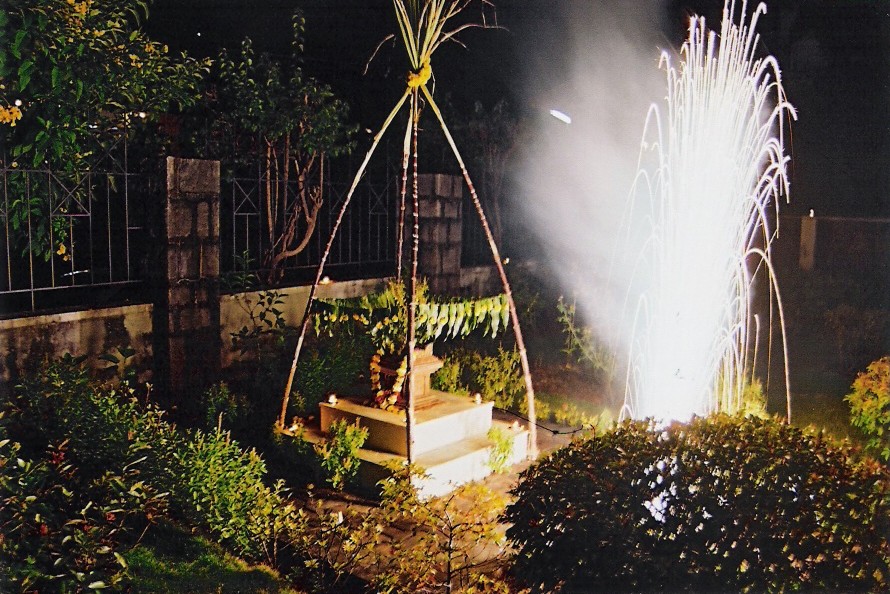
Families build a small canopy around a tulasi bush planted in a brick circle called Tulasi Vrindavana. The plant is dressed in a sari and jewelry, while a shaligrama stone or amla branch represents Vishnu. Both are bathed and adorned with flowers. A priest ties a cotton thread between them while reciting mantras. Attendees shower rice and vermilion powder, clapping to approve the union. The event often concludes with a feast shared by the community.
Regional variations
In Maharashtra, women lead the rites, offering sandalwood paste and clothes to the groom figure. They give saris and a mangal-sutra to the tulasi plant. Couples without children often sponsor the event, performing the giving away of the bride. In Gujarat, processions move images of Vishnu between temples. Telugu communities worship an amla branch instead of a stone, performing elaborate rituals on the twelfth lunar day.
How Tulasi Vivah is kept
A family prepares a courtyard space with a tulasi plant at its center. The plant is decorated as a bride with cloth and ornaments. A shaligrama stone or amla branch is dressed as the groom. A priest conducts the ceremony, tying a thread between them. Family members offer food and sweets. The ritual mimics a full human wedding, including processions in some regions and specific mantras recited by priests to bless the union.
When and where
The festival occurs during the Hindu month of Kartika, which usually falls in October or November. It begins on Prabodhini Ekadashi and ends on Kartik Purnima. The exact date depends on the lunar calendar and local traditions.
This custom is primarily observed in India. It is widespread across various states, with distinct practices in Maharashtra, Gujarat, Bihar, and Andhra Pradesh. Homes and temples serve as the main venues for these ceremonies.
What Tulasi Vivah means
The ritual marks the transition from the monsoon to the wedding season. It signifies the restoration of cosmic balance after the legend of Vrinda. Marrying tulasi to Vishnu is believed to bring prosperity and remove obstacles. For childless couples, sponsoring the wedding is considered a meritorious act that may help them have children.
Who takes part
- The priest: Recites mantras and conducts the wedding rites
- Childless couple: Sponsors the event and acts as parents to the bride
- Attendees: Shower rice and clap to approve the union
- Women: Lead the decoration and rituals in many regions
If you are a guest
Guests attend the ceremony to witness the union. They participate by showering rice and vermilion on the couple figures. They also share in the feast, receiving prasad such as sugar cane, coconut chips, and fruits distributed by the hosts.
Then and now
The practice remains active across India. Some regions have adapted the scale of the celebration. Urban families may perform simplified versions at home. The core symbolism of starting the wedding season persists despite modern changes.
On the wedding table
- Pongal: A special dish prepared and distributed in Bihar celebrations
- Chapan Bhog: Fifty-six types of offerings prepared and shared in Bihar
- Sugar cane: Distributed as prasad to devotees in Maharashtra
- Coconut chips: Given to attendees as part of the festive offering
- Groundnut: Shared among devotees during the ceremony
- Sweets: Cooked specifically for the occasion and offered to the deities
Symbols: Rice and grain Garlands and flowers The colour red The colour white Gold and jewellery Water and washing Sweets, sugar and honey Coconut and betel Bread


Wedding days that Tulasi Vivah belongs to
Questions people ask about Tulasi Vivah
When is Tulasi Vivah marked?
Tulasi Vivah is kept as part of Dev Uthani Ekadashi, which is on Friday, 20 November 2026.
What is Tulasi Vivah?
It is a Hindu ritual where a tulasi plant is symbolically married to a representation of Vishnu. This ceremony marks the beginning of the auspicious wedding season in Hindu tradition.
Who performs the wedding?
Families and temple communities conduct the rites. In some areas, childless couples sponsor the event to gain merit. Priests officiate the formal union.
Is it legal?
This is a religious ritual involving plants and stones. It is not a human marriage and carries no legal implications regarding marital status or rights.
See also
 LaavaanThe four sacred hymns sung during the Anand Karaj that guide a Sikh couple through spiritual stages of married life.
 MayianThe turmeric paste ceremony held the day before Punjabi weddings in India and Pakistan.
 Odia Hindu weddingThe traditional Hindu marriage ceremony of the Odia people in Odisha, India.
 Bengali Muslim weddingA multi-day Bengali Muslim marriage blending Islamic rites with local folk traditions.
Good reading and sources
The facts on this page come from the Wikipedia article "Tulasi Vivaha", written by its contributors and used under the CC BY-SA 4.0 licence, and from its Wikidata record (CC0). EveryShaadi rewrote the text in its own words, with AI assistance, and compares every page with the article to make sure no passage is copied. It may be reused under the same CC BY-SA 4.0 licence with a link back.
It may contain mistakes. Wedding customs differ from one family, village and community to the next, and the people who keep them know them best. If something is wrong, tell us. Last refreshed 2026-10-05.
More from India
All the traditions of India
🇮🇳 India and 1 moreLaavaanਲਾਵਾਂ ਫੇਰੇ (Lavan)
The four sacred hymns sung during the Anand Karaj that guide a Sikh couple through spiritual stages of married life.Rite · The ceremony
🇮🇳 IndiaNishekam
The Hindu rite of consummation on the first night after marriageRite · The ceremony
🇮🇳 India and 1 moreMayian
The turmeric paste ceremony held the day before Punjabi weddings in India and Pakistan.Rite · The weeks before
 🇮🇳 IndiaGaye holudগায়ে হলুদ
The turmeric ceremony that prepares the Bengali bride and groom for marriageRite · The weeks before
🇮🇳 IndiaGaye holudগায়ে হলুদ
The turmeric ceremony that prepares the Bengali bride and groom for marriageRite · The weeks before
The same idea elsewhere
Luck, omens and protection on the day compared 🇸🇿 Ludzidzini Royal Village, Eswatini and 1 moreUmhlanga
The annual Swazi and Zulu gathering where young women cut reeds to preserve chastity and offer tribute labour.Rite · The eve
🇸🇿 Ludzidzini Royal Village, Eswatini and 1 moreUmhlanga
The annual Swazi and Zulu gathering where young women cut reeds to preserve chastity and offer tribute labour.Rite · The eve
 🇮🇩 Indonesia and 2 moreKenduri
A communal feast and prayer gathering held by Javanese and Malay communities to mark life events.Feast custom · The weeks before
🇮🇩 Indonesia and 2 moreKenduri
A communal feast and prayer gathering held by Javanese and Malay communities to mark life events.Feast custom · The weeks before
 🇳🇪 In-Gall, Niger and 2 moreGuérewol
A week-long courtship dance where Wodaabe men display their beauty to win the attention of marriageable women.Rite · The weeks before
🇳🇪 In-Gall, Niger and 2 moreGuérewol
A week-long courtship dance where Wodaabe men display their beauty to win the attention of marriageable women.Rite · The weeks before
 🇲🇲 MyanmarMarriage in Myanmar
A blend of Buddhist rites, astrological timing, and family negotiations that defines union across Myanmar's diverse ethnRite · Finding a match
🇲🇲 MyanmarMarriage in Myanmar
A blend of Buddhist rites, astrological timing, and family negotiations that defines union across Myanmar's diverse ethnRite · Finding a match