Ceremony and sacred rites
The sacred act itself: the fire, the circling, the blessing, the knot, the exchange.
The rite is the act that makes the wedding a wedding: a fire circled, a cord tied, a cup shared, a blessing spoken over two people. Every culture has one, and they differ enormously in length, in who leads them and in what is actually required. Here the rites are described by those who keep them, without ranking one over another.
What a rite does
A rite turns a private agreement into a public fact. In a Hindu wedding the couple walk seven steps around a sacred fire; in a Jewish wedding they stand under a canopy while seven blessings are recited; in a Church of England wedding the priest asks if anyone knows a reason the marriage should not go ahead, and then hears the vows. In a Yoruba wedding the couple may kneel and the families exchange gifts in a long, witty negotiation. The shape differs, but each rite names who is joining, who is watching and what is being promised.
Short and long
A Muslim nikah can be completed in minutes, with an offer, an acceptance and two witnesses. A traditional Chinese wedding once ran across days, with bows to Heaven and Earth, the parents and each other. An Orthodox Christian service includes the crowning, the common cup and a procession around the table, while a Quaker wedding may consist of silence and a signed certificate. Length is not a sign of depth, and many families keep both a short legal moment and a long cultural one.
What is changing
Couples increasingly write their own words, mix two traditions in one ceremony, or ask a friend to officiate. Many keep the old actions and change the meaning: walking down the aisle together instead of being given away, or leaving out a rite that no longer fits while keeping the garland, the knot or the fire. Priests, imams, rabbis and celebrants report that more couples ask what each action means before they agree to it.
Written by the EveryShaadi desk with AI assistance. Background on Ceremony and sacred rites (kind of custom). Customs differ from place to place and family to family. If this is your tradition and we have it wrong, tell us.
 🇺🇸 New York, United StatesSlave marriages in the United States
The unions formed by enslaved African Americans before and after the abolition of slavery in the US.Rite · The ceremony
🇺🇸 New York, United StatesSlave marriages in the United States
The unions formed by enslaved African Americans before and after the abolition of slavery in the US.Rite · The ceremony
 🇺🇸 United States and 3 moreJumping the broom
A wedding ritual where a couple leaps over a broom to mark their unionRite · The ceremony
🇺🇸 United States and 3 moreJumping the broom
A wedding ritual where a couple leaps over a broom to mark their unionRite · The ceremony
 🇺🇸 United StatesNavajo wedding ceremony
A Navajo marriage ritual centred on harmony, family union, and nature inside a Hogan.Rite · The eve
🇺🇸 United StatesNavajo wedding ceremony
A Navajo marriage ritual centred on harmony, family union, and nature inside a Hogan.Rite · The eve
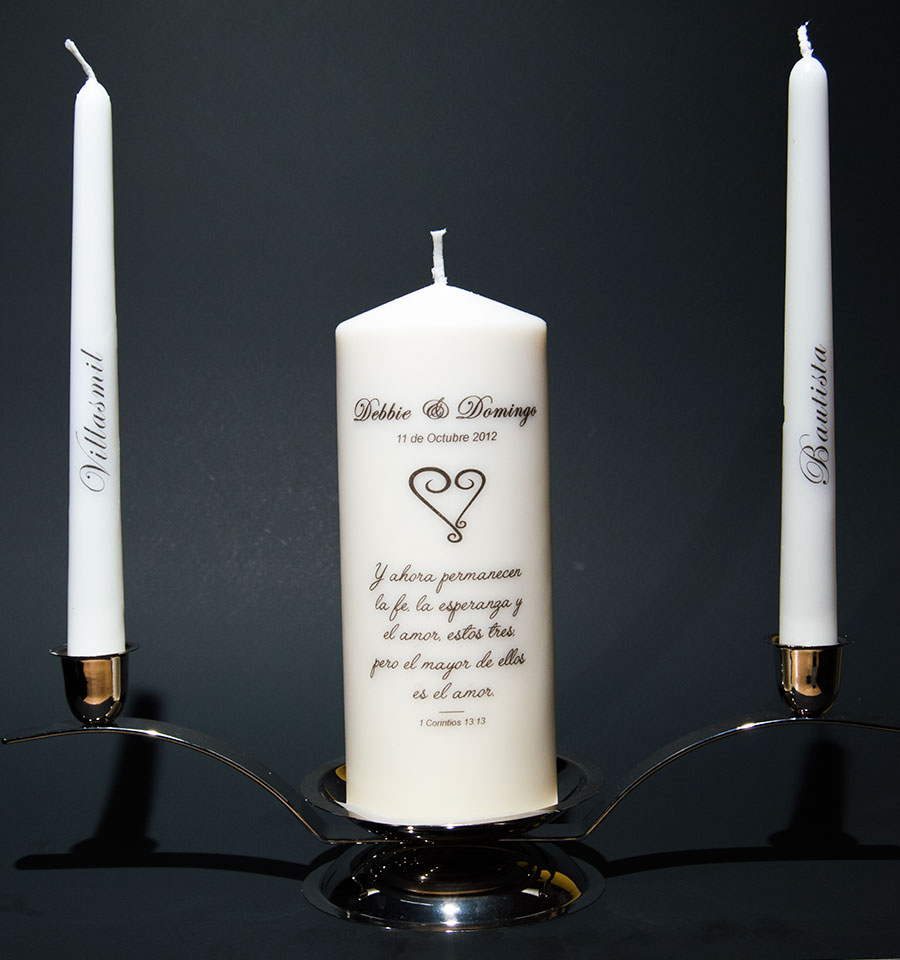 🇺🇸 United StatesUnity candle
A modern wedding ritual where a couple lights a central candle from two tapers to symbolize their union.Rite · The ceremony
🇺🇸 United StatesUnity candle
A modern wedding ritual where a couple lights a central candle from two tapers to symbolize their union.Rite · The ceremony
 🇺🇸 United States and 5 moreSaber Arch
An arch of swords or sabers held over a couple as they exit their wedding ceremony.Rite · The ceremony
🇺🇸 United States and 5 moreSaber Arch
An arch of swords or sabers held over a couple as they exit their wedding ceremony.Rite · The ceremony
 🇺🇸 United States and 5 moreSealing (Mormonism)
A temple ritual that binds couples and families together for eternity.Rite · The ceremony
🇺🇸 United States and 5 moreSealing (Mormonism)
A temple ritual that binds couples and families together for eternity.Rite · The ceremony
Photo credits on this page
The small pictures above come from Wikimedia Commons under free licences. Some are cropped to fit.
- Slave marriages in the United States: An 1899 illustration of a broomstick wedding. Schomburg Center for Res, Public domain, source
- Jumping the broom: credited only as "Hipstamatic shots, CC BY-SA 2.0, source
- Sealing (Mormonism): NewNameNoah, CC BY 4.0, source
- Navajo wedding ceremony: Neeta Lind, CC BY 2.0, source
- Unity candle: Dvillasmil, CC BY-SA 4.0, source
- Saber Arch: Rabe100, Public domain, source