Ceremony and sacred ritesNorth AmericaProtestant and AnglicanCatholic
Unity candle
A ritual where a couple lights a single candle from two smaller ones to mark their marriage.
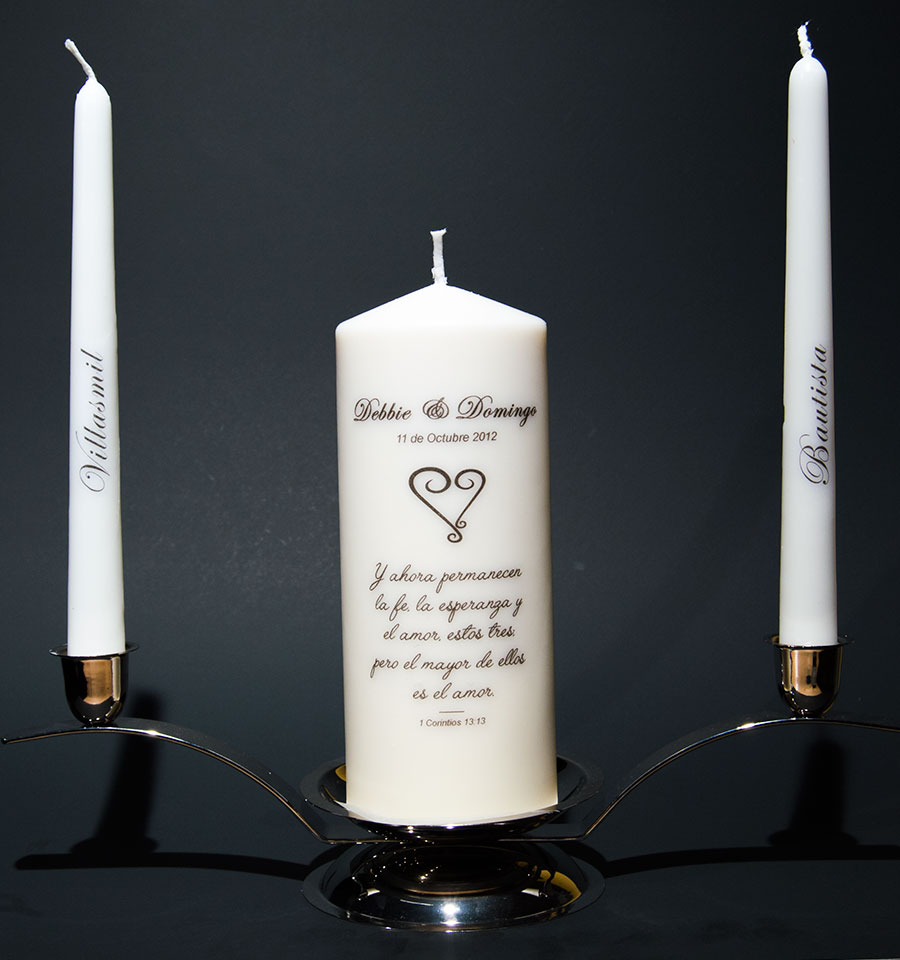
The unity candle is a modern wedding rite used in American Protestant and some Catholic ceremonies. Two taper candles represent the families of the bride and groom. The couple uses these flames to light a larger central candle during the ceremony, showing how they join into one household while keeping their separate identities.
When is Unity candle kept?
Unity candle is kept during the wedding ceremony or at the reception.
Couples light a unity candle to show they are building a shared life together. The practice started in mid twentieth century America and spread through Protestant churches. It uses three candles on the altar. Two smaller tapers stand for the bride and groom. A larger center candle waits to be lit. The flame passing from one pair to the other marks the moment they become husband and wife.
How the ritual works
The ceremony usually begins with two taper candles already burning. These represent the families of the bride and groom. Sometimes the mothers hold them, but the couple often lights them first. They then reach across to touch their tapers to a third, larger candle placed between them. This act shows two separate lives merging into one marriage. After the center candle catches fire, couples make a choice about the side flames. Some blow out the tapers to show that individual lives have fully joined. Others leave them burning beside the main candle. That choice keeps the symbol of personal identity alive alongside the union.
Church rules and placement
The custom does not appear in early Christian writings or biblical texts. Because it is a recent addition, many churches treat it as optional rather than required. Couples must ask their pastor before adding it to the service order. Catholic parishes generally do not include it in the marriage rite itself. The official Catholic Rite of Marriage focuses on the Eucharist as the true sign of Christian unity. If a diocese allows the candle, bishops suggest placing it away from the altar. The couple should light their tapers from the Paschal Candle instead. Keeping all three candles lit afterward highlights the sacramental nature of the marriage without confusing the ritual with church doctrine.
Meaning across traditions
In mixed marriages where one partner is Catholic and the other follows a different Christian tradition, the candle can serve as a visible sign of baptismal unity. Both partners share the same light, which reflects their common call to discipleship. The gesture echoes the baptism rite, where a godparent lights a small candle from the great Easter candle. That flame reminds believers to keep their faith active until Christ returns. The couple carries that same vigilance into married life. The visual of shared fire offers a simple way to express spiritual partnership when formal communion is not possible.
How Unity candle is kept
Two taper candles burn at the start of the service. The bride and groom light them, or their mothers hold them. The couple then touches both tapers to a larger center candle. Once the main flame catches, they either extinguish the side candles or leave them burning. The choice signals whether they view the marriage as a complete merge or a partnership that preserves individual identity. The ritual takes place during the ceremony or sometimes at the reception if church rules require it.
When and where
The custom appears in the second half of the twentieth century. It falls during the wedding ceremony or occasionally at the reception. Couples set the timing by checking with their officiant. Many pastors prefer it outside the formal vows so it does not replace older liturgical symbols.
The practice began in the United States and remains strongest there. It appears mostly in Protestant congregations and occasionally in Catholic parishes that allow local discretion. Dioceses vary widely on whether to permit the candle on the altar or at the back of the nave.
What Unity candle means
The flame passing between candles stands for two people becoming one family. Keeping the side tapers lit honors personal history and independence. Extinguishing them marks a permanent blend of separate lives. In Catholic settings, sharing a flame from the Paschal Candle points to baptismal grace and ongoing spiritual vigilance. The light itself represents shared purpose and mutual commitment.
Who takes part
- the bride and groom: light the side tapers and use them to ignite the center candle
- the bride's mother: sometimes holds or lights the left taper candle
- the groom's mother: sometimes holds or lights the right taper candle
- the pastor: reviews whether the custom fits the service order
If you are a guest
Guests watch the candle lighting as a quiet moment of focus. No special clothing or gifts are required. Attendees simply observe the flame pass from one candle to another. The gesture asks for silence and attention rather than participation or applause.
Then and now
The ritual has grown less common in strict liturgical settings. Many couples now skip it to follow traditional church guidelines. Others adapt it by moving the lighting to the reception. Some replace it with ring exchanges or handfasting. The practice survives mainly in casual Protestant services and blended ceremonies.
On the wedding table
Symbols: Candles and lamps
Questions people ask about Unity candle
When is Unity candle kept?
Unity candle is kept during the wedding ceremony or at the reception.
What is the unity candle?
It is a wedding rite where a couple lights a large center candle using two smaller tapers. The flame passing between candles shows how two separate lives join into one marriage.
Is it allowed in Catholic weddings?
The official Catholic Rite of Marriage does not include it. Many parishes allow it only at the reception or outside the sanctuary. Couples must check with their pastor before planning the service.
Why do some couples leave the side candles lit?
Leaving the tapers burning shows that the partners keep their individual identities after marriage. Blowing them out signals a complete merge of separate lives into one household.
See also
 NikahThe Islamic marriage contract that binds a couple through mutual consent and a mandatory gift.
 Blessing ceremonyMass weddings in which matched couples are blessed into God's lineage
 Blessing ceremonyThe large-scale marriage rite of the Unification Church where couples are matched and blessed by their leaders.
 Slave marriages in the United StatesUnions of enslaved African Americans, often not legally binding, held by ritual and kin
Good reading and sources
The facts on this page come from the Wikipedia article "Unity candle", written by its contributors and used under the CC BY-SA 4.0 licence, and from its Wikidata record (CC0). EveryShaadi rewrote the text in its own words, with AI assistance, and compares every page with the article to make sure no passage is copied. It may be reused under the same CC BY-SA 4.0 licence with a link back.
It may contain mistakes. Wedding customs differ from one family, village and community to the next, and the people who keep them know them best. If something is wrong, tell us. Last refreshed 2026-11-23.
More from the United States
All the traditions of the United States
🇰🇷 Seoul, South Korea and 2 moreBlessing ceremony축복결혼식
Mass weddings in which matched couples are blessed into God's lineageRite · Finding a match
🇰🇷 Seoul, South Korea and 3 moreBlessing ceremony
The large-scale marriage rite of the Unification Church where couples are matched and blessed by their leaders.Rite · The ceremony
🇺🇸 New York, United StatesSlave marriages in the United States
Unions of enslaved African Americans, often not legally binding, held by ritual and kinRite · The ceremony
🇮🇷 Iran and 5 moreNikahنِكَاح (nikāḥ)
The Islamic marriage contract that binds a couple through mutual consent and a mandatory gift.Rite · Engagement and betrothal
The same idea elsewhere
Parents, giving away and the in-laws compared 🇮🇳 India and 1 moreMaithil Vivahमैथिल विवाह
The arranged Hindu wedding of Maithils in the Mithila region, guided by strict kinship rules and unique folk rituals.Rite · Finding a match
 🇯🇵 JapanTamagushitamagushi (玉串)
A decorated sakaki branch offered to kami during Shinto wedding ceremonies and other rites.Rite · The ceremony
 🇰🇷 Seoul, South Korea and 1 moreMarriage in KoreaKorean marriage (결혼)
A look at how Korean weddings blend ancient Confucian rites with modern legal practices.Rite · Finding a match
 🇮🇳 India and 1 moreLaavaanਲਾਵਾਂ (Lavan)
The four sacred hymns of the Anand Karaj that guide a Sikh couple through spiritual stages of married life.Rite · The ceremony