Wedding traditions with turmeric
Turmeric, haldi, is the golden root that is ground to a paste and rubbed on a bride and groom before the wedding.
Turmeric, haldi, is the golden root that is ground to a paste and rubbed on a bride and groom before the wedding. It is a purifier, a blessing and a beauty treatment, and in India it marks the start of the wedding days.
The haldi ceremony
In North India the haldi ceremony takes place the morning before the wedding, and family members apply the paste with mango leaves, singing songs. In Bengal the gaye holud sends turmeric from the groom's house to the bride's, with the paste and a fish, and the bride's family returns the favour. In Tamil weddings a yellow turmeric thread is tied on the wrist and used to tie the thali. In Nepal and Sri Lanka similar rites are followed.
Meaning
Turmeric is an antiseptic and a colour of auspiciousness. It is believed to give the bride glow and to ward off the evil eye. It also stains clothes, so participants wear old garments, and the ceremony has become playful, with splashes and photographs. In Indonesia and Malaysia turmeric rice, nasi kuning, is also served at celebrations.
Written by the EveryShaadi desk with AI assistance. Background on Turmeric (symbol). Customs differ from place to place and family to family. If this is your tradition and we have it wrong, tell us.
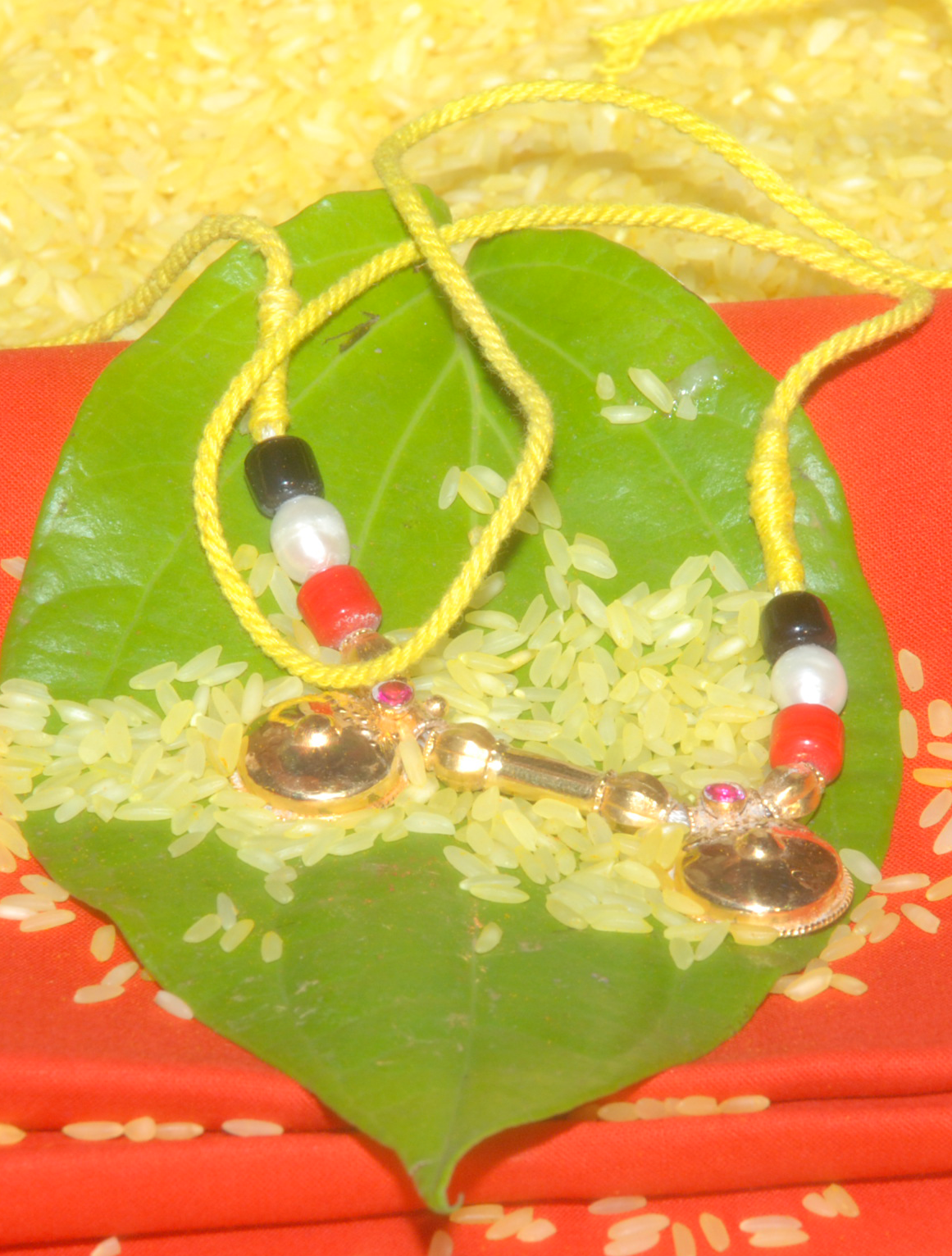
Photo credits on this page
The small pictures above come from Wikimedia Commons under free licences. Some are cropped to fit.
- Mangalsutra: Ackroydman, CC BY-SA 3.0, source