Wedding dress and clothingSouth Asia
Bandhani
A traditional Indian tie-dye method that creates intricate dot patterns by binding small sections of cloth before dyeing

Bandhani is a centuries-old textile art from India and Pakistan. Artisans tie tiny knots in fabric to resist dye, creating detailed designs. The practice remains strong in Gujarat and Rajasthan, where it holds deep cultural significance for weddings and daily life.
When is Bandhani kept?
Bandhani is kept during weddings and significant family ceremonies.
Bandhani represents a skilled textile tradition where fabric is bound tightly to create unique patterns. This ancient craft uses natural dyes to produce vibrant colors with specific meanings. The technique involves tying minute knots before immersion in dye vats. These bindings protect the cloth underneath, leaving behind distinct dots when released. The result is a beautiful, intricate design that has adorned brides and families for millennia across South Asia.
Origins and history
Evidence of early dyeing practices appears at Indus Valley sites dating back to 4000 B.C. Paintings in the Ajanta Caves from the sixth century show similar dotted patterns. Historical texts mention fine cottons during Alexander the Great's era. Banabhatta’s Harshacharita records bandhani saris at royal weddings. The craft likely evolved alongside other Indian textile traditions over thousands of years.
The tying process
Artisans pinch small portions of cloth using fingernails or metal rings with pointed tips. They tie these spots tightly with thread to prevent dye penetration. This meticulous work requires immense patience and skill. A single meter of fabric may contain thousands of tiny knots. The tied sections remain undyed while the rest absorbs color, forming the characteristic dot motifs.
Colors and meaning
Each hue carries specific cultural weight. Red symbolizes marriage and is essential for bridal trousseaus. Yellow represents spring and childbirth. Saffron connects to renunciation and warriors. Black and maroon are used for mourning. Natural sources like flowers and turmeric provide these shades. The durability of dyes varies, with some fading easily and others lasting longer.
Regional styles
Gujarat and Rajasthan are primary centers for this craft. Khatri artisans in Kutch and Saurashtra produce renowned varieties. Bhuj is famous for its bright red bandhani. Patterns differ between regions, with Kutchi style being particularly distinct. Similar techniques appear in Sindh, Pakistan, showing shared heritage across borders.
How Bandhani is kept
Artisans begin by washing and bleaching loose silk or cotton. They mark patterns using clay pigments. Small sections are plucked and tied tightly with thread. The fabric undergoes multiple dye baths, starting with lighter colors like yellow. Subsequent ties protect areas for darker shades like red or green. Finally, threads are removed to reveal the intricate dot designs. This process transforms plain cloth into elaborate textiles.
When and where
It is kept during wedding preparations and ceremonies. Brides often wear bandhani saris on their wedding day. The craft is also practiced throughout the year for various festivals and family events. Dates are not fixed but depend on the wedding schedule.
The practice is strongest in Gujarat and Rajasthan. Cities like Bhuj, Rajkot, Jaipur, and Udaipur are key hubs. The Khatri community in Kutch and Saurashtra preserves the tradition. Similar styles exist in Sindh, Pakistan, reflecting historical trade routes.
What Bandhani means
Red bandhani saris bring good fortune to brides. The dots represent protection and prosperity. Wearing these textiles is believed to ensure a happy future. Colors convey social status and life stages. The intricate patterns reflect the wearer's connection to family heritage and regional identity.
Who takes part
- Artisans: Tie tiny knots and apply dyes to create patterns
- Brides: Wear bandhani saris as part of their wedding attire
- Mothers-in-law: Gift ghar chola saris to new brides
- Natal families: Provide yellow saris during pregnancy or childbirth
If you are a guest
Guests at weddings may notice the bride wearing a red bandhani sari. They might observe guests wearing colorful textiles featuring similar dot patterns. The presence of these fabrics signifies celebration and respect for tradition. Guests do not typically participate in the making but appreciate the craftsmanship.
Then and now
Modern materials like chiffon and crepe are now used alongside traditional silk. Some artisans experiment with synthetic dyes for brighter results. The craft faces challenges from mass-produced imitations. However, demand for authentic hand-tied pieces remains strong among those valuing heritage.
On the wedding table
Symbols: The colour red Rice and grain


Questions people ask about Bandhani
When is Bandhani kept?
Bandhani is kept during weddings and significant family ceremonies.
What is bandhani?
Bandhani is an Indian tie-dye technique where fabric is tied in small knots before dyeing. This creates intricate dot patterns. It is widely used for wedding garments and festive attire across Gujarat and Rajasthan.
What does red mean?
Red is the most important color in bandhani. It symbolizes marriage, fertility, and auspiciousness. Brides traditionally wear red bandhani saris to invoke good fortune and blessings for their new life together.
See also
 Kanchipuram silk sariThe heavy silk bridal garment woven in Kanchipuram with contrasting borders and gold zari.
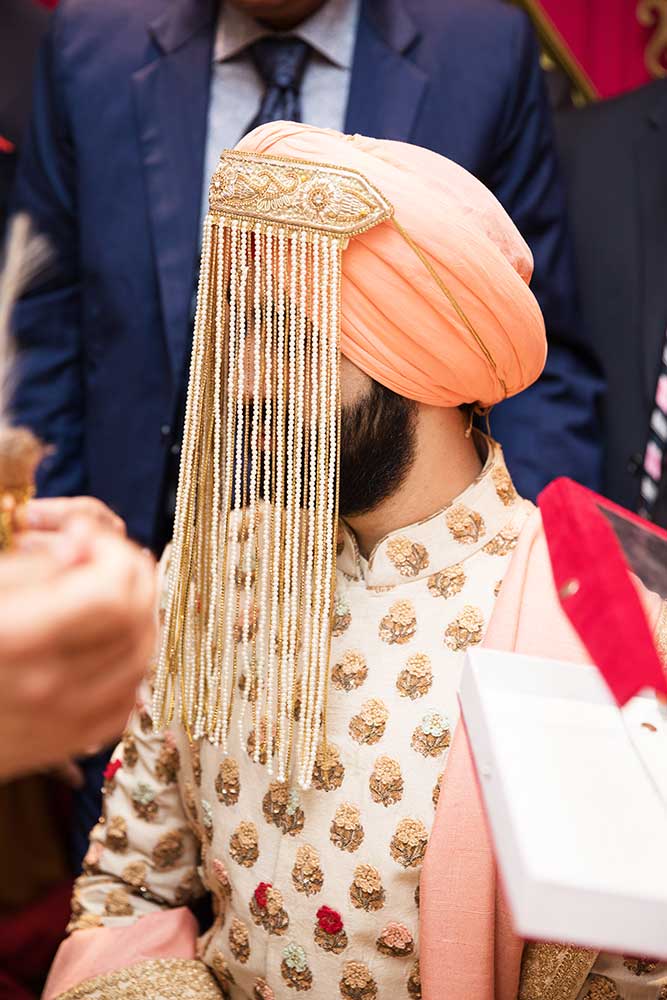 SehraA floral or beaded veil tied to the groom's turban before he departs for the wedding ceremony.
Good reading and sources
- Bandhani on WikipediaEncyclopedia
- More photos on Wikimedia CommonsPhotos and video
- Wikidata recordOpen data
The facts on this page come from the Wikipedia article "Bandhani", written by its contributors and used under the CC BY-SA 4.0 licence, and from its Wikidata record (CC0). EveryShaadi rewrote the text in its own words, with AI assistance, and compares every page with the article to make sure no passage is copied. It may be reused under the same CC BY-SA 4.0 licence with a link back.
It may contain mistakes. Wedding customs differ from one family, village and community to the next, and the people who keep them know them best. If something is wrong, tell us. Last refreshed 2026-10-05.
More from India
All the traditions of India
🇮🇳 Kanchipuram, IndiaKanchipuram silk sari
The heavy silk bridal garment woven in Kanchipuram with contrasting borders and gold zari.Attire · The ceremony
🇮🇳 Kochi, IndiaKasavuകസാവ്
The white cotton and gold border attire worn by Malayalis for weddings and festivals.Attire · The weeks before
🇮🇳 IndiaMadisarமடிசார் (Madisar)
The nine-yard sari drape worn by Tamil Brahmin women during weddings and religious rites.Attire · The ceremony
🇮🇳 Jodhpur, India and 1 moreAchkanअचकन (Hindi), اچکن (Urdu)
A long, side-fastening jacket worn by grooms and men at formal Indian weddings.Attire · The ceremony
The same idea elsewhere
The wedding dress and what the couple wear compared 🇬🇭 Ghana and 2 moreKente clothnwentoma
Hand-woven silk and cotton strips from Ghana that mark weddings and graduationsAttire · The ceremony
🇬🇭 Ghana and 2 moreKente clothnwentoma
Hand-woven silk and cotton strips from Ghana that mark weddings and graduationsAttire · The ceremony
 🇲🇽 Oaxaca, Mexico and 1 moreHuipilhuīpīlli
The traditional tunic worn by indigenous women in Mexico and Central America for weddings and daily life.Attire · The weeks before
🇲🇽 Oaxaca, Mexico and 1 moreHuipilhuīpīlli
The traditional tunic worn by indigenous women in Mexico and Central America for weddings and daily life.Attire · The weeks before
 🇬🇷 Athens, GreeceLoutrophorosλουτροφόρος
An ancient Greek vessel that carried water for a bride's bath or marked an unmarried death.Attire · The weeks before
🇬🇷 Athens, GreeceLoutrophorosλουτροφόρος
An ancient Greek vessel that carried water for a bride's bath or marked an unmarried death.Attire · The weeks before
 🇪🇹 Addis Ababa, Ethiopia and 1 moreZuria
The ankle-length dress with woven hem bands worn by Tigrinya and Amhara women for weddings and holidays.Attire · The weeks before
🇪🇹 Addis Ababa, Ethiopia and 1 moreZuria
The ankle-length dress with woven hem bands worn by Tigrinya and Amhara women for weddings and holidays.Attire · The weeks before