Music, dance and processionEurope
Polonaise
In its own language: Polonez
A stately Polish partner dance in triple metre that opens weddings and formal celebrations.

The polonaise is a traditional Polish folk dance performed in three-quarter time. It serves as the opening dance at many social gatherings, including student balls and wedding receptions in Poland and parts of Indonesia.
When is Polonaise kept?
Polonaise is kept at the start of formal events and weddings.
The polonaise is a historic Polish dance defined by its measured pace and triple rhythm. People perform it to mark the beginning of significant social occasions. The steps require partners to move together in a structured procession, reflecting values of cooperation and equality within the community.
Origins and history
This dance began among peasants in Poland during the fifteenth century. Early versions carried names like chodzony, which means walking dance, or wielki for great. Over time, the practice moved from rural fields to urban centers and noble courts. By the seventeenth century, it became a favorite of the aristocracy and adopted an instrumental style. The dance spread across Europe, influencing ballroom culture and classical music composition throughout the eighteenth and nineteenth centuries.
How it is kept
Dancers form long lines or pairs and move in a specific pattern across the floor. The rhythm stays steady in three-quarter time, requiring participants to walk with dignity and precision. Couples often link arms or hold hands while following the leader of the procession. This structure emphasizes group harmony rather than individual display. The dance remains popular in Poland as a standard opening act for formal gatherings and national celebrations.
Global presence
While rooted in Poland, the tradition appears in other regions. In the Maluku islands of Indonesia, a version called polones is common at wedding receptions. There, it functions as a loose group or line dance similar to a country dance. The Swedish polska shares rhythmic similarities due to historical ties between Poland and Sweden during the Vasa dynasty period. French courts also adopted the style in the seventeenth century for royal entertainment.
Modern status
In Poland, the dance holds a central place in youth culture. It is always the first dance at the studniówka, a student ball held roughly one hundred days before final exams. This event marks a rite of passage for teenagers. In 2023, UNESCO recognized the polonaise as intangible cultural heritage. The organization noted that the dance commemorates important family moments and symbolizes reconciliation and equality among participants.
How Polonaise is kept
Partners join hands or link arms to form a procession. They move in a measured, dignified walk across the floor in three-quarter time. The group follows a leader who sets the direction and pace. Dancers maintain close formation, emphasizing unity and coordination over complex footwork. The movement is continuous and circular, allowing all guests to participate in the opening sequence of the event.
When and where
It typically opens major events, student balls, and wedding receptions. The timing is fixed at the very beginning of the dancing portion of the evening. In Poland, it specifically starts the studniówka celebration for high school students.
It originates in Poland and remains most prominent there. It is also found in Indonesian wedding receptions in the Maluku region. Historical records show its popularity in French courts and Swedish ballrooms during earlier centuries.
What Polonaise means
The dance represents cooperation, reconciliation, and equality. Its structured procession requires participants to move as a unified body. This physical alignment mirrors social harmony and shared community values. The open nature of the dance allows people of different ages and statuses to join together on equal footing.
Who takes part
- The couple: Often lead the procession at their own wedding reception
- Guests: Join hands to form a long chain or circle
- The leader: Sets the pace and direction for the entire group
If you are a guest
Guests link arms or hold hands to form a long line or circle. They follow the leader's steps without breaking the chain. Participants wear formal attire suitable for the occasion. Everyone joins the opening dance regardless of age or status, creating a sense of shared celebration.
Then and now
The dance remains vital in Polish youth culture through the studniocca tradition. UNESCO recognition in 2023 has helped preserve its status as a key cultural symbol. While classical music compositions have evolved, the live folk performance continues to anchor formal social events in Poland.


Questions people ask about Polonaise
When is Polonaise kept?
Polonaise is kept at the start of formal events and weddings.
What is the polonaise?
It is a traditional Polish partner dance performed in three-quarter time. It involves a structured procession where dancers move together in a line or circle. The dance emphasizes dignity, cooperation, and equality among participants.
Is it still practiced today?
Yes, it remains popular in Poland. It is mandatory at the studniocca student ball. UNESCO listed it as intangible cultural heritage in 2023, confirming its ongoing relevance in modern society.
Where else is it found?
Beyond Poland, it appears in Indonesian wedding receptions in Maluku. Historically, it influenced European ballroom dances in France and Sweden. The rhythm also inspired many classical music composers.
See also
 Chicken DanceA novelty polka song and accompanying hand movements performed at weddings and festivals.MerariqA Sasak ritual in Lombok where the groom takes the bride to his home with family consent.
 Minangkabau marriageA matrilineal wedding tradition from West Sumatra where the groom moves into the bride's family home.
 DabkeA Levantine line dance performed at weddings to celebrate union and community.
Good reading and sources
- Encyclopaedia BritannicaArticle
- Polonaise, traditional Polish danceUNESCO, Heritage listing
- Polonaise, traditional Polish danceUNESCO, Article
- Polonaise on WikipediaEncyclopedia
- More photos on Wikimedia CommonsPhotos and video
- Wikidata recordOpen data
The facts on this page come from the Wikipedia article "Polonaise", written by its contributors and used under the CC BY-SA 4.0 licence, and from its Wikidata record (CC0). EveryShaadi rewrote the text in its own words, with AI assistance, and compares every page with the article to make sure no passage is copied. It may be reused under the same CC BY-SA 4.0 licence with a link back.
It may contain mistakes. Wedding customs differ from one family, village and community to the next, and the people who keep them know them best. If something is wrong, tell us. Last refreshed 2026-10-05.
More from Poland
All the traditions of Poland 🇭🇺 Hungary and 5 moreCsárdás
A Hungarian folk dance that begins slowly and ends with a fast spin.Performance · Reception, dance and gifts
🇨🇭 Switzerland and 5 moreChicken DanceDer Ententanz
A novelty polka song and accompanying hand movements performed at weddings and festivals.Performance · Reception, dance and gifts
🇭🇺 Hungary and 5 moreCsárdás
A Hungarian folk dance that begins slowly and ends with a fast spin.Performance · Reception, dance and gifts
🇨🇭 Switzerland and 5 moreChicken DanceDer Ententanz
A novelty polka song and accompanying hand movements performed at weddings and festivals.Performance · Reception, dance and gifts
 🇵🇱 Poland and 1 moreBadchenבּדחן (badkhn)
The Ashkenazi Jewish wedding entertainer and master of ceremonies who guides the couple through ritual stages with song Performance · Engagement and betrothal
🇵🇱 Poland and 1 moreBadchenבּדחן (badkhn)
The Ashkenazi Jewish wedding entertainer and master of ceremonies who guides the couple through ritual stages with song Performance · Engagement and betrothal
 🇺🇦 Kolomyia, Ukraine and 2 moreKolomyikaколомийка
A fast Ukrainian folk dance with rhymed verses, celebrated at weddings in western Ukraine and Canada.Performance · Reception, dance and gifts
🇺🇦 Kolomyia, Ukraine and 2 moreKolomyikaколомийка
A fast Ukrainian folk dance with rhymed verses, celebrated at weddings in western Ukraine and Canada.Performance · Reception, dance and gifts
The same idea elsewhere
Wedding music and the dance floor compared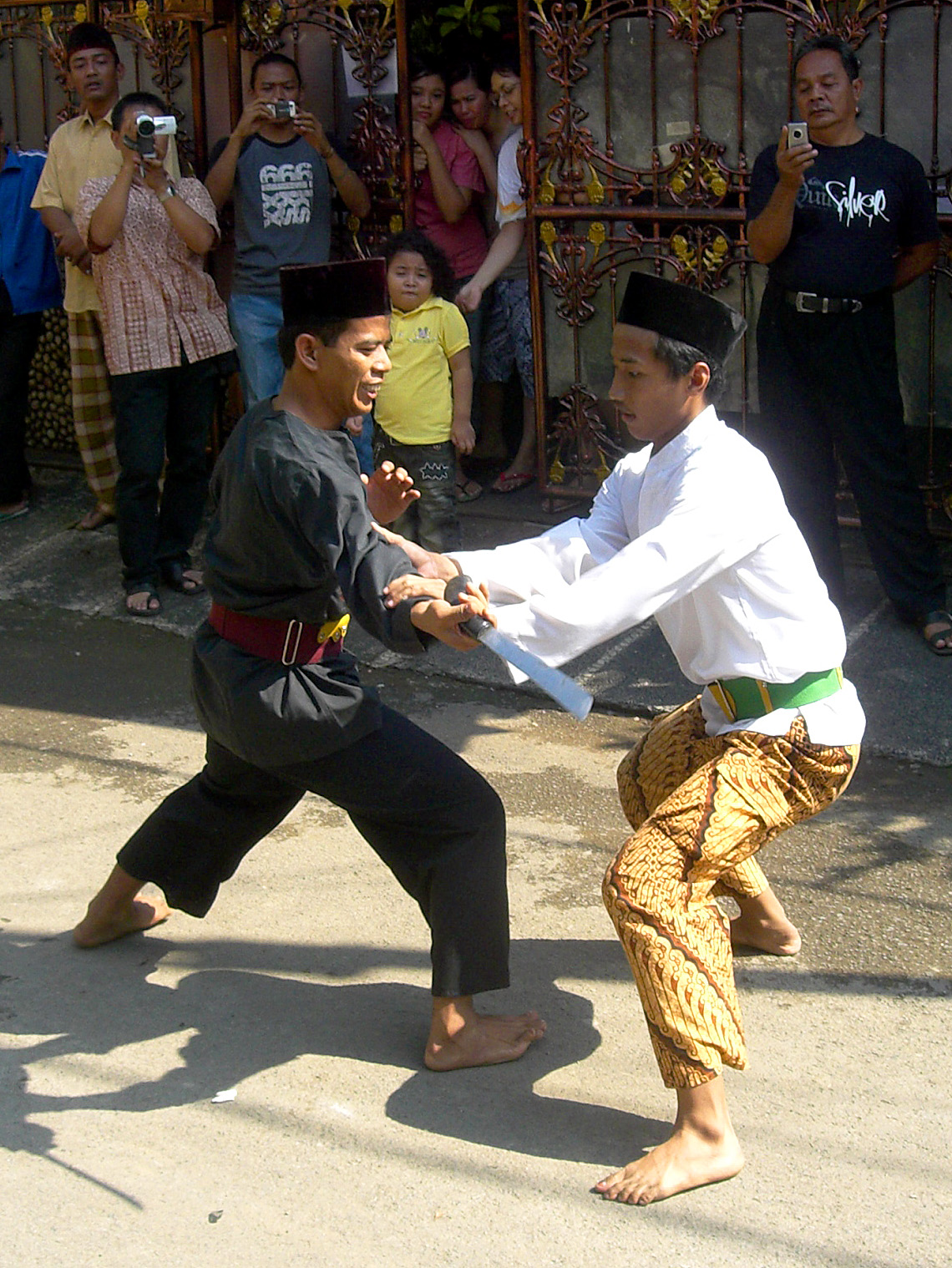 🇮🇩 Jakarta, IndonesiaPalang pintu
The martial arts and poetry test that allows the groom to enter the bride's home in Betawi weddings.Rite · The weeks before
🇳🇬 Lagos, Nigeria and 2 moreOwanbeÓwàńbẹ̀
The extravagant Yoruba celebration where music, fashion, and money spraying mark life's milestones.Feast custom · Reception, dance and gifts
🇮🇩 Jakarta, IndonesiaPalang pintu
The martial arts and poetry test that allows the groom to enter the bride's home in Betawi weddings.Rite · The weeks before
🇳🇬 Lagos, Nigeria and 2 moreOwanbeÓwàńbẹ̀
The extravagant Yoruba celebration where music, fashion, and money spraying mark life's milestones.Feast custom · Reception, dance and gifts
 🇨🇺 Havana, Cuba and 5 moreConga line
A long processing line dance that links dancers in single file to a rhythmic drum beat.Performance · Reception, dance and gifts
🇨🇺 Havana, Cuba and 5 moreConga line
A long processing line dance that links dancers in single file to a rhythmic drum beat.Performance · Reception, dance and gifts
 🇨🇱 Santiago, Chile and 3 moreCueca
A courtship dance from Chile and the Andes where couples trace circles with handkerchiefs to reenact a rooster and hen.Performance · The eve
🇨🇱 Santiago, Chile and 3 moreCueca
A courtship dance from Chile and the Andes where couples trace circles with handkerchiefs to reenact a rooster and hen.Performance · The eve