Music, dance and processionMiddle East
Halay
A traditional line and circle dance performed across Turkey and surrounding regions at weddings.

Halay is a collective folk dance found throughout Turkey and parts of the Caucasus. It involves dancers linking hands or shoulders to move in unison during festive gatherings. The style varies by region but always emphasizes community participation.
When is Halay kept?
Halay is kept at weddings and festive gatherings.
Halay serves as a central feature of celebration in Turkey and neighboring areas. Groups of people join together to perform synchronized steps that strengthen social bonds. The dance adapts to local traditions while maintaining its core structure of communal movement.
Origins and history
The word likely stems from Turkish terms for crowd or group, though some scholars suggest Kurdish roots. Historical records from the early twentieth century document the practice among Pontic Greek miners who moved into Central Anatolia. These communities brought specific rhythmic footwork that blended with local styles. Over time, the term expanded to describe various line dances across different provinces. Documentation from the nineteen thirties confirms its status as a hand-held line dance accompanied by traditional wind and percussion instruments.
How it is kept
Participants form circles or long lines, linking fingers, hands, or resting arms on each other's shoulders. A leader often holds a colored cloth to guide the movements. The dance typically starts at a slow pace before gradually increasing in speed. Dancers follow specific foot patterns, such as diagonal steps or inward toe placements. Musicians play zurna and davul drums, though modern versions sometimes use electronic beats. The rhythm dictates the energy of the entire group.
Regional variations
Different areas have developed unique names and steps for this type of dance. In Azerbaijan, the practice is known as Yallı and appears in regions like Nakhchivan and Shamkir. Armenian and Azerbaijani groups also perform Kochari and Tamzara variants. Kurdish communities call similar dances Govend or Dîlan. Each village maintains distinct characteristics while preserving the fundamental requirement of unified movement. The dance remains a vital part of cultural identity in these regions.
Meaning and symbolism
The act of dancing together reinforces community ties and shared heritage. Holding onto one another physically represents mutual support and unity. The progression from slow to fast movements mirrors the building excitement of a celebration. Leaders guiding the line with a handkerchief symbolize direction and focus. Participants find joy in matching their steps to the drumbeats, creating a collective experience that transcends individual performance.
How Halay is kept
Dancers link hands or shoulders to form a circle or line. A leader waves a handkerchief to direct the group. The music begins slowly, allowing participants to master the footwork. Steps include diagonal advances and inward toe placements. As the tempo rises, the energy increases. Traditional instruments like the zurna and davul provide the beat, though modern electronics are now common. Everyone moves in sync, emphasizing the group over the individual.
When and where
It occurs during wedding receptions and major festivals. The timing depends on the event schedule rather than a specific calendar date. The dance usually follows the formal ceremonies, serving as entertainment for guests. It can last for hours, adapting to the crowd's energy levels.
The practice is strongest in Turkey, particularly in Central Anatolia and Cappadocia. It also thrives in Azerbaijan, especially in Nakhchivan and Shamkir. Smaller communities in Armenia, Iran, and Syria maintain their own regional versions. Urban centers see adapted forms, while rural villages preserve older step patterns.
What Halay means
The linked formation symbolizes unity and social cohesion. Moving together requires trust and coordination among strangers and friends alike. The leader's handkerchief represents guidance and cultural continuity. The increasing tempo reflects the rising joy of the occasion. The dance honors ancestors by keeping ancient rhythms alive in modern celebrations.
Who takes part
- The leader: Holds a handkerchief and guides the line's direction
- The musicians: Play zurna and davul drums to set the rhythm
- The dancers: Link hands and follow the synchronized footwork
- The bride and groom: Often stand in the center or join the line later
If you are a guest
Guests are expected to join the line if they wish to participate. They should wear comfortable clothing that allows for movement. No special gifts are required, but enthusiasm is appreciated. Observers clap along to the music. Joining the dance shows respect for the hosts and the culture.
Then and now
Modern weddings sometimes replace traditional instruments with electronic music. Younger generations may learn the steps in dance schools rather than through family tradition. Some urban areas have simplified the complex footwork for easier learning. Despite these changes, the core requirement of communal participation remains unchanged.
Questions people ask about Halay
When is Halay kept?
Halay is kept at weddings and festive gatherings.
What is Halay?
It is a traditional line or circle dance performed at weddings and festivals across Turkey and the Caucasus. Dancers link hands or shoulders to move in unison to drum music.
Who performs it?
People from various backgrounds including Turks, Kurds, Azerbaijanis, and Armenians perform it. Anyone can join the line, regardless of age or gender.
Is it legal?
Yes, Halay is a celebrated cultural tradition with no legal restrictions. It is widely encouraged as a way to preserve national heritage and community bonds.
See also
 DabkeA Levantine line dance performed at weddings to celebrate union and community.UlulationA high-pitched trilling sound made by women to celebrate weddings and share good news across many cultures.
 HoronThe fast shoulder-shimmying line dance of the Eastern Black Sea Region performed at weddings and festivals
Good reading and sources
- Halay on WikipediaEncyclopedia
- More photos on Wikimedia CommonsPhotos and video
- Wikidata recordOpen data
The facts on this page come from the Wikipedia article "Halay", written by its contributors and used under the CC BY-SA 4.0 licence, and from its Wikidata record (CC0). EveryShaadi rewrote the text in its own words, with AI assistance, and compares every page with the article to make sure no passage is copied. It may be reused under the same CC BY-SA 4.0 licence with a link back.
It may contain mistakes. Wedding customs differ from one family, village and community to the next, and the people who keep them know them best. If something is wrong, tell us. Last refreshed 2026-10-05.
More from Turkey
All the traditions of Turkey
🇹🇷 TurkeyHoronχορόν (Pontic Greek)
The fast shoulder-shimmying line dance of the Eastern Black Sea Region performed at weddings and festivalsPerformance · The wedding feast
 🇧🇬 Bulgaria and 5 moreBulgarian wedding musicсватбарска музика
Fast-paced instrumental music played at Bulgarian weddings that blends folk, Romani, and Turkish styles.Performance · The ceremony
🇧🇬 Bulgaria and 5 moreBulgarian wedding musicсватбарска музика
Fast-paced instrumental music played at Bulgarian weddings that blends folk, Romani, and Turkish styles.Performance · The ceremony
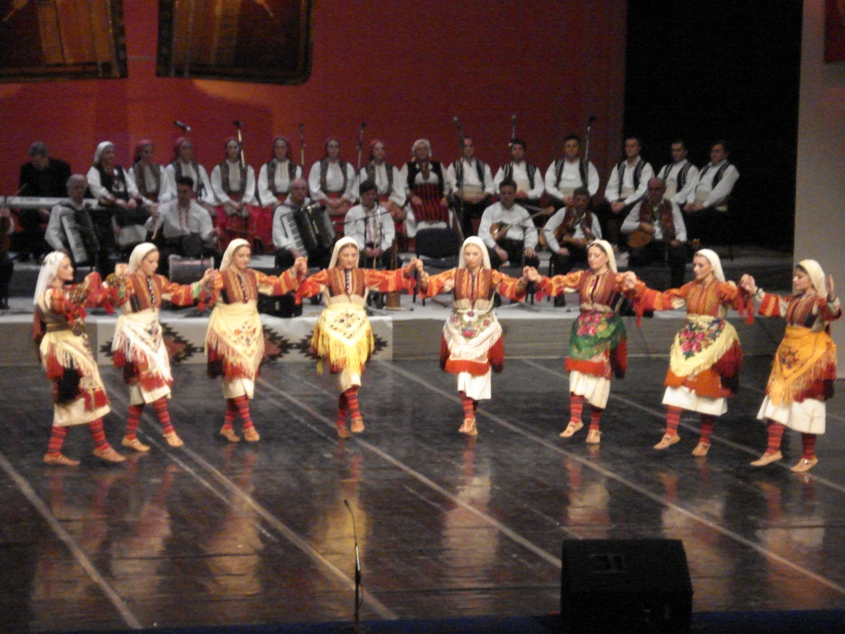 🇷🇴 Romania and 7 moreHorahora (Romanian), horo (Bulgarian), oro (Macedonian), horah (Hebrew)
A circle dance held at weddings across Southeast Europe and among Jewish communities worldwide.Performance · Reception, dance and gifts
🇷🇴 Romania and 7 moreHorahora (Romanian), horo (Bulgarian), oro (Macedonian), horah (Hebrew)
A circle dance held at weddings across Southeast Europe and among Jewish communities worldwide.Performance · Reception, dance and gifts
 🇸🇾 Syria and 3 moreAssyrian wedding
Marriage ceremonies blending ancient Assyrian rites with modern cultural practices among the Assyrian people.Rite · Finding a match
🇸🇾 Syria and 3 moreAssyrian wedding
Marriage ceremonies blending ancient Assyrian rites with modern cultural practices among the Assyrian people.Rite · Finding a match
The same idea elsewhere
Wedding music and the dance floor compared 🇮🇳 IndiaOdia Hindu weddingBahaghara (ଓଡ଼ିଆ ବାହାଘର)
The traditional Hindu marriage ceremony of the Odia people in Odisha, India.Rite · Engagement and betrothal
🇮🇳 IndiaOdia Hindu weddingBahaghara (ଓଡ଼ିଆ ବାହାଘର)
The traditional Hindu marriage ceremony of the Odia people in Odisha, India.Rite · Engagement and betrothal
 🇵🇱 Poland and 1 moreBadchenבּדחן (badkhn)
The Ashkenazi Jewish wedding entertainer and master of ceremonies who guides the couple through ritual stages with song Performance · Engagement and betrothal
🇮🇳 IndiaTelugu Hindu weddingతెలుగు వివాహ వేడుక
A multi-day Telugu Hindu marriage marked by seven vows around fire and family rituals.Rite · Finding a match
🇵🇱 Poland and 1 moreBadchenבּדחן (badkhn)
The Ashkenazi Jewish wedding entertainer and master of ceremonies who guides the couple through ritual stages with song Performance · Engagement and betrothal
🇮🇳 IndiaTelugu Hindu weddingతెలుగు వివాహ వేడుక
A multi-day Telugu Hindu marriage marked by seven vows around fire and family rituals.Rite · Finding a match
 🇱🇹 Lithuania and 1 moreLithuanian wedding songsvestuvinės dainos
The polyphonic songs and weeping rituals that mark a Lithuanian bride's transition to her new family.Performance · Engagement and betrothal
🇱🇹 Lithuania and 1 moreLithuanian wedding songsvestuvinės dainos
The polyphonic songs and weeping rituals that mark a Lithuanian bride's transition to her new family.Performance · Engagement and betrothal