Henna, jewellery and body artEuropeIndigenous and traditional
Rushnyk
In its own language: рушник (Ukrainian), ручнік (Belarusian), ручник/рушник (Russian)
The embroidered linen cloth that marks life stages and guides the couple through the wedding ceremony in East Slavic cul

A rushnyk is a ritual linen or hemp cloth central to East Slavic traditions. It accompanies people from birth to death and serves as a sacred platform during weddings, symbolizing fertility and ancestral protection.
When is Rushnyk kept?
Rushnyk is kept on throughout the wedding ceremony and procession.
The rushnyk is a sacred embroidered cloth used by East Slavic communities to mark significant life events. Woven from linen or hemp, it features intricate patterns that convey ancestral memory and spiritual power. During weddings, it acts as a protective barrier and a guide for the couple's new journey together.
Symbolic meaning
The rectangular shape of the cloth represents the path of a human life. Embroidery captures cultural memory and spiritual energy linked to ancient deities like Mokosh. Red thread dominates the designs, symbolizing life, health, and fertility. In older languages, the word for red also meant beautiful. Diamond shapes stand for sown fields and sun protection, while duck motifs represent water and the union of bride and groom.
Wedding role
Couples stand on a specific rushnyk called a pidnozhnyk during the ceremony. The bride drags this towel behind her as she walks toward the altar or sacred space. Her bridesmaids follow closely behind the fabric. This act signifies that they are walking in the bride's footsteps, hoping to share her future marital happiness. The cloth physically connects the couple to the ground and their community.
Types and uses
Different rushnyks serve distinct purposes in daily and religious life. A simple wiper lacks decoration, while a nabozhnyk is heavily embroidered with lace. These decorated cloths adorn icons and home corners in Orthodox households. The same cloth accompanies a person from their first bath at birth until their funeral service, marking every major transition in their existence.
How Rushnyk is kept
The bride stands on the pidnozhnyk while the groom stands beside her. She drags the cloth backward as she moves forward. Bridesmaids walk directly over the trailing end of the rushnyk. The couple remains on the cloth throughout the main vows or blessings. Family members may present the rushnyk before the ceremony begins.
When and where
It appears during the wedding procession and the central ceremony. Families prepare these cloths weeks in advance. The rushnyk is also present at births and funerals, spanning the entire lifespan of the individual.
This custom is strongest in Ukraine, Russia, and Belarus. Collections exist in ethnographic museums across these regions. The Pereiaslav Museum in Ukraine holds a dedicated collection of these ritual textiles.
What Rushnyk means
The rushnyk embodies the journey of life and the protection of ancestors. Red threads invoke vitality and beauty. Duck symbols ensure fertility and harmony between partners. The cloth acts as a spiritual shield against evil forces while connecting the couple to their heritage and the divine.
Who takes part
- The bride: Stands on the rushnyk and drags it behind her during the procession
- Bridesmaids: Follow the bride by walking over the trailing end of the cloth
- The groom: Stands beside the bride on the ceremonial rushnyk
- Family elders: Prepare and present the rushnyk for use in the ceremony
If you are a guest
Guests observe the couple standing on the rushnyk without touching it. They may watch the bridesmaids follow the cloth. Visitors should respect the sacred nature of the textile and avoid stepping on any rushnyks not designated for the ceremony.
Then and now
Traditional rushnyks remain vital in rural and urban East Slavic weddings. Modern couples often commission custom embroidery that blends historical motifs with contemporary styles. Museums actively preserve these items, ensuring the techniques survive for future generations.
On the wedding table
Symbols: The colour red Water and washing Garlands and flowers


Questions people ask about Rushnyk
When is Rushnyk kept?
Rushnyk is kept on throughout the wedding ceremony and procession.
What is a rushnyk?
A rushnyk is a ritual linen or hemp cloth embroidered with symbolic patterns. It is central to East Slavic traditions, accompanying people from birth to death and playing a key role in wedding ceremonies.
What do the colors and symbols mean?
Red represents life, health, and beauty. Diamond shapes symbolize fertility and protection. Duck motifs represent water and the union of the bride and groom. These designs carry ancestral memory.
Where is this custom practiced?
The rushnyk tradition is practiced in Ukraine, Russia, and Belarus. It is an essential part of East Slavic cultural heritage and religious services.
See also
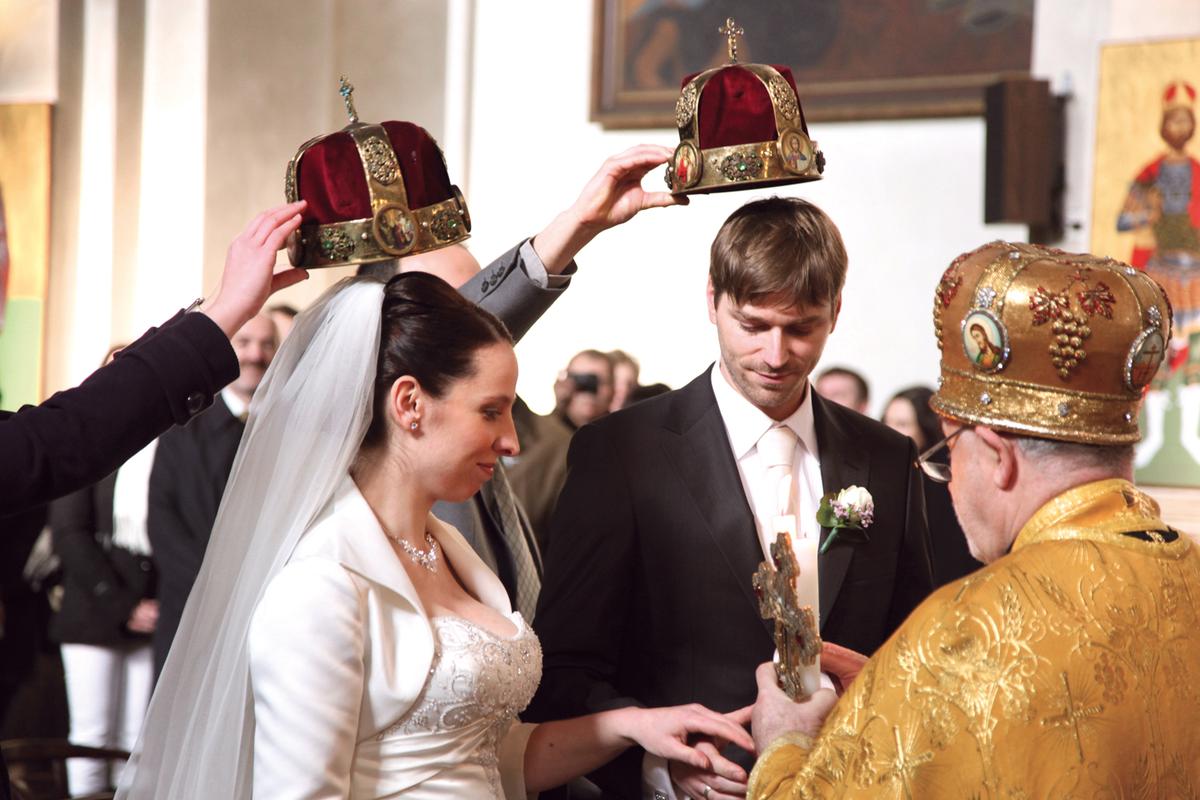 Eastern Orthodox marriageThe Byzantine Rite ceremony where a priest crowns the couple to seal their union in Christ.
 MantillaA lace or silk veil worn over the head and shoulders by women in Spain and Latin America
 Russian wedding traditionsA multi-day celebration blending Orthodox crowning, ransom games, and lively toasting in Russia.
Good reading and sources
- Rushnyk on WikipediaEncyclopedia
- More photos on Wikimedia CommonsPhotos and video
- Wikidata recordOpen data
The facts on this page come from the Wikipedia article "Rushnyk", written by its contributors and used under the CC BY-SA 4.0 licence, and from its Wikidata record (CC0). EveryShaadi rewrote the text in its own words, with AI assistance, and compares every page with the article to make sure no passage is copied. It may be reused under the same CC BY-SA 4.0 licence with a link back.
It may contain mistakes. Wedding customs differ from one family, village and community to the next, and the people who keep them know them best. If something is wrong, tell us. Last refreshed 2026-10-05.
More from Ukraine
All the traditions of Ukraine 🇺🇦 Ukraine and 4 moreKorovaiкоровай (Ukrainian), каравай (Russian), кравай (Bulgarian)
A large round braided bread shared at weddings to bless the couple and unite the community.Feast custom · The ceremony
🇺🇦 Ukraine and 4 moreKorovaiкоровай (Ukrainian), каравай (Russian), кравай (Bulgarian)
A large round braided bread shared at weddings to bless the couple and unite the community.Feast custom · The ceremony
 🇺🇦 UkraineTraditional Ukrainian weddingТрадиційне українське весілля
A multi-day sequence of folk rites, bread baking and church vows that marks the transition from maidenhood to married liRite · Finding a match
🇺🇦 UkraineTraditional Ukrainian weddingТрадиційне українське весілля
A multi-day sequence of folk rites, bread baking and church vows that marks the transition from maidenhood to married liRite · Finding a match
 🇺🇦 Chernivtsi, Ukraine and 1 moreVyshyvanka DayДень вишиванки
The annual celebration where people wear embroidered shirts to show national unity and identitySetting
🇺🇦 Chernivtsi, Ukraine and 1 moreVyshyvanka DayДень вишиванки
The annual celebration where people wear embroidered shirts to show national unity and identitySetting
The same idea elsewhere
Luck, omens and protection on the day compared 🇸🇿 Ludzidzini Royal Village, Eswatini and 1 moreUmhlanga
The annual Swazi and Zulu gathering where young women cut reeds to preserve chastity and offer tribute labour.Rite · The eve
🇸🇿 Ludzidzini Royal Village, Eswatini and 1 moreUmhlanga
The annual Swazi and Zulu gathering where young women cut reeds to preserve chastity and offer tribute labour.Rite · The eve
 🇲🇽 Oaxaca, Mexico and 1 moreHuipilhuīpīlli
The traditional tunic worn by indigenous women in Mexico and Central America for weddings and daily life.Attire · The weeks before
🇲🇽 Oaxaca, Mexico and 1 moreHuipilhuīpīlli
The traditional tunic worn by indigenous women in Mexico and Central America for weddings and daily life.Attire · The weeks before
 🇨🇱 Santiago, Chile and 3 moreCueca
A courtship dance from Chile and the Andes where couples trace circles with handkerchiefs to reenact a rooster and hen.Performance · The eve
🇨🇱 Santiago, Chile and 3 moreCueca
A courtship dance from Chile and the Andes where couples trace circles with handkerchiefs to reenact a rooster and hen.Performance · The eve
 🇮🇳 Delhi, India and 1 moreBaraat
The groom's wedding procession through the streets to the bride's home or venue.Performance · Procession and arrival
🇮🇳 Delhi, India and 1 moreBaraat
The groom's wedding procession through the streets to the bride's home or venue.Performance · Procession and arrival