Wedding dress and clothingSouth AsiaHinduJewish
Wedding veil
A cloth covering the head or face worn by brides and grooms to mark marriage.

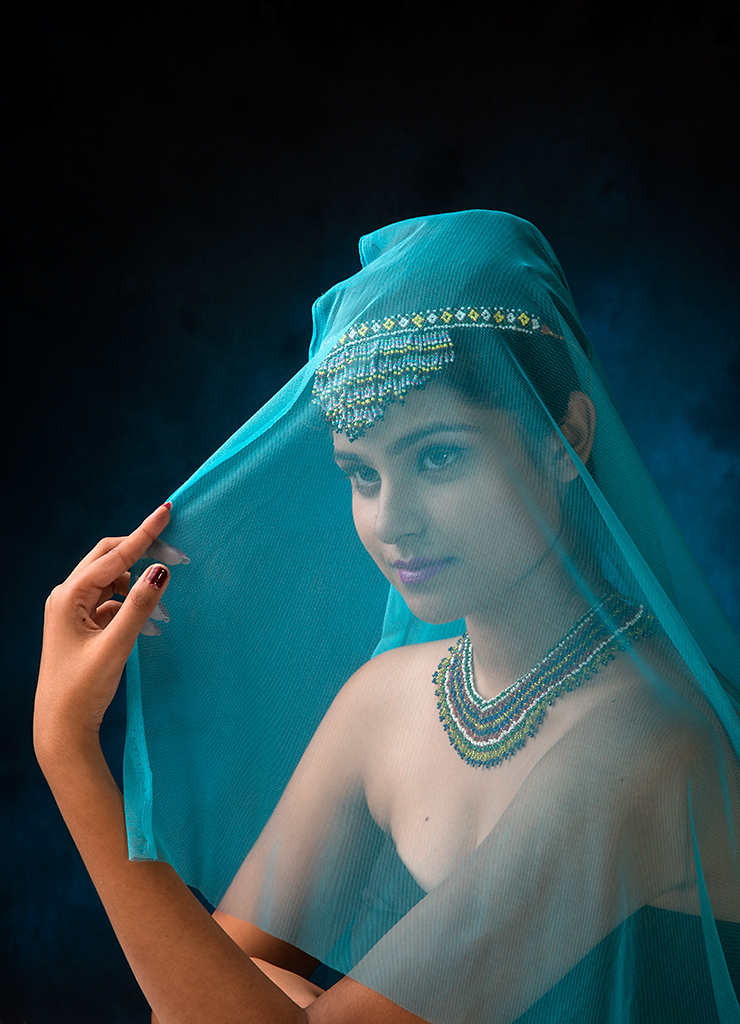
A veil is a piece of cloth used to cover part of the head or face during wedding ceremonies. It appears in many cultures across Europe, Asia, and Africa. The practice signals modesty, status, or religious devotion. Brides and grooms wear them at different points in the ceremony.
When is Wedding veil kept?
Wedding veil is kept during the wedding ceremony.
The wedding veil serves as a visible sign of union and modesty. It covers the bride or groom to show respect and signal their new marital status. This custom spans many regions and faiths. People wear it to protect against evil spirits or to display family wealth. The cloth marks the transition from single life to marriage.
Historical origins
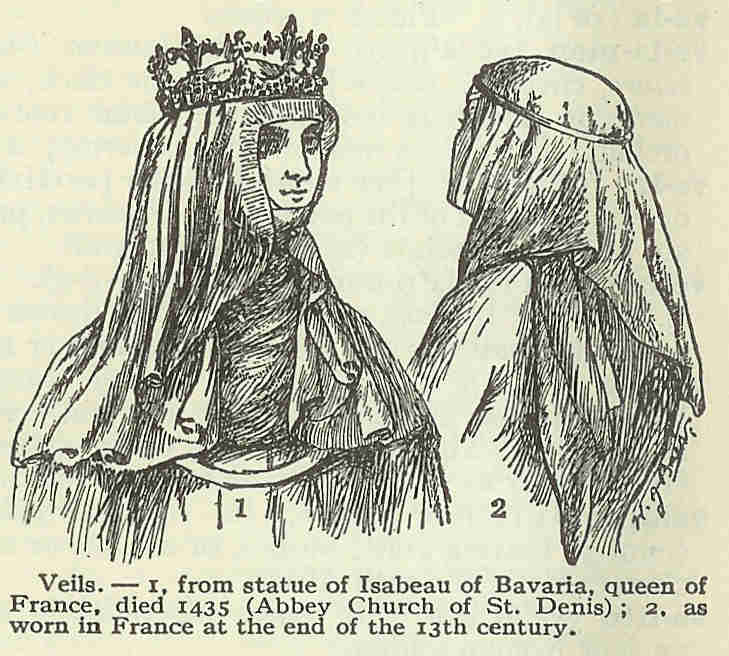
Ancient societies used veils to show social rank. In Mesopotamia and Persia, elite women wore them to prove they were respectable. Middle Assyrian laws required married women to cover their heads in public. Unmarried women and prostitutes were forbidden to do so. In Greece, respectable women concealed their faces from strangers. Roman brides wore a yellow flame-colored veil called flammeum. This color symbolized lifelong fidelity. The word for marriage in Latin relates to clouds, linking the veil to the idea of being covered.
Religious significance
Many faiths connect veiling with piety and propriety. Christian teachings often advise women to cover their heads during worship. Orthodox Jewish women cover their hair after marriage to show modesty. Muslim women may wear headscarves to express devotion. These practices vary by region and community. Some groups view the veil as a personal choice. Others see it as a strict religious requirement. The meaning changes depending on who wears it and where they live. It can signal spiritual commitment or cultural identity.
Regional customs
Different places have unique ways of using veils. In India and Pakistan, grooms wear a sehra made of flowers or beads. This covers their entire face during the ceremony. It is often worn while riding a horse into the venue. In Italy, women historically wore caps and scarves to show they were well-behaved. In Egypt, upper-class women once wore face coverings in cities. Rural women adopted these styles later when visiting towns. These local traditions reflect specific cultural values about gender and respect.
How Wedding veil is kept
The bride or groom puts on the veil before the main ceremony begins. In some traditions, the father or officiant lifts the veil during the vows. In others, the groom removes it after the exchange of rings. The sehra stays on the groom’s face throughout the day. Guests watch the couple as they appear covered. The veil remains until the reception or final blessing. It acts as a constant visual reminder of the marriage bond.
When and where
It falls during the ceremony or procession. The date depends on the local calendar. Families choose auspicious days for weddings. The veil is worn only on the wedding day. It is not kept for daily use afterward.
It is kept in India, Pakistan, Greece, Italy, and Egypt. These regions have strong historical ties to the practice. Urban areas often adopt newer styles faster. Rural communities may keep older traditions longer. The custom spreads through migration and trade.
What Wedding veil means
The veil represents modesty and protection. It shields the wearer from evil eyes or bad luck. It also shows that the person belongs to their partner. In ancient times, it proved high social status. Today, it often symbolizes love and commitment. The covering creates a private space for the couple during the public ritual.
Who takes part
- The bride: Wears the veil to show modesty and readiness for marriage
- The groom: Wears the sehra to conceal his face during the procession
- The father: Lifts the veil to reveal the bride's face to the groom
- The officiant: Blesses the couple while they stand under the veil
If you are a guest
Guests observe the veil as a sign of the couple's new status. They do not touch the cloth unless invited. Men and women dress modestly to match the tone. Some guests bring gifts related to the ceremony. They speak softly during the veiling moment.
Then and now
Modern couples sometimes skip the veil for comfort. Others adapt it with shorter lengths or modern fabrics. Legal changes in some countries affect traditional dress codes. Younger generations mix old customs with new styles. The practice remains popular but less rigid than in the past.
On the wedding table
Symbols: The veil The colour red Gold and jewellery The colour white


Questions people ask about Wedding veil
When is Wedding veil kept?
Wedding veil is kept during the wedding ceremony.
What does the wedding veil symbolize?
It symbolizes modesty, protection from evil, and the woman's new status as a wife. In ancient times, it also showed high social rank and respectability within the community.
Who wears the veil in different cultures?
Brides wear it in many Western and Asian traditions. Grooms wear the sehra in parts of India and Pakistan. Some African men wear veils as a mark of manhood. Religious rules dictate who must cover their heads.
Is the veil mandatory for all weddings?
No, it is not mandatory. Many couples choose not to wear one. Legal requirements for marriage do not include veils. The choice depends on personal preference, family tradition, or religious belief.
See also
 MantillaA lace or silk veil worn over the head and shoulders by women in Spain and Latin AmericaKasavuThe white cotton and gold border attire worn by Malayalis for weddings and festivals.
 Care clothA linen or silk cloth held over the heads of a bride and groom during a Christian wedding blessing.
 Wedding ringA metal circle worn on the finger to show that a person is married.
Good reading and sources
- Encyclopaedia BritannicaArticle
- Mourning glory: Two centuries of funeral dressBBC, Article
- The Islamic veil across EuropeBBC, Article
- Mourning glory: Two centuries of funeral dressBBC, Article
- The Islamic veil across EuropeBBC, Article
- Veil on WikipediaEncyclopedia
- More photos on Wikimedia CommonsPhotos and video
- Wikidata recordOpen data
The facts on this page come from the Wikipedia article "Veil", written by its contributors and used under the CC BY-SA 4.0 licence, and from its Wikidata record (CC0). EveryShaadi rewrote the text in its own words, with AI assistance, and compares every page with the article to make sure no passage is copied. It may be reused under the same CC BY-SA 4.0 licence with a link back.
It may contain mistakes. Wedding customs differ from one family, village and community to the next, and the people who keep them know them best. If something is wrong, tell us. Last refreshed 2026-10-05.
More from India
All the traditions of India
🇬🇷 Greece and 5 moreWedding ring
A metal circle worn on the finger to show that a person is married.Attire · Engagement and betrothal
 🇮🇳 Bhuj, India and 1 moreBandhani
A traditional Indian tie-dye method that creates intricate dot patterns by binding small sections of cloth before dyeingAttire · Engagement and betrothal
🇮🇳 IndiaMadisarமடிசார் (Madisar)
The nine-yard sari drape worn by Tamil Brahmin women during weddings and religious rites.Attire · The ceremony
🇮🇳 Bhuj, India and 1 moreBandhani
A traditional Indian tie-dye method that creates intricate dot patterns by binding small sections of cloth before dyeingAttire · Engagement and betrothal
🇮🇳 IndiaMadisarமடிசார் (Madisar)
The nine-yard sari drape worn by Tamil Brahmin women during weddings and religious rites.Attire · The ceremony
The same idea elsewhere
Veils, crowns and the covered head compared 🇮🇱 Jerusalem, Israel and 3 moreJewish wedding
The ceremony and laws that bind a couple in Jewish marriage, from the canopy to the glass.Rite · Engagement and betrothal
🇮🇱 Jerusalem, Israel and 3 moreJewish wedding
The ceremony and laws that bind a couple in Jewish marriage, from the canopy to the glass.Rite · Engagement and betrothal
 🇯🇵 Tokyo, JapanShinto wedding神前結婚 (Shinzen kekkon)
A Shinto purification ritual featuring sake sharing and kimono attire held at a shrine or venue.Rite · The ceremony
🇯🇵 Tokyo, JapanShinto wedding神前結婚 (Shinzen kekkon)
A Shinto purification ritual featuring sake sharing and kimono attire held at a shrine or venue.Rite · The ceremony
 🇮🇱 Israel and 3 moreChuppahחֻפָּה (ḥuppā)
The four-poster canopy that marks the Jewish wedding ceremony and symbolizes the couple's new home.Setting · The ceremony
🇮🇱 Israel and 3 moreChuppahחֻפָּה (ḥuppā)
The four-poster canopy that marks the Jewish wedding ceremony and symbolizes the couple's new home.Setting · The ceremony
 🇮🇷 Tehran, Iran and 1 moreIranian weddingمراسم عروسی در ایران
A multi-stage ceremony rooted in Zoroastrianism and Islam that binds families through courtship, feasts, and sacred vowsRite · Finding a match
🇮🇷 Tehran, Iran and 1 moreIranian weddingمراسم عروسی در ایران
A multi-stage ceremony rooted in Zoroastrianism and Islam that binds families through courtship, feasts, and sacred vowsRite · Finding a match