Ceremony and sacred ritesEast AsiaSecular and civilHindu
Marriage in Korea
In its own language: Korean marriage (결혼)
A look at how Korean weddings blend ancient Confucian rites with modern legal practices.

Marriage in Korea combines millennia-old traditions with global influences. The practice evolved from matrilocality in the Goguryeo period to strict patrilineal rules under the Joseon dynasty, and now includes both traditional ceremonies and civil registrations.
When is Marriage in Korea kept?
Marriage in Korea is kept on throughout history and today.
Korean marriage reflects a long history of shifting social norms. Early practices favored living with the bride's family, while later dynasties enforced strict patrilineal rules. Today, couples navigate a mix of ancient rituals and modern legal requirements.
Historical shifts
Early Korean society practiced matrilocality, where husbands joined their wives' households. This changed during the Joseon dynasty, which adopted Chinese-style laws to enforce patrilocality and clear lines of succession. The state restricted marriages between people of the same surname to maintain social order and prevent consanguineous unions. These changes solidified the husband's role as the head of the household.
Traditional customs
Traditional weddings followed elaborate Confucian steps. Families began with matchmaking, discussing status and material harmony. A formal proposal letter started the process, followed by setting an auspicious date based on the lunar calendar. Ceremonies included gift exchanges and banquets to display wealth. These events marked the union of two families rather than just two individuals, emphasizing social status and continuity.
Modern regulations
South Korea currently restricts marriage to opposite-sex couples. The legal age is twenty in Korean age, or nineteen internationally, though parental consent allows marriage at eighteen. The country recognizes de facto marriages for couples who cohabit or hold public ceremonies without registration. North Korea sets the marriage age at seventeen for girls and eighteen for boys, with high marriage rates and low divorce rates reported in recent decades.
How Marriage in Korea is kept
Families initiate the process through matchmaking, exchanging letters to agree on the union. They select a date using traditional calendars. The ceremony involves formal greetings and gift exchanges between the families. Modern couples may also choose secular civic weddings or religious chapel services, blending old respect for elders with contemporary personal choices.
When and where
Matchmaking occurs before the wedding. Dates are often set according to the lunar calendar. The practice spans all eras, from ancient times to the present day.
The custom is central to Korean culture in both South and North Korea. It originated in the Korean peninsula and has been influenced by neighboring China and Japan throughout history.
What Marriage in Korea means
Marriage symbolizes the union of two families and the maintenance of social status. Traditional rituals emphasize respect for ancestors and elders. The exchange of gifts and formal letters represent the binding agreement between kin groups, ensuring stability and continuity across generations.
Who takes part
- The families: Arrange the match and exchange formal letters
- The couple: Agree to the union and participate in the ceremony
- Fortune tellers: Predict material harmony and select auspicious dates
Then and now
Modern practices blend ancient traditions with global influences. Civil and religious weddings have become common alternatives to strict traditional rites. Legal reforms continue to shape eligibility and recognition, reflecting changing social values.


Questions people ask about Marriage in Korea
When is Marriage in Korea kept?
Marriage in Korea is kept on throughout history and today.
What is the legal marriage age in South Korea?
The legal age is twenty in Korean age, which equals nineteen internationally. Individuals aged eighteen can marry with parental or guardian consent.
How were marriages arranged in the past?
Families initiated matchmaking by discussing status and compatibility. They exchanged formal letters to propose and accept the union, then selected a date based on the lunar calendar.
Is same-sex marriage recognized in South Korea?
No, South Korea currently restricts marriage to unions between individuals of the opposite sex. Same-sex marriages remain unrecognized by law.
See also
 MayianThe turmeric paste ceremony held the day before Punjabi weddings in India and Pakistan.
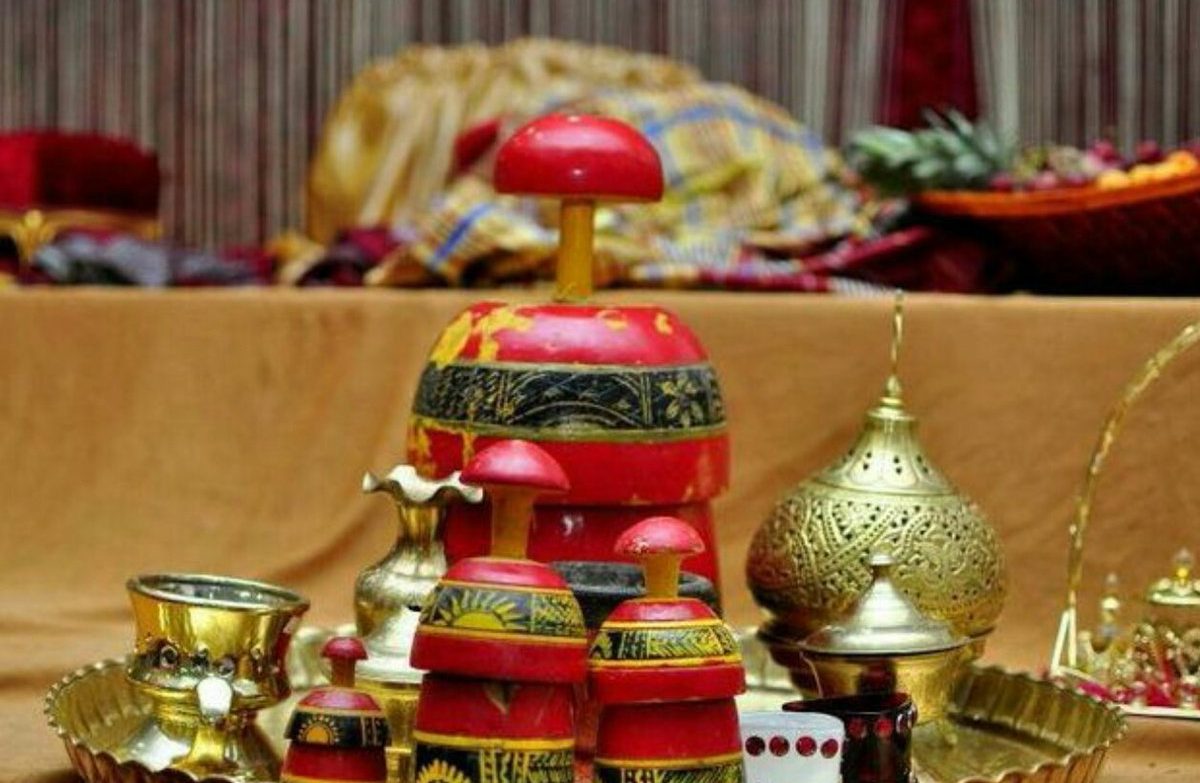 JirtigA Sudanese inauguration ritual where the groom is symbolically crowned as a king.
 IhiThe Newar rite in which a girl is married to Vishnu, shown by a golden figure
Good reading and sources
- Multicultural families help make Korea more open societyThe Korea Times, Article
- Multicultural families help make Korea more open societyThe Korea Times, Article
- Marriage in Korea on WikipediaEncyclopedia
- More photos on Wikimedia CommonsPhotos and video
- Wikidata recordOpen data
The facts on this page come from the Wikipedia article "Marriage in Korea", written by its contributors and used under the CC BY-SA 4.0 licence, and from its Wikidata record (CC0). EveryShaadi rewrote the text in its own words, with AI assistance, and compares every page with the article to make sure no passage is copied. It may be reused under the same CC BY-SA 4.0 licence with a link back.
It may contain mistakes. Wedding customs differ from one family, village and community to the next, and the people who keep them know them best. If something is wrong, tell us. Last refreshed 2026-10-05.
More from South Korea
All the traditions of South Korea 🇰🇷 South Korea and 5 moreBlessing ceremony of the Unification ChurchHoly Marriage Blessing Ceremony (축복결혼식)
A large-scale marriage rededication or new union ceremony that engrafts couples into a sinless lineage.Rite · Engagement and betrothal
🇰🇷 South Korea and 5 moreBlessing ceremony of the Unification ChurchHoly Marriage Blessing Ceremony (축복결혼식)
A large-scale marriage rededication or new union ceremony that engrafts couples into a sinless lineage.Rite · Engagement and betrothal
 🇰🇷 Seoul, South Korea and 3 moreBlessing ceremony
The large-scale marriage rite of the Unification Church where couples are matched and blessed by their leaders.Rite · The ceremony
🇨🇳 China and 5 moreBride buying
The exchange of money or goods for a woman to become a wife.Gift custom · Engagement and betrothal
🇰🇷 Seoul, South Korea and 3 moreBlessing ceremony
The large-scale marriage rite of the Unification Church where couples are matched and blessed by their leaders.Rite · The ceremony
🇨🇳 China and 5 moreBride buying
The exchange of money or goods for a woman to become a wife.Gift custom · Engagement and betrothal
 🇰🇷 South KoreaHwarot활옷
The embroidered Korean gown worn by brides during the pyebaek ceremony.Attire · Reception, dance and gifts
🇰🇷 South KoreaHwarot활옷
The embroidered Korean gown worn by brides during the pyebaek ceremony.Attire · Reception, dance and gifts
The same idea elsewhere
Arranged marriage, matchmaking and choosing a partner compared 🇮🇳 IndiaChaklong wedding
The traditional Ahom marriage system involving rice powder mandalas and ancestral rituals.Rite · Finding a match
🇮🇳 IndiaZoroastrian wedding
A Zoroastrian marriage ceremony featuring hand-fastening, rice sprinkling, and shared meals.Rite · Engagement and betrothal
🇮🇳 IndiaChaklong wedding
The traditional Ahom marriage system involving rice powder mandalas and ancestral rituals.Rite · Finding a match
🇮🇳 IndiaZoroastrian wedding
A Zoroastrian marriage ceremony featuring hand-fastening, rice sprinkling, and shared meals.Rite · Engagement and betrothal
 🇳🇬 Nigeria and 1 moreHausa traditional marriage
The Islamic marriage rites of the Hausa people in Northern Nigeria and Niger.Rite · Finding a match
🇳🇬 Nigeria and 1 moreHausa traditional marriage
The Islamic marriage rites of the Hausa people in Northern Nigeria and Niger.Rite · Finding a match
 🇮🇳 IndiaMeitei weddingLuhongba (ꯂꯨꯍꯣꯡꯕ)
The traditional union of the Meitei people, marked by clan exogamy and specific courtship rituals.Rite · Finding a match
🇮🇳 IndiaMeitei weddingLuhongba (ꯂꯨꯍꯣꯡꯕ)
The traditional union of the Meitei people, marked by clan exogamy and specific courtship rituals.Rite · Finding a match