Ceremony and sacred ritesMiddle EastMuslim
Nikah
In its own language: نِكَاح (nikāḥ)
The Islamic marriage contract that binds a couple through mutual consent and a mandatory gift.

Nikah is the formal marriage contract in Islam, centered on the bride's acceptance of a dower from the groom. It requires witnesses and free consent to be valid. The ceremony marks the legal and religious start of the union within Muslim communities worldwide.
When is Nikah kept?
Nikah is kept at the time of the marriage contract signing.
Nikah serves as the foundational marriage contract in Islamic law. It transforms a relationship into a sacred bond through specific legal and spiritual steps. The process emphasizes mutual agreement, financial responsibility, and community witness. This rite establishes the rights and duties of both partners within the faith.
The marriage contract
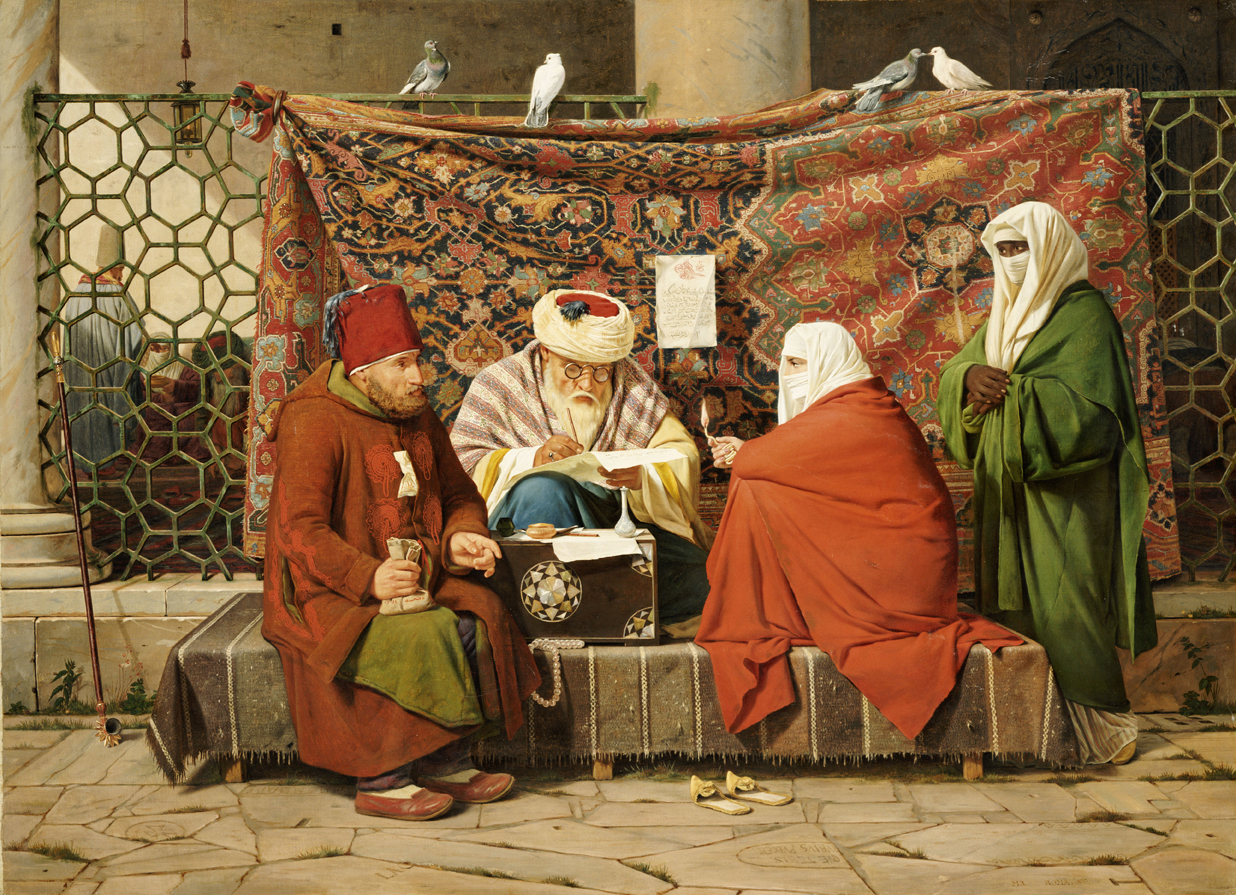
The core of the nikah is a binding agreement between the bride and groom. This contract outlines their rights and obligations toward one another. It can be spoken orally or written down on paper. The essential moment involves the groom offering a dower, known as mahr, and the bride explicitly accepting it. Witnesses must be present to validate this exchange. Without this mutual consent and the presence of observers, the union is not considered legally or religiously valid in Islamic jurisprudence.
Historical context
Before the seventh century, Arabian marriage practices varied widely. Some forms included capture or inheritance of wives. Islamic reforms introduced strict regulations to protect women's rights. The practice of inheriting wives was banned. Men were limited to four wives at once, provided they could support them equally. The dower shifted from a payment to the father to a personal gift for the bride. Marriage became a contract of partnership rather than a status of ownership.
Financial obligations
A mandatory gift called mahr is required in every Islamic marriage contract. This wealth is given by the groom directly to the bride. She retains exclusive control over these funds. The amount is agreed upon before the ceremony begins. If the contract does not specify a sum, a judicial authority determines a fair value. This financial provision secures the wife's economic standing, particularly in the event of divorce. It distinguishes the union from simple cohabitation.
Consent and guardianship
Both parties must freely consent to the marriage. Requirements for the bride's consent vary among different schools of jurisprudence. Some traditions allow a guardian to arrange marriages for virgin daughters if it benefits them. Others insist on explicit verbal agreement regardless of marital history. A male guardian, or wali, often represents the bride in negotiations. His role ensures her interests are protected during the contracting phase.
How Nikah is kept
The couple meets with a religious officiant and witnesses. The groom proposes the mahr, and the bride accepts the terms. They sign or verbally confirm the contract. A wedding feast, or walimah, follows the signing. The bride may then be sent off to her new home. Family members participate in negotiations beforehand. The process focuses on legal clarity and spiritual commitment.
When and where
It occurs during the main ceremony phase of the wedding. Dates are chosen based on family preference and religious availability. There is no fixed calendar month for the ritual itself.
It is practiced globally by Muslim communities. Major centers include Iran, the United States, Australia, Canada, Mali, and the United Kingdom. It takes place in homes, mosques, or licensed venues.
What Nikah means
Nikah symbolizes a covenant of tranquility and mutual respect. It creates a stable family unit recognized by God and society. The contract safeguards individual rights while promoting communal harmony. It reflects a shift from tribal customs to structured ethical partnerships.
Who takes part
- The groom: Offers the mahr and proposes the marriage contract
- The bride: Accepts the offer and consents to the union
- The wali: Represents the bride's interests during negotiations
- Witnesses: Observe and validate the signing of the contract
If you are a guest
Guests attend the walimah feast after the contract is signed. They celebrate the new union and offer blessings. Attire is modest and respectful of religious norms. Guests do not typically bring gifts unless specified by local custom.
Then and now
Modern interpretations continue to debate polygyny and divorce ease. Traditionalists defend established rules, while modernists seek reforms. Civil registration is increasingly common alongside religious contracts. Temporary marriage forms remain specific to certain Shia branches.
On the wedding table
- Walimah feast dishes: Served to guests following the contract signing to celebrate the union
Symbols: The ring Money and envelopes Bread

Questions people ask about Nikah
When is Nikah kept?
Nikah is kept at the time of the marriage contract signing.
What is the most important part of a nikah?
The most critical element is the mutual consent of the bride and groom. The groom must offer a mahr, and the bride must accept it. Witnesses must observe this exchange to make the contract valid.
Is a dowry required in Islam?
Yes, a mahr is mandatory. It is a gift from the groom to the bride, not her family. She controls these funds entirely. The amount is negotiated before the ceremony.
Can a woman force her daughter to marry?
Views differ. Some schools allow guardians to arrange marriages for virgins if beneficial. Others require the bride's explicit free consent. Modern laws in many countries restrict forced arrangements.
See also
 Slave marriages in the United StatesUnions of enslaved African Americans, often not legally binding, held by ritual and kin
 Blessing ceremonyMass weddings in which matched couples are blessed into God's lineage
 Blessing ceremonyThe large-scale marriage rite of the Unification Church where couples are matched and blessed by their leaders.
 Jewish weddingThe ceremony and laws that bind a couple in Jewish marriage, from the canopy to the glass.
Good reading and sources
- 'Are you concerned by sharia law?': Trump canvasses supporters for 2020 | Donald TrumpThe Guardian, Article
- I do... for now. UK Muslims revive temporary marriagesBBC, Article
- 'Are you concerned by sharia law?': Trump canvasses supporters for 2020 | Donald TrumpThe Guardian, Article
- I do... for now. UK Muslims revive temporary marriagesBBC, Article
- Marriage in Islam on WikipediaEncyclopedia
- More photos on Wikimedia CommonsPhotos and video
- Wikidata recordOpen data
The facts on this page come from the Wikipedia article "Marriage in Islam", written by its contributors and used under the CC BY-SA 4.0 licence, and from its Wikidata record (CC0). EveryShaadi rewrote the text in its own words, with AI assistance, and compares every page with the article to make sure no passage is copied. It may be reused under the same CC BY-SA 4.0 licence with a link back.
It may contain mistakes. Wedding customs differ from one family, village and community to the next, and the people who keep them know them best. If something is wrong, tell us. Last refreshed 2026-10-22.
More from Iran
All the traditions of Iran 🇸🇾 Syria and 3 moreAssyrian wedding
Marriage ceremonies blending ancient Assyrian rites with modern cultural practices among the Assyrian people.Rite · Finding a match
 🇮🇷 Iran and 1 moreIranian weddingمراسم عروسی در ایران
A multi-stage celebration rooted in Zoroastrian tradition and adapted by Islamic customs across Iran.Rite · Finding a match
🇮🇷 Shiraz, Iran and 5 moreUlulation
A high-pitched trilling sound used to celebrate weddings and share joy across many cultures.Performance · Procession and arrival
🇮🇳 India and 3 moreNikah halalaنکاح حلالہ
A controversial practice where a divorced woman marries another man to become eligible to remarry her first husband.Vow · After the wedding
The same idea elsewhere
Bride price, dowry and gifts between families compared 🇰🇪 Kenya and 1 moreAyie
The Luo bride price ceremony where the mother accepts payment and agrees to the marriage.Gift custom · Engagement and betrothal
🇰🇷 Seoul, South Korea and 2 moreBlessing ceremony축복결혼식
Mass weddings in which matched couples are blessed into God's lineageRite · Finding a match
 🇰🇷 Seoul, South Korea and 1 moreMarriage in KoreaKorean marriage (결혼)
A look at how Korean weddings blend ancient Confucian rites with modern legal practices.Rite · Finding a match
🇪🇹 Addis Ababa, EthiopiaWedding customs in Ethiopia
A collection of diverse marriage rites across Ethiopian tribes and the Orthodox Christian community.Rite · Finding a match