Music, dance and processionMiddle East
Ardah
In its own language: العرضة
The men's group dance with swords and drums that marks weddings in the Arabian Peninsula

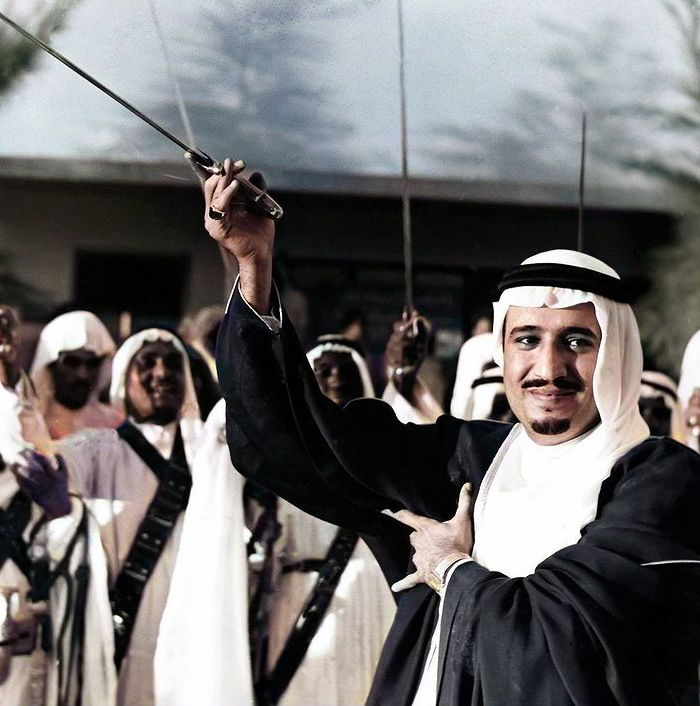
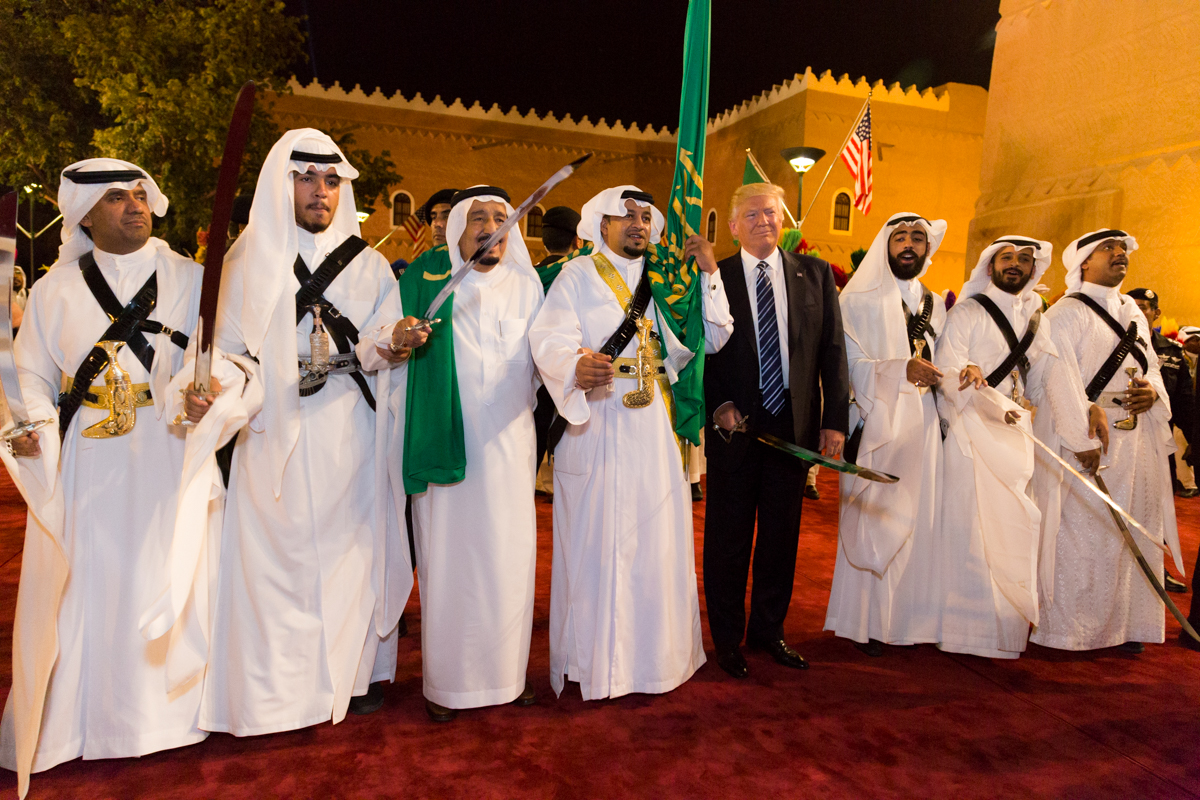
Ardah is a folkloric group dance performed across the Arabian Peninsula. It features two rows of men facing each other while holding swords or canes, accompanied by drums and spoken poetry. The tradition appears at weddings and national celebrations.
When is Ardah kept?
Ardah is kept at weddings and cultural events.
Ardah serves as a central performance at many Arabian Peninsula weddings. Men stand in parallel lines to perform a rhythmic dance. They hold swords or canes while drums beat and poetry is recited. This practice connects modern celebrations to ancient tribal traditions of unity and strength.
What the dance involves
The performance centers on two lines of men standing opposite one another. Each participant holds a sword or a cane. The group moves together to the rhythm of drums. A poet or singer recites verses aloud during the routine. The dancers may sway or step in time with the music. This structure creates a powerful visual display of coordination. The presence of weapons highlights historical roots in tribal defense. Today the focus shifts entirely to celebration and community bonding.
Origins and history
The word ardah likely comes from an Arabic verb meaning to show or parade. Historically, tribes used this dance before going to war. It served to display fighting strength and boost morale among warriors. Only male members of specific tribes performed it originally. Over time the practice moved away from battlefields. It now appears at weddings and national festivals. UNESCO recognized the Najdi variant as intangible heritage in twenty fifteen. The Saudi government also promoted it under the name Saudi ardah.
Regional variations
Different areas within the Arabian Peninsula maintain distinct styles. The Najdi version remains the most common in Saudi Arabia. It receives significant television coverage and public support. Other regions like Najran, Asir and Jizan have their own unique forms. Despite these differences the core purpose stays similar. All versions emphasize male participation and rhythmic movement. The use of swords or canes persists across most types. Poetry remains a constant element throughout the regional variations.
How Ardah is kept
Men form two opposing rows for the ceremony. They hold swords or canes while moving to drum beats. A poet recites verses that match the rhythm. Participants sway or step in unison. The performance happens at wedding receptions or cultural gatherings. No women typically join the dancing lines. The event requires coordination and shared cultural knowledge. Drums provide the steady tempo for the entire group.
When and where
This custom occurs during wedding receptions or related celebrations. It often follows the main religious or legal marriage rites. The timing allows guests to witness the communal performance. Dates depend on local wedding schedules rather than fixed calendar days. It serves as entertainment and cultural affirmation after vows are exchanged.
The practice originates in the Arabian Peninsula. Saudi Arabia hosts the most prominent versions today. Urban centers and rural tribal areas both maintain the tradition. National events also feature large scale performances. The dance travels with communities across Gulf Cooperation Council countries.
What Ardah means
The dance symbolizes tribal unity and collective strength. Holding weapons represents historical readiness and protection. The synchronized movement reflects social cohesion and discipline. Poetry preserves oral history and values. Performing at weddings honors family lineage and community bonds. The public nature of the display reinforces social identity. It transforms martial heritage into celebratory art.
Who takes part
- Male dancers: Stand in rows holding swords or canes and move to the beat
- Drummers: Provide the rhythmic foundation for the dance movements
- Poet or singer: Recite verses aloud that accompany the physical performance
If you are a guest
Guests watch the performance from the sidelines. They may clap along to the drum rhythm. Some attendees listen closely to the poetic verses. Children often observe the sword handling with interest. Visitors should respect the solemnity of the cultural display. Applause is appropriate after the sequence concludes.
Then and now
The tradition has shifted from military preparation to civilian celebration. Television broadcasts have increased its visibility nationwide. Government support ensures its preservation in modern contexts. Younger generations learn the steps through cultural programs. Regional variations persist despite standardization efforts. The dance remains a vital part of Saudi identity.
On the wedding table
Symbols: Swords and daggers

Questions people ask about Ardah
When is Ardah kept?
Ardah is kept at weddings and cultural events.
What is Ardah?
Ardah is a folkloric group dance from the Arabian Peninsula. Men stand in two rows holding swords or canes. They move to drum rhythms while poetry is recited. It appears at weddings and national events.
Who performs the Ardah?
Only men participate in the traditional lines. Different tribes and regions have specific styles. The Najdi version is most common in Saudi Arabia. Performers must know the rhythmic steps and poetry.
See also
 KartuliA romantic Georgian wedding dance where the couple dances apart without touching.
 DabkeA Levantine line dance performed at weddings to celebrate union and community.
 RomvongA circular folk dance across Southeast Asia where couples hold hands and step in time with drums.
Good reading and sources
- Alardah Alnajdiyah, dance, drumming and poetry in Saudi ArabiaUNESCO, Heritage listing
- Alardah Alnajdiyah, dance, drumming and poetry in Saudi ArabiaUNESCO, Article
- Ardah on WikipediaEncyclopedia
- More photos on Wikimedia CommonsPhotos and video
- Wikidata recordOpen data
The facts on this page come from the Wikipedia article "Ardah", written by its contributors and used under the CC BY-SA 4.0 licence, and from its Wikidata record (CC0). EveryShaadi rewrote the text in its own words, with AI assistance, and compares every page with the article to make sure no passage is copied. It may be reused under the same CC BY-SA 4.0 licence with a link back.
It may contain mistakes. Wedding customs differ from one family, village and community to the next, and the people who keep them know them best. If something is wrong, tell us. Last refreshed 2026-10-05.
More from Saudi Arabia
All the traditions of Saudi Arabia 🇪🇬 Egypt and 2 moreHenna ceremonyليلة الحناء (Laylat al-Henna)
The pre-wedding gathering where the bride and guests receive intricate henna body art for luck and protection.Adornment · The weeks before
🇪🇬 Egypt and 2 moreHenna ceremonyليلة الحناء (Laylat al-Henna)
The pre-wedding gathering where the bride and guests receive intricate henna body art for luck and protection.Adornment · The weeks before
 🇸🇦 Mecca, Saudi ArabiaSa'yeeالسعي
The seven trips between two hills in Mecca that complete the Hajj and Umrah pilgrimages.Rite · The ceremony
🇵🇰 Pakistan and 4 moreWatta sattaوٹّا سٹّا / شغار
A reciprocal marriage arrangement where two families swap brides to bind households and manage domestic tensions.Betrothal · Finding a match
🇸🇦 Mecca, Saudi ArabiaSa'yeeالسعي
The seven trips between two hills in Mecca that complete the Hajj and Umrah pilgrimages.Rite · The ceremony
🇵🇰 Pakistan and 4 moreWatta sattaوٹّا سٹّا / شغار
A reciprocal marriage arrangement where two families swap brides to bind households and manage domestic tensions.Betrothal · Finding a match
The same idea elsewhere
Wedding music and the dance floor compared 🇳🇪 In-Gall, Niger and 2 moreGuérewol
A week-long courtship dance where Wodaabe men display their beauty to win the attention of marriageable women.Rite · The weeks before
🇳🇪 In-Gall, Niger and 2 moreGuérewol
A week-long courtship dance where Wodaabe men display their beauty to win the attention of marriageable women.Rite · The weeks before
 🇪🇸 Seville, SpainSevillanas
A traditional Andalusian folk dance performed by couples at weddings and local festivals in Spain.Performance · Reception, dance and gifts
🇪🇸 Seville, SpainSevillanas
A traditional Andalusian folk dance performed by couples at weddings and local festivals in Spain.Performance · Reception, dance and gifts
 🇪🇬 Egypt and 5 moreMizmarمزمار (mizmār)
A loud double reed instrument played at weddings and festivals across Egypt and the Levant.Performance · Procession and arrival
🇪🇬 Egypt and 5 moreMizmarمزمار (mizmār)
A loud double reed instrument played at weddings and festivals across Egypt and the Levant.Performance · Procession and arrival
 🇮🇳 Chandigarh, IndiaBhangra
A vigorous Punjabi folk dance performed to the beat of a dhol drum during harvest celebrations.Performance · Reception, dance and gifts
🇮🇳 Chandigarh, IndiaBhangra
A vigorous Punjabi folk dance performed to the beat of a dhol drum during harvest celebrations.Performance · Reception, dance and gifts