Ceremony and sacred ritesSub-Saharan Africa
Guérewol
A week-long courtship dance where Wodaabe men display their beauty to win the attention of marriageable women.

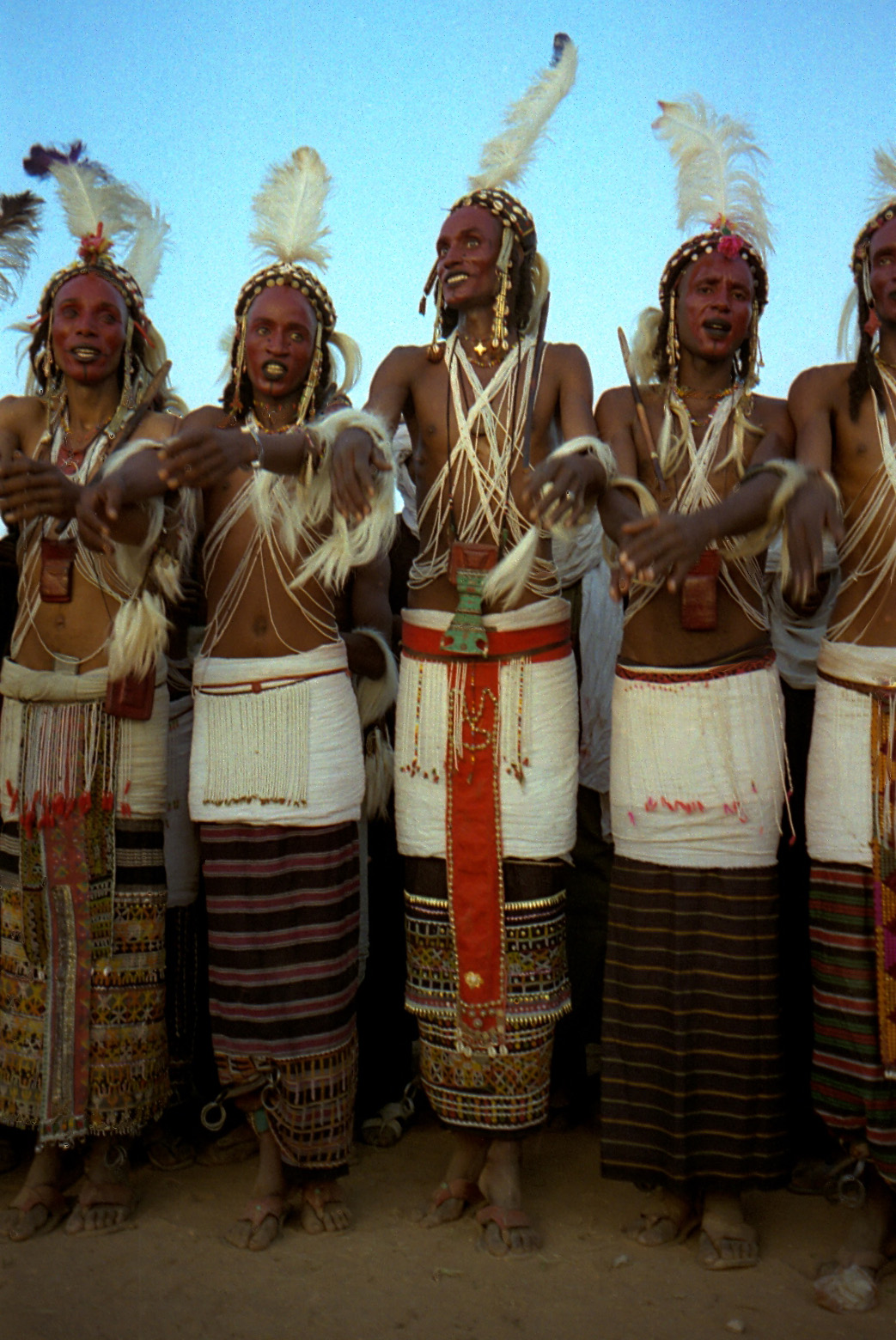
The Guérewol is an annual courtship ritual of the Wodaabe Fula people in Niger. Young men wear elaborate makeup and ornaments to dance for hours, competing for the approval of young women who judge their attractiveness and stamina.
When is Guérewol kept?
Guérewol is kept at the end of the rainy season in September.
The Guérewol serves as a vital social gathering for the nomadic Wodaabe community. It marks the time when herders reunite after the dry season to find partners. Men perform intricate dances to demonstrate their physical fitness and aesthetic appeal. Women observe these displays to select potential husbands based on traditional standards of beauty.
Origins and timing
This ritual takes place annually at the close of the rainy season. The Wodaabe cattle herders converge at the southern Sahara edge before moving to dry pastures. In-Niger, the most prominent site is In-Gall. This location hosts a larger festival known as the Cure Salée, which brings together various nomadic groups including the Tuareg. The event allows clans to meet, trade salt, and arrange marriages. The timing aligns with the natural cycle of migration and resource availability.
The dance performance
The core activity involves a line dance called Yaake. Men stand in rows facing the women they wish to impress. They link arms and sway rhythmically while singing. The choreography requires significant endurance as performances can last for hours under the desert sun. Participants often consume a fermented bark drink to maintain their energy levels. The movements are hypnotic and percussive, reflecting broader Fula musical traditions that have faded in urban areas.
Standards of beauty
Judges evaluate suitors based on specific physical traits valued by the Wodaabe. These include tall stature, bright white eyes, and clean white teeth. Men emphasize these features through deliberate facial expressions. They may roll their eyes back or bare their teeth to highlight the contrast against their painted faces. Elaborate adornments such as feathers and jewelry complete the presentation. The goal is to showcase personal hygiene and genetic fitness to prospective brides.
Modern observations
International media coverage has transformed this local custom into a tourist attraction. Documentaries and magazines have featured the stylized performances globally. This exposure has drawn outside visitors to the region. While the ritual remains central to Wodaabe social structure, it now exists alongside commercial tourism. The community continues to practice these traditions as a means of preserving cultural identity and facilitating inter-clan connections.
How Guérewol is kept
Young men apply traditional face paint and wear ornamental clothing. They form lines and perform the Yaake dance for hours. Women sit and watch, judging the dancers' appearance and stamina. The men sing and clap while swaying on their toes. Some participants drink a bark concoction to stay alert. The competition lasts for several days during the annual gathering.
When and where
It occurs in September after the rains. The date depends on the seasonal migration cycle. The event spans a full week. It coincides with other nomadic festivals like the Cure Salée.
It is strongest in Niger, particularly around In-Gall. Wodaabe communities also hold similar gatherings in northern Cameroon and Nigeria. The rituals follow the herders' transhumance routes across the Sahel.
What Guérewol means
The dance represents a search for compatible partners. Physical attributes signal health and vitality. The public nature of the selection process reinforces community bonds. It allows families to negotiate dowries and alliances. The ritual ensures the continuation of cultural values regarding aesthetics and social responsibility.
Who takes part
- Young men: Dance, sing, and display makeup to attract brides
- Marriageable women: Observe the dancers and select their preferred suitors
- Clan elders: Oversee the negotiations and ensure proper conduct
If you are a guest
Visitors may watch the performances from a distance. They should respect the privacy of the participants. Photography is sometimes permitted but requires permission. Guests are encouraged to learn about the cultural significance before attending.
Then and now
Tourism has increased interest in the ritual. Some elements have been adapted for external audiences. The community balances tradition with economic opportunities. Concerns exist about the commodification of sacred practices. Efforts continue to preserve the authentic context of the ceremony.
On the wedding table
- Fermented bark drink: Consumed by dancers to maintain energy and focus during long performances
Symbols: The colour white Gold and jewellery
Questions people ask about Guérewol
When is Guérewol kept?
Guérewol is kept at the end of the rainy season in September.
What is the Guérewol?
It is a courtship ritual where Wodaabe men dance to impress women. The event happens annually during the post-rainy season gathering. It serves as a primary method for finding marriage partners within the community.
Who judges the dance competition?
Marriageable young women act as the judges. They evaluate the men based on physical traits like eye whiteness and teeth. Their choice determines the success of the suitor.
Where is the main event held?
The most famous location is In-Gall in Niger. Other gatherings occur along the Wodaabe migration route. These include areas in northern Cameroon and Nigeria.
See also
 Weddings in MaliMulti-day Malian wedding traditions blending Islamic rites, civil law, and local customs with bazin attire.
 Marriage in KoreaA look at how Korean weddings blend ancient Confucian rites with modern legal practices.
 BetasharThe lifting of the bride's veil by the groom's mother during a Kazakh wedding ceremony
Good reading and sources
- Guérewol on WikipediaEncyclopedia
- More photos on Wikimedia CommonsPhotos and video
- Wikidata recordOpen data
The facts on this page come from the Wikipedia article "Guérewol", written by its contributors and used under the CC BY-SA 4.0 licence, and from its Wikidata record (CC0). EveryShaadi rewrote the text in its own words, with AI assistance, and compares every page with the article to make sure no passage is copied. It may be reused under the same CC BY-SA 4.0 licence with a link back.
It may contain mistakes. Wedding customs differ from one family, village and community to the next, and the people who keep them know them best. If something is wrong, tell us. Last refreshed 2026-10-05.
More from Niger
All the traditions of Niger 🇳🇬 Nigeria and 1 moreHausa traditional marriage
The Islamic marriage rites of the Hausa people in Northern Nigeria and Niger.Rite · Finding a match
🇳🇬 Nigeria and 1 moreHausa traditional marriage
The Islamic marriage rites of the Hausa people in Northern Nigeria and Niger.Rite · Finding a match
 🇪🇬 Egypt and 4 moreWaist beads
Strands of glass or seed worn around the hips to mark womanhood and track body changes in West and North Africa.Adornment · Engagement and betrothal
🇪🇬 Egypt and 4 moreWaist beads
Strands of glass or seed worn around the hips to mark womanhood and track body changes in West and North Africa.Adornment · Engagement and betrothal
 🇳🇬 Lagos, Nigeria and 3 moreAso ebiAsọ-Ẹbí
Matching outfits worn by groups to show solidarity at Yoruba weddings and other ceremoniesAttire · The weeks before
🇲🇷 Mauritania and 5 moreLeblouhالبلوح
The forced fattening of girls to improve their marriage prospects, a harmful practiceBetrothal · Finding a match
🇳🇬 Lagos, Nigeria and 3 moreAso ebiAsọ-Ẹbí
Matching outfits worn by groups to show solidarity at Yoruba weddings and other ceremoniesAttire · The weeks before
🇲🇷 Mauritania and 5 moreLeblouhالبلوح
The forced fattening of girls to improve their marriage prospects, a harmful practiceBetrothal · Finding a match
The same idea elsewhere
Wedding music and the dance floor compared 🇮🇳 IndiaOdia Hindu weddingBahaghara (ଓଡ଼ିଆ ବାହାଘର)
The traditional Hindu marriage ceremony of the Odia people in Odisha, India.Rite · Engagement and betrothal
🇮🇳 IndiaOdia Hindu weddingBahaghara (ଓଡ଼ିଆ ବାହାଘର)
The traditional Hindu marriage ceremony of the Odia people in Odisha, India.Rite · Engagement and betrothal
 🇨🇱 Santiago, Chile and 3 moreCueca
A courtship dance from Chile and the Andes where couples trace circles with handkerchiefs to reenact a rooster and hen.Performance · The eve
🇮🇷 Shiraz, Iran and 5 moreUlulation
A high-pitched trilling sound made by women to celebrate weddings and share good news across many cultures.Performance · Procession and arrival
🇨🇱 Santiago, Chile and 3 moreCueca
A courtship dance from Chile and the Andes where couples trace circles with handkerchiefs to reenact a rooster and hen.Performance · The eve
🇮🇷 Shiraz, Iran and 5 moreUlulation
A high-pitched trilling sound made by women to celebrate weddings and share good news across many cultures.Performance · Procession and arrival
 🇮🇩 Indonesia and 2 moreKenduri
A communal feast and prayer gathering held by Javanese and Malay communities to mark life events.Feast custom · The weeks before
🇮🇩 Indonesia and 2 moreKenduri
A communal feast and prayer gathering held by Javanese and Malay communities to mark life events.Feast custom · The weeks before