Pièce montée
A sculptural French dessert centerpiece made of nougat, sugar, and pastry for wedding banquets.
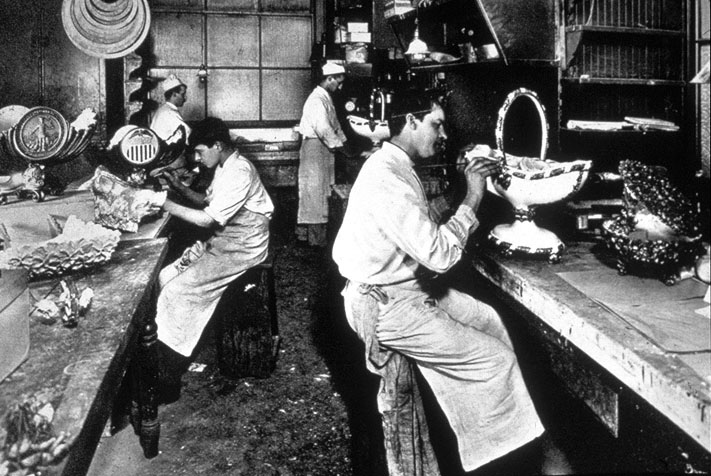
A pièce montée is a decorative confectionery centerpiece shaped like architecture or sculpture. Originating in France, it appears at formal banquets and wedding celebrations, serving as a grand display rather than just food.
When is Pièce montée kept?
Pièce montée is kept at formal banquets and wedding celebrations.
A pièce montée is a sculptural dessert centerpiece used in French banquets. Chefs build these structures from spun sugar, nougat, and marzipan to resemble buildings or statues. While the ingredients are edible, the display is meant to impress guests more than to be eaten immediately.
Structure and ingredients
These desserts take the shape of towers or statues. Builders use hardened sugar threads and thick pastes to hold the form. Nougat and marzipan provide the solid blocks. The result looks like a miniature city or garden. The goal is visual impact rather than immediate taste.
The chef's art
French cooks developed this style during the classical era. Marie-Antoine Carême studied architecture before entering the kitchen. He believed pastry work matched the dignity of building designs. His ideas set the standard for high-end banquet presentations.
Edible variations
Not all versions stay on display forever. Some chefs make a croquembouche instead. This uses fried dough balls glued with caramel. Guests can eat this version. It remains popular at French family celebrations.
How Pièce montée is kept
Chefs construct tall displays using sweet materials. They mold marzipan and nougat into shapes. Spun sugar adds fine details. The assembly sits on a table for guests to see. Some parts may be eaten later if the design allows.
When and where
This item appears at formal meals and wedding receptions. In France, it marks special events like baptisms. The timing depends on the schedule of the celebration.
The practice began in France. Historical images show kitchens preparing these works. The style spread to places like New York restaurants by the early twentieth century.
What Pièce montée means
The structure honors the skill of the maker. It treats cooking as a serious craft. The height and complexity show respect for the occasion. It transforms food into a lasting image.
If you are a guest
Visitors admire the craftsmanship on the table. They wait while the meal progresses. If the piece is a croquembouche, they may share it. Otherwise, they enjoy the view without touching the sculpture.
On the wedding table
- Nougat: Used to build the structural elements of the sculpture
- Marzipan: Molded into shapes to add detail to the design
- Spun sugar: Creates delicate branches and decorations around the base
- Choux pastry: Forms profiteroles in the croquembouche variation
- Caramel: Glues the pastry pieces together in the edible version
Questions people ask about Pièce montée
When is Pièce montée kept?
Pièce montée is kept at formal banquets and wedding celebrations.
What is a pièce montée?
It is a decorative confectionery centerpiece shaped like architecture or sculpture, made from ingredients like nougat, marzipan, and spun sugar.
Is it eaten?
The main structure is often not meant to be consumed because it serves a decorative purpose. However, some versions like the croquembouche are designed to be eaten.
Where does it come from?
The tradition originates in France and is associated with classical French chefs who viewed pastry as a form of architecture.
See also
 DabkeA Levantine line dance performed at weddings to celebrate union and community.Posthumous marriage in FranceA legal union with a deceased partner, authorized by the French President for serious reasons.Marriage à la façon du paysThe common-law unions between European fur traders and Indigenous women that shaped North American history.
 Iranian weddingA multi-stage ceremony rooted in Zoroastrianism and Islam that binds families through courtship, feasts, and sacred vows
Good reading and sources
The facts on this page come from the Wikipedia article "Pièce montée", written by its contributors and used under the CC BY-SA 4.0 licence, and from its Wikidata record (CC0). EveryShaadi rewrote the text in its own words, with AI assistance, and compares every page with the article to make sure no passage is copied. It may be reused under the same CC BY-SA 4.0 licence with a link back.
It may contain mistakes. Wedding customs differ from one family, village and community to the next, and the people who keep them know them best. If something is wrong, tell us. Last refreshed 2026-10-05.
More from France
All the traditions of France 🇫🇷 France and 2 moreBonbonniere
A small decorative container holding sweets given as a wedding favor in several countries.Feast custom · Reception, dance and gifts
🇫🇷 France and 2 moreBonbonniere
A small decorative container holding sweets given as a wedding favor in several countries.Feast custom · Reception, dance and gifts
 🇲🇦 Morocco and 5 moreMimounaמימונה (Hebrew), ميمونة (Arabic)
The Maghrebi Jewish feast held the day after Passover to welcome leavened bread and good fortune.Feast custom · After the wedding
🇲🇦 Morocco and 5 moreMimounaמימונה (Hebrew), ميمونة (Arabic)
The Maghrebi Jewish feast held the day after Passover to welcome leavened bread and good fortune.Feast custom · After the wedding
 🇬🇧 United Kingdom and 2 moreWhite wedding
A formal Western ceremony marked by a white bridal gown and traditional Christian rituals.Attire · Engagement and betrothal
🇬🇧 United Kingdom and 2 moreWhite wedding
A formal Western ceremony marked by a white bridal gown and traditional Christian rituals.Attire · Engagement and betrothal
 🇬🇧 United Kingdom and 5 moreWedding superstitions
Traditional beliefs about luck and omens that shape wedding rituals across culturesAttire · The weeks before
🇬🇧 United Kingdom and 5 moreWedding superstitions
Traditional beliefs about luck and omens that shape wedding rituals across culturesAttire · The weeks before
The same idea elsewhere
The wedding feast, the cake and the toast compared 🇰🇷 Seoul, South Korea and 1 moreMarriage in KoreaKorean marriage (결혼)
A look at how Korean weddings blend ancient Confucian rites with modern legal practices.Rite · Finding a match
🇰🇷 Seoul, South Korea and 1 moreMarriage in KoreaKorean marriage (결혼)
A look at how Korean weddings blend ancient Confucian rites with modern legal practices.Rite · Finding a match
 🇲🇱 MaliWeddings in Mali
Multi-day Malian wedding traditions blending Islamic rites, civil law, and local customs with bazin attire.Rite · Engagement and betrothal
🇵🇸 Ramallah, Palestine and 4 moreDabkeدبكة
A Levantine line dance performed at weddings to celebrate union and community.Performance · Reception, dance and gifts
🇲🇱 MaliWeddings in Mali
Multi-day Malian wedding traditions blending Islamic rites, civil law, and local customs with bazin attire.Rite · Engagement and betrothal
🇵🇸 Ramallah, Palestine and 4 moreDabkeدبكة
A Levantine line dance performed at weddings to celebrate union and community.Performance · Reception, dance and gifts
 🇦🇴 Luanda, Angola and 4 moreKizomba
A slow, sensual partner dance from Angola that turns wedding parties into intimate social gatherings.Performance · The wedding feast
🇦🇴 Luanda, Angola and 4 moreKizomba
A slow, sensual partner dance from Angola that turns wedding parties into intimate social gatherings.Performance · The wedding feast