Modern and changing weddingsSub-Saharan Africa
Prohibition of Mixed Marriages Act, 1949
An apartheid-era law in South Africa that banned marriages between white and non-white citizens.
This was a 1949 South African law that made interracial marriage illegal. It targeted unions between people classified as white and those classified as black, coloured, Indian, or Asian. The legislation enforced racial segregation by criminalising cross-race weddings and relationships.
The Prohibition of Mixed Marriages Act of 1949 was a South African statute that criminalised marriages between white citizens and people of other racial groups. Passed shortly after the National Party took power, it formed a core part of the apartheid system. The law forbade couples from different official racial categories from marrying each other within the country or having their foreign marriages recognised.
Origins and enforcement
Mixed unions existed in South Africa since Dutch colonisation began in the seventeenth century, though they remained uncommon before the late 1940s. The new government moved quickly to ban these partnerships. Police officers monitored suspected couples and raided private residences to verify racial classifications. Anyone caught in a forbidden union faced arrest and imprisonment. Wedding officiants who performed such ceremonies risked heavy fines, while couples who lied about their race could face perjury charges.
Racial classification and implementation
Authorities relied on strict population registers to enforce the ban. A follow-up law required every resident to identify as white, black, coloured, or Indian. These official labels dictated who could legally wed whom. The rules extended beyond domestic borders, meaning South Africans who married outside the country could not have those unions recognised at home. The legislation worked alongside separate statutes that also restricted intimate relationships across racial lines.
Social impact and repeal
Breaking the law carried severe social costs. Families often rejected members who crossed racial boundaries, leaving them isolated from their communities. Conviction numbers peaked in the early 1970s before gradually falling as authorities showed more leniency toward certain groups. Political shifts eventually led to the law's abolition. A 1985 amendment formally repealed the act, removing the statutory barrier to interracial marriage.
Questions people ask about Prohibition of Mixed Marriages Act, 1949
What did the law prohibit?
It banned marriages between white citizens and people classified as black, coloured, Indian, or Asian. The legislation applied to all residents and refused to recognise interracial weddings performed abroad.
How was the law enforced?
Police monitored suspected couples and raided homes to check racial registrations. Officiants who conducted forbidden ceremonies faced fines, while couples caught violating the rule risked imprisonment.
When was the law abolished?
Authorities repealed the act in 1985 through a subsequent amendment passed during the presidency of P.W. Botha, ending the legal prohibition on interracial marriage.
See also
 Same-sex marriageThe legal union of two people of the same sex or gender, recognized in dozens of countries.
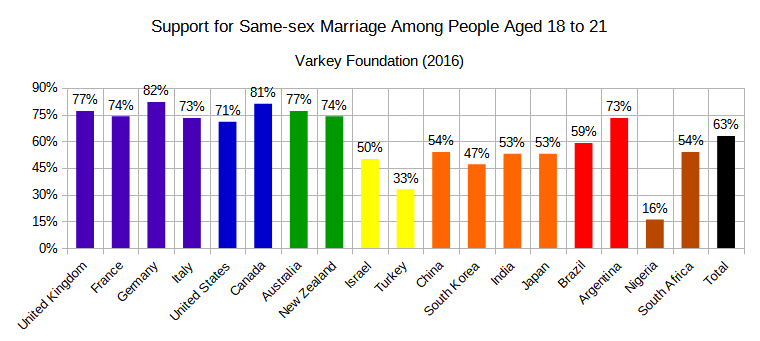 Same-sex marriage in South AfricaThe legal recognition of same-sex unions established by the Civil Union Act of 2006.
 UkuthwalwaA South African practice of abducting a woman for marriage, now largely illegal and contested.
 Polygamy in South AfricaThe practice of men marrying more than one wife under customary and Islamic law in South Africa.
Good reading and sources
The facts on this page come from the Wikipedia article "Prohibition of Mixed Marriages Act, 1949", written by its contributors and used under the CC BY-SA 4.0 licence, and from its Wikidata record (CC0). EveryShaadi rewrote the text in its own words, with AI assistance, and compares every page with the article to make sure no passage is copied. It may be reused under the same CC BY-SA 4.0 licence with a link back.
It may contain mistakes. Wedding customs differ from one family, village and community to the next, and the people who keep them know them best. If something is wrong, tell us. Last refreshed 2026-10-05.
More from South Africa
All the traditions of South Africa
🇳🇱 Amsterdam, Netherlands and 5 moreSame-sex marriage
The legal union of two people of the same sex or gender, recognized in dozens of countries.Modern · Engagement and betrothal
🇿🇦 Cape Town, South AfricaSame-sex marriage in South Africa
The legal recognition of same-sex unions established by the Civil Union Act of 2006.Modern · The ceremony
🇿🇦 South AfricaUkuthwalwa
A South African practice of abducting a woman for marriage, now largely illegal and contested.Betrothal · Finding a match
🇨🇳 China and 5 morePosthumous marriageminghun
A union performed when one or both partners have died, kept in parts of Asia and permitted by law in a few nations.Betrothal · After the wedding
The same idea elsewhere
Interfaith, inter-community and same-sex weddings compared 🇮🇹 Rome, ItalyRecognition of same-sex unions in ItalyRiconoscimento delle unioni tra persone dello stesso sesso in Italia
The legal framework that grants same-sex couples rights and protections in Italy.Modern
🇮🇳 India and 3 moreNikah halalaنکاح حلالہ
A second marriage required for a woman to remarry her first husband after triple talaq.Vow · After the wedding
🇮🇳 IndiaSambandam
The traditional matrilineal marriage alliance of Kerala's Nairs and Nambudiris.Betrothal · Finding a match
🇮🇹 Rome, ItalyRecognition of same-sex unions in ItalyRiconoscimento delle unioni tra persone dello stesso sesso in Italia
The legal framework that grants same-sex couples rights and protections in Italy.Modern
🇮🇳 India and 3 moreNikah halalaنکاح حلالہ
A second marriage required for a woman to remarry her first husband after triple talaq.Vow · After the wedding
🇮🇳 IndiaSambandam
The traditional matrilineal marriage alliance of Kerala's Nairs and Nambudiris.Betrothal · Finding a match
 🇪🇬 Egypt and 4 moreWaist beads
Strands of glass or seed worn around the hips to mark womanhood and track body changes in West and North Africa.Adornment · Engagement and betrothal
🇪🇬 Egypt and 4 moreWaist beads
Strands of glass or seed worn around the hips to mark womanhood and track body changes in West and North Africa.Adornment · Engagement and betrothal