Modern and changing weddingsEurope
Recognition of same-sex unions in Croatia
In its own language: Životno partnerstvo
The legal framework that grants same-sex couples rights through life partnerships and foster care recognition.

Croatia recognizes same-sex relationships through a life partnership system established in 2014, following earlier limited protections for unregistered cohabitation. While the constitution restricts marriage to opposite-sex couples, courts have increasingly granted family rights such as fostering to registered partners.
When is Recognition of same-sex unions in Croatia kept?
Recognition of same-sex unions in Croatia is kept on ongoing since 2014.
Same-sex couples in Croatia can formalize their union through a life partnership, a legal status created by the Life Partnership Act of 2014. This framework provides rights similar to marriage, excluding adoption, while constitutional limits keep traditional marriage reserved for opposite-sex pairs. Courts have also expanded family rights like fostering for these couples.
Legal history
Croatia first acknowledged same-sex bonds in 2003 with a law on unregistered cohabitation. This early measure offered limited financial and inheritance benefits but required three years of living together. It excluded adoption, taxes, and joint property ownership. In 2014, the parliament passed the Life Partnership Act, granting equal rights in most areas except adoption. The constitution limits marriage to opposite-sex couples, a restriction confirmed by a 2013 referendum.
Partnership rules
The Life Partnership Act allows couples to register at registry offices. Registration mirrors marriage procedures, and foreign same-sex unions are recognized if they meet specific criteria. Partners gain rights to parental responsibility over a partner's child through a mechanism called partner-guardianship. This arrangement lets a non-biological parent share decision-making for a child's well-being, either temporarily or permanently under court supervision.
Family rights
While joint adoption remains prohibited, courts have supported other family roles. A 2019 administrative court ruling allowed a male couple to become foster parents, citing discrimination laws. The Constitutional Court upheld this right in 2020, stating that excluding same-sex couples from foster care was unconstitutional. These decisions ensure that registered partners can provide care services under the same conditions as opposite-sex couples.
How Recognition of same-sex unions in Croatia is kept
Couples register their relationship at a local registry office, following procedures identical to marriage. They receive legal recognition that grants them rights in areas such as inheritance, health insurance, and parental responsibility. Partner-guardianship allows one partner to assume legal duties for the other's child. Couples may also apply to become foster parents, a right affirmed by recent court rulings despite legislative exclusions.
When and where
The Life Partnership Act took effect on August 5, 2014. Unregistered cohabitation rights began in 2003. Foster care rights were solidified through court rulings in 2019 and 2020.
This legal framework applies throughout Croatia. The first life partnership was registered in Zagreb in September 2014. Subsequent registrations occurred in cities like Split.
Who takes part
- The couple: Registers their relationship at a registry office to gain legal rights.
- The government: Drafts legislation and implements laws regarding partnership recognition.
- The courts: Rules on disputes regarding foster care and parental rights for partners.
Then and now
Legal recognition continues to evolve through judicial interpretation. Courts have expanded rights beyond the original statute, particularly regarding foster care. The constitutional ban on same-sex marriage remains in place, limiting full equality.

Questions people ask about Recognition of same-sex unions in Croatia
When is Recognition of same-sex unions in Croatia kept?
Recognition of same-sex unions in Croatia is kept on ongoing since 2014.
What is the legal status of same-sex unions in Croatia?
Croatia recognizes life partnerships for same-sex couples, established by the 2014 Life Partnership Act. This status grants rights similar to marriage, excluding adoption. Unregistered cohabitation has been recognized since 2003 with limited benefits.
Can same-sex couples adopt children in Croatia?
Joint adoption is not permitted under current law. However, partners can become partner-guardians, allowing them to share parental responsibility for a partner's child. Courts have also ruled that same-sex couples can become foster parents.
How does the constitution affect same-sex marriage?
The Croatian Constitution limits marriage to opposite-sex couples. This definition was reinforced by a 2013 referendum. Consequently, same-sex couples must use the life partnership framework rather than marriage to secure legal recognition.
See also
 Recognition of same-sex unions in ItalyThe legal framework that grants same-sex couples rights and protections in Italy.Unregistered cohabitation in IsraelLegal recognition for same-sex couples living together without a formal religious or civil wedding ceremony.Polygamy in UzbekistanThe practice of men taking multiple wives in a country where the law strictly forbids it.Recognition of same-sex unions in FijiThe legal status and social context of same-sex marriage and civil unions in Fiji.
Good reading and sources
- Croatia ratifies women's rights conventionDeutsche Welle, Article
- Croatia ratifies women's rights conventionDeutsche Welle, Article
The facts on this page come from the Wikipedia article "Recognition of same-sex unions in Croatia", written by its contributors and used under the CC BY-SA 4.0 licence, and from its Wikidata record (CC0). EveryShaadi rewrote the text in its own words, with AI assistance, and compares every page with the article to make sure no passage is copied. It may be reused under the same CC BY-SA 4.0 licence with a link back.
It may contain mistakes. Wedding customs differ from one family, village and community to the next, and the people who keep them know them best. If something is wrong, tell us. Last refreshed 2026-10-05.
More from Croatia
All the traditions of Croatia 🇭🇺 Hungary and 5 moreCsárdás
A Hungarian folk dance that begins slowly and ends with a fast spin.Performance · Reception, dance and gifts
🇭🇺 Hungary and 5 moreCsárdás
A Hungarian folk dance that begins slowly and ends with a fast spin.Performance · Reception, dance and gifts
 🇷🇸 Serbia and 2 moreKoloКоло
A South Slavic circle dance performed at weddings and social gatherings across the Balkans.Performance · Reception, dance and gifts
🇷🇸 Serbia and 2 moreKoloКоло
A South Slavic circle dance performed at weddings and social gatherings across the Balkans.Performance · Reception, dance and gifts
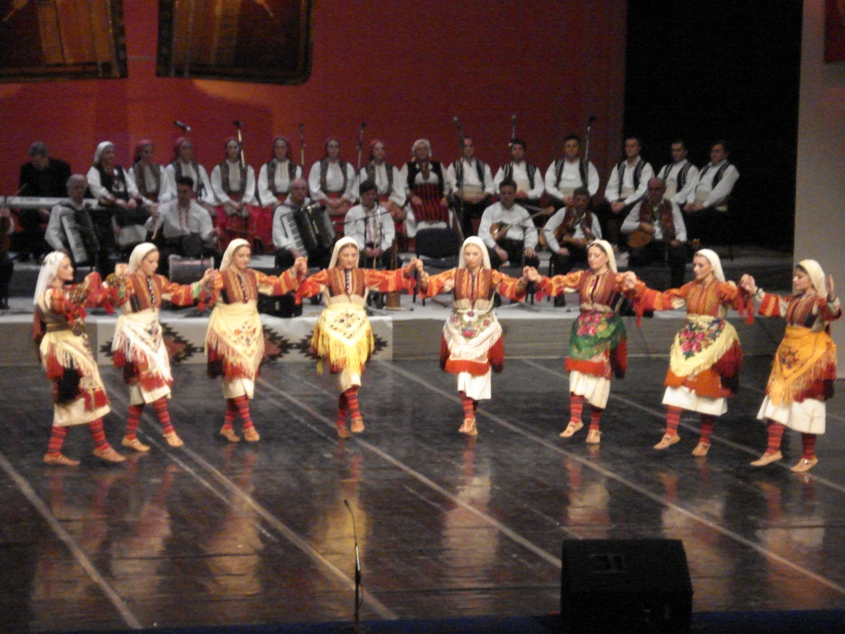 🇷🇴 Romania and 7 moreHorahora (Romanian), horo (Bulgarian), oro (Macedonian), horah (Hebrew)
A circle dance held at weddings across Southeast Europe and among Jewish communities worldwide.Performance · Reception, dance and gifts
🇭🇷 CroatiaŽudijeŽudije (čuvari Kristova groba)
Catholic guardians who stand watch over a replica tomb of Christ in Dalmatia until Easter Vigil.Rite · The weeks before
🇷🇴 Romania and 7 moreHorahora (Romanian), horo (Bulgarian), oro (Macedonian), horah (Hebrew)
A circle dance held at weddings across Southeast Europe and among Jewish communities worldwide.Performance · Reception, dance and gifts
🇭🇷 CroatiaŽudijeŽudije (čuvari Kristova groba)
Catholic guardians who stand watch over a replica tomb of Christ in Dalmatia until Easter Vigil.Rite · The weeks before
The same idea elsewhere
Interfaith, inter-community and same-sex weddings compared 🇪🇬 Egypt and 4 moreWaist beads
Strands of glass or seed worn around the hips to mark womanhood and track body changes in West and North Africa.Adornment · Engagement and betrothal
🇮🇳 IndiaSambandam
The traditional matrilineal marriage alliance of Kerala's Nairs and Nambudiris.Betrothal · Finding a match
🇪🇬 Egypt and 4 moreWaist beads
Strands of glass or seed worn around the hips to mark womanhood and track body changes in West and North Africa.Adornment · Engagement and betrothal
🇮🇳 IndiaSambandam
The traditional matrilineal marriage alliance of Kerala's Nairs and Nambudiris.Betrothal · Finding a match
 🇮🇷 Iran and 1 moreNikahnikāḥ (Arabic: نِكَاح)
The Islamic marriage contract that establishes a binding union between two people.Vow · Engagement and betrothal
🇮🇷 Iran and 1 moreNikahnikāḥ (Arabic: نِكَاح)
The Islamic marriage contract that establishes a binding union between two people.Vow · Engagement and betrothal