Blessings, luck and omensEuropeCatholic
Za križen
A night-long Maundy Thursday procession on Hvar island that honors the Weeping of the Lady.

Za križen is a sacred night procession held every Maundy Thursday on the island of Hvar in Croatia. It involves six simultaneous routes through local villages, culminating in the singing of the Gospin plač to express deep religious devotion.
When is Za križen kept?
Za križen is kept on the evening of Maundy Thursday.
Za križen is a solemn night procession on the Croatian island of Hvar. Held annually on Maundy Thursday, it unites six villages in a shared display of piety. Participants walk for hours while singing ancient texts about the Passion. The event reflects the deep cultural and religious identity of the local community.
What the procession is
Za križen translates to following the cross in the local dialect. This annual event takes place on Maundy Thursday across the central region of Hvar island. Six separate processions begin simultaneously from parish churches in Svirče, Vrbanj, Vrboska, Jelsa, Pitve, and Vrisnik. Each route forms a large circle, allowing participants to return to their starting point by morning. The journey covers approximately twenty-five kilometers over eight hours. It serves as a powerful expression of faith and community identity for the islanders.
How the ceremony unfolds
The march starts at ten in the evening. A crossbearer leads each group, an honor often decided decades in advance. He is accompanied by helpers carrying large candles and lead singers known as kantaduri. All participants wear formal white tunics. The group visits every church along the way, where priests bless the crossbearer. The singers perform the Gospin plač, a musical dialogue based on a fifteenth-century text. The processions are carefully coordinated so they never meet during their routes.
Origins and history
The tradition stems from the worship of the Sveti križić relic, kept in the Hvar Cathedral since fifteen hundred and ten. Reports state the cross began bleeding during civil unrest in early fifteen hundred and ten, sparking intense devotion. Written records confirm the procession existed by sixteen hundred and fifty-eight. The custom has continued for five centuries without interruption. In two thousand and nine, UNESCO recognized Za križen as an important part of intangible cultural heritage.
Music and symbols
The heart of the ceremony is the Gospin plač, or Weeping of the Lady. This octosyllabic Passion text dates back to the fifteenth century. Chosen singers perform it in a dialogic musical style. The crossbearer carries a physical cross, symbolizing the path of Christ. Large candle holders provide light during the long night walk. The music and the steady pace create a meditative atmosphere. Pilgrims pray and sing throughout the journey, maintaining focus on the religious narrative.
How Za križen is kept
Six processions start at ten PM on Maundy Thursday. A crossbearer leads each group, followed by candle bearers and singers. They wear white tunics and visit local churches. Priests bless the crossbearer at each stop. Singers perform the Gospin plač throughout the walk. The routes are planned so groups do not intersect. The journey lasts eight hours and ends by seven AM.
When and where
It occurs on Maundy Thursday evening. The event begins at ten PM and continues until seven AM the next morning. Good Friday is a day of rest for participants after the exhausting night.
The custom is specific to the middle part of Hvar island in Croatia. Six villages participate: Svirče, Vrbanj, Vrboska, Jelsa, Pitve, and Vrisnik. The largest procession originates in Jelsa.
What Za križen means
The procession expresses deep religious piety and cultural identity. The crossbearer role signifies immense honor within the community. The Gospin plač connects modern participants to fifteenth-century traditions. The collective walk reinforces social bonds among the villagers.
Who takes part
- Crossbearer: Leads the procession and receives blessings at each church
- Kantaduri: Lead singers who perform the Gospin plač
- Helpers: Carry large candle holders alongside the crossbearer
- Priest: Blesses the crossbearer at each church stop
- Pilgrims: Walk the route and sing along with the leaders
If you are a guest
Visitors observe the solemn atmosphere from the sidelines. They may witness the white-clad participants passing through village streets. Guests should remain respectful of the quiet prayer and singing. The event is primarily for local residents and pilgrims.
Then and now
The tradition remains strong in the six participating villages. Jelsa hosts the largest group, sometimes exceeding one thousand people. The custom continues to define the religious identity of the central Hvar community.
On the wedding table
Symbols: Candles and lamps
Questions people ask about Za križen
When is Za križen kept?
Za križen is kept on the evening of Maundy Thursday.
Which villages participate in the ceremony?
Six villages on Hvar island take part. These include Svirče, Vrbanj, Vrboska, Jelsa, Pitve, and Vrisnik. Each village runs its own simultaneous procession.
What is the Gospin plač?
It is the Weeping of the Lady, a musical text from the fifteenth century. Lead singers perform it during the procession to recount the Passion of Christ.
Is the procession open to tourists?
Yes, visitors can watch the event. However, it is a serious religious observance. Guests should maintain silence and respect the praying participants.
See also
 CsárdásA Hungarian folk dance that begins slowly and ends with a fast spin.
 Nijemo koloA silent Croatian folk dance where couples move in a circle without music.BećaracA humorous folk song sung at weddings and village parties in Eastern Croatia
 KoloA South Slavic circle dance performed at weddings and social gatherings across the Balkans.
Good reading and sources
- Za križen on WikipediaEncyclopedia
- More photos on Wikimedia CommonsPhotos and video
- Wikidata recordOpen data
The facts on this page come from the Wikipedia article "Za križen", written by its contributors and used under the CC BY-SA 4.0 licence, and from its Wikidata record (CC0). EveryShaadi rewrote the text in its own words, with AI assistance, and compares every page with the article to make sure no passage is copied. It may be reused under the same CC BY-SA 4.0 licence with a link back.
It may contain mistakes. Wedding customs differ from one family, village and community to the next, and the people who keep them know them best. If something is wrong, tell us. Last refreshed 2026-10-06.
More from Croatia
All the traditions of Croatia
🇭🇺 Hungary and 5 moreCsárdás
A Hungarian folk dance that begins slowly and ends with a fast spin.Performance · Reception, dance and gifts
🇷🇸 Serbia and 2 moreKoloКоло
A South Slavic circle dance performed at weddings and social gatherings across the Balkans.Performance · Reception, dance and gifts
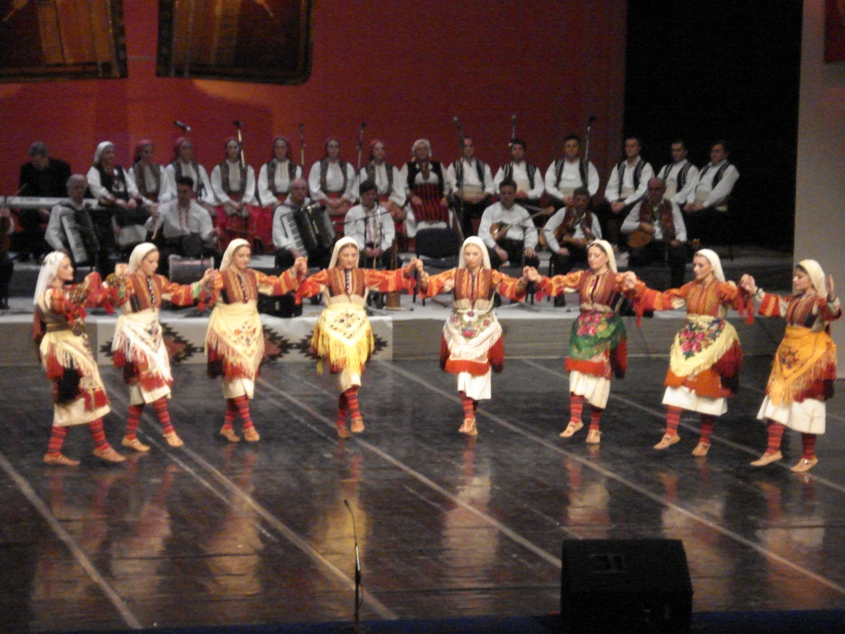 🇷🇴 Romania and 7 moreHorahora (Romanian), horo (Bulgarian), oro (Macedonian), horah (Hebrew)
A circle dance held at weddings across Southeast Europe and among Jewish communities worldwide.Performance · Reception, dance and gifts
🇭🇷 CroatiaNijemo kolo
A silent Croatian folk dance where couples move in a circle without music.Performance · The ceremony
🇷🇴 Romania and 7 moreHorahora (Romanian), horo (Bulgarian), oro (Macedonian), horah (Hebrew)
A circle dance held at weddings across Southeast Europe and among Jewish communities worldwide.Performance · Reception, dance and gifts
🇭🇷 CroatiaNijemo kolo
A silent Croatian folk dance where couples move in a circle without music.Performance · The ceremony
The same idea elsewhere
The wedding procession and the arrival compared 🇨🇱 Santiago, Chile and 3 moreCueca
A courtship dance from Chile and the Andes where couples trace circles with handkerchiefs to reenact a rooster and hen.Performance · The eve
🇨🇱 Santiago, Chile and 3 moreCueca
A courtship dance from Chile and the Andes where couples trace circles with handkerchiefs to reenact a rooster and hen.Performance · The eve
 🇸🇿 Ludzidzini Royal Village, Eswatini and 1 moreUmhlanga
The annual Swazi and Zulu gathering where young women cut reeds to preserve chastity and offer tribute labour.Rite · The eve
🇸🇿 Ludzidzini Royal Village, Eswatini and 1 moreUmhlanga
The annual Swazi and Zulu gathering where young women cut reeds to preserve chastity and offer tribute labour.Rite · The eve
 🇲🇽 Oaxaca, Mexico and 1 moreHuipilhuīpīlli
The traditional tunic worn by indigenous women in Mexico and Central America for weddings and daily life.Attire · The weeks before
🇲🇽 Oaxaca, Mexico and 1 moreHuipilhuīpīlli
The traditional tunic worn by indigenous women in Mexico and Central America for weddings and daily life.Attire · The weeks before
 🇮🇳 Delhi, India and 1 moreBaraat
The groom's wedding procession through the streets to the bride's home or venue.Performance · Procession and arrival
🇮🇳 Delhi, India and 1 moreBaraat
The groom's wedding procession through the streets to the bride's home or venue.Performance · Procession and arrival