Ceremony and sacred ritesEuropeOrthodox and Eastern ChristianSecular and civil
Russian wedding traditions
In its own language: Русская свадьба
A multi-day celebration blending Orthodox crowning, ransom games, and lively toasting in Russia.

Russian weddings are elaborate events lasting several days that combine religious rites with folk customs. The ceremony typically includes a church crowning followed by a civil registration at ZAGS, featuring specific rituals like the exchange of rings and breaking of glasses.
When is Russian wedding traditions kept?
Russian wedding traditions is kept on over two days to one week.
Russian weddings are significant cultural events that blend Orthodox Christian rituals with distinct folk practices. These celebrations often span multiple days, involving family gatherings, religious ceremonies, and lively receptions. Key elements include the crowning rite, the payment of a symbolic ransom, and communal feasting with traditional toasts.
Ceremony structure
The wedding day begins with a religious service in an Eastern Orthodox church. This is divided into the Betrothal and the Crowning. During the Betrothal, the couple stands at the entrance holding lit candles while a priest blesses their rings. The Crowning follows, where the couple stands on rose-colored fabric and receives crowns placed on their heads. After readings and prayers, they share a common cup of wine and walk three times around a Gospel book. A civil ceremony at ZAGS then legally formalizes the union, often accompanied by bread and salt greetings.
Folk rituals
Before the official events, the groom visits the bride's home for a playful ransom game. He must pay money or offer jewelry to gain entry, often facing veiled substitutes who demand higher payments. Once the bride is revealed, the couple tours the city in a decorated limousine, stopping at historical sites for photographs. A doll on the car is later washed and kept for luck. The reception features dancing, singing, and toasts, including the tradition of shouting 'Gorko' to prompt kisses.
Roles and guests
The best man and bridesmaid are known as Witnesses or Svideteli. They assist the couple throughout the day. Married friends often provide the wedding rings, placing them on the bride first. At the civil registry, family members greet the couple with bread and salt. In some regions, parents give crystal glasses to be broken, with the number of shards symbolizing the marriage's duration. Doves or balloons may be released to represent love and the bride's farewell to her maiden name.
How Russian wedding traditions is kept
The groom pays a ransom to the bride's family before the ceremony. The couple attends an Orthodox church service involving candle holding, ring blessing, and crowning. They then visit ZAGS for legal registration, receiving bread and salt. A city tour follows, after which a reception with dancing, singing, and toasts takes place over several days.
When and where
Held over two days to one week. The religious service occurs in the morning after Divine Liturgy. The civil ceremony follows, and the reception continues into subsequent days.
Primarily in Russia. Ceremonies take place in churches and ZAGS offices. City tours occur at local historical sites.
What Russian wedding traditions means
Crowns signify the sacred mystery of marriage. Rose fabric represents a new life. Breaking glass predicts the marriage's length. Releasing doves symbolizes partnership. Keeping the car doll brings luck. Shouting 'Gorko' encourages kissing to sweeten the bitter wine taste.
Who takes part
- Witnesses: Assist the couple and manage the wedding party
- Priest: Blesses rings, places crowns, and leads prayers
- Married friends: Provide and place the wedding rings
- Parents: Offer bread, salt, and crystal glasses
- Tamada: Organizes games, dancing, and toasts
If you are a guest
Guests attend the reception, dance, sing, and play games. They make toasts and shout 'Gorko' to encourage the couple to kiss. They may witness the breaking of crystal glasses and release doves or balloons.
Then and now
Modern weddings incorporate Western elements like maids of honour. Crowns are often removed immediately after the service rather than worn for eight days. Civil ceremonies remain mandatory alongside religious rites.
On the wedding table
- Bread and salt: Offered by family at the civil registry to welcome the couple
- Wine: Shared from a common cup during the church ceremony and consumed during toasts
Symbols: The ring Crowns and wreaths Bread Salt Wine and the shared cup Candles and lamps Doves, butterflies and birds Breaking glass and plates

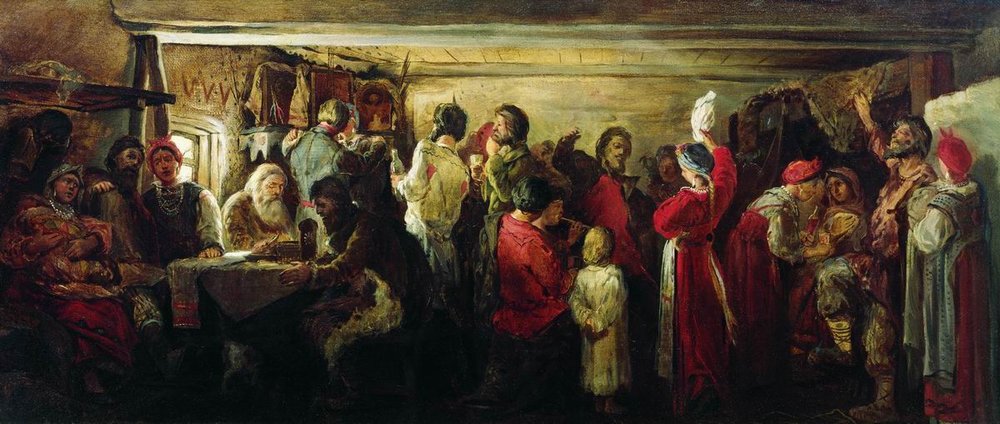


Questions people ask about Russian wedding traditions
When is Russian wedding traditions kept?
Russian wedding traditions is kept on over two days to one week.
What are the main parts of a Russian wedding?
The wedding includes a religious Orthodox ceremony with crowning, a civil registration at ZAGS, a city tour, and a multi-day reception with feasting and dancing.
What is the ransom ritual?
The groom pays money or offers gifts to the bride's family to gain access to her, often facing playful demands and veiled substitutes before meeting the bride.
What do the crowns symbolize?
In the Orthodox ceremony, crowns represent the sacred mystery of marriage and the couple's entry into a new life together.
See also
 MayianThe turmeric paste ceremony held the day before Punjabi weddings in India and Pakistan.
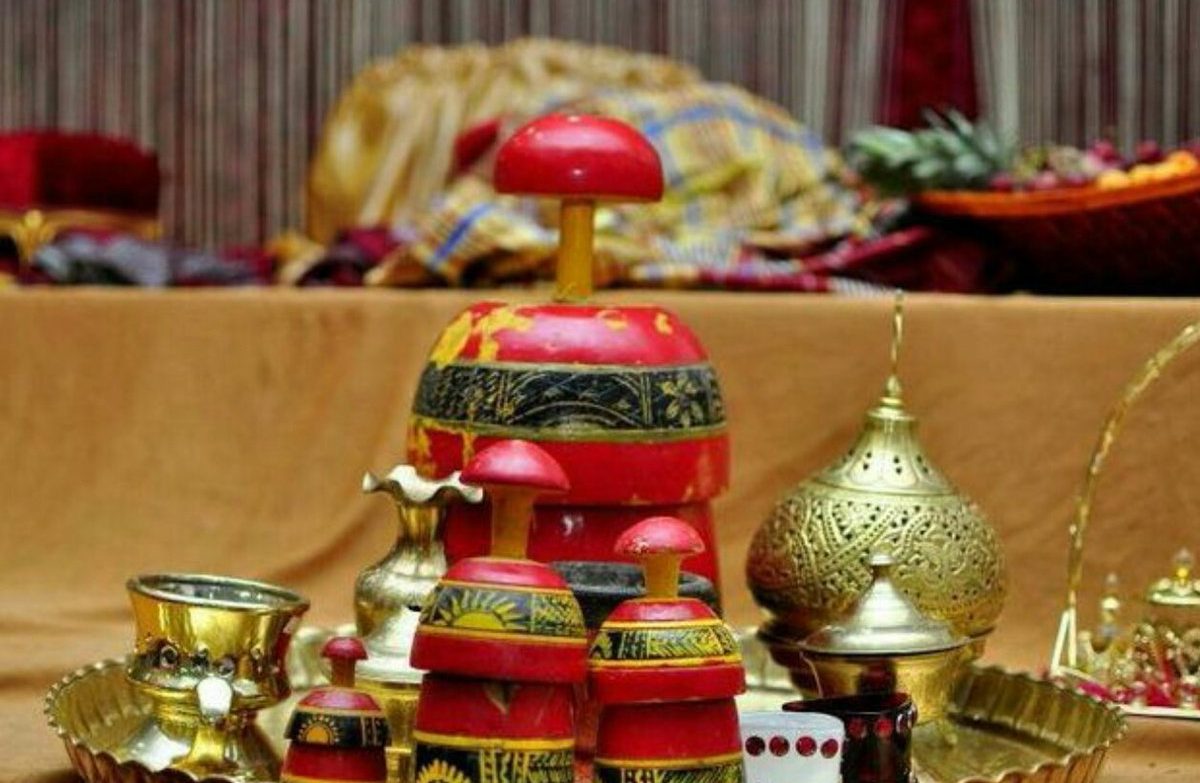 JirtigA Sudanese inauguration ritual where the groom is symbolically crowned as a king.
 IhiThe Newar rite in which a girl is married to Vishnu, shown by a golden figure
 Poruwa ceremonyThe Sinhalese wedding ritual performed on a carved wooden platform with betel leaves and milk rice.
Good reading and sources
- Russian wedding traditions on WikipediaEncyclopedia
- More photos on Wikimedia CommonsPhotos and video
- Wikidata recordOpen data
The facts on this page come from the Wikipedia article "Russian wedding traditions", written by its contributors and used under the CC BY-SA 4.0 licence, and from its Wikidata record (CC0). EveryShaadi rewrote the text in its own words, with AI assistance, and compares every page with the article to make sure no passage is copied. It may be reused under the same CC BY-SA 4.0 licence with a link back.
It may contain mistakes. Wedding customs differ from one family, village and community to the next, and the people who keep them know them best. If something is wrong, tell us. Last refreshed 2026-10-05.
More from Russia
All the traditions of Russia 🇰🇿 Kazakhstan and 1 moreKazakh wedding ceremonyҮйлену тойы (Üilenu toiy)
The multi-stage Kazakh marriage process featuring the face-revealing feast and the Islamic religious contract.Rite · Engagement and betrothal
🇰🇿 Kazakhstan and 1 moreKazakh wedding ceremonyҮйлену тойы (Üilenu toiy)
The multi-stage Kazakh marriage process featuring the face-revealing feast and the Islamic religious contract.Rite · Engagement and betrothal
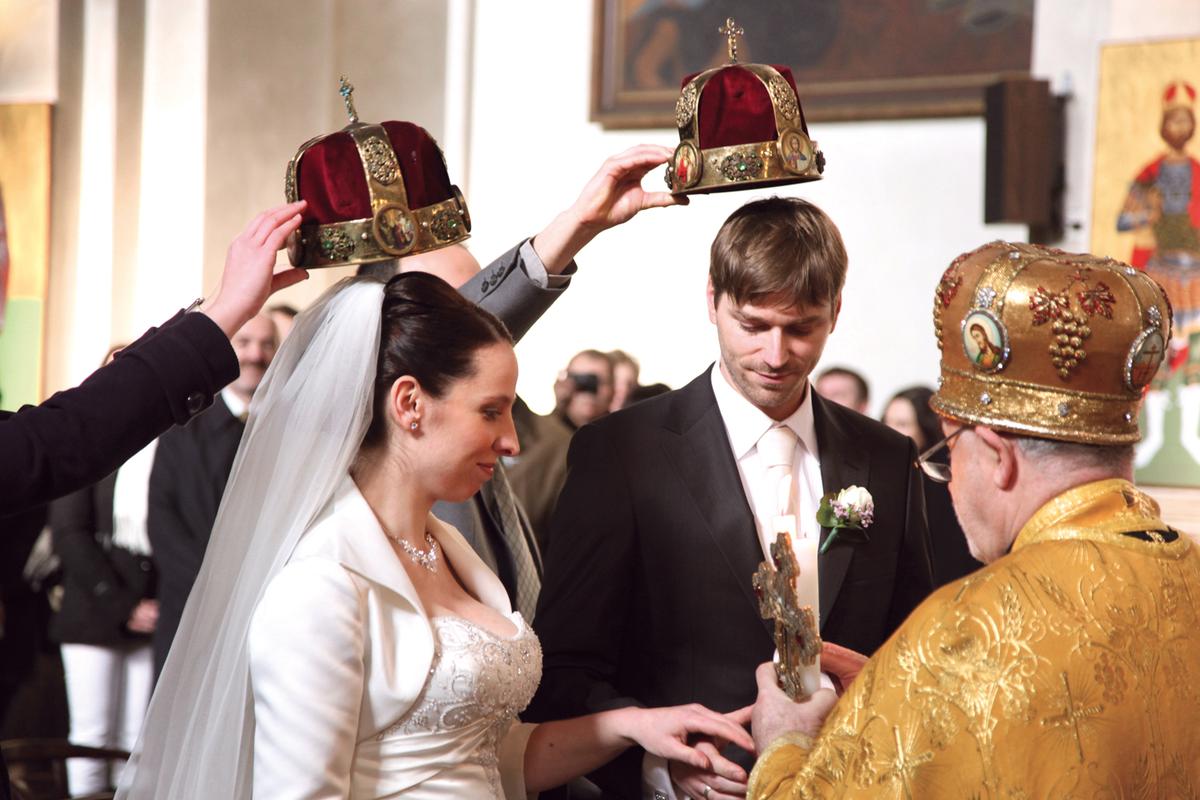 🇷🇺 RussiaEastern Orthodox marriage
The Byzantine Rite ceremony where a priest crowns the couple to seal their union in Christ.Rite · Engagement and betrothal
🇷🇺 RussiaEastern Orthodox marriage
The Byzantine Rite ceremony where a priest crowns the couple to seal their union in Christ.Rite · Engagement and betrothal
 🇺🇦 Ukraine and 2 moreRushnykрушник (Ukrainian), ручнік (Belarusian), ручник/рушник (Russian)
The embroidered linen cloth that marks life stages and guides the couple through the wedding ceremony in East Slavic culAdornment · The weeks before
🇺🇦 Ukraine and 2 moreRushnykрушник (Ukrainian), ручнік (Belarusian), ручник/рушник (Russian)
The embroidered linen cloth that marks life stages and guides the couple through the wedding ceremony in East Slavic culAdornment · The weeks before
 🇪🇸 Spain and 4 moreMantilla
A lace or silk veil worn over the head and shoulders by women in Spain and Latin AmericaAttire · The weeks before
🇪🇸 Spain and 4 moreMantilla
A lace or silk veil worn over the head and shoulders by women in Spain and Latin AmericaAttire · The weeks before
The same idea elsewhere
Rings, knots and tokens of promise compared 🇮🇳 IndiaOdia Hindu weddingBahaghara (ଓଡ଼ିଆ ବାହାଘର)
The traditional Hindu marriage ceremony of the Odia people in Odisha, India.Rite · Engagement and betrothal
🇮🇳 IndiaOdia Hindu weddingBahaghara (ଓଡ଼ିଆ ବାହାଘର)
The traditional Hindu marriage ceremony of the Odia people in Odisha, India.Rite · Engagement and betrothal
 🇮🇷 Tehran, Iran and 1 moreIranian weddingمراسم عروسی در ایران
A multi-stage ceremony rooted in Zoroastrianism and Islam that binds families through courtship, feasts, and sacred vowsRite · Finding a match
🇮🇳 IndiaTelugu Hindu weddingతెలుగు వివాహ వేడుక
A multi-day Telugu Hindu marriage marked by seven vows around fire and family rituals.Rite · Finding a match
🇮🇷 Tehran, Iran and 1 moreIranian weddingمراسم عروسی در ایران
A multi-stage ceremony rooted in Zoroastrianism and Islam that binds families through courtship, feasts, and sacred vowsRite · Finding a match
🇮🇳 IndiaTelugu Hindu weddingతెలుగు వివాహ వేడుక
A multi-day Telugu Hindu marriage marked by seven vows around fire and family rituals.Rite · Finding a match
 🇯🇵 Tokyo, JapanShinto wedding神前結婚 (Shinzen kekkon)
A Shinto purification ritual featuring sake sharing and kimono attire held at a shrine or venue.Rite · The ceremony
🇯🇵 Tokyo, JapanShinto wedding神前結婚 (Shinzen kekkon)
A Shinto purification ritual featuring sake sharing and kimono attire held at a shrine or venue.Rite · The ceremony