Ceremony and sacred ritesEuropePagan and ancient
Weddings in ancient Rome
The religious ceremonies and attire that marked a union in the city of Rome before the rise of Christianity.

Marriage in ancient Rome involved strict rituals, specific clothing, and religious observances. The central event was the domum deductio, where the bride moved to her husband's home. Attire included the tunica recta and flammeum veil, while hairstyles like sex crines held symbolic meaning.
When is Weddings in ancient Rome kept?
Weddings in ancient Rome is kept on auspicious dates chosen by religious omens.
Marriage in ancient Rome was a deeply religious affair governed by superstition and social custom. Couples followed specific rites to ensure divine favor, including sacrifices and the selection of lucky days. The bride wore distinct garments like the yellow-red flammeum veil and a woven tunic. These elements signaled purity and fertility to the community.
Religious foundations
Romans viewed marriage as a sacred duty requiring divine approval. Families consulted augurs to find propitious dates free from bad omens. Artistic evidence shows bulls or sheep sacrificed during these events, though pig offerings mentioned by Varro may have been older traditions. Writers often idealized these scenes, but literary bias toward wealthy families complicates our understanding of ordinary life. Christian authors later condemned some pagan practices, creating conflicting records of what actually occurred in daily Roman society.
Bridal attire details
The bride wore a tunica recta, a straight tunic woven by herself or others standing. This garment signified chastity and skill. She also donned a flammeum, a yellow-red veil honoring faithfulness and fertility. Festus noted this style linked brides to Vestal Virgins, who shared a liminal status between youth and adulthood. A yellow hairnet called reticula lutea accompanied the veil. Belts known as cingulum or zona tied the tunic, sometimes serving as shorthand for virginity in poetry.
Hairstyle symbolism
Brides styled their hair into sex crines, likely six or seven locks. This complex arrangement mirrored the number of Vestal Virgins, emphasizing purity. Some scholars argue it represented an aberrant state or intentional discrepancy in poetic texts. Other theories suggest the term derives from verbs meaning to bind or cut, though cutting hair contradicted Roman beauty standards favoring long locks. Fillets called vittae might have completed the look, linking the bride to matronly authority.
Ceremonial objects
A spear called hasta caelibaris separated hair locks during rituals. Ovid referenced a bent-back spear arranging virgin locks. A knot known as nodus Herculaneus bound the couple on their wedding couch. Festus claimed this knot ensured fruitfulness like Hercules and symbolized the marital bond. Grooms untied this knot silently, invoking gods like Iugatinus and Virginensis. These objects reinforced the spiritual and physical union expected in Roman marriage customs.
How Weddings in ancient Rome is kept
Families selected auspicious dates after consulting omens. Sacrifices of bulls or sheep honored the gods. The bride wore a tunica recta, flammeum veil, and sex crines hairstyle. The groom wore a toga virilis. The domum deductio led the bride to the groom's home, simulating reluctant movement to appease household guardians. The couple rested on a lectus, where the groom untied a ceremonial knot. These steps ensured divine blessing and social recognition of the new union.
When and where
Held on dates deemed auspicious by religious authorities. Families avoided inauspicious signs to prevent misfortune. The ceremony occurred after pre-wedding sacrifices and consultations with augurs. Timing depended entirely on favorable omens rather than fixed calendar seasons.
Primarily practiced in Rome and surrounding Italian territories. Literary sources focus heavily on elite households in the capital. Evidence suggests variations across social strata, though wealthy depictions dominate surviving records. Ordinary citizens likely adapted these rituals to simpler forms.
What Weddings in ancient Rome means
Attire and objects protected the couple and ensured fertility. The flammeum veil honored faithfulness. The tunica recta showcased weaving skills and chastity. Sex crines linked brides to Vestal Virgins, marking a transition to matronhood. The nodus Herculaneus knot guaranteed fruitfulness and bound the spouses together. Rituals appeased lares and deities like Fortuna Virginalis.
Who takes part
- The bride: Wears the tunica recta, flammeum veil, and sex crines hairstyle
- The groom: Wears the toga virilis and unties the ceremonial knot
- Augurs: Consult omens to select auspicious wedding dates
- Household guardians: Receive the bride during the domum deductio ritual
- Family members: Perform sacrifices of bulls or sheep for divine favor
If you are a guest
Guests observed the religious proceedings and witnessed the union. They likely attended the sacrifices and the procession. Literary accounts suggest they recognized the significance of the bride's attire. Their presence validated the social contract of marriage within the community.
Then and now
These customs belong to ancient history and are no longer practiced. Modern Italian weddings follow different legal and cultural frameworks. Scholars study these rites through literary and artistic sources to understand Roman social structures. The religious aspects vanished with the rise of Christianity and the fall of the Empire.
On the wedding table
Symbols: Fire and the sacred flame The ring Knots, cords and threads The veil Garlands and flowers The colour red The colour white Gold and jewellery Water and washing


Questions people ask about Weddings in ancient Rome
When is Weddings in ancient Rome kept?
Weddings in ancient Rome is kept on auspicious dates chosen by religious omens.
What was the main ritual of a Roman wedding?
The domum deductio led the bride from her family home to the groom's residence. This ritual simulated reluctant movement to appease household guardians. It marked the physical transfer of the bride into her new family unit.
What did the bride wear?
She wore a tunica recta woven by herself, a yellow-red flammeum veil, and a yellow hairnet. Her hair was styled in sex crines, likely six or seven locks. These items symbolized chastity, fertility, and a link to Vestal Virgins.
How were dates chosen?
Families consulted augurs to find auspicious dates free from bad omens. Religious superstition dictated timing. Inauspicious signs were avoided to prevent misfortune for the couple and their families throughout the marriage.
Was child marriage common?
Sources do not provide clear data on child marriage prevalence in ancient Rome. The text focuses on ritual attire and religious rites. Legal ages and social norms regarding young brides require separate historical investigation beyond these wedding customs.
See also
 Marriage in KoreaA look at how Korean weddings blend ancient Confucian rites with modern legal practices.
 BetasharThe lifting of the bride's veil by the groom's mother during a Kazakh wedding ceremony
 Weddings in MaliMulti-day Malian wedding traditions blending Islamic rites, civil law, and local customs with bazin attire.
Good reading and sources
The facts on this page come from the Wikipedia article "Weddings in ancient Rome", written by its contributors and used under the CC BY-SA 4.0 licence, and from its Wikidata record (CC0). EveryShaadi rewrote the text in its own words, with AI assistance, and compares every page with the article to make sure no passage is copied. It may be reused under the same CC BY-SA 4.0 licence with a link back.
It may contain mistakes. Wedding customs differ from one family, village and community to the next, and the people who keep them know them best. If something is wrong, tell us. Last refreshed 2026-10-05.
More from Italy
All the traditions of Italy 🇮🇹 ItalyConfarreatio
The ancient Roman patrician marriage rite marked by sharing a sacred emmer cake.Rite · The ceremony
🇮🇹 ItalyFescennine VersesFescennina carmina
Bawdy wedding songs from Ancient Rome that evolved into satire and comic drama.Performance · Engagement and betrothal
🇮🇹 ItalyConfarreatio
The ancient Roman patrician marriage rite marked by sharing a sacred emmer cake.Rite · The ceremony
🇮🇹 ItalyFescennine VersesFescennina carmina
Bawdy wedding songs from Ancient Rome that evolved into satire and comic drama.Performance · Engagement and betrothal
 🇦🇹 Austria and 4 moreDirndl
The bodice, skirt and apron dress worn by brides in the German-speaking Alps.Attire · The ceremony
🇦🇹 Austria and 4 moreDirndl
The bodice, skirt and apron dress worn by brides in the German-speaking Alps.Attire · The ceremony
 🇬🇷 Greece and 1 moreEpithalamium
A poem or song written to celebrate a bride as she goes to her wedding chamber.Performance · The eve
🇬🇷 Greece and 1 moreEpithalamium
A poem or song written to celebrate a bride as she goes to her wedding chamber.Performance · The eve
The same idea elsewhere
The wedding dress and what the couple wear compared 🇯🇵 Tokyo, JapanShinto wedding神前結婚 (Shinzen kekkon)
A Shinto purification ritual featuring sake sharing and kimono attire held at a shrine or venue.Rite · The ceremony
🇯🇵 Tokyo, JapanShinto wedding神前結婚 (Shinzen kekkon)
A Shinto purification ritual featuring sake sharing and kimono attire held at a shrine or venue.Rite · The ceremony
 🇲🇽 Oaxaca, Mexico and 1 moreHuipilhuīpīlli
The traditional tunic worn by indigenous women in Mexico and Central America for weddings and daily life.Attire · The weeks before
🇲🇽 Oaxaca, Mexico and 1 moreHuipilhuīpīlli
The traditional tunic worn by indigenous women in Mexico and Central America for weddings and daily life.Attire · The weeks before
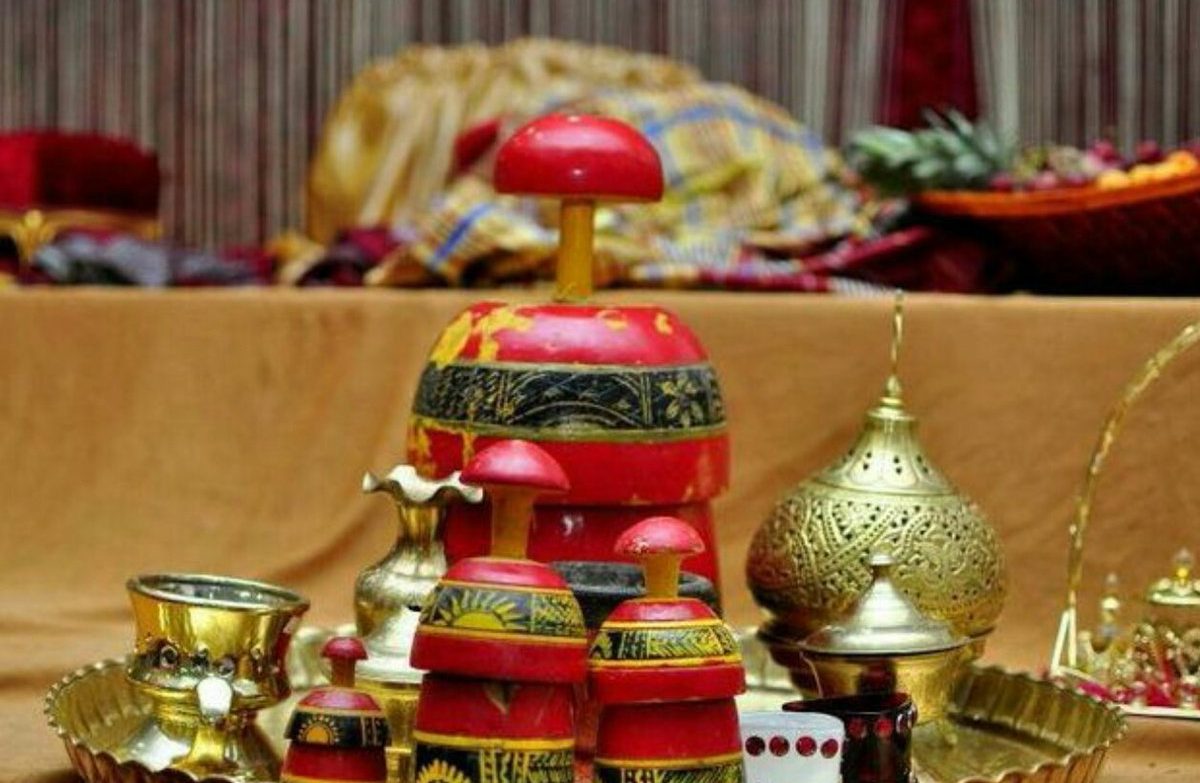 🇸🇩 Khartoum, SudanJirtigالجَرْتِقْ (Arabic)
A Sudanese inauguration ritual where the groom is symbolically crowned as a king.Rite · The weeks before
🇸🇩 Khartoum, SudanJirtigالجَرْتِقْ (Arabic)
A Sudanese inauguration ritual where the groom is symbolically crowned as a king.Rite · The weeks before
 🇮🇳 IndiaOdia Hindu weddingBahaghara (ଓଡ଼ିଆ ବାହାଘର)
The traditional Hindu marriage ceremony of the Odia people in Odisha, India.Rite · Engagement and betrothal
🇮🇳 IndiaOdia Hindu weddingBahaghara (ଓଡ଼ିଆ ବାହାଘର)
The traditional Hindu marriage ceremony of the Odia people in Odisha, India.Rite · Engagement and betrothal