Wedding dress and clothingNorth America
Huipil
In its own language: huīpīlli
The traditional tunic worn by indigenous women in Mexico and Central America for weddings and daily life.

The huipil is a loose-fitting tunic worn by indigenous women across central Mexico and Central America. It serves as both everyday clothing and ceremonial attire for weddings, burials, and religious festivals. The garment identifies the wearer's specific community through its unique weaving patterns and decorative elements.
When is Huipil kept?
Huipil is kept during weddings, funerals, and religious festivals.
The huipil is a traditional tunic that defines the identity of indigenous women in Mexico and Central America. Worn for centuries, it marks significant life events like marriage and death. Each design reflects the wearer’s community, history, and spiritual beliefs. The garment transforms the wearer into a symbol of cosmic order when put on.
What the huipil is
This garment is a loose tunic made from one to five rectangular pieces of fabric. Most often constructed from two or three panels, it features an opening for the head and sometimes arms. Traditional versions are woven on backstrap looms using cotton, wool, or silk. Decorative elements include embroidery, ribbons, lace, and woven designs. These patterns signify cultural identity, personal history, and natural world connections. Ceremonial huipils are highly valued and may be stored for funeral use.
History and evolution
Indigenous women wore huipils before the Spanish invasion. After conquest, the garment evolved, incorporating European and Asian influences. Some designs show Filipino cloth impacts via the Isthmus of Tehuantepec. Colonial periods saw shorter styles emerge as blouses. By the late nineteenth century, many weaving techniques were lost due to commercial fabric availability. Today, handwoven versions remain rare but cherished for their cultural significance and intricate craftsmanship passed down through generations.
Regional variations
Designs vary significantly by region and community. In Oaxaca, Chinanteca huipils feature geometric patterns and red accents. Zinacantán garments use white cotton with featherwork, believed to ensure good marriages. Mayan women in Guatemala wear distinct styles identifying their specific group. Santa María Magdalena huipils depict cosmic symbols. Amuzgo weavers create complex animal and plant motifs. Some communities restrict wearing local huipils outside their area, preserving regional identity through dress codes.
Symbolism and meaning
Putting on a huipil is a ritual act. The neck opening represents the passage between worlds. Arms form a cross, surrounding the wearer with mythological significance. Designs often map the universe: east, west, south, and north correspond to body parts. Feathers, birds, flowers, and frogs carry spiritual weight. The garment connects the wearer to ancestors, nature, and divine forces. It is not merely clothing but a sacred expression of identity and cosmology.
How Huipil is kept
Women weave or commission huipils for weddings and special occasions. Families invest time and resources into creating these garments, often starting years in advance. Young girls learn weaving from elders, preserving techniques. During ceremonies, the bride wears a specially made huipil, sometimes adorned with feathers or gold thread. The garment is displayed prominently, honoring the couple and their lineage. After the wedding, it may be stored for future rituals or funerals, maintaining its role across the lifecycle.
When and where
Worn during weddings, funerals, and religious festivals. Dates depend on community calendars and seasonal cycles. No fixed month or weekday applies universally. Specific occasions dictate when elaborate huipils are donned versus everyday versions.
Most common in Mexican states like Oaxaca, Chiapas, Yucatán, and Veracruz. Also worn by Mayan communities in Guatemala. Regional hubs include Cuetzalan and towns in the Isthmus of Tehuantepec. Urban areas see fewer daily uses, while rural villages maintain stronger traditions.
What Huipil means
The huipil embodies cosmic order and community identity. Wearing it aligns the body with celestial directions and ancestral spirits. Designs tell stories of nature, mythology, and social status. Featherwork and vibrant colors honor pre-Hispanic art forms. The garment transforms the wearer into a living symbol of heritage, connecting past, present, and future through textile artistry.
Who takes part
- The bride: Wears a ceremonial huipil during the wedding ceremony
- Weavers: Create intricate designs using traditional loom techniques
- Elders: Teach younger generations weaving patterns and meanings
- Religious officials: Dress saint statues in layered ceremonial huipils
- Family members: Commission or gift huipils for life milestones
If you are a guest
Guests observe the bride’s huipil closely, noting its craftsmanship and symbolism. They may admire the weaving details or ask about regional origins. Respectful comments acknowledge the garment’s cultural value. Guests do not typically wear huipils unless invited by the family, respecting community-specific dress norms.
Then and now
Commercial fabrics have reduced handweaving prevalence. Many women now wear simpler or store-bought versions. However, ceremonial huipils remain vital for weddings and funerals. Efforts to preserve weaving techniques continue through competitions and cultural festivals. Younger generations show renewed interest in traditional methods, ensuring survival of this iconic garment.
On the wedding table


Questions people ask about Huipil
When is Huipil kept?
Huipil is kept during weddings, funerals, and religious festivals.
What is a huipil?
A huipil is a traditional tunic worn by indigenous women in Mexico and Central America. It identifies community origin through unique designs and is used for weddings, funerals, and festivals.
How is it made?
Traditional huipils are woven on backstrap looms using cotton, wool, or silk. Designs are woven or embroidered, reflecting cultural symbols and natural motifs. Modern versions may use commercial fabric.
Is it legal to wear?
There are no laws restricting huipil wear. It is a protected cultural expression. Communities may have norms about who can wear specific regional styles, but no legal prohibitions exist.
See also
 Conga lineA long processing line dance that links dancers in single file to a rhythmic drum beat.
 MantillaA lace or silk veil worn over the head and shoulders by women in Spain and Latin AmericaMadisarThe nine-yard sari drape worn by Tamil Brahmin women during weddings and religious rites.
Good reading and sources
- Huipil on WikipediaEncyclopedia
- More photos on Wikimedia CommonsPhotos and video
- Wikidata recordOpen data
The facts on this page come from the Wikipedia article "Huipil", written by its contributors and used under the CC BY-SA 4.0 licence, and from its Wikidata record (CC0). EveryShaadi rewrote the text in its own words, with AI assistance, and compares every page with the article to make sure no passage is copied. It may be reused under the same CC BY-SA 4.0 licence with a link back.
It may contain mistakes. Wedding customs differ from one family, village and community to the next, and the people who keep them know them best. If something is wrong, tell us. Last refreshed 2026-10-05.
More from Mexico
All the traditions of Mexico
🇨🇺 Havana, Cuba and 5 moreConga line
A long processing line dance that links dancers in single file to a rhythmic drum beat.Performance · Reception, dance and gifts
 🇬🇧 United Kingdom and 3 moreMarriage bond
A financial guarantee posted to prove a couple was legally free to marry before the ceremony took place.Vow · Engagement and betrothal
🇬🇧 United Kingdom and 3 moreMarriage bond
A financial guarantee posted to prove a couple was legally free to marry before the ceremony took place.Vow · Engagement and betrothal
 🇪🇸 Spain and 2 moreWedding cord
A satin loop placed around the couple to symbolize their lifelong union in Catholic weddings.Rite · The ceremony
🇪🇸 Spain and 2 moreWedding cord
A satin loop placed around the couple to symbolize their lifelong union in Catholic weddings.Rite · The ceremony
The same idea elsewhere
The wedding dress and what the couple wear compared 🇮🇹 Rome, ItalyWeddings in ancient Rome
The religious ceremonies and attire that marked a union in the city of Rome before the rise of Christianity.Rite · The weeks before
🇺🇦 UkraineSong about the RushnykПісня про рушник (Pisnia pro rushnyk)
A Ukrainian song that celebrates the embroidered cloth used in weddings and family life.Performance · The ceremony
🇮🇹 Rome, ItalyWeddings in ancient Rome
The religious ceremonies and attire that marked a union in the city of Rome before the rise of Christianity.Rite · The weeks before
🇺🇦 UkraineSong about the RushnykПісня про рушник (Pisnia pro rushnyk)
A Ukrainian song that celebrates the embroidered cloth used in weddings and family life.Performance · The ceremony
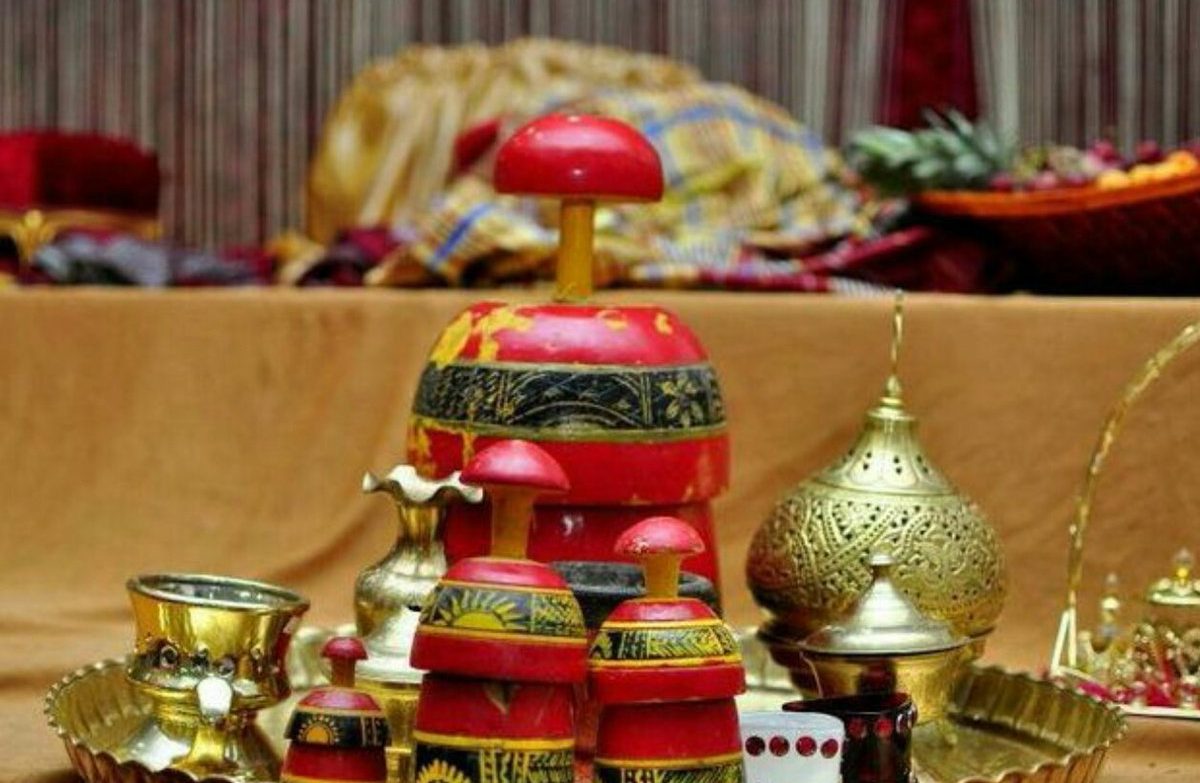 🇸🇩 Khartoum, SudanJirtigالجَرْتِقْ (Arabic)
A Sudanese inauguration ritual where the groom is symbolically crowned as a king.Rite · The weeks before
🇸🇩 Khartoum, SudanJirtigالجَرْتِقْ (Arabic)
A Sudanese inauguration ritual where the groom is symbolically crowned as a king.Rite · The weeks before
 🇯🇵 Tokyo, JapanShinto wedding神前結婚 (Shinzen kekkon)
A Shinto purification ritual featuring sake sharing and kimono attire held at a shrine or venue.Rite · The ceremony
🇯🇵 Tokyo, JapanShinto wedding神前結婚 (Shinzen kekkon)
A Shinto purification ritual featuring sake sharing and kimono attire held at a shrine or venue.Rite · The ceremony