Wedding news
LawPunjab Panel Approves Bill to Reform Christian Marriage LawIndustryEvolved Catering Baltimore Enters Fall Wedding Season With New Five Star Reviews From CouplesMass weddingsHoms Hosts Mass Wedding for Over 100 Children of Martyrs - Syria FocusMass weddingsMore than 100 sons of martyrs join mass wedding in HomsCustomsOCU holds evening of wedding rituals at seized Cherkasy cathedralDowry and giftsAndhra Pradesh High Court Quashes Dowry And Cruelty Case Against NRI In-Laws Over Lack Of Sanction And Specific Allegations – The Legal AffairLawOnline marriage registration on Diia has been expanded: who else will be able to get married via smartphoneIndustryWedding season boosts hotel demand, bookings pour into 2027Mass weddingsSC: Marriage void due to false claims of cohabitationLawOnline marriage registration to curb child marriage, polygamy: law ministerLawPunjab Panel Approves Bill to Reform Christian Marriage LawIndustryEvolved Catering Baltimore Enters Fall Wedding Season With New Five Star Reviews From CouplesMass weddingsHoms Hosts Mass Wedding for Over 100 Children of Martyrs - Syria FocusMass weddingsMore than 100 sons of martyrs join mass wedding in HomsCustomsOCU holds evening of wedding rituals at seized Cherkasy cathedralDowry and giftsAndhra Pradesh High Court Quashes Dowry And Cruelty Case Against NRI In-Laws Over Lack Of Sanction And Specific Allegations – The Legal AffairLawOnline marriage registration on Diia has been expanded: who else will be able to get married via smartphoneIndustryWedding season boosts hotel demand, bookings pour into 2027Mass weddingsSC: Marriage void due to false claims of cohabitationLawOnline marriage registration to curb child marriage, polygamy: law minister
EveryShaadi

Veils, crowns and the covered head

Covering or crowning the head of the couple is one of the oldest wedding gestures.

Covering or crowning the head of the couple is one of the oldest wedding gestures. The bride's veil, the groom's turban, the Orthodox crowns, the Indian ghunghat and the Jewish bedeken each carry a meaning that those who keep them can explain. Some hide, some honour, some mark a change of status, and some simply keep the hair tidy and the head warm.

A veil, many meanings

In ancient Rome the bride wore a flame-coloured veil, the flammeum. In the Jewish bedeken the groom veils the bride before the ceremony, recalling Jacob and Rachel. In the Christian West the white veil became a symbol of modesty and purity, and lifting it is the climax of the ceremony. In the Hindu ghunghat, a veil drawn over the face, the bride shows respect for her elders. In many Muslim communities the bride's headscarf or veil is part of her everyday dress and the wedding outfit is chosen to match.

Crowns, turbans and wreaths

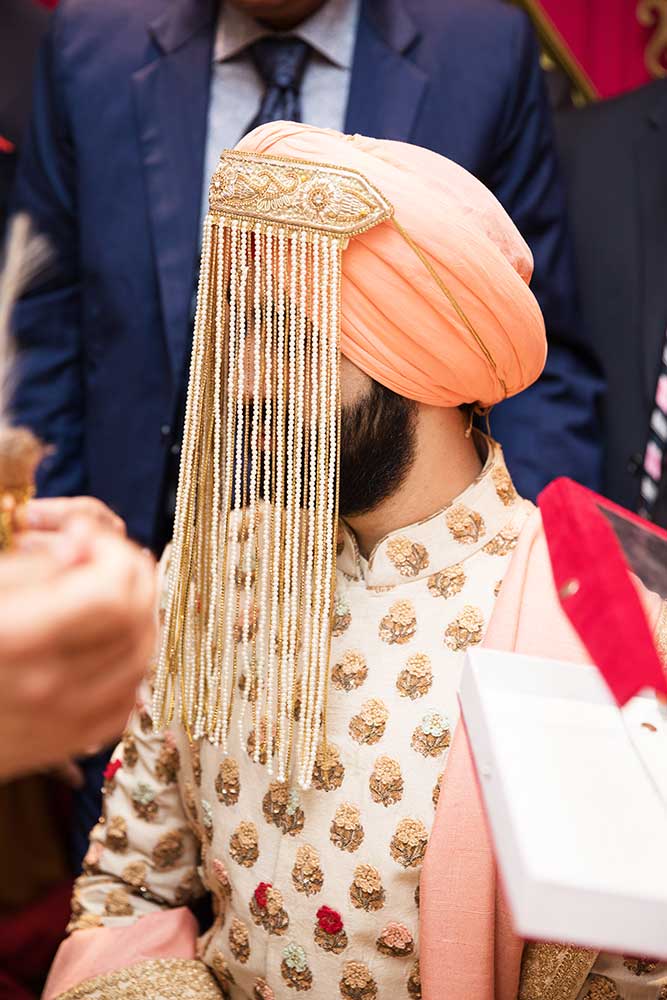
Crowns raise the couple to a kind of royalty for a day. Orthodox Christians crown the pair with stefana, linked by a ribbon. Scandinavian brides wear silver crowns, Polish and Ukrainian brides wear wreaths of flowers and herbs, and Greek brides have crowns tied to each other. Grooms may wear the safa or turban in North India, the sehra of flowers or beads hanging from the turban, and a ceremonial hat in Korea, Japan and Central Asia.

Why cover the head

Reasons given include modesty, respect for elders, protection from the evil eye, a sign of being between two states and a way of marking the bride as someone special on the day. For some communities it is a religious requirement, for others a family habit. In many places the veil is lifted only when the vows are made, so the face is the surprise.

How it is changing

Brides today choose long, short or no veils, flower crowns or jewelled hair combs, and the veil may be an keepsake. Women who cover their hair every day may choose a decorated headscarf for the wedding. Debates about veiling in public life are separate from the ritual veil, and what a wearer thinks it means is what counts.

Veils, crowns and the covered head around the world

🇮🇳 India

In many North Indian communities the bride's face is covered by the ghunghat or an odhni, and the groom wears a sehra of flowers or pearls over his face that is removed before the ceremony. The sehra is a blessing and a defence against the evil eye.

Read: Sehra

🇵🇰 Pakistan

The bride's face is covered by a dupatta, and the couple are shown a mirror under a shawl in the rite of arsi mushaf. The Quran is placed before them as a blessing.

Arsi Mushaf, being written

🇹🇭 Thailand

In the Thai Buddhist rite, the couple's heads are joined by the mongkhon, a pair of linked cords, and water is poured over their hands from a conch shell. It is blessed by monks and elders.

Sai Monkhon, being written

🇨🇳 China

The Han bride wore a red cloth, the hong gaitou, over her head to the groom's house, where the groom lifts it with a rod or a fan. The phoenix crown and a red veil are now used mostly as costume.

Chinese marriage, being written

🇯🇵 Japan

The shiromuku bride wears the wataboshi, a large white hood, or the tsunokakushi, which hides the "horns". The reason given is to hide jealousy and to show humility before her new family.

Tsunokakushi, being written

🇬🇪 Georgia

In an Orthodox wedding the priest places crowns on the heads of the bride and groom and exchanges them three times. In the Svan highlands, brides wear a heavy decorated headdress.

Stefana, being written

Compare all 15 places

Traditions to start with

Also part of it, and being written: Bridal veil (The history of the wedding veil.), Bedeken (The Jewish veiling of the bride.), Stefana (The Orthodox wedding crowns.), Sai Monkhon (The Thai head-linking cord.), Tsunokakushi (The Japanese bridal headdress.), Oczepiny (The Polish capping of the bride.).

Questions people ask

Why does the bride wear a veil?

Reasons given include modesty, a sign of a change in status, protection from the evil eye, and the surprise of the first look. For many people today it is simply part of the dress.

Do grooms wear veils or crowns?

In several traditions, yes: the Indian sehra, the Orthodox crown, the Korean hat and the Central Asian skullcap.

Is a veil the same as hijab?

No. A wedding veil is part of the ceremony, while hijab is a religious head covering worn in daily life by many Muslim women. Some brides wear both.

What does lifting the veil mean?

In Western weddings it marks the moment the couple are united. In others it is the first time the groom sees the bride's face.

About this page

Written by the EveryShaadi desk with AI assistance. Customs differ from place to place and family to family. If this is your tradition and we have it wrong, tell us.
Veils, crowns and the covered head on EveryShaadi

The traditions written up so far, best known first.

🇳🇬 Nigeria and 2 moreGeleGèlè The towering Yoruba head tie that crowns the bride and marks her status on the wedding day.Attire · The weeks before 🇲🇾 Malaysia and 4 moreBaju Kurungباجو كوروڠ The traditional blouse and skirt worn by Malay women for weddings and religious ceremoniesAttire · The weeks before 🇪🇬 Egypt and 4 moreWaist beads Strands of glass or seed worn around the hips to mark womanhood and track body changes in West and North Africa.Adornment · Engagement and betrothal 🇰🇿 KazakhstanBetasharбеташар The lifting of the bride's veil by the groom's mother during a Kazakh wedding ceremonyRite · The ceremony 🇮🇹 Rome, ItalyWeddings in ancient Rome The religious ceremonies and attire that marked a union in the city of Rome before the rise of Christianity.Rite · The weeks before 🇪🇸 Spain and 4 moreMantilla A lace or silk veil worn over the head and shoulders by women in Spain and Latin AmericaAttire · The weeks before 🇮🇱 Jerusalem, Israel and 3 moreJewish wedding The ceremony and laws that bind a couple in Jewish marriage, from the canopy to the glass.Rite · Engagement and betrothal 🇫🇷 Paris, FranceGlobe de mariée A glass bell jar used in France to hold the bride's bouquet and preserve family memories.Adornment · The weeks before 🇯🇵 Tokyo, JapanShinto wedding神前結婚 (Shinzen kekkon) A Shinto purification ritual featuring sake sharing and kimono attire held at a shrine or venue.Rite · The ceremony 🇬🇧 United Kingdom and 3 moreCare cloth A linen or silk cloth held over the heads of a bride and groom during a Christian wedding blessing.Attire · The ceremony 🇫🇷 FranceGarter toss The groom removes the bride's garter and tosses it to unmarried men at the reception.Play · Reception, dance and gifts 🇺🇦 UkraineTraditional Ukrainian weddingТрадиційне українське весілля A multi-day sequence of folk rites, bread baking and church vows that marks the transition from maidenhood to married liRite · Finding a match 🇮🇳 IndiaTelugu Hindu weddingతెలుగు వివాహ వేడుక A multi-day Telugu Hindu marriage marked by seven vows around fire and family rituals.Rite · Finding a match 🇮🇶 Mosul, IraqWedding traditions in Iraq The arranged courtship, religious rites and multi-day celebrations that mark marriage in Iraqi society.Betrothal · Finding a match 🇮🇷 Tehran, Iran and 1 moreIranian weddingمراسم عروسی در ایران A multi-stage ceremony rooted in Zoroastrianism and Islam that binds families through courtship, feasts, and sacred vowsRite · Finding a match 🇷🇺 RussiaRussian wedding traditionsРусская свадьба A multi-day celebration blending Orthodox crowning, ransom games, and lively toasting in Russia.Rite · Engagement and betrothal 🇮🇳 IndiaOdia Hindu weddingBahaghara (ଓଡ଼ିଆ ବାହାଘର) The traditional Hindu marriage ceremony of the Odia people in Odisha, India.Rite · Engagement and betrothal 🇩🇪 Hanover, Germany and 5 moreBridal crownBrautkrone A headdress worn by brides in Central and Northern Europe to symbolize purity and status.Attire · The ceremony

Photo credits on this page

The small pictures above come from Wikimedia Commons under free licences. Some are cropped to fit.

The weekly EveryShaadi

Every week: one wedding tradition from somewhere new, the wedding days coming up around the world, and one idea explained.