Music, dance and procession
The band, the drum, the first dance, the baraat and the dance that ends the night.
A wedding without music is rare. The band at the gate, the drum on the road, the first dance, the choir in the church and the dance that goes on past midnight are all part of how a community says that this is a joyful day. Music also tells guests what to do: stand, walk, clap, throw money or join the circle.
Procession and call
North Indian weddings are led by the baraat band with dhol drummers and a brass ensemble, and the groom may arrive on a mare. In Ghana and Nigeria, drummers and singers precede the groom's family. In Greece the daouli and zurna lead the groom's party, and in Turkey the davul and zurna play through the streets. In Egypt and the Levant a zaffe, a theatrical entrance of drummers, dancers and sometimes a sword bearer, brings the couple into the hall.
Dances with meaning
The Jewish hora lifts the couple on chairs. The Greek kalamatianos and the Georgian kartuli are circle dances where family join hands. In Poland the oczepiny, the capping of the bride, is followed by dancing and games. In the Philippines the money dance, and in Poland and the Polish diaspora the dollar dance, bring cash to the couple. In Scotland the ceilidh is danced by all ages, and in Ireland the reel and the jig do the same.
What is changing
Playlists have replaced many live bands, though live music is still prized. Couples choose a first-dance song, and some arrange choreographed routines that go viral. Devout communities sometimes restrict music or use only voices and drums, and these choices are respected as part of the tradition.
Written by the EveryShaadi desk with AI assistance. Background on Music, dance and procession (kind of custom). Customs differ from place to place and family to family. If this is your tradition and we have it wrong, tell us.
 🇬🇧 United KingdomNantgarw DancesDawnsfeydd Nantgarw
A Welsh folk dance style from south Wales featuring handkerchiefs and sticks.Performance
 🇭🇷 CroatiaNijemo kolo
A silent Croatian folk dance where couples move in a circle without music.Performance · The ceremony
 🇬🇷 Crete, Greece and 1 moreSyrtosΣυρτός
A traditional Greek line dance where partners hold hands and follow a leader through slow and quick steps.Performance · Reception, dance and gifts
🇮🇹 Siena, ItalyMarch of the PalioMarcia del Palio
The brass anthem played during the historical parade before Siena's horse race.Performance · Procession and arrival
 🇧🇪 Belgium and 1 moreProcessional giants and dragonsGéants et dragons processionnels
Large costumed figures carried in street festivals across Belgium and France.Setting · Procession and arrival
🇬🇷 Greece and 2 moreLeventikosΛεβέντικος (Greek), Буфчанско (Macedonian)
A five-beat folk dance performed by Greeks and Slav Macedonians in western Macedonia.Performance
 🇭🇺 Hungary and 2 moreEaster sprinkling in Hungaryhúsvéti locsolás
An Easter Monday custom where boys sprinkle water or perfume on girls and receive painted eggs in return.Betrothal · The weeks before
 🇷🇸 Serbia and 5 moreČočekčočек (Serbian/Macedonian), кючек (Bulgarian), çyçek/qyqek (Albanian), sistemul (Romanian), Tsifteteli (Greek)
A Balkan wedding dance with a distinctive nine-beat rhythm, kept alive by Romani musicians and village celebrations.Performance · The wedding feast
 🇷🇴 Romania and 5 moreKlezmerקלעזמער
The instrumental dance music played by Ashkenazi Jewish musicians at weddings in Eastern Europe and beyondPerformance · Engagement and betrothal
 🇬🇧 United KingdomWassailing
Singing and drinking to bless trees or homes during the Christmas seasonFeast custom · The weeks before
 🇵🇱 Poland and 3 moreEaster palmPolish: palma wielkanocna; Lithuanian: verba
A decorated willow or juniper bundle blessed on Palm Sunday to protect homes and crops.Blessing · The weeks before
 🇷🇴 Romania and 5 moreKlezmerקלעזמער
The instrumental wedding music of Ashkenazi Jews, blending Eastern European and Jewish ritual melodies.Performance · Engagement and betrothal
 🇺🇦 Ukraine and 2 moreQaytarma
A Crimean Tatar folk dance of cyclical motion performed at weddings and holidays.Performance · Reception, dance and gifts
 🇬🇷 Crete, GreeceSoustaΣούστα
A Greek courtship dance performed at weddings to display romance and agility.Performance · Procession and arrival
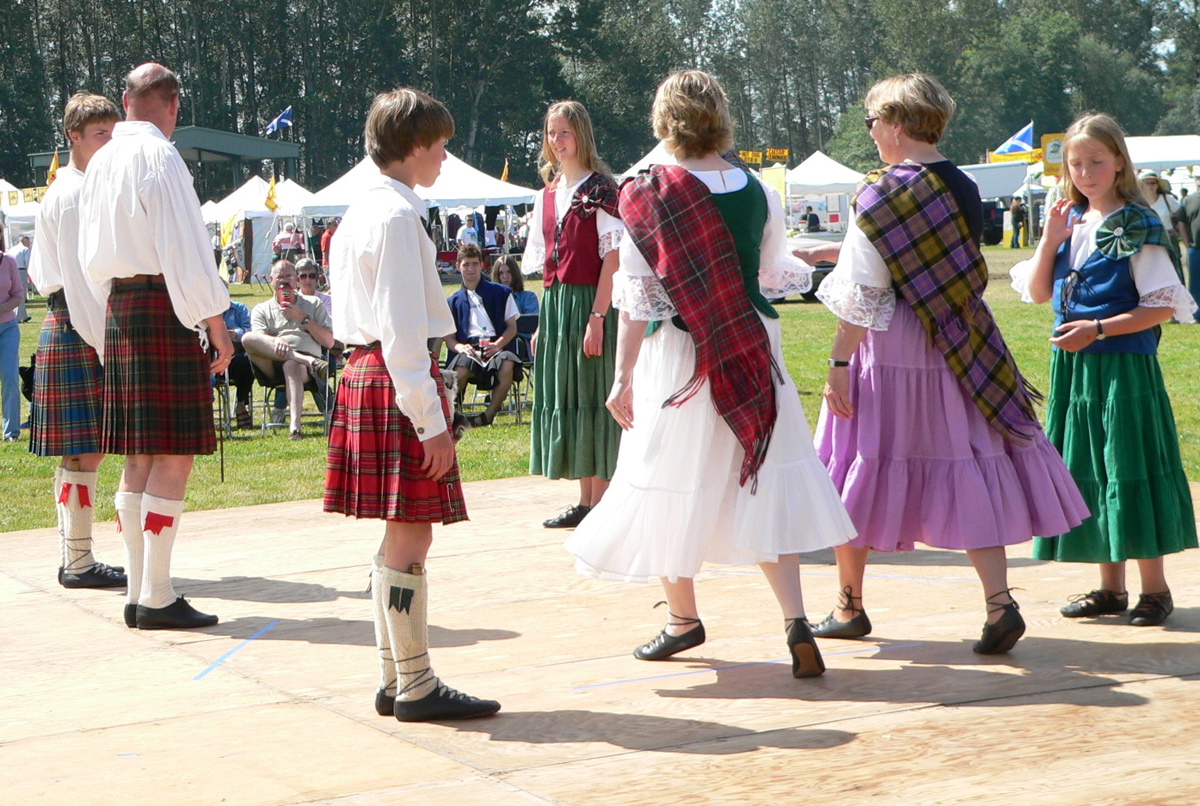 🇬🇧 Edinburgh, United Kingdom and 5 moreScottish country dance
A social group dance where couples trace progressive patterns to traditional Scottish musicPerformance · Reception, dance and gifts
Photo credits on this page
The small pictures above come from Wikimedia Commons under free licences. Some are cropped to fit.
- Wassailing: Joss Smithson, CC BY-SA 2.0, source
- Easter sprinkling in Hungary: Matyófolk, CC BY-SA 4.0, source
- Nijemo kolo: Outrageous zone, CC BY 3.0, source
- Nantgarw Dances: Tabulabells, CC0, source
- Qaytarma: Gottfried Heinrich Geißler, Public domain, source
- Sousta: psyberartist, CC BY 2.0, source
- Scottish country dance: © James F. Perry, CC BY-SA 3.0, source
- Syrtos: Muriel Pécastaing-Boissière pour Cédric Boissière, CC BY-SA 3.0, source
- Processional giants and dragons: No machine-readable author provided. Carolus assumed (based on copyrig, CC BY 2.5, source
- Čoček: Модернист, CC BY-SA 4.0, source
- Klezmer: Syrena Records (Warsaw), Public domain, source
- Easter palm: Evaldas Liutkus, CC BY 2.0, source
- Klezmer: Unknown artist identified as "M.D.", Public domain, source