Venue, setting and decorationEurope
Processional giants and dragons
In its own language: Géants et dragons processionnels
Large costumed figures carried in street festivals across Belgium and France.

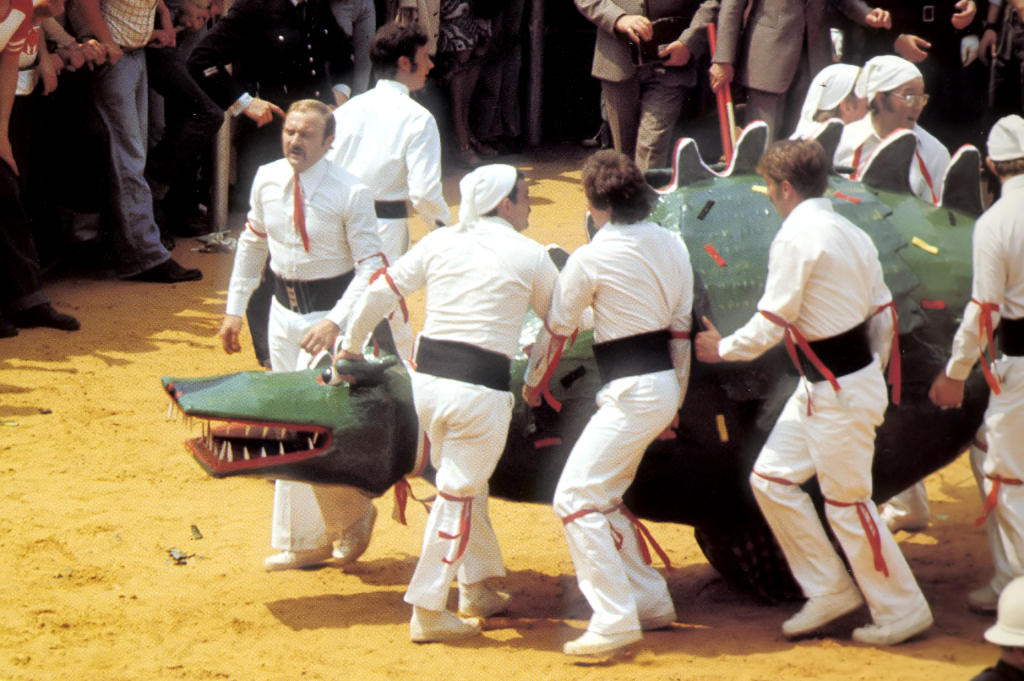
These are massive papier-mâché or wooden figures paraded through towns during local festivals. The tradition spans Belgium and northern France, with roots in medieval community rites. UNESCO recognized the practice in 2008 to support its preservation.
When is Processional giants and dragons kept?
Processional giants and dragons is kept during local town festivals and carnivals.
Processional giants are large, costumed figures that move through streets during local celebrations. Communities in Belgium and France carry these creations to honor history and identity. The practice includes both human-like giants and mythical animals. UNESCO added the tradition to its heritage list in 2008. These events bring neighborhoods together for shared cultural expression.
What the figures represent
The giants serve as living symbols of a town’s history. Some depict historical heroes, while others show mythical creatures. In medieval times, these large figures helped teach biblical stories to people who could not read. Today, they remain central to local identity. Each figure has a unique face and size. The names change by region, such as reus in Flemish areas or gayant in Picardy. They are not static statues but active participants in the festival.
History and origins
The custom began in the fifteenth century. The oldest recorded Belgian giant is Goliath of Nivelles, mentioned in 1457. Belgium hosts nearly one thousand five hundred of these figures. One stands out as the largest in Europe: Jean Turpin of Nieuwpoort, which rises over eleven meters high. The tradition spread from religious processions to secular town festivals. It reflects a deep connection between the community and its past.
Key locations and events
Belgian towns like Mons, Ath, Dendermonde, Mechelen, and Brussels host major festivals featuring these giants. The Ducasse de Mons and Meyboom of Brussels are notable examples. In France, the Nord-Pas-de-Calais region holds more than four hundred fifty giants. Cities such as Douai, Cassel, Hazebrouck, and Steenvoorde parade their own figures. Southern France also participates, with the Pézenas colt and Tarascon’s tarasque representing animal traditions.
Modern recognition and status
UNESCO inscribed the practice on its Intangible Cultural Heritage list in 2008. This recognition helps protect the festivals and supports their continuation. The proclamation aims to valorize these popular events. Some traditions, like the Ducasse d'Ath, have faced changes or withdrawals. Despite shifts, the giants remain vital to regional culture. They continue to appear at carnivals and seasonal gatherings across the border regions.
How Processional giants and dragons is kept
Communities build and maintain the giants using wood, papier-mâché, and fabric. Carriers lift the figures onto their shoulders and move them through streets. The giants dance or sway to music during parades. Local groups manage the maintenance and transport. Festivals occur annually, often tied to religious or historical dates. The figures are stored carefully when not in use. Families and volunteers pass down the skills needed to create and operate them.
When and where
The events happen during specific town festivals throughout the year. Dates vary by location, often linked to saints' days or seasonal cycles. Some occur in summer, others in spring or autumn. The timing depends on local tradition rather than a single national calendar.
The practice is strongest in Belgium and northern France. Key areas include Hainaut, Flanders, and Nord-Pas-de-Calais. Towns like Mons, Douai, and Cassel are central hubs. The tradition extends into southern France with animal figures. Urban and rural communities alike keep the custom alive.
What Processional giants and dragons means
The giants embody local pride and historical memory. They connect present generations to medieval ancestors. The figures represent protection, prosperity, and community unity. Carrying them is seen as an act of devotion to the town. The movement of the giants symbolizes life and continuity. They serve as visual anchors for collective identity.
Who takes part
- Carriers: Lift and move the giant through the streets
- Artisans: Build and repair the giant's structure and costume
- Local officials: Organize the festival schedule and permissions
- Musicians: Play music that guides the procession pace
- Spectators: Watch and participate in the festive atmosphere
If you are a guest
Guests watch the procession from sidewalks or designated areas. They may throw confetti or cheer for the figures. Visitors should respect local customs and stay clear of carriers. Photography is often allowed but check local rules. Bringing cash for food stalls is useful.
Then and now
Some festivals have changed or stopped due to funding or safety concerns. The Ducasse d'Ath was withdrawn in 2022. Modern regulations affect how giants are built and moved. Younger generations help maintain the tradition through new techniques. The UNESCO status provides some financial and promotional support.
On the wedding table
Symbols: Horse and carriage


Questions people ask about Processional giants and dragons
When is Processional giants and dragons kept?
Processional giants and dragons is kept during local town festivals and carnivals.
What are processional giants?
They are large costumed figures carried in street parades during local festivals in Belgium and France. They represent historical or mythical beings and are central to community celebrations.
Why are they important today?
They preserve local history and identity. UNESCO recognized them in 2008 to ensure their protection and continued practice in modern times.
Where can I see them?
Major festivals in Mons, Douai, Cassel, and Tarascon feature these giants. Events occur throughout the year depending on the town's calendar.
See also
 Conga lineA long processing line dance that links dancers in single file to a rhythmic drum beat.
 Viennese waltzThe fast rotary ballroom dance that originated in Austria and defines the traditional waltz.
 MimounaThe Maghrebi Jewish feast held the day after Passover to welcome leavened bread and good fortune.
 Globe de mariéeA glass bell jar used in France to hold the bride's bouquet and preserve family memories.
Good reading and sources
- Processional giants and dragons in Belgium and France on WikipediaEncyclopedia
- More photos on Wikimedia CommonsPhotos and video
- Wikidata recordOpen data
The facts on this page come from the Wikipedia article "Processional giants and dragons in Belgium and France", written by its contributors and used under the CC BY-SA 4.0 licence, and from its Wikidata record (CC0). EveryShaadi rewrote the text in its own words, with AI assistance, and compares every page with the article to make sure no passage is copied. It may be reused under the same CC BY-SA 4.0 licence with a link back.
It may contain mistakes. Wedding customs differ from one family, village and community to the next, and the people who keep them know them best. If something is wrong, tell us. Last refreshed 2026-10-06.
More from Belgium
All the traditions of Belgium 🇫🇷 France and 5 moreChapelloise
A circle mixer dance with partner changes kept in the European Balfolk scenePerformance · Reception, dance and gifts
🇫🇷 France and 5 moreChapelloise
A circle mixer dance with partner changes kept in the European Balfolk scenePerformance · Reception, dance and gifts
 🇫🇮 Finland and 5 moreBanns of marriagekuulutukset avioliittoon (Finnish)
The public announcement of an impending marriage in church or town hall to allow for legal objections.Vow · The weeks before
🇫🇮 Finland and 5 moreBanns of marriagekuulutukset avioliittoon (Finnish)
The public announcement of an impending marriage in church or town hall to allow for legal objections.Vow · The weeks before
 🇧🇪 Kapellen, BelgiumSame-sex marriage in Belgiumhomohuwelijk / mariage homosexuel
The legal union of two people of the same sex, available since June 2003.Modern · The ceremony
🇧🇪 Kapellen, BelgiumSame-sex marriage in Belgiumhomohuwelijk / mariage homosexuel
The legal union of two people of the same sex, available since June 2003.Modern · The ceremony
 🇧🇪 Bruges, BelgiumProcession of the Holy BloodHeilig Bloedprocessie
A Catholic parade in Bruges that carries a relic on Ascension Day.Blessing · The ceremony
🇧🇪 Bruges, BelgiumProcession of the Holy BloodHeilig Bloedprocessie
A Catholic parade in Bruges that carries a relic on Ascension Day.Blessing · The ceremony
The same idea elsewhere
The wedding procession and the arrival compared 🇮🇳 India and 1 moreLaavaanਲਾਵਾਂ ਫੇਰੇ (Lavan)
The four sacred hymns sung during the Anand Karaj that guide a Sikh couple through spiritual stages of married life.Rite · The ceremony
🇮🇳 India and 1 moreLaavaanਲਾਵਾਂ ਫੇਰੇ (Lavan)
The four sacred hymns sung during the Anand Karaj that guide a Sikh couple through spiritual stages of married life.Rite · The ceremony
 🇮🇷 Iran and 1 moreNoghlنقل (Persian) / نقل (Dari)
Sugar-coated almonds served at Iranian and Afghan weddings as a sweet treat and showered confetti.Feast custom · The wedding feast
🇮🇷 Iran and 1 moreNoghlنقل (Persian) / نقل (Dari)
Sugar-coated almonds served at Iranian and Afghan weddings as a sweet treat and showered confetti.Feast custom · The wedding feast
 🇲🇽 Oaxaca, Mexico and 1 moreHuipilhuīpīlli
The traditional tunic worn by indigenous women in Mexico and Central America for weddings and daily life.Attire · The weeks before
🇲🇽 Oaxaca, Mexico and 1 moreHuipilhuīpīlli
The traditional tunic worn by indigenous women in Mexico and Central America for weddings and daily life.Attire · The weeks before
 🇪🇹 Addis Ababa, Ethiopia and 1 moreZuria
The ankle-length dress with woven hem bands worn by Tigrinya and Amhara women for weddings and holidays.Attire · The weeks before
🇪🇹 Addis Ababa, Ethiopia and 1 moreZuria
The ankle-length dress with woven hem bands worn by Tigrinya and Amhara women for weddings and holidays.Attire · The weeks before