Music, dance and processionEurope
Čoček
In its own language: čočек (Serbian/Macedonian), кючек (Bulgarian), çyçek/qyqek (Albanian), sistemul (Romanian), Tsifteteli (Greek)
A Balkan wedding dance with a distinctive nine-beat rhythm, kept alive by Romani musicians and village celebrations.

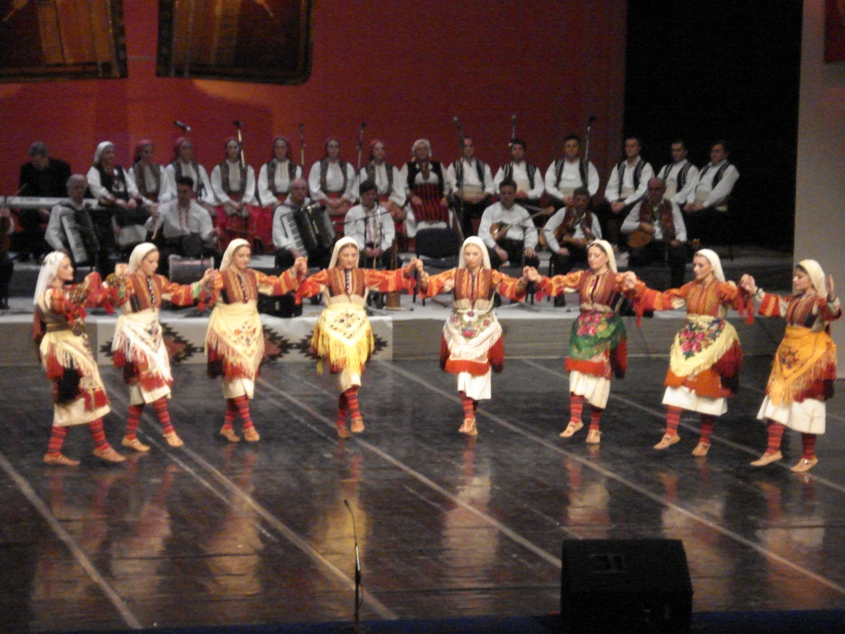
Čoček is a musical style and accompanying dance that developed in the Balkans during the early nineteenth century. It grew from Ottoman military band traditions and spread across Serbia, Bulgaria, North Macedonia, and Romania. Today it remains a central feature of village weddings and banquets, particularly among Muslim Roma and Albanian communities.
When is Čoček kept?
Čoček is kept at village weddings and banquets.
This lively dance and music form defines celebration across the Balkans. Couples move to a complex nine-beat rhythm that traces its roots to Ottoman military bands. Romani musicians preserve the tradition, ensuring it remains a staple at community gatherings and family feasts for generations.
Origins and history
The style emerged in the early nineteenth century as Ottoman military bands moved through the region. These ensembles played across Serbia, Bulgaria, North Macedonia, and Romania. Over time, local groups adapted the music, creating distinct ethnic sub-styles. The tradition passed down through families and was largely maintained by Romani minorities. By the mid-twentieth century, the dance had traveled internationally. Groups like Tanec introduced it to American audiences in 1956, presenting specific pieces such as Kjupurlika from Titov Veles as a dance performed by Muslim women.
Rhythm and structure
The core beat divides into nine parts, often counted as two-two-two-three or two-two-three-two. This pattern appears frequently in Bulgarian and Macedonian folk traditions. Musicians sometimes call this meter 'gypsy nine.' Performers in the former Yugoslavia expanded the form to include four-four and seven-eight time signatures. International folk dancers use many different melodies for the steps. Common tunes include Jeni Jol and Sa Sa. The flexible tempo allows for various interpretations while keeping the essential rhythmic identity intact.
Cultural significance
The dance holds special importance for Muslim Roma and Albanian populations in Kosovo, South Serbia, and Macedonia. It serves as a social glue at village weddings and banquets. The music drives the celebration, encouraging participation from guests of all ages. Romani brass bands keep the repertoire alive, adapting old marches into festive wedding songs. The style has also influenced outside composers. Jazz musician Dave Brubeck noted its impact on his work, using similar tempo patterns in compositions like Blue Rondo à la Turk.
How Čoček is kept
Musicians play a driving rhythm in nine-eight time while couples or groups perform synchronized steps. The dance typically occurs during wedding receptions or village banquets. Romani brass bands provide the live accompaniment, drawing on centuries of military band heritage. Participants follow the beat, shifting weight in patterns that match the two-two-two-three or two-two-three-two subdivisions. The atmosphere is communal, with guests joining in as the music builds energy throughout the evening.
When and where
It takes place during wedding receptions and village banquets. The rhythm dominates the latter part of the celebration when dancing begins. No specific calendar date sets the timing; it depends on the wedding schedule and local customs.
The custom thrives in Serbia, Bulgaria, North Macedonia, and Romania. It is especially strong among Muslim Roma and Albanian communities in Kosovo and South Serbia. The tradition originated from scattered Ottoman military units across these regions.
What Čoček means
The nine-beat rhythm connects modern celebrants to Ottoman military ancestors. The dance represents resilience and cultural continuity within minority communities. For Romani musicians, it is a way to preserve heritage while adapting to local tastes. The communal nature of the dance reinforces social bonds between families and neighbors during important life events.
Who takes part
- Romani musicians: Play the brass band arrangements and drive the rhythm
- The couple: Lead the dance steps during the reception
- Guests: Join the circle or line to celebrate with the couple
- Community elders: Oversee the banquet and encourage participation
If you are a guest
Attendees join the dance floor as the band plays. Guests follow the basic steps, mirroring the lead dancers. There is no strict dress code beyond formal wedding attire. Visitors are welcome to participate once they learn the rhythm. The atmosphere encourages everyone to move together.
Then and now
The tradition continues to evolve as younger generations adapt the music. Some performances incorporate modern instruments alongside traditional brass. International folk dance groups keep the steps alive outside the Balkans. The core rhythm remains recognizable, though tempos may vary slightly depending on the venue and audience.
Questions people ask about Čoček
When is Čoček kept?
Čoček is kept at village weddings and banquets.
What is Čoček?
It is a musical genre and dance from the Balkans that uses a distinctive nine-beat rhythm. It originated from Ottoman military bands and is now a staple of village weddings and banquets.
Who keeps the tradition alive?
Romani musicians and Albanian communities maintain the practice. They pass the music down through generations and perform it at local celebrations across Serbia, Bulgaria, and Macedonia.
Is it legal?
Yes, it is a cultural dance and music form. There are no legal restrictions on performing or attending these celebrations in the countries where it is practiced.
See also
 CsárdásA Hungarian folk dance that begins slowly and ends with a fast spin.
 CălușariA traditional Romanian spring dance and male society known for acrobatic leaps and ritual healing.
 KoloA South Slavic circle dance performed at weddings and social gatherings across the Balkans.
 KlezmerThe instrumental wedding music of Ashkenazi Jews, blending Eastern European and Jewish ritual melodies.
Good reading and sources
The facts on this page come from the Wikipedia article "Čoček", written by its contributors and used under the CC BY-SA 4.0 licence, and from its Wikidata record (CC0). EveryShaadi rewrote the text in its own words, with AI assistance, and compares every page with the article to make sure no passage is copied. It may be reused under the same CC BY-SA 4.0 licence with a link back.
It may contain mistakes. Wedding customs differ from one family, village and community to the next, and the people who keep them know them best. If something is wrong, tell us. Last refreshed 2026-10-06.
More from Serbia
All the traditions of Serbia
🇷🇸 Serbia and 2 moreKoloКоло
A South Slavic circle dance performed at weddings and social gatherings across the Balkans.Performance · Reception, dance and gifts
 🇷🇴 Romania and 7 moreHorahora (Romanian), horo (Bulgarian), oro (Macedonian), horah (Hebrew)
A circle dance held at weddings across Southeast Europe and among Jewish communities worldwide.Performance · Reception, dance and gifts
🇷🇴 Romania and 7 moreHorahora (Romanian), horo (Bulgarian), oro (Macedonian), horah (Hebrew)
A circle dance held at weddings across Southeast Europe and among Jewish communities worldwide.Performance · Reception, dance and gifts
 🇧🇬 Bulgaria and 5 moreBulgarian wedding musicсватбарска музика
Fast-paced instrumental music played at Bulgarian weddings that blends folk, Romani, and Turkish styles.Performance · The ceremony
🇭🇷 Croatia and 2 moreBećarac
A humorous folk song sung at weddings and village parties in Eastern CroatiaPerformance · The wedding feast
🇧🇬 Bulgaria and 5 moreBulgarian wedding musicсватбарска музика
Fast-paced instrumental music played at Bulgarian weddings that blends folk, Romani, and Turkish styles.Performance · The ceremony
🇭🇷 Croatia and 2 moreBećarac
A humorous folk song sung at weddings and village parties in Eastern CroatiaPerformance · The wedding feast
The same idea elsewhere
Wedding music and the dance floor compared 🇹🇷 Kayseri, Turkey and 4 moreHalay
A traditional line and circle dance performed across Turkey and surrounding regions at weddings.Performance · The ceremony
🇹🇷 Kayseri, Turkey and 4 moreHalay
A traditional line and circle dance performed across Turkey and surrounding regions at weddings.Performance · The ceremony
 🇲🇱 MaliWeddings in Mali
Multi-day Malian wedding traditions blending Islamic rites, civil law, and local customs with bazin attire.Rite · Engagement and betrothal
🇪🇬 Egypt and 3 moreZaffaزفّة
A lively musical procession that marks the start of wedding festivities in Arab culture.Performance · The weeks before
🇲🇱 MaliWeddings in Mali
Multi-day Malian wedding traditions blending Islamic rites, civil law, and local customs with bazin attire.Rite · Engagement and betrothal
🇪🇬 Egypt and 3 moreZaffaزفّة
A lively musical procession that marks the start of wedding festivities in Arab culture.Performance · The weeks before
 🇦🇿 AzerbaijanAzerbaijani wedding traditionsAzərbaycanın toy adətləri
The multi-step family rituals of Azerbaijani weddings, from matchmaking to the henna night.Rite · Finding a match
🇦🇿 AzerbaijanAzerbaijani wedding traditionsAzərbaycanın toy adətləri
The multi-step family rituals of Azerbaijani weddings, from matchmaking to the henna night.Rite · Finding a match