Wedding traditions with the veil
The veil hides and reveals.
The veil hides and reveals. It has been a sign of modesty, of protection, of a bride's transformation and of a thing about to be unwrapped. Many cultures have a moment when it is lifted, and that moment is among the most emotional of the day.
Lifting and covering
Roman brides wore a flame-coloured veil, and Greek brides lifted theirs in the anakalypteria. In Jewish weddings the groom covers the bride's face in the bedeken to show he chooses the right bride, a custom linked to Jacob and Leah. In North India the ghunghat is a veil over the face, and in Iran the bride sits at the sofreh aghd under a canopy of silk held by unmarried women. In Western weddings the father may lift it, or the groom after the vows.
Modern choices
Veils are now often worn only for the entrance, or are skipped. In Muslim weddings some brides wear a hijab with the dress, and others do not. Whether to wear one is the bride's decision, and the many styles, from the short blusher to the cathedral veil, reflect a long fashion history.
Written by the EveryShaadi desk with AI assistance. Background on The veil (symbol). Customs differ from place to place and family to family. If this is your tradition and we have it wrong, tell us.
 🇪🇸 Spain and 3 moreMantilla
A lace or silk veil worn over the head and shoulders by women in Spain and Latin America for church and weddings.Attire · The weeks before
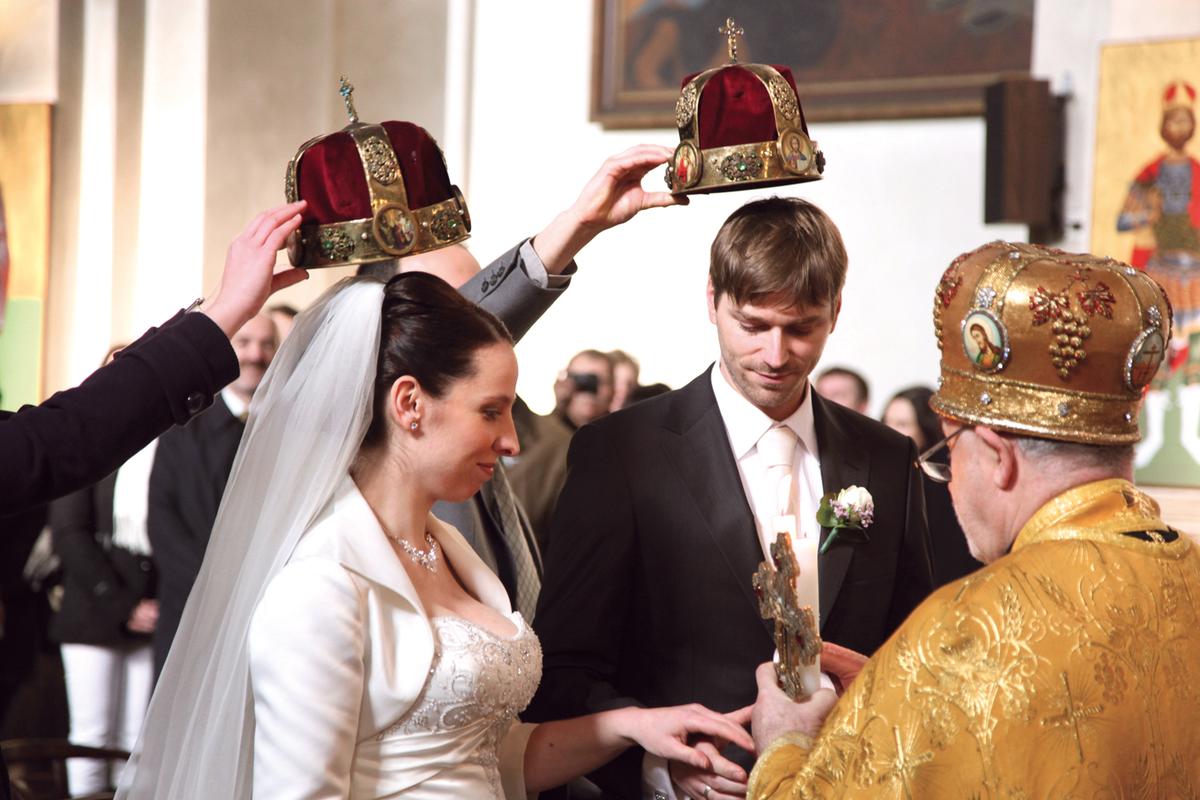 🇷🇺 RussiaEastern Orthodox marriage
A priest blesses rings, then crowns the couple in a two-part sacred riteRite · Engagement and betrothal
🇺🇦 UkraineSong about the RushnykПісня про рушник (Pisnia pro rushnyk)
A Ukrainian song that celebrates the embroidered cloth used in weddings and family life.Performance · The ceremony
 🇮🇹 Rome, ItalyAncient Roman wedding
A veiled Roman bride, omens checked, was led from her family home to her groom's house.Rite · The weeks before
 🇩🇪 Haslach, Germany and 5 moreBridal crownBrautkrone
A headdress worn by brides in Central and Northern Europe to mark purity and family status.Attire · The ceremony
 🇬🇧 United Kingdom and 2 moreWhite wedding
A formal Western marriage style marked by a white dress and structured ceremony.Attire · The weeks before
 🇵🇱 Poland and 3 moreEaster palmPolish: palma wielkanocna; Lithuanian: verba
A decorated willow or juniper bundle blessed on Palm Sunday to protect homes and crops.Blessing · The weeks before
 🇷🇴 Ieud, RomaniaNunta mortului
A symbolic Romanian rite that dresses an unmarried dead person as a bride or groom to complete their life cycle.Rite · The weeks before
Photo credits on this page
The small pictures above come from Wikimedia Commons under free licences. Some are cropped to fit.
- Interfaith marriage in Christianity: Andreas Praefcke, CC BY 3.0, source
- Nunta mortului: Iosif Berman, CC BY-SA 4.0, source
- Ancient Roman wedding: Meister der Aldobrandinischen Hochzeit, Public domain, source
- Bridal crown: Daderot, CC0, source
- Eastern Orthodox marriage: VitVit, CC BY 3.0, source
- Easter palm: Evaldas Liutkus, CC BY 2.0, source
- Mantilla: Museu Valencià d'Etnologia, CC BY-SA 2.0, source