Ceremony and sacred ritesEuropeOrthodox and Eastern Christian
Eastern Orthodox marriage
A priest blesses rings, then crowns the couple in a two-part sacred rite
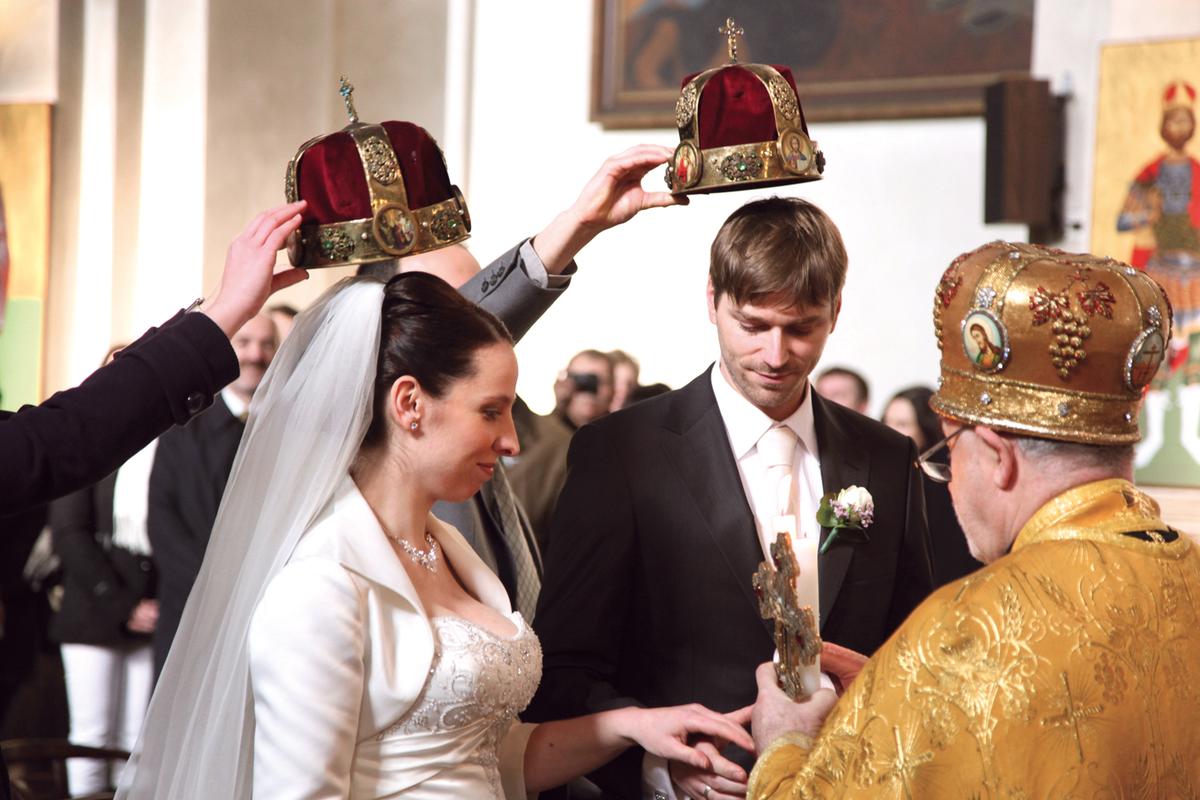
In the Eastern Orthodox Church, marriage is a holy mystery conducted by a priest, joining a man and a woman. It has two linked parts: betrothal, with the giving of rings, then crowning, when the couple receive crowns, share one cup and circle the table three times.
When is Eastern Orthodox marriage kept?
Eastern Orthodox marriage is kept on the wedding day, inside a single church service.
In the Eastern Orthodox Church, marriage is a sacred mystery, one of the church's sacraments, carried out by a priest who joins a man and a woman. The service moves through two linked rites: the couple first exchange rings as a promise, then stand crowned, share from one cup and are led three times around a table. Orthodox Christians keep it because they believe God himself binds the pair.
A sacred mystery
Orthodox Christians treat marriage as one of the church's sacraments, which they call holy mysteries. A priest conducts the service, and his work is to join one man and one woman in marriage. The liturgy used belongs to the Byzantine Rite, the church's traditional order of service, and its most striking moment gives the wedding one of its names: the couple are crowned. A sponsor stands with the pair throughout; in Greek-speaking churches this person is the koumbaro. The service holds two main movements, betrothal first and crowning second.
Rings and promises
The service opens with betrothal, the engagement made formal. Bride and groom give each other rings as a free promise that they intend to marry. Before the exchange, the priest blesses each of them three times. The rings sit on the fourth finger of the right hand. Two texts frame the moment: the priest's prayer recalls the Prodigal Son, the parable of a son welcomed home, and he then recites Psalm 128.
The crowning
Crowning is the more formal half. The couple are each given a candle to hold, and the priest joins their right hands, praying that God will bind the two in one mind, make them one flesh and grant them children. He then sets a crown on each head, declaring three times that he crowns the groom, God's servant, for the bride, God's handmaiden, and naming the Father, the Son and the Holy Spirit. A short hymn sings of God crowning the two with glory and honor. The couple trade crowns three times; a bride's crown rests on her veil if she wears one. Two New Testament readings follow, one from Paul's letter to the Ephesians (5:20-33) addressed to married couples, the other from John's Gospel (2:1-11).
Cup and farewell
After the Lord's Prayer, the couple share a common cup, each drinking from it three times. Wine is the usual filling, though some may choose grape juice instead. Then the priest, holding the Gospel book, leads the bride and groom three times around a table while three hymns are sung. To end, he lifts the crowns from their heads, praying that God will keep them unsoiled and unharmed in his kingdom, and sends them out with the words "Go forth in peace".
How Eastern Orthodox marriage is kept
A priest leads the whole service, and a sponsor, the koumbaro, stands with the couple throughout. First comes betrothal: after three blessings each, bride and groom exchange rings, set on the right hand. Then crowning: each holds a candle, the priest joins their right hands with a prayer, and crowns are placed on both heads, the declaration spoken three times. The couple swap crowns three times and hear two scripture readings and the Lord's Prayer. Each drinks three times from one shared cup of wine. The priest, holding the Gospel book, leads them three times around a table while three hymns are sung. He lifts off the crowns with a closing prayer and dismisses them in peace.
When and where
Both rites happen within one church service on the wedding day: betrothal first, crowning after. The sources here set no rule for choosing the date, and no season or weekday is tied to the ceremony.
It belongs to the Eastern Orthodox Church, whose marriage liturgy follows the Byzantine Rite. It is celebrated in church by a priest, wherever Orthodox communities worship. No single country is named as its home in the sources given here; the sponsor's title, koumbaro, is Greek.
What Eastern Orthodox marriage means
Couples understand the joining as God's own doing: the priest's prayer over their joined hands asks that a wife be joined to her husband by God, the pair made one flesh and given children. Rings stand for a promise made freely by each partner. Crowns mark the glory the couple receive, and the last prayer asks that they be kept without stain until God receives their crowns in his kingdom.
Who takes part
- The priest: Blesses the couple, joins their right hands, crowns them and leads them around the table
- The groom: Gives and receives a ring, holds a candle and drinks from the common cup
- The bride: Gives and receives a ring, holds a candle and wears the crown over her veil
- The koumbaro: The sponsor who is present with the couple through the service
Then and now
The sources record one present-day variation: some may fill the common cup with grape juice rather than wine. Otherwise the service is described in its settled form, moving from betrothal to crowning within a single liturgy.
On the wedding table
- Wine: Fills the common cup, which the couple each drink from three times
- Grape juice: Some may offer it in the shared cup in place of wine
Symbols: The ring Crowns and wreaths The veil Candles and lamps Wine and the shared cup
Questions people ask about Eastern Orthodox marriage
When is Eastern Orthodox marriage kept?
Eastern Orthodox marriage is kept on the wedding day, inside a single church service.
What is an Eastern Orthodox marriage?
It is a sacrament, which the church calls a holy mystery, in which a priest joins one man and one woman in marriage. The liturgy follows the Byzantine Rite, and its best-known act is the placing of crowns on the couple's heads.
Why are the couple crowned?
Crowning is the centre of the second rite. Crowns go on both heads, the couple exchange them three times, and a hymn speaks of God crowning the pair with glory and honor. A bride wearing a veil has her crown set on top of it.
Who is the koumbaro?
The koumbaro is the sponsor who is present with the couple through an Orthodox wedding. The word is Greek. The sources given here name the role but describe no particular duties for it.
What do the couple drink?
After the Lord's Prayer, bride and groom each drink three times from one common cup. Wine is the traditional drink, though some may choose grape juice instead.
See also
 Kazakh wedding ceremonyThe multi-stage Kazakh marriage process featuring the face-revealing feast and the Islamic contract signing.
 Russian wedding traditionsA multi-day celebration blending Orthodox rites, civil registration, and lively folk customs in Russia.AdelphopoiesisA historical Eastern Christian ceremony uniting two people of the same sex in a recognized spiritual bond.
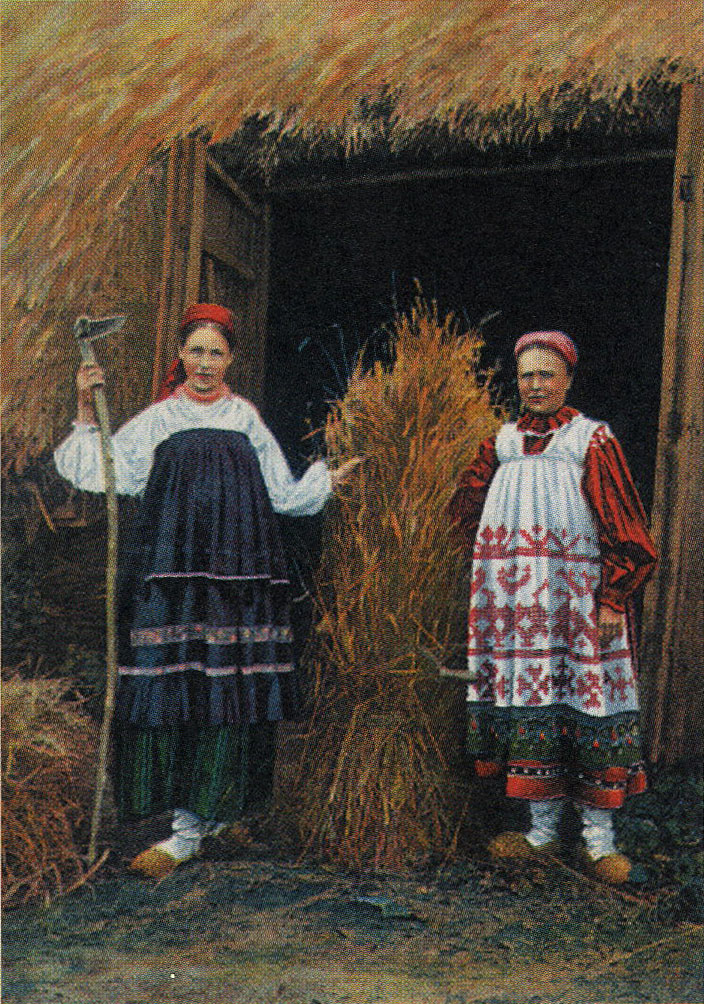 DożynkiA Slavic harvest festival where farmers bring the last sheaf of grain to the village in a ceremonial wreath.
Good reading and sources
- Marriage in the Eastern Orthodox Church on WikipediaEncyclopedia
- More photos on Wikimedia CommonsPhotos and video
- Wikidata recordOpen data
The facts on this page come from the Wikipedia article "Marriage in the Eastern Orthodox Church", written by its contributors and used under the CC BY-SA 4.0 licence, and from its Wikidata record (CC0). EveryShaadi rewrote the text in its own words, with AI assistance, and compares every page with the article to make sure no passage is copied. It may be reused under the same CC BY-SA 4.0 licence with a link back.
It may contain mistakes. Wedding customs differ from one family, village and community to the next, and the people who keep them know them best. If something is wrong, tell us. Last refreshed 2026-10-21.
More from Russia
All the traditions of Russia
🇰🇿 Kazakhstan and 1 moreKazakh wedding ceremonyҮйлену тойы
The multi-stage Kazakh marriage process featuring the face-revealing feast and the Islamic contract signing.Rite · Engagement and betrothal
🇷🇺 RussiaRussian wedding traditions
A multi-day celebration blending Orthodox rites, civil registration, and lively folk customs in Russia.Rite · Engagement and betrothal
 🇷🇺 Russia and 2 moreLoving cup
A two-handled vessel shared by the couple to seal their union at a wedding feast.Feast custom · The wedding feast
 🇵🇱 Poland and 6 moreKolachколач (kolach), калач (kalach), kołacz, colac, kalács
A braided or ring-shaped bread that marks weddings and major holidays across Eastern Europe.Feast custom · Engagement and betrothal
The same idea elsewhere
Rings, knots and tokens of promise compared 🇮🇱 Jerusalem, Israel and 3 moreJewish wedding
The ceremony and laws that bind a couple in Jewish marriage, from the canopy to the glass.Rite · Engagement and betrothal
 🇮🇱 Israel and 3 moreChuppahחֻפָּה (ḥuppā)
The four-poster canopy that marks the Jewish wedding ceremony and symbolizes the couple's new home.Setting · The ceremony
 🇨🇳 China and 2 moreChinese pre-wedding customs三書六禮 (sàam syù luhk láih)
The six traditional rites from the Book of Rites that guide betrothal, gift exchange, and date selection in Chinese weddBetrothal · Finding a match
 🇮🇳 IndiaOdia Hindu weddingBahaghara (ଓଡ଼ିଆ ବାହାଘର)
The traditional Hindu marriage ceremony of the Odia people in India.Rite · Engagement and betrothal