Ceremony and sacred ritesEuropeOrthodox and Eastern Christian
Nunta mortului
A symbolic Romanian rite that dresses an unmarried dead person as a bride or groom to complete their life cycle.

The nunta mortului is a Romanian funeral custom for young people who died before marriage. It treats the deceased as a spouse in ritual language and dress, ensuring their soul finds peace and protecting the living from restless spirits.
When is Nunta mortului kept?
Nunta mortului is kept during the funeral of an unmarried young adult.
This Romanian tradition addresses the social disruption caused by the death of an unmarried person. Villagers dress the deceased in bridal or groom attire to symbolically complete their life journey. The rite honors the soul and prevents it from returning as a restless spirit.
Life cycle completion
Local communities view birth, marriage, and death as a required sequence. Dying without marrying leaves a person's social status unfinished. This gap creates anxiety about the soul's fate and potential harm to the living. The ceremony inserts a symbolic marriage into the funeral to resolve this tension. It does not create a legal union or bind any survivor. Instead, it provides a spiritual transition, allowing the deceased to move to the afterlife with proper honor and completed duties.
Dress and symbols
The body is dressed in specific garments that signal marital status. Men receive festive shirts, scarves, and crowns. Women wear fine embroidered clothes, jewelry, and floral headpieces. White clothing marks the bride, contrasting with the black mourning attire of relatives. A crown or veil often represents a union with a divine figure rather than a human partner. Flags and decorated fir trees also appear, varying by region and gender.
Surrogate partners
Unmarried men sometimes receive a living woman to act as a surrogate bride. She may be a sweetheart, cousin, or volunteer. This role honors the dead man but carries no binding obligation. The woman remains free to marry later. Unmarried women typically do not receive a living groom. They are instead paired with a divine spouse through ritual language and crowning. This asymmetry reflects local gender norms and spiritual beliefs about the afterlife.
Historical records
Ethnographers have documented this practice since the late nineteenth century. Simion Florea Marian recorded details of dress and trees across multiple regions. Gail Kligman conducted extensive fieldwork in Maramureș, analyzing the ritual's social function. Later studies in Lăpuș and Vișeu de Mijloc show how the custom persists in isolated areas. These accounts highlight regional variations in flags, colors, and specific ceremonial objects used during the burial.
How Nunta mortului is kept
The family prepares the body using bridal or groom attire. A crown, veil, or flag is added to mark the symbolic union. Mourners dress in black, creating a visual contrast with the white wedding garments. A living woman may accompany a dead man, while a dead woman receives a divine spouse. The procession moves to the cemetery with these elements present. Laments use wedding vocabulary to describe the departure. The priest performs standard funeral rites, incorporating the symbolic marriage imagery.
When and where
It occurs during the funeral of an unmarried young adult. The timing aligns with the standard burial schedule. The ritual replaces or supplements standard mourning practices to address the specific social gap left by premature death.
The custom is strongest in northern Romania, particularly in Maramureș. Historical records extend to Transylvania, Bukovina, Moldavia, Wallachia, Dobruja, and Banat. Specific villages like Ieud, Botiza, Breb, and Vișeu de Mijloc maintain distinct local forms.
What Nunta mortului means
The rite resolves the social incompleteness of dying unmarried. It ensures the soul transitions peacefully to the afterlife. It also protects the living from potential harm caused by unresolved obligations. The symbolism transforms a tragic loss into a structured social event. It reaffirms community values regarding marriage and life stages.
Who takes part
- The deceased: Is dressed as a bride or groom to signify completed social status.
- Mourners: Wear black to distinguish funeral decorum from wedding joy.
- Surrogate bride: Accompanies a dead man to honor his soul without binding ties.
- Priest: Performs funeral services while acknowledging the symbolic wedding context.
- Family members: Prepare the body and manage the procession with specific ritual objects.
If you are a guest
Guests attend as mourners, wearing black clothing. They participate in the procession and support the family. They do not treat the event as a celebration. Their presence acknowledges the social importance of the deceased's life stage. They respect the solemnity of the combined funeral and symbolic wedding.
Then and now
The practice has declined in many areas due to urbanization and changing religious views. However, it persists in some rural communities in Maramureș. Local ethnographers continue to document surviving forms. The custom adapts to modern contexts while retaining its core symbolic function.
On the wedding table
Symbols: Crowns and wreaths The veil The colour white Trees and plantings The ring

Questions people ask about Nunta mortului
When is Nunta mortului kept?
Nunta mortului is kept during the funeral of an unmarried young adult.
What is the nunta mortului?
It is a Romanian funeral rite for unmarried young adults. The deceased is dressed as a bride or groom to symbolically complete their life cycle. This honors the soul and protects the living from unrest.
Does it create a real marriage?
No. The union is purely symbolic and spiritual. It does not bind any living person to the deceased. A surrogate partner remains free to marry others. The rite addresses social and spiritual needs, not legal ones.
Where is this custom practiced?
It is primarily found in Romania, especially in Maramureș. Historical records show it once spread across Transylvania, Bukovina, and other regions. Today, it survives mainly in specific rural villages.
Why is it important?
It resolves the social disruption of dying unmarried. It ensures the soul's peaceful transition. It also prevents the dead from returning as harmful spirits. The rite reinforces community values about life stages.
See also
 CălușariA traditional Romanian spring dance and male society known for acrobatic leaps and ritual healing.DragobeteA Romanian spring festival where young people exchange flowers and seek romantic bonds.MărțișorThe red and white string charm worn in early spring to welcome the new year.
 MartenitsaWhite and red yarn charms worn in the Balkans to welcome spring and wish for good health.
Good reading and sources
The facts on this page come from the Wikipedia article "Nunta mortului", written by its contributors and used under the CC BY-SA 4.0 licence, and from its Wikidata record (CC0). EveryShaadi rewrote the text in its own words, with AI assistance, and compares every page with the article to make sure no passage is copied. It may be reused under the same CC BY-SA 4.0 licence with a link back.
It may contain mistakes. Wedding customs differ from one family, village and community to the next, and the people who keep them know them best. If something is wrong, tell us. Last refreshed 2026-10-06.
More from Romania
All the traditions of Romania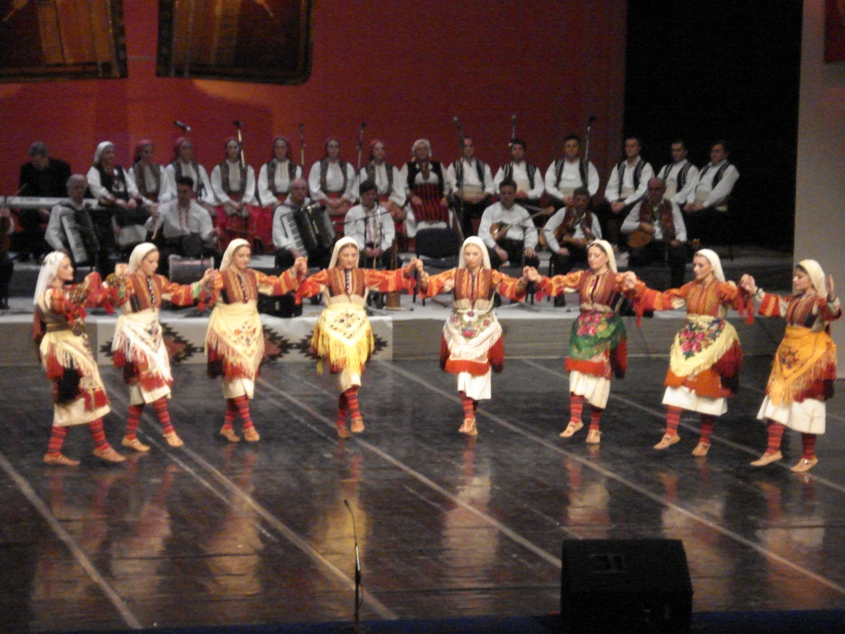 🇷🇴 Romania and 7 moreHorahora (Romanian), horo (Bulgarian), oro (Macedonian), horah (Hebrew)
A circle dance held at weddings across Southeast Europe and among Jewish communities worldwide.Performance · Reception, dance and gifts
🇷🇴 Romania and 7 moreHorahora (Romanian), horo (Bulgarian), oro (Macedonian), horah (Hebrew)
A circle dance held at weddings across Southeast Europe and among Jewish communities worldwide.Performance · Reception, dance and gifts
 🇵🇱 Poland and 6 moreKolachколач (kolach), калач (kalach), kołacz, colac, kalács
A braided or ring-shaped bread that marks weddings and major holidays across Eastern Europe.Feast custom · Engagement and betrothal
🇵🇱 Poland and 6 moreKolachколач (kolach), калач (kalach), kołacz, colac, kalács
A braided or ring-shaped bread that marks weddings and major holidays across Eastern Europe.Feast custom · Engagement and betrothal
 🇬🇧 United Kingdom and 5 moreRing fingerdigitus annularis
The fourth digit of the hand where wedding and engagement rings are traditionally worn.Attire · The ceremony
🇷🇴 Romania and 4 moreCălușariCălușarii
A traditional Romanian spring dance and male society known for acrobatic leaps and ritual healing.Performance · The weeks before
🇬🇧 United Kingdom and 5 moreRing fingerdigitus annularis
The fourth digit of the hand where wedding and engagement rings are traditionally worn.Attire · The ceremony
🇷🇴 Romania and 4 moreCălușariCălușarii
A traditional Romanian spring dance and male society known for acrobatic leaps and ritual healing.Performance · The weeks before
The same idea elsewhere
Parents, giving away and the in-laws compared 🇮🇳 IndiaAyyavazhi wedding
The sacred rite of Ayyavazhi that treats marriage as a spiritual sacrament and family life as the highest austerity.Rite · Procession and arrival
🇮🇳 IndiaAyyavazhi wedding
The sacred rite of Ayyavazhi that treats marriage as a spiritual sacrament and family life as the highest austerity.Rite · Procession and arrival
 🇫🇯 FijiTabua
A polished sperm whale tooth exchanged as a gift in Fijian weddings and ceremonies.Gift custom · Engagement and betrothal
🇫🇯 FijiTabua
A polished sperm whale tooth exchanged as a gift in Fijian weddings and ceremonies.Gift custom · Engagement and betrothal
 🇲🇽 Oaxaca, Mexico and 1 moreHuipilhuīpīlli
The traditional tunic worn by indigenous women in Mexico and Central America for weddings and daily life.Attire · The weeks before
🇲🇽 Oaxaca, Mexico and 1 moreHuipilhuīpīlli
The traditional tunic worn by indigenous women in Mexico and Central America for weddings and daily life.Attire · The weeks before
 🇳🇪 In-Gall, Niger and 2 moreGuérewol
A week-long courtship dance where Wodaabe men display their beauty to win the attention of marriageable women.Rite · The weeks before
🇳🇪 In-Gall, Niger and 2 moreGuérewol
A week-long courtship dance where Wodaabe men display their beauty to win the attention of marriageable women.Rite · The weeks before