Wedding dress and clothingSouth AsiaHinduSecular and civil
Kasavu
In its own language: കസാവ്
The white cotton and gold border attire worn by Malayalis for weddings and festivals.
Kasavu is a handloom weaving technique from Kerala that uses fine gold or silver threads to create borders on white cotton or silk. It produces the traditional two-piece mundu-veshti set and the single-piece Kerala saree. This attire is central to Malayali identity and is worn during weddings, Vishu, and classical dance performances.
When is Kasavu kept?
Kasavu is kept during weddings, festivals, and special occasions.
Kasavu refers to the intricate weaving of gold or silver threads into white cotton fabric in Kerala. This craft creates the distinctive attire worn by Malayalis for significant life events. The garments symbolize purity and prosperity, forming an essential part of the wedding ensemble for both men and women.
Origins and history
The tradition traces back to ancient draped garments mentioned in Buddhist and Jain texts. The specific weaving method gained prominence through royal patronage between the sixteenth and nineteenth centuries. Maharaja Avittam Thirunal Balaramavarma invited weavers from the Chaliyan community to elevate the local industry. They produced fine cotton for the Travancore royal family, which attracted European traders. The technique spread across India, though it remains most closely tied to Kerala's cultural heritage.
Attire and styles
Traditional wear consists of a mundu wrapped around the lower body and a veshti for the upper torso. Women often pair this with a red, green, or gold blouse. The defining feature is the wide border woven with metallic threads. While pure gold was once standard, modern versions use synthetic gold-colored yarns. The width of the border varies significantly, influencing the garment's value. Today, many women prefer a single-piece Kerala saree over the historical two-piece set.
Production and places
Weaving villages like Kuthampully near Ottapalam specialize entirely in kasavu cloth. The Devanga chettiar community established these centers centuries ago. Weavers pool their output and sell it through collective markets. Powerlooms now compete with handlooms, offering cheaper mass-produced alternatives. However, hand-woven pieces retain a distinct texture valued by purists. The craft continues to thrive as a marker of regional identity and artisanal skill.
Cultural significance
The attire is mandatory for classical dances like Mohiniyattam and Kaikottikali. During Vishu, new kasavu cloths are placed near the ceremonial lamp to invite wealth. The white fabric represents purity, while the gold border signifies prosperity. Families invest heavily in these garments for weddings, viewing them as heirlooms. The style remains a powerful symbol of Malayali pride and continuity across generations.
How Kasavu is kept
Men wrap the mundu around their waist and drape the veshti over their shoulder. Women wear the mundu similarly but often choose a pre-stitched Kerala saree. Both genders accessorize with the gold-bordered fabric for wedding ceremonies. The attire is also worn during religious festivals and classical dance recitals. Families ensure the bride and groom don these garments to honor tradition and signal their cultural roots.
When and where
Worn during weddings, Vishu festival, and classical dance performances. The date depends on the wedding schedule or lunar calendar events.
Originated in Kerala, India. Now common across South India, particularly Tamil Nadu and Karnataka. Strongest presence in weaving villages like Kuthampully.
What Kasavu means
White cotton symbolizes purity and simplicity. The gold border represents wealth, prosperity, and divine blessing. Wearing kasavu connects the individual to ancestral traditions and regional pride. It marks significant life transitions and spiritual observances.
Who takes part
- The bride: Wears a Kerala saree with a gold border and traditional blouse
- The groom: Wears the mundu and veshti set with a formal shirt
- The weavers: Hand-weave the gold threads into the cotton fabric
- Dancers: Perform Mohiniyattam wearing only kasavu garments
If you are a guest
Guests at a Kerala wedding typically wear kasavu attire to show respect. Men might wear a mundu-veshti, while women choose a saree with a gold border. The dress code emphasizes modesty and traditional elegance. Visitors should avoid bright, non-traditional colors if possible.
Then and now
Powerlooms have replaced some handlooms, making kasavu more affordable. Synthetic gold threads are common due to the high cost of real metal. Younger generations sometimes prefer lighter fabrics, but the style remains essential for formal events.
On the wedding table
Questions people ask about Kasavu
When is Kasavu kept?
Kasavu is kept during weddings, festivals, and special occasions.
What is kasavu?
It is a weaving technique using gold or silver threads on white cotton, creating the traditional Kerala saree and mundu-veshti set worn for weddings and festivals.
Who wears kasavu?
Malayalis in Kerala and surrounding regions wear it. Both men and women don the attire for weddings, Vishu, and classical dance performances.
Is kasavu legal?
Yes, kasavu is a textile craft and attire. There are no legal restrictions on its production or wearing. It is a protected cultural heritage item.
See also
 Kanchipuram silk sariThe heavy silk bridal garment woven in Kanchipuram with contrasting borders and gold zari.
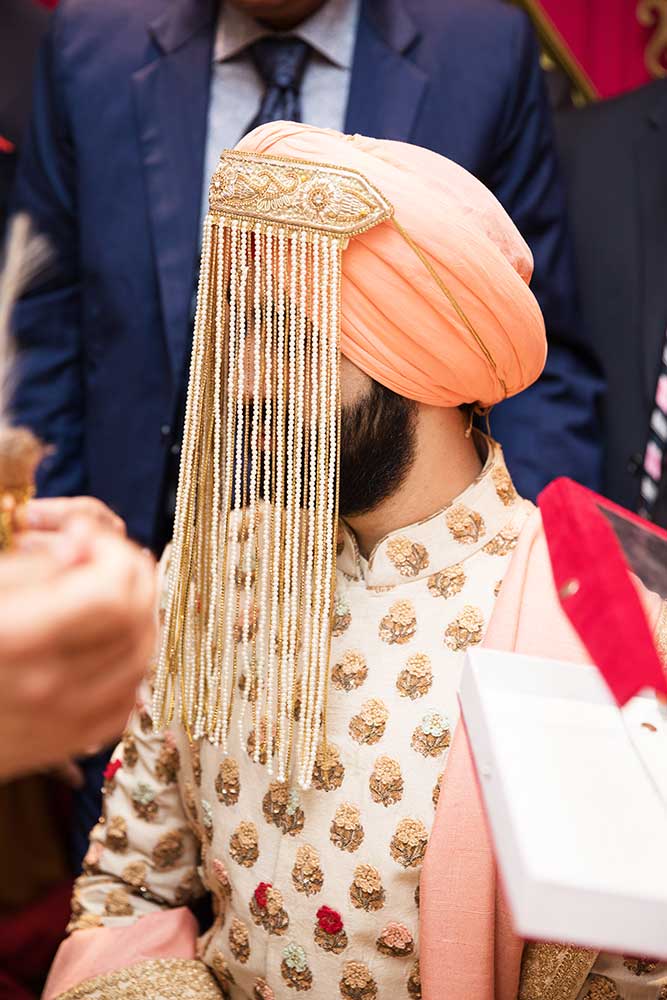 SehraA floral or beaded veil tied to the groom's turban before he departs for the wedding ceremony.
 ShankhaWhite conch shell bangles worn by Bengali Hindu married women as a symbol of their husband's well-being.
Good reading and sources
- For 500 years, a Kannadiga community of weavers has produced Kerala’s iconic white and gold sareeScroll.in, Article
- For 500 years, a Kannadiga community of weavers has produced Kerala’s iconic white and gold sareeScroll.in, Article
The facts on this page come from the Wikipedia article "Kasavu", written by its contributors and used under the CC BY-SA 4.0 licence, and from its Wikidata record (CC0). EveryShaadi rewrote the text in its own words, with AI assistance, and compares every page with the article to make sure no passage is copied. It may be reused under the same CC BY-SA 4.0 licence with a link back.
It may contain mistakes. Wedding customs differ from one family, village and community to the next, and the people who keep them know them best. If something is wrong, tell us. Last refreshed 2026-10-05.
More from India
All the traditions of India
🇮🇳 Kanchipuram, IndiaKanchipuram silk sari
The heavy silk bridal garment woven in Kanchipuram with contrasting borders and gold zari.Attire · The ceremony
 🇮🇳 Bhuj, India and 1 moreBandhani
A traditional Indian tie-dye method that creates intricate dot patterns by binding small sections of cloth before dyeingAttire · Engagement and betrothal
🇮🇳 IndiaMadisarமடிசார் (Madisar)
The nine-yard sari drape worn by Tamil Brahmin women during weddings and religious rites.Attire · The ceremony
🇮🇳 Jodhpur, India and 1 moreAchkanअचकन (Hindi), اچکن (Urdu)
A long, side-fastening jacket worn by grooms and men at formal Indian weddings.Attire · The ceremony
🇮🇳 Bhuj, India and 1 moreBandhani
A traditional Indian tie-dye method that creates intricate dot patterns by binding small sections of cloth before dyeingAttire · Engagement and betrothal
🇮🇳 IndiaMadisarமடிசார் (Madisar)
The nine-yard sari drape worn by Tamil Brahmin women during weddings and religious rites.Attire · The ceremony
🇮🇳 Jodhpur, India and 1 moreAchkanअचकन (Hindi), اچکن (Urdu)
A long, side-fastening jacket worn by grooms and men at formal Indian weddings.Attire · The ceremony
The same idea elsewhere
The wedding dress and what the couple wear compared 🇰🇷 South Korea and 1 moreJokduri족두리
A traditional Korean coronet worn by women during weddings and other special occasions.Attire · The ceremony
🇺🇦 UkraineSong about the RushnykПісня про рушник (Pisnia pro rushnyk)
A Ukrainian song that celebrates the embroidered cloth used in weddings and family life.Performance · The ceremony
🇰🇷 South Korea and 1 moreJokduri족두리
A traditional Korean coronet worn by women during weddings and other special occasions.Attire · The ceremony
🇺🇦 UkraineSong about the RushnykПісня про рушник (Pisnia pro rushnyk)
A Ukrainian song that celebrates the embroidered cloth used in weddings and family life.Performance · The ceremony
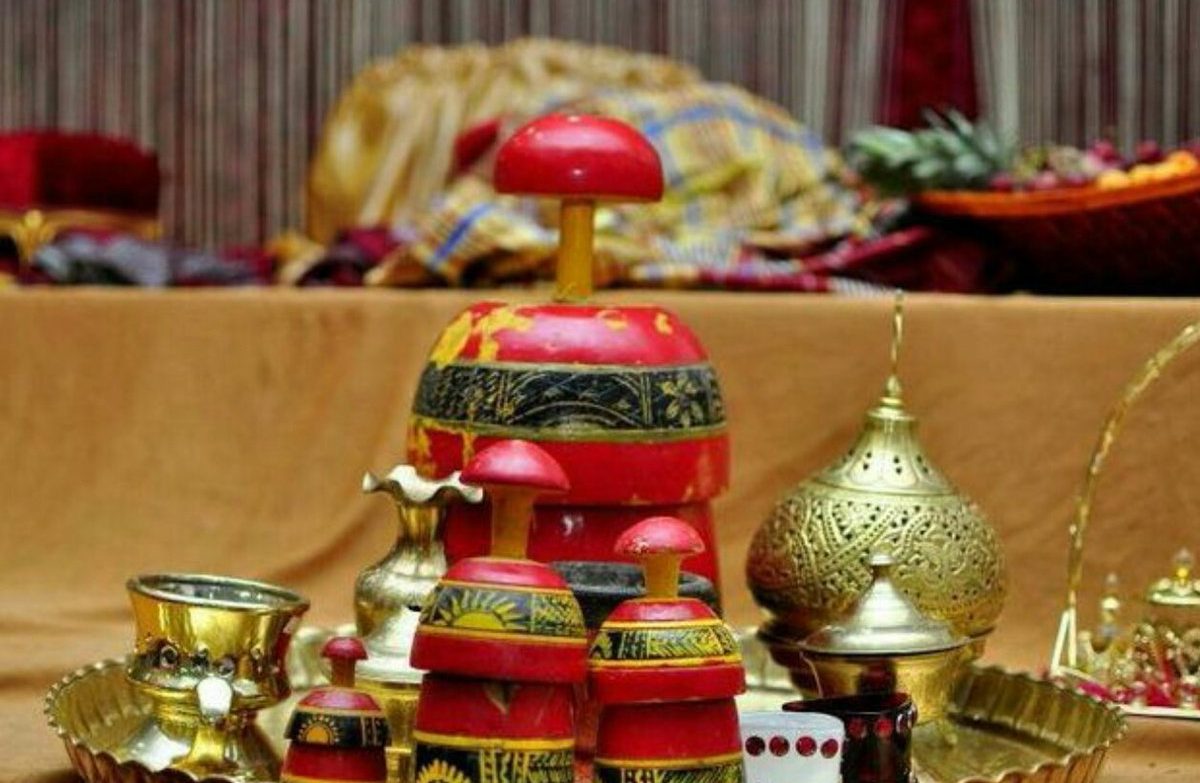 🇸🇩 Khartoum, SudanJirtigالجَرْتِقْ (Arabic)
A Sudanese inauguration ritual where the groom is symbolically crowned as a king.Rite · The weeks before
🇸🇩 Khartoum, SudanJirtigالجَرْتِقْ (Arabic)
A Sudanese inauguration ritual where the groom is symbolically crowned as a king.Rite · The weeks before
 🇯🇵 Tokyo, JapanShinto wedding神前結婚 (Shinzen kekkon)
A Shinto purification ritual featuring sake sharing and kimono attire held at a shrine or venue.Rite · The ceremony
🇯🇵 Tokyo, JapanShinto wedding神前結婚 (Shinzen kekkon)
A Shinto purification ritual featuring sake sharing and kimono attire held at a shrine or venue.Rite · The ceremony