Wedding dress and clothingSouth Asia
Kanchipuram silk sari
The heavy silk bridal garment woven in Kanchipuram with contrasting borders and gold zari.

A silk sari made in the Kanchipuram region of Tamil Nadu, India. It is worn as a bridal or special occasion garment by women across South India. The Government of India granted it geographical indication status in 2005-2006.
When is Kanchipuram silk sari kept?
Kanchipuram silk sari is kept during weddings and festivals.
The Kanchipuram silk sari is a traditional bridal garment from Tamil Nadu, India. Women wear these heavy silk saris for weddings and religious festivals. The design features wide contrasting borders and intricate gold patterns. Weavers use pure mulberry silk and zari threads to create these durable textiles. The craft has been protected by a geographical indication since 2005.
Weaving techniques
Artisans weave these saris using pure mulberry silk threads sourced from South India. The process requires three shuttles working simultaneously. One weaver handles the right side while an aide manages the left shuttle. The border and body are woven separately before being interlocked. This method creates a strong joint that prevents the border from detaching if the fabric tears. A zigzag line often marks where the main body meets the hanging end.
Design elements
The saris display wide contrast borders and traditional motifs. Temple designs, checks, stripes, and floral buttas appear frequently. Patterns draw inspiration from South Indian temple scriptures and natural features like leaves and birds. Some versions feature paintings of Raja Ravi Varma or scenes from the Ramayana and Mahabharata epics on the mundhi. The cost varies based on the intricacy of the work and the amount of gold zari used.
Cultural significance
These garments hold a central place in South Indian weddings. Women in Tamil Nadu, Kerala, Karnataka, and Andhra Pradesh wear them for bridal ceremonies. The heavy silk and gold cloth mark the occasion as special and festive. The quality of the craftsmanship has earned the textile its renowned reputation. Families involved in production number around five thousand as of 2008.
How Kanchipuram silk sari is kept
Brides wear the sari during the wedding ceremony. The garment features a distinct body and border woven together. Gold zari threads add decorative detail. The sari is draped traditionally over the shoulder. The heavy silk fabric signifies prosperity and auspiciousness. Women continue this practice for weddings and major religious festivals across South India.
When and where
Worn during weddings and festivals throughout the year. No specific month is designated.
Originates in Kanchipuram, Tamil Nadu, India. Worn widely in Tamil Nadu, Kerala, Karnataka, and Andhra Pradesh.
What Kanchipuram silk sari means
The heavy silk and gold zari represent prosperity and auspiciousness. The strong weaving symbolizes durability and commitment. The temple-inspired motifs connect the wearer to spiritual heritage. The contrasting borders highlight the importance of the occasion.
Who takes part
- The bride: Wears the sari during the wedding ceremony
- The weaver: Uses three shuttles to weave the silk and zari
- The aide: Manages the left shuttle while the weaver works the right
Then and now
The craft remains active with thousands of families involved. The geographical indication protects the name and origin. Modern adaptations may vary in design complexity.
On the wedding table
Symbols: Gold and jewellery

Questions people ask about Kanchipuram silk sari
When is Kanchipuram silk sari kept?
Kanchipuram silk sari is kept during weddings and festivals.
What is a Kanchipuram silk sari?
It is a silk sari made in Kanchipuram, Tamil Nadu, India. It features pure mulberry silk and gold zari threads. The design includes wide contrasting borders and intricate patterns. It is recognized as a geographical indication.
How is the sari woven?
Artisans use three shuttles to weave the fabric. The border and body are woven separately and then interlocked. This technique ensures the border does not detach easily. Pure mulberry silk and zari are the primary materials.
See also
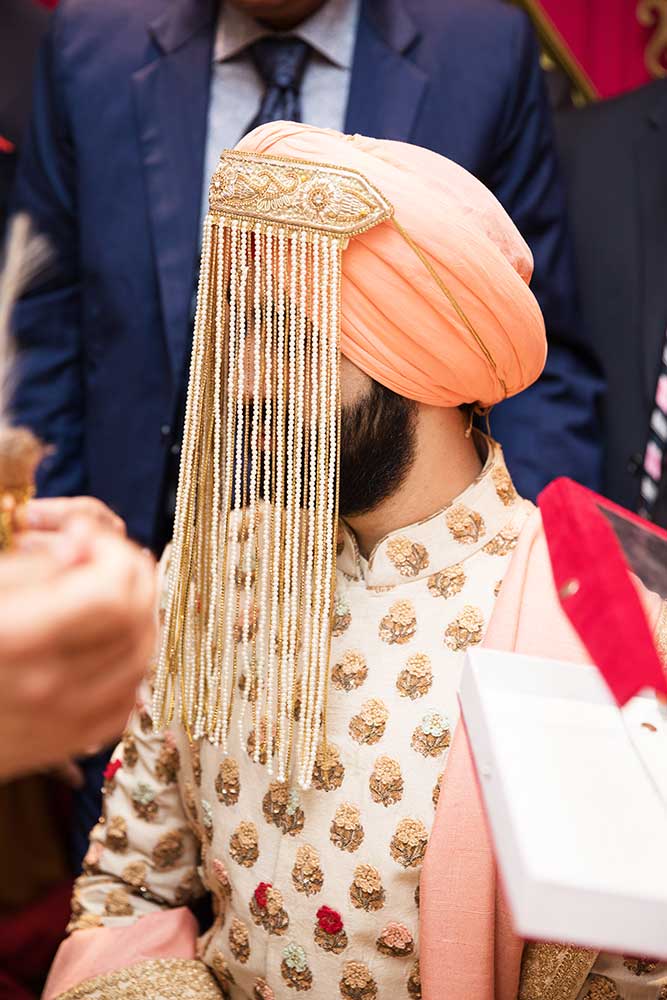 SehraA floral or beaded veil tied to the groom's turban before he departs for the wedding ceremony.
 ShankhaWhite conch shell bangles worn by Bengali Hindu married women as a symbol of their husband's well-being.
 BeskapThe formal black jacket worn by Javanese men during weddings and official ceremonies.
Good reading and sources
- Weaving through threads of Kancheepuram's historyThe Hindu, Article
- Weaving through threads of Kancheepuram's historyThe Hindu, Article
The facts on this page come from the Wikipedia article "Kanchipuram silk sari", written by its contributors and used under the CC BY-SA 4.0 licence, and from its Wikidata record (CC0). EveryShaadi rewrote the text in its own words, with AI assistance, and compares every page with the article to make sure no passage is copied. It may be reused under the same CC BY-SA 4.0 licence with a link back.
It may contain mistakes. Wedding customs differ from one family, village and community to the next, and the people who keep them know them best. If something is wrong, tell us. Last refreshed 2026-10-05.
More from India
All the traditions of India 🇮🇳 Bhuj, India and 1 moreBandhani
A traditional Indian tie-dye method that creates intricate dot patterns by binding small sections of cloth before dyeingAttire · Engagement and betrothal
🇮🇳 IndiaMadisarமடிசார் (Madisar)
The nine-yard sari drape worn by Tamil Brahmin women during weddings and religious rites.Attire · The ceremony
🇮🇳 Kochi, IndiaKasavuകസാവ്
The white cotton and gold border attire worn by Malayalis for weddings and festivals.Attire · The weeks before
🇮🇳 Jodhpur, India and 1 moreAchkanअचकन (Hindi), اچکن (Urdu)
A long, side-fastening jacket worn by grooms and men at formal Indian weddings.Attire · The ceremony
🇮🇳 Bhuj, India and 1 moreBandhani
A traditional Indian tie-dye method that creates intricate dot patterns by binding small sections of cloth before dyeingAttire · Engagement and betrothal
🇮🇳 IndiaMadisarமடிசார் (Madisar)
The nine-yard sari drape worn by Tamil Brahmin women during weddings and religious rites.Attire · The ceremony
🇮🇳 Kochi, IndiaKasavuകസാവ്
The white cotton and gold border attire worn by Malayalis for weddings and festivals.Attire · The weeks before
🇮🇳 Jodhpur, India and 1 moreAchkanअचकन (Hindi), اچکن (Urdu)
A long, side-fastening jacket worn by grooms and men at formal Indian weddings.Attire · The ceremony
The same idea elsewhere
The wedding dress and what the couple wear compared 🇲🇾 Malaysia and 4 moreBaju Kurungباجو كوروڠ
The traditional blouse and skirt worn by Malay women for weddings and religious ceremoniesAttire · The weeks before
🇮🇩 IndonesiaBeskapꦧꦼꦱ꧀ꦏꦥ꧀
The formal black jacket worn by Javanese men during weddings and official ceremonies.Attire · The ceremony
🇲🇾 Malaysia and 4 moreBaju Kurungباجو كوروڠ
The traditional blouse and skirt worn by Malay women for weddings and religious ceremoniesAttire · The weeks before
🇮🇩 IndonesiaBeskapꦧꦼꦱ꧀ꦏꦥ꧀
The formal black jacket worn by Javanese men during weddings and official ceremonies.Attire · The ceremony
 🇧🇳 Brunei and 2 moreTengkolokتڠكولوق
A folded songket headcloth worn by Malay and Indonesian grooms at weddingsAttire · The ceremony
🇧🇳 Brunei and 2 moreTengkolokتڠكولوق
A folded songket headcloth worn by Malay and Indonesian grooms at weddingsAttire · The ceremony
 🇲🇱 MaliWeddings in Mali
Multi-day Malian wedding traditions blending Islamic rites, civil law, and local customs with bazin attire.Rite · Engagement and betrothal
🇲🇱 MaliWeddings in Mali
Multi-day Malian wedding traditions blending Islamic rites, civil law, and local customs with bazin attire.Rite · Engagement and betrothal