Wedding dress and clothingSoutheast Asia
Beskap
In its own language: ꦧꦼꦱ꧀ꦏꦥ꧀
The formal black jacket worn by Javanese men during weddings and official ceremonies.

This tailored black jacket is a key part of traditional Javanese attire for men. It features an asymmetrical front and is worn with a batik sarong. The garment signals respect and formality at wedding events and other important social gatherings.
When is Beskap kept?
Beskap is kept during formal weddings and official occasions.
The beskap serves as the upper-body garment for men participating in Javanese weddings. This structured black jacket conveys dignity and adherence to cultural norms. It pairs with a lower cloth to create a complete traditional ensemble suitable for significant life events.
Design and structure
The jacket features a high collar and buttons placed diagonally across the chest. This asymmetrical layout distinguishes it from standard Western coats. The back section varies in length depending on the specific regional style. Some cuts allow space for a ceremonial dagger tucked into the waistband. Men always wear this top piece alongside a long wrapped skirt made of patterned fabric.
Historical origins
A local ruler created this outfit in 1871 for military officials attending a royal retreat. The design aimed to present a civilized appearance before the reigning monarch. The military group itself had formed decades earlier under Dutch colonial administration. The garment name derives from a foreign word meaning polite or refined behavior.
Regional variations
Different areas maintain distinct cutting styles for the jacket. Survivors include versions named after Solo and Yogya regions. Other local adaptations exist for landung, kulon, and Banyumas districts. Each variation reflects subtle differences in tailoring preferences while keeping the core black color and formal purpose intact for modern celebrations.
How Beskap is kept
Men wear the black jacket over their torso during the wedding ceremony. They pair it with a long batik cloth wrapped around their legs. The outfit covers the body formally to show respect for the occasion. Guests observe the couple and families dressed in these traditional layers.
When and where
Worn during the main wedding ceremony and related formal gatherings. The date depends on the chosen wedding schedule rather than a specific calendar season.
Originated in Java, Indonesia. Remains common throughout Javanese communities for weddings and official duties.
What Beskap means
Represents politeness and civilized conduct within Javanese society. Wearing it shows respect for tradition and hierarchy during important social milestones like marriage.
Who takes part
- The groom: Wears the jacket and sarong as his primary wedding attire
- Male guests: May wear similar formal jackets to honor cultural expectations
If you are a guest
Attendees often dress formally to match the event's tone. Men might choose traditional jackets if they wish to align with local customs. Bright colors are less common than the dignified black worn by the main participants.
Then and now
The garment remains a staple for formal Javanese weddings. Modern men continue wearing it to connect with their heritage. Tailors still produce the various regional styles for contemporary ceremonies.

Questions people ask about Beskap
When is Beskap kept?
Beskap is kept during formal weddings and official occasions.
What is a beskap?
It is a formal black jacket worn by Javanese men. The garment features diagonal buttons and a high collar. It serves as the upper half of traditional wedding attire.
What does it go with?
The jacket pairs with a long batik cloth. This lower garment wraps around the legs. Together they form a complete traditional ensemble for men.
See also
 TengkolokA folded songket headcloth worn by Malay and Indonesian grooms at weddings
 Minangkabau marriageA matrilineal wedding tradition from West Sumatra where the groom moves into the bride's family home.MadisarThe nine-yard sari drape worn by Tamil Brahmin women during weddings and religious rites.
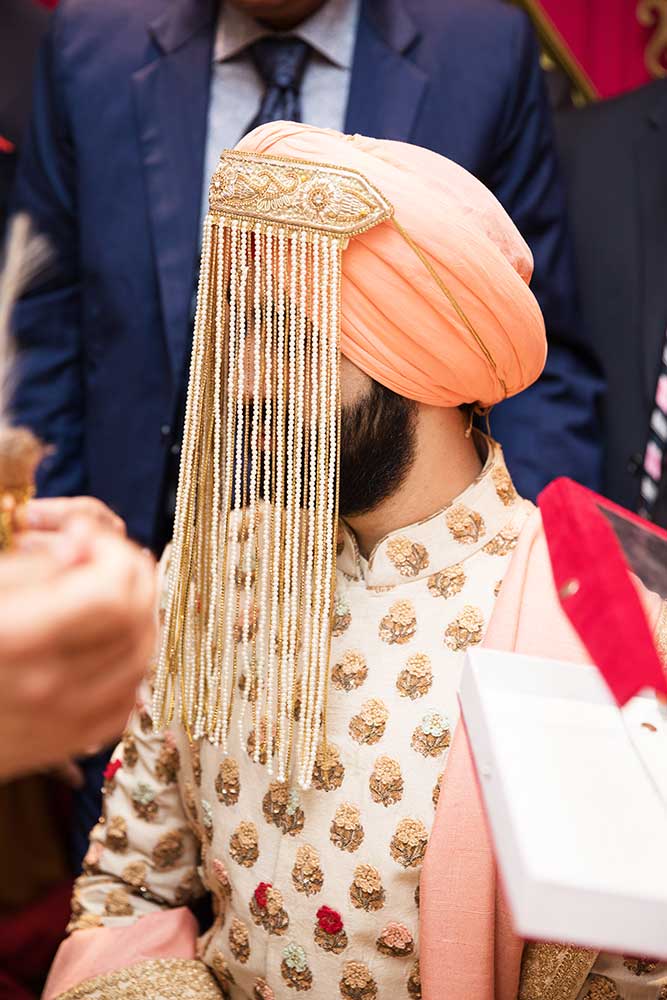 SehraA floral or beaded veil tied to the groom's turban before he departs for the wedding ceremony.
Good reading and sources
The facts on this page come from the Wikipedia article "Beskap", written by its contributors and used under the CC BY-SA 4.0 licence, and from its Wikidata record (CC0). EveryShaadi rewrote the text in its own words, with AI assistance, and compares every page with the article to make sure no passage is copied. It may be reused under the same CC BY-SA 4.0 licence with a link back.
It may contain mistakes. Wedding customs differ from one family, village and community to the next, and the people who keep them know them best. If something is wrong, tell us. Last refreshed 2026-10-05.
More from Indonesia
All the traditions of Indonesia 🇲🇾 Malaysia and 4 moreBaju Kurungباجو كوروڠ
The traditional blouse and skirt worn by Malay women for weddings and religious ceremoniesAttire · The weeks before
🇲🇾 Malaysia and 4 moreBaju Kurungباجو كوروڠ
The traditional blouse and skirt worn by Malay women for weddings and religious ceremoniesAttire · The weeks before
 🇮🇩 Palembang, Indonesia and 2 moreSongketᬲᭀᬂᬓᬾᬢ᭄
A hand-woven brocade cloth patterned with gold or silver threads for traditional weddings in Southeast Asia.Attire · Engagement and betrothal
🇧🇳 Brunei and 2 moreTengkolokتڠكولوق
A folded songket headcloth worn by Malay and Indonesian grooms at weddingsAttire · The ceremony
🇮🇩 Palembang, Indonesia and 2 moreSongketᬲᭀᬂᬓᬾᬢ᭄
A hand-woven brocade cloth patterned with gold or silver threads for traditional weddings in Southeast Asia.Attire · Engagement and betrothal
🇧🇳 Brunei and 2 moreTengkolokتڠكولوق
A folded songket headcloth worn by Malay and Indonesian grooms at weddingsAttire · The ceremony
 🇮🇩 IndonesiaUlosᯥᯞᯘᯬ᯲
The hand-woven textile that binds Batak couples in marriage and symbolizes warmth.Attire · The ceremony
🇮🇩 IndonesiaUlosᯥᯞᯘᯬ᯲
The hand-woven textile that binds Batak couples in marriage and symbolizes warmth.Attire · The ceremony
The same idea elsewhere
The wedding dress and what the couple wear compared 🇲🇱 MaliWeddings in Mali
Multi-day Malian wedding traditions blending Islamic rites, civil law, and local customs with bazin attire.Rite · Engagement and betrothal
🇮🇳 IndiaMadisarமடிசார் (Madisar)
The nine-yard sari drape worn by Tamil Brahmin women during weddings and religious rites.Attire · The ceremony
🇲🇱 MaliWeddings in Mali
Multi-day Malian wedding traditions blending Islamic rites, civil law, and local customs with bazin attire.Rite · Engagement and betrothal
🇮🇳 IndiaMadisarமடிசார் (Madisar)
The nine-yard sari drape worn by Tamil Brahmin women during weddings and religious rites.Attire · The ceremony
 🇮🇳 IndiaShankha
White conch shell bangles worn by Bengali Hindu married women as a symbol of their husband's well-being.Adornment · Engagement and betrothal
🇮🇳 IndiaShankha
White conch shell bangles worn by Bengali Hindu married women as a symbol of their husband's well-being.Adornment · Engagement and betrothal