Wedding dress and clothingSoutheast Asia
Tengkolok
In its own language: تڠكولوق
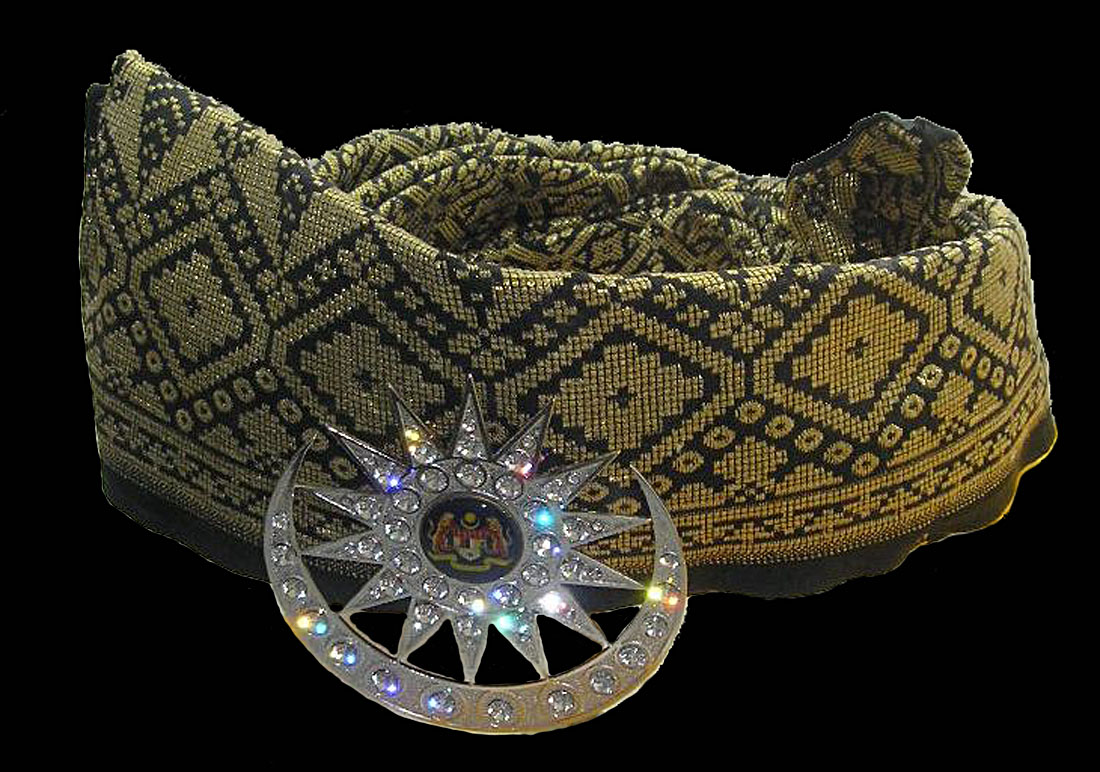
A folded songket headcloth worn by Malay and Indonesian grooms at weddings

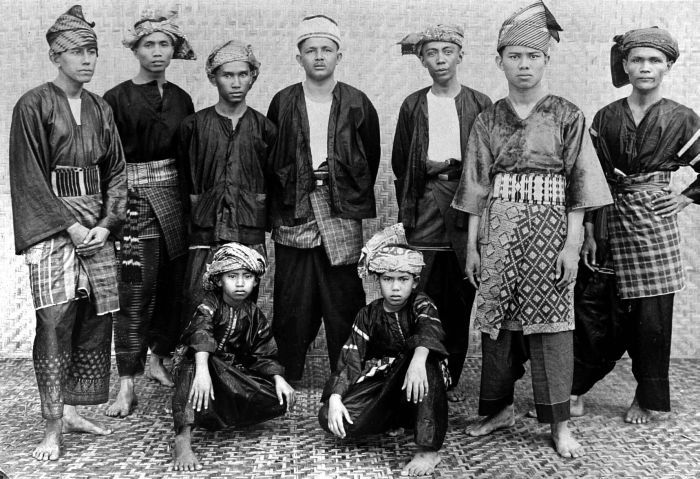
The tengkolok is a traditional male headgear made from long songket cloth. It is tied in specific styles called solek to mark social status. Grooms wear it during wedding ceremonies in Brunei, Malaysia, and Indonesia.
When is Tengkolok kept?
Tengkolok is kept during the wedding ceremony.
The tengkolok is a folded songket headcloth worn by Malay men. It marks social rank through its tying style. Grooms wear it to show respect and status during their wedding day.
What it is
The tengkolok is a traditional male headgear found across Maritime Southeast Asia. It is crafted from long strips of songket cloth that are folded and tied into a specific shape. The word tengkolok can also refer to women's headcovers, though this usage is rare today. Other names include tanjak and destar. These terms describe the same type of ceremonial headwear used by various ethnic groups such as the Minangkabau, Bugis, and Banjar people.
How it is kept
The headgear is made using a technique known as solek. Each style has a unique name that reflects its appearance or origin. For example, the Solek Dendam Tak Sudah features many layers that taper to a point. Different Malay rulers wear specific solek styles during their installation ceremonies. The Sultan of Johor is an exception, wearing a crown instead due to British influence. The production of high-quality versions can take up to a week.
Wedding role
Today, the tengkolok is primarily worn during ceremonial functions. Grooms don the headgear as part of their wedding attire. It signifies their social standing and cultural heritage on their special day. The headcloth serves as a symbol of dignity and tradition. It is usually paired with other formal Malay clothing elements to complete the groom's ensemble for the ceremony.
How Tengkolok is kept
The groom wears the tengkolok during the wedding ceremony. It is made from songket cloth folded into a specific solek style. The tying method varies by region and social status. The headgear is often paired with formal Malay attire.
When and where
It is worn during the wedding ceremony itself. The date depends on the couple's schedule and auspicious timing chosen by families.
It is kept in Brunei, Malaysia, and Indonesia. It is strongest among Malay communities and related ethnic groups like the Minangkabau and Banjar.
What Tengkolok means
The tengkolok represents social status and cultural identity. The complexity of the solek indicates the wearer's rank. It shows respect for tradition and family heritage during important life events like marriage.
Who takes part
- The groom: Wears the tengkolok during the wedding ceremony
- The tailor: Folds and ties the songket cloth into the correct solek style
If you are a guest
Guests should dress formally to match the occasion. Traditional Malay attire is appropriate. Guests should respect the groom's cultural dress and avoid drawing attention away from him.
Then and now
The custom remains strong in modern weddings. Young couples choose it to honor their heritage. The practice adapts to contemporary fashion while keeping traditional tying methods.
On the wedding table
Symbols: Gold and jewellery


Questions people ask about Tengkolok
When is Tengkolok kept?
Tengkolok is kept during the wedding ceremony.
What is a tengkolok?
It is a traditional male headgear made from folded songket cloth. It is worn by Malay men during ceremonies and weddings to show social status.
Is it legal?
Yes, it is a protected cultural garment. There are no legal restrictions on wearing it. It is recognized as part of the national heritage in Brunei and Malaysia.
See also
 Minangkabau marriageA matrilineal wedding tradition from West Sumatra where the groom moves into the bride's family home.MadisarThe nine-yard sari drape worn by Tamil Brahmin women during weddings and religious rites.
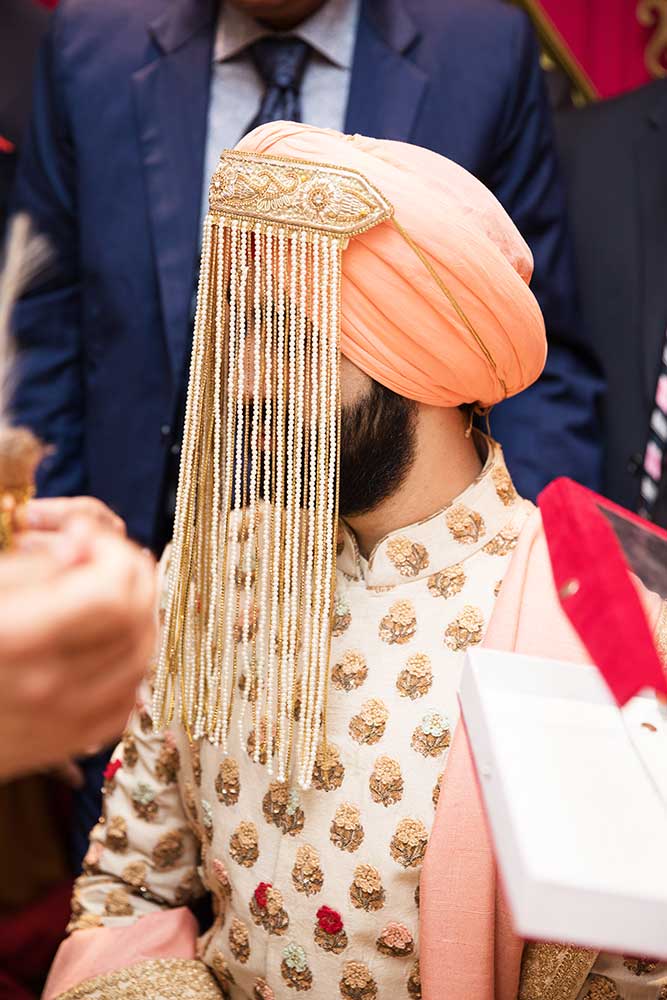 SehraA floral or beaded veil tied to the groom's turban before he departs for the wedding ceremony.
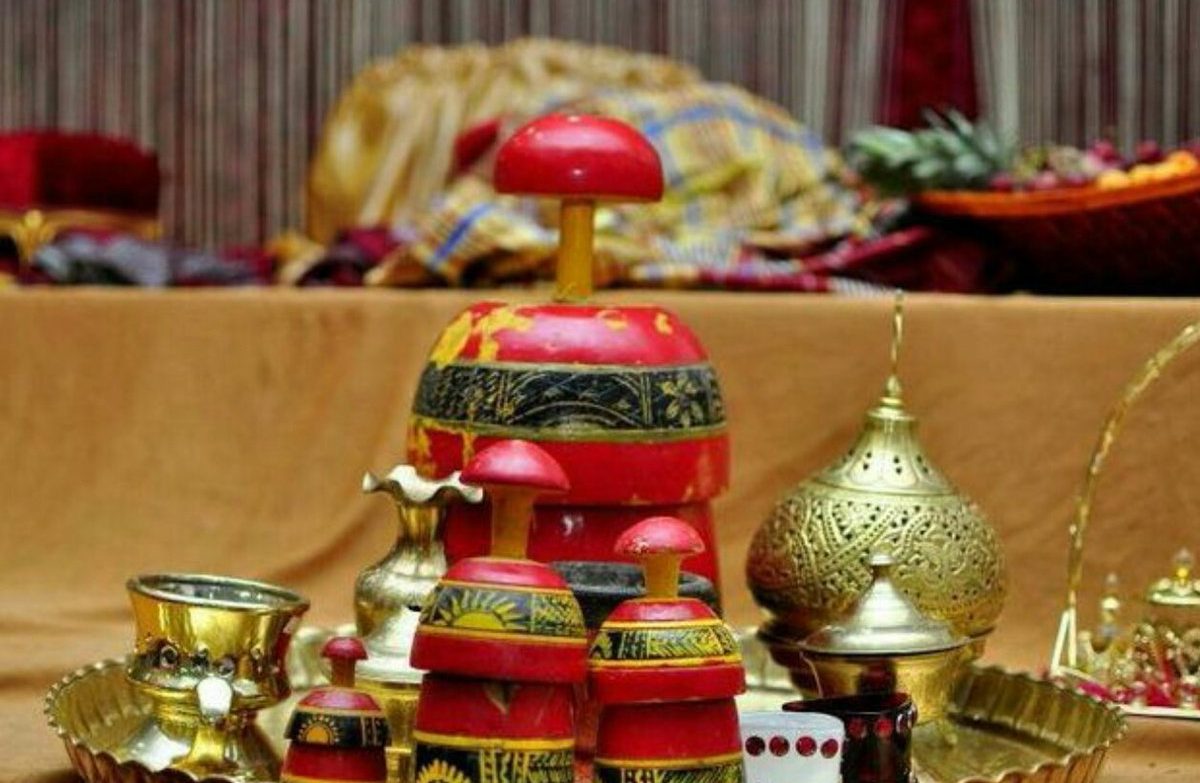 JirtigA Sudanese inauguration ritual where the groom is symbolically crowned as a king.
Good reading and sources
- Tengkolok on WikipediaEncyclopedia
- More photos on Wikimedia CommonsPhotos and video
- Wikidata recordOpen data
The facts on this page come from the Wikipedia article "Tengkolok", written by its contributors and used under the CC BY-SA 4.0 licence, and from its Wikidata record (CC0). EveryShaadi rewrote the text in its own words, with AI assistance, and compares every page with the article to make sure no passage is copied. It may be reused under the same CC BY-SA 4.0 licence with a link back.
It may contain mistakes. Wedding customs differ from one family, village and community to the next, and the people who keep them know them best. If something is wrong, tell us. Last refreshed 2026-10-05.
More from Brunei
All the traditions of Brunei 🇲🇾 Malaysia and 4 moreBaju Kurungباجو كوروڠ
The traditional blouse and skirt worn by Malay women for weddings and religious ceremoniesAttire · The weeks before
🇲🇾 Malaysia and 4 moreBaju Kurungباجو كوروڠ
The traditional blouse and skirt worn by Malay women for weddings and religious ceremoniesAttire · The weeks before
 🇮🇩 Palembang, Indonesia and 2 moreSongketᬲᭀᬂᬓᬾᬢ᭄
A hand-woven brocade cloth patterned with gold or silver threads for traditional weddings in Southeast Asia.Attire · Engagement and betrothal
🇮🇩 Palembang, Indonesia and 2 moreSongketᬲᭀᬂᬓᬾᬢ᭄
A hand-woven brocade cloth patterned with gold or silver threads for traditional weddings in Southeast Asia.Attire · Engagement and betrothal
 🇮🇩 Indonesia and 2 moreKenduri
A communal feast and prayer gathering held by Javanese and Malay communities to mark life events.Feast custom · The weeks before
🇮🇩 Indonesia and 2 moreKenduri
A communal feast and prayer gathering held by Javanese and Malay communities to mark life events.Feast custom · The weeks before
The same idea elsewhere
The wedding dress and what the couple wear compared 🇲🇱 MaliWeddings in Mali
Multi-day Malian wedding traditions blending Islamic rites, civil law, and local customs with bazin attire.Rite · Engagement and betrothal
🇮🇳 IndiaMadisarமடிசார் (Madisar)
The nine-yard sari drape worn by Tamil Brahmin women during weddings and religious rites.Attire · The ceremony
🇲🇱 MaliWeddings in Mali
Multi-day Malian wedding traditions blending Islamic rites, civil law, and local customs with bazin attire.Rite · Engagement and betrothal
🇮🇳 IndiaMadisarமடிசார் (Madisar)
The nine-yard sari drape worn by Tamil Brahmin women during weddings and religious rites.Attire · The ceremony
 🇮🇳 IndiaShankha
White conch shell bangles worn by Bengali Hindu married women as a symbol of their husband's well-being.Adornment · Engagement and betrothal
🇮🇳 IndiaShankha
White conch shell bangles worn by Bengali Hindu married women as a symbol of their husband's well-being.Adornment · Engagement and betrothal