Wedding dress and clothingSub-Saharan Africa
Aso oke
In its own language: Aṣọ òkè
Hand-woven cloth worn by the Yoruba for weddings and formal gatherings

Aso oke is a traditional hand-woven textile of the Yoruba people in western Nigeria, Benin, and Togo. It serves as formal attire for weddings, where couples and guests wear matching ensembles to mark the occasion.
When is Aso oke kept?
Aso oke is kept during wedding ceremonies and related celebrations.
Aso oke is a prestigious hand-woven fabric central to Yoruba identity. Families select specific colors and patterns to create coordinated outfits for weddings. The cloth signals respect for tradition and unity among relatives attending the ceremony.
What it is
Aso oke, meaning top cloth, is a heavy woven textile produced in West Africa. Historically called Òfì, it originates from the Yoruba regions of Nigeria, Benin, and Togo. Men typically weave the fabric on narrow looms. The material forms the basis for formal garments like the agbada gown, fila hat, iro wrapper, buba blouse, and gele headtie. These pieces combine to create complete ceremonial attire.
Types and colors
The fabric features distinct varieties defined by color and material. Sanyan uses wild silk and cotton in tan hues. Alaari incorporates shiny threads with deep red or purple tones. Etu displays dark indigo with white stripes. Other types include opa aro in blue and green, ifun in brown and navy, waka in black with red stripes, and various red weaves like aso-ipo. Designers now blend these traditional motifs with modern geometric shapes.
Weaving process
Artisans use specialized tools like the akata propeller and iye long wheel to set up the loom. They prepare yarn from locally sourced cotton, silk from caterpillar cocoons, and natural dyes derived from onion skin and bark. The weaving technique involves a pick-and-pick method that alternates two weft threads to create intricate patterns. Each design tells a story through non-verbal communication passed down through generations.
Wedding role
At Yoruba weddings, aso oke defines the visual aesthetic of the event. Couples often choose matching fabrics to symbolize their union. Extended families and friends coordinate their outfits in the same color scheme to show solidarity. This practice extends beyond the ceremony to receptions and post-wedding gatherings. The fabric also appears in other life events like chieftaincy titles and religious festivals.
How Aso oke is kept
Men weave the cloth using traditional narrow-strip looms. Families purchase the fabric or commission specific designs. Tailors cut and sew the material into men's gowns and women's wrappers. For weddings, the couple selects a primary color. Guests and family members then acquire matching aso oke outfits to wear during the ceremony and reception.
When and where
Worn during the ceremony and reception phases of Yoruba weddings. The specific date depends on the couple's schedule and auspicious calendar selections. The fabric remains relevant year-round for formal occasions.
Strongest in Yorubaland across western Nigerian states like Oyo, Lagos, and Osun. Also present in parts of Benin and Togo. Iseyin in Oyo State serves as a historic production hub. Global Yoruba communities maintain the tradition abroad.
What Aso oke means
Colors convey specific meanings about status, personality, or spiritual beliefs. Red suggests passion or vitality. Indigo and white reflect simplicity or purity. Matching outfits demonstrate family unity and social cohesion. The heavy weight of the cloth signifies the importance of the occasion and the wearer's dignity.
Who takes part
- The weaver: Creates the fabric using traditional looms and natural dyes
- The couple: Selects the specific color and pattern for their wedding
- Tailors: Cuts and sews the woven strips into formal garments
- Family members: Coordinates their outfits to match the couple's chosen theme
- Guests: Purchases or wears matching aso oke to honor the couple
If you are a guest
Guests wear coordinated aso oke outfits in the color designated by the couple. Women typically don the iro wrapper, buba blouse, gele headtie, and ipele sash. Men wear the agbada gown and fila hat. The uniform appearance creates a striking visual display of community support.
Then and now
Modern designers are adapting the heavy traditional fabric for lighter casual wear. New techniques reduce thickness while maintaining aesthetic appeal. Computer-aided design introduces geometric variations alongside classic folklore motifs. International fashion runways have featured aso oke, raising its global profile.
On the wedding table


Questions people ask about Aso oke
When is Aso oke kept?
Aso oke is kept during wedding ceremonies and related celebrations.
What is aso oke?
It is a hand-woven textile from the Yoruba people used for formal clothing. The name means top cloth. It is made from cotton, silk, and synthetic threads using traditional looms.
Why do families wear matching clothes?
Matching aso oke outfits signal family unity and collective support for the marriage. It visually distinguishes the bride's and groom's clans within the larger gathering.
Is it legal?
There are no legal restrictions on wearing aso oke. It is a cultural textile freely produced and sold throughout Nigeria, Benin, and Togo.
See also
 Kente clothHand-woven silk and cotton strips from Ghana that mark weddings and graduations
 Waist beadsStrands of glass or seed worn around the hips to mark womanhood and track body changes in West and North Africa.OwanbeThe extravagant Yoruba celebration where music, fashion, and money spraying mark life's milestones.
 GuérewolA week-long courtship dance where Wodaabe men display their beauty to win the attention of marriageable women.
Good reading and sources
- Aso oke on WikipediaEncyclopedia
- More photos on Wikimedia CommonsPhotos and video
- Wikidata recordOpen data
The facts on this page come from the Wikipedia article "Aso oke", written by its contributors and used under the CC BY-SA 4.0 licence, and from its Wikidata record (CC0). EveryShaadi rewrote the text in its own words, with AI assistance, and compares every page with the article to make sure no passage is copied. It may be reused under the same CC BY-SA 4.0 licence with a link back.
It may contain mistakes. Wedding customs differ from one family, village and community to the next, and the people who keep them know them best. If something is wrong, tell us. Last refreshed 2026-10-05.
More from Nigeria
All the traditions of Nigeria 🇳🇬 Lagos, Nigeria and 3 moreAso ebiAsọ-Ẹbí
Matching outfits worn by groups to show solidarity at Yoruba weddings and other ceremoniesAttire · The weeks before
🇳🇬 Lagos, Nigeria and 3 moreAso ebiAsọ-Ẹbí
Matching outfits worn by groups to show solidarity at Yoruba weddings and other ceremoniesAttire · The weeks before
 🇳🇬 Nigeria and 2 moreGeleGèlè
The towering Yoruba head tie that crowns the bride and marks her status on the wedding day.Attire · The weeks before
🇬🇭 Ghana and 2 moreKente clothnwentoma
Hand-woven silk and cotton strips from Ghana that mark weddings and graduationsAttire · The ceremony
🇳🇬 Nigeria and 2 moreGeleGèlè
The towering Yoruba head tie that crowns the bride and marks her status on the wedding day.Attire · The weeks before
🇬🇭 Ghana and 2 moreKente clothnwentoma
Hand-woven silk and cotton strips from Ghana that mark weddings and graduationsAttire · The ceremony
 🇳🇬 NigeriaYoruba traditional weddingIgbeyawo
The multi-day Yoruba marriage ceremony featuring traditional attire, family introductions, and the Eru Iyawo gift list.Attire · Engagement and betrothal
🇳🇬 NigeriaYoruba traditional weddingIgbeyawo
The multi-day Yoruba marriage ceremony featuring traditional attire, family introductions, and the Eru Iyawo gift list.Attire · Engagement and betrothal
The same idea elsewhere
The wedding dress and what the couple wear compared 🇮🇹 Rome, ItalyWeddings in ancient Rome
The religious ceremonies and attire that marked a union in the city of Rome before the rise of Christianity.Rite · The weeks before
🇮🇹 Rome, ItalyWeddings in ancient Rome
The religious ceremonies and attire that marked a union in the city of Rome before the rise of Christianity.Rite · The weeks before
 🇲🇽 Oaxaca, Mexico and 1 moreHuipilhuīpīlli
The traditional tunic worn by indigenous women in Mexico and Central America for weddings and daily life.Attire · The weeks before
🇺🇦 UkraineSong about the RushnykПісня про рушник (Pisnia pro rushnyk)
A Ukrainian song that celebrates the embroidered cloth used in weddings and family life.Performance · The ceremony
🇲🇽 Oaxaca, Mexico and 1 moreHuipilhuīpīlli
The traditional tunic worn by indigenous women in Mexico and Central America for weddings and daily life.Attire · The weeks before
🇺🇦 UkraineSong about the RushnykПісня про рушник (Pisnia pro rushnyk)
A Ukrainian song that celebrates the embroidered cloth used in weddings and family life.Performance · The ceremony
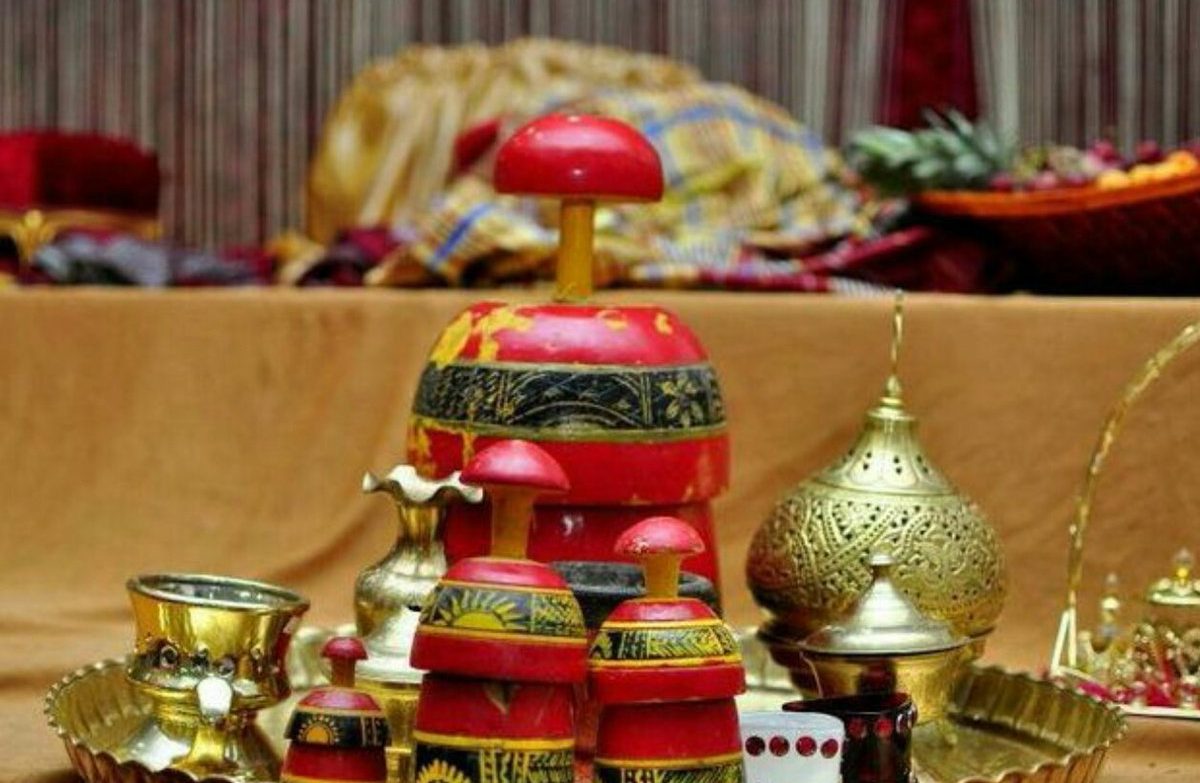 🇸🇩 Khartoum, SudanJirtigالجَرْتِقْ (Arabic)
A Sudanese inauguration ritual where the groom is symbolically crowned as a king.Rite · The weeks before
🇸🇩 Khartoum, SudanJirtigالجَرْتِقْ (Arabic)
A Sudanese inauguration ritual where the groom is symbolically crowned as a king.Rite · The weeks before