Wedding dress and clothingSoutheast Asia
Songket
In its own language: ᬲᭀᬂᬓᬾᬢ᭄
A hand-woven brocade cloth patterned with gold or silver threads for traditional weddings in Southeast Asia.

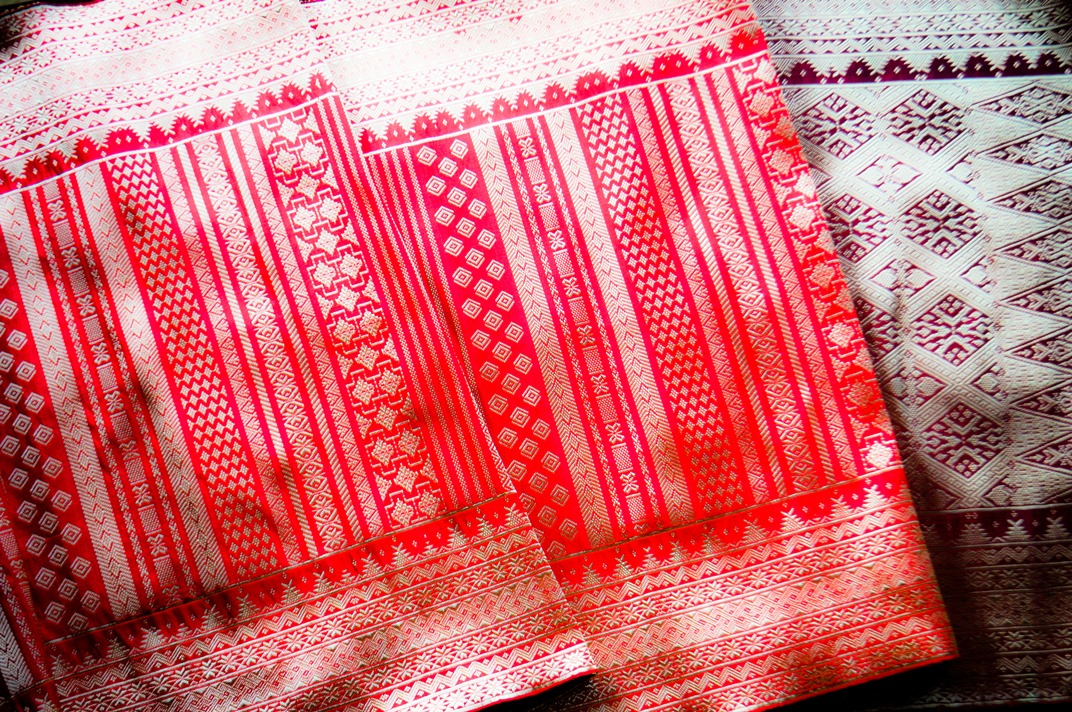
Songket is a luxurious hand-woven textile from Indonesia and Malaysia, often worn by brides and grooms at their ceremonies. The fabric features intricate metallic patterns created using a supplementary weft technique on silk or cotton backgrounds.
When is Songket kept?
Songket is kept during wedding ceremonies and religious festivals.
Songket is a prestigious woven fabric used as ceremonial attire across Maritime Southeast Asia. Brides and grooms wear these shimmering textiles to mark their union. The cloth serves as a visible symbol of social standing and cultural heritage during the wedding ceremony.
What songket is
This textile belongs to the brocade family and is known as tenun. Weavers create it by hand-weaving silk or cotton threads. They insert gold or silver threads into the fabric using a supplementary weft technique. This method makes the metallic patterns stand out against the background cloth. The result is a shimmering effect that catches the light. The name comes from the Malay word sungkit, meaning to hook. This refers to the action of picking up threads to slip in the metal yarns.
Origins and history
The tradition links back to the Srivijaya Empire, which ruled parts of Sumatra between the seventh and thirteenth centuries. Statues found at the Bumiayu temple in South Sumatra show people wearing songket-like garments dating to the eighth century. Chinese records from the tenth century also describe gifts of silk woven with gold floral motifs. Over time, the craft spread through trade and intermarriage to other regions. It became a luxury item reserved for royalty and nobility before becoming more widely available after the fall of local sultanates.
Wedding role and status
In Indonesian traditions, songket acts as a marker of social status. Specific motifs were once reserved strictly for aristocrats. For example, the lepus motif belonged to the bangsawan class. The fabric also indicates marital status. Widows wore specific shoulder cloths to signal they were eligible for remarriage or had recently lost a spouse. Today, couples wear these textiles as part of their traditional wedding costumes. The choice of fabric and pattern still reflects the family's standing within the community.
Modern production
Weaving remains a cottage industry in places like Pandai Sikek and Kota Bharu. While real gold threads are rare and expensive, most modern songket uses artificial nylon threads dyed to look like metal. These affordable versions allow more people to participate in the tradition. Heirlooms made with genuine gold leaf are passed down through families. Efforts to promote the craft include exhibitions and carnivals. UNESCO recognized the Malaysian tradition as intangible cultural heritage in twenty twenty-one.
How Songket is kept
Brides and grooms don elaborate songket garments for their wedding ceremony. In Palembang and Minangkabau cultures, the couple wears specific styles that reflect their regional identity. The bride typically wears a songket sarong or shoulder cloth, while the groom wears a matching head tie or vest. Family members assist in dressing the couple, ensuring the fabric is arranged correctly to display the intricate metallic patterns. The weaving process itself involves women and men working at looms to create the supplementary weft designs.
When and where
It appears during the betrothal phase and the main wedding ceremony. Families select the fabric weeks before the event. The date depends on the couple's schedule rather than a fixed calendar day.
The craft originates in Palembang, Sumatra, and remains strongest there. It is also prominent in West Sumatra, Bali, and Lombok in Indonesia. In Malaysia, it is common in Kelantan and Terengganu. Brunei and Singapore also observe the tradition among local communities.
What Songket means
The fabric represents wealth, power, and high social rank. Historically, only royalty could wear certain motifs. The use of gold thread symbolizes prosperity and divine blessing. Wearing songket connects the couple to their ancestors and the Srivijaya legacy. It signals respect for tradition and community values during the marriage rite.
Who takes part
- The bride: Wears a songket sarong or shoulder cloth
- The groom: Wears a matching songket head tie or vest
- The weaver: Creates the fabric using supplementary weft techniques
- Family elders: Select the appropriate motifs based on social status
If you are a guest
Guests observe the couple’s attire and recognize the social status indicated by the motifs. They may bring gifts of money or household items. Guests do not wear songket unless they are part of the immediate family or royal court.
Then and now
Artificial threads have replaced real gold in most cases. This change makes the fabric accessible to middle-class families. Younger generations sometimes adapt the designs for modern fashion. Traditional motifs remain important for formal weddings and cultural celebrations.
On the wedding table
Symbols: Gold and jewellery The colour red



Questions people ask about Songket
When is Songket kept?
Songket is kept during wedding ceremonies and religious festivals.
What is songket?
Songket is a hand-woven brocade textile from Southeast Asia. It features gold or silver patterns created by inserting metallic threads into silk or cotton fabric using a supplementary weft technique.
Where does songket come from?
The tradition originated in the Srivijaya Empire in Sumatra, Indonesia. It spread to Malaysia, Brunei, and other parts of Maritime Southeast Asia through trade and intermarriage.
Is songket legal?
Yes, songket is a protected cultural heritage practice. Indonesia and Malaysia officially recognize specific songket traditions as intangible cultural heritage.
See also
 BeskapThe formal black jacket worn by Javanese men during weddings and official ceremonies.
 Baju KurungThe traditional blouse and skirt worn by Malay women for weddings and religious ceremonies
 TengkolokA folded songket headcloth worn by Malay and Indonesian grooms at weddings
 RomvongA circular folk dance across Southeast Asia where couples hold hands and step in time with drums.
Good reading and sources
- Songket on WikipediaEncyclopedia
- More photos on Wikimedia CommonsPhotos and video
- Wikidata recordOpen data
The facts on this page come from the Wikipedia article "Songket", written by its contributors and used under the CC BY-SA 4.0 licence, and from its Wikidata record (CC0). EveryShaadi rewrote the text in its own words, with AI assistance, and compares every page with the article to make sure no passage is copied. It may be reused under the same CC BY-SA 4.0 licence with a link back.
It may contain mistakes. Wedding customs differ from one family, village and community to the next, and the people who keep them know them best. If something is wrong, tell us. Last refreshed 2026-10-05.
More from Indonesia
All the traditions of Indonesia
🇮🇩 IndonesiaBeskapꦧꦼꦱ꧀ꦏꦥ꧀
The formal black jacket worn by Javanese men during weddings and official ceremonies.Attire · The ceremony
🇲🇾 Malaysia and 4 moreBaju Kurungباجو كوروڠ
The traditional blouse and skirt worn by Malay women for weddings and religious ceremoniesAttire · The weeks before
🇧🇳 Brunei and 2 moreTengkolokتڠكولوق
A folded songket headcloth worn by Malay and Indonesian grooms at weddingsAttire · The ceremony
 🇮🇩 IndonesiaUlosᯥᯞᯘᯬ᯲
The hand-woven textile that binds Batak couples in marriage and symbolizes warmth.Attire · The ceremony
🇮🇩 IndonesiaUlosᯥᯞᯘᯬ᯲
The hand-woven textile that binds Batak couples in marriage and symbolizes warmth.Attire · The ceremony
The same idea elsewhere
The wedding dress and what the couple wear compared 🇲🇽 Oaxaca, Mexico and 1 moreHuipilhuīpīlli
The traditional tunic worn by indigenous women in Mexico and Central America for weddings and daily life.Attire · The weeks before
🇲🇽 Oaxaca, Mexico and 1 moreHuipilhuīpīlli
The traditional tunic worn by indigenous women in Mexico and Central America for weddings and daily life.Attire · The weeks before
 🇮🇹 Rome, ItalyWeddings in ancient Rome
The religious ceremonies and attire that marked a union in the city of Rome before the rise of Christianity.Rite · The weeks before
🇮🇹 Rome, ItalyWeddings in ancient Rome
The religious ceremonies and attire that marked a union in the city of Rome before the rise of Christianity.Rite · The weeks before
 🇬🇭 Ghana and 2 moreKente clothnwentoma
Hand-woven silk and cotton strips from Ghana that mark weddings and graduationsAttire · The ceremony
🇺🇦 UkraineSong about the RushnykПісня про рушник (Pisnia pro rushnyk)
A Ukrainian song that celebrates the embroidered cloth used in weddings and family life.Performance · The ceremony
🇬🇭 Ghana and 2 moreKente clothnwentoma
Hand-woven silk and cotton strips from Ghana that mark weddings and graduationsAttire · The ceremony
🇺🇦 UkraineSong about the RushnykПісня про рушник (Pisnia pro rushnyk)
A Ukrainian song that celebrates the embroidered cloth used in weddings and family life.Performance · The ceremony