Wedding dress and clothingEuropeProtestant and Anglican
Bollenhut
A straw hat with woolen pompoms worn by women in specific Black Forest villages as part of their traditional dress.

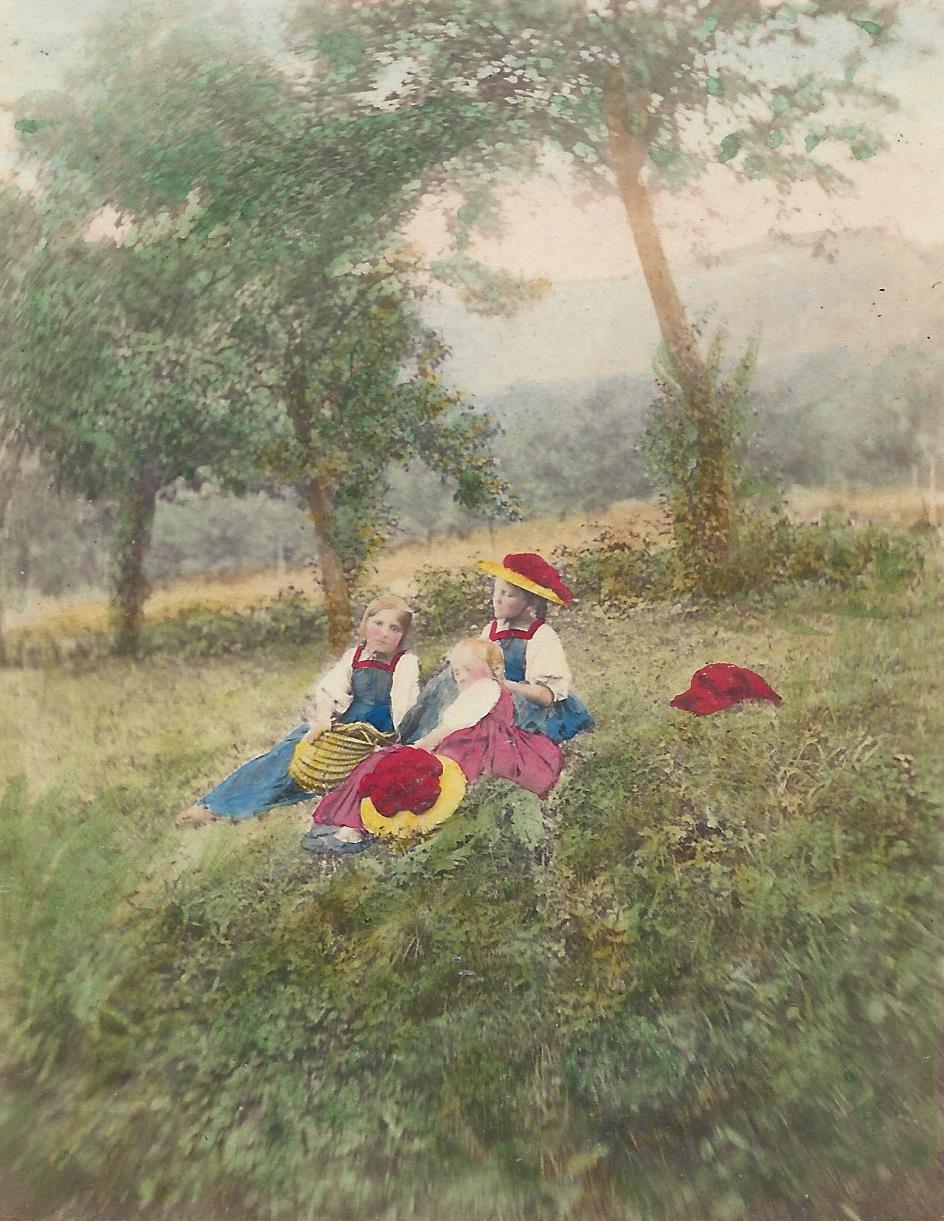
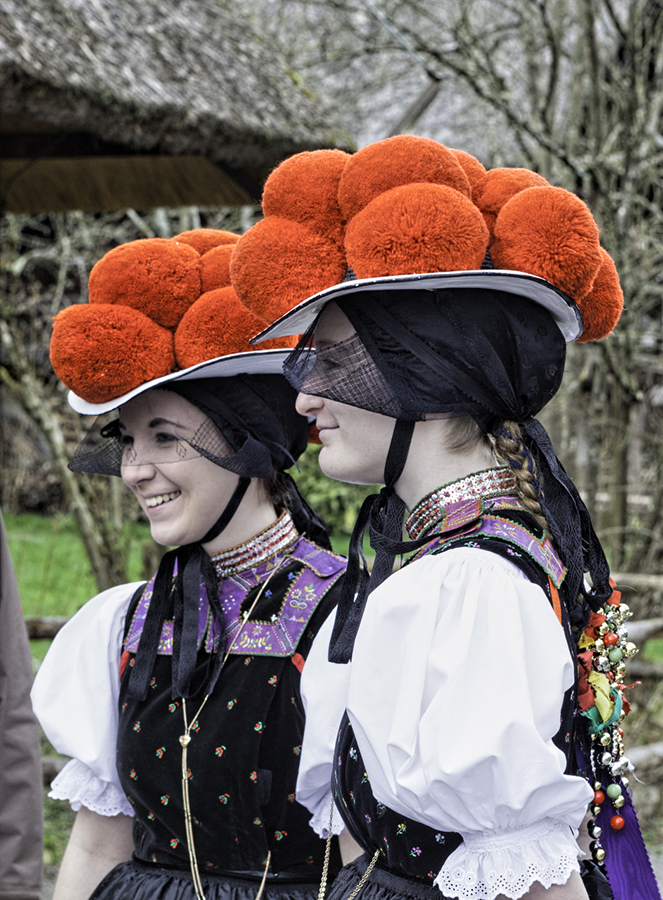
The Bollenhut is a formal headdress featuring woollen pompoms arranged in a cross shape. It has been worn since the mid-1700s by Protestant women in three adjoining Black Forest villages to mark their marital status and age.
When is Bollenhut kept?
Bollenhut is kept on holidays and for traditional events.
Women in three Black Forest villages wear a distinctive straw hat adorned with woolen pompoms. This headpiece signals a woman's age and marital status. The tradition began in the eighteenth century. Artists later popularized the hat as a regional symbol. Today it remains a key element of local folk costume.
Design and structure
The hat consists of a broad-brimmed straw base that is whitewashed. Fourteen large woolen pompoms are attached to the crown in a cross pattern. Three of these pompoms sit beneath the top layer, leaving eleven visible on the surface. The original design weighed approximately five hundred grams. Modern versions can reach two kilograms. Female artisans craft each piece by hand. A silk cap fits underneath the main hat and ties securely under the chin.
Social meaning
The color of the pompoms indicates a woman's life stage. Unmarried girls wear red pompoms. Married women switch to black pompoms. Older women and widows stop wearing the full hat and use only a simple silk mob cap. Girls may wear their first red Bollenhut during their confirmation ceremony. The hat comes in five different sizes to fit various ages.
Historical spread
The hat gained fame through nineteenth-century art and early cinema. Théodore Valerio published a lithograph of a couple from Hornberg in Paris in 1841. This image showed an early version of the hat to French audiences. Later, artists settled in Gutach and painted locals in their traditional dress. These works appeared in magazines and postcards worldwide. Postwar films further cemented the hat's reputation as a general Black Forest icon, despite its specific village origins.
Modern practice
Women continue to wear the Bollenhut for religious holidays and community festivals. The costume appears year-round at local heritage sites. Visitors can view examples in museums dedicated to regional traditions. The hat remains a proud marker of identity for the women who wear it. It connects current generations to their Protestant ancestors in the area.
How Bollenhut is kept
Women in Gutach, Kirnbach, and Hornberg-Reichenbach wear the hat on special occasions. They choose the pompom color based on their marital status. Artisans construct the heavy straw hats by hand. Women place a silk cap underneath before securing the main hat. The custom persists through community celebrations and museum displays.
When and where
Worn on holidays and traditional events throughout the year. Girls begin wearing the red version at confirmation.
Originated in three adjacent Black Forest villages. Now recognized as a broader regional symbol across Germany.
What Bollenhut means
The red and black pompoms clearly signal a woman's transition from girlhood to marriage. The white brim represents purity or local aesthetic standards. The cross arrangement reflects the Protestant faith of the wearers. The hat serves as a visual record of a woman's social standing within her community.
Who takes part
- Unmarried women: Wear red pompoms on the hat
- Married women: Wear black pompoms on the hat
- Older women: Wear only a silk mob cap
- Female milliners: Craft the heavy straw hats by hand
If you are a guest
Visitors observe the hats in museums or at local festivals. No specific gifts or attire are required for guests. Observers should respect the cultural significance of the dress.
Then and now
The hat is still worn for traditional events. It has become a commercial symbol for the wider region. Some locals note that its widespread fame overshadows its specific village origins.
On the wedding table
- Black Forest Cake: The hat's red pompoms and white brim are said to have inspired the cake's decoration
Symbols: The colour red The colour white The ring

Questions people ask about Bollenhut
When is Bollenhut kept?
Bollenhut is kept on holidays and for traditional events.
What does the Bollenhut look like?
It is a straw hat with a wide whitewashed brim. Fourteen woolen pompoms are attached to the top in a cross shape. Eleven pompoms are visible on the outside.
Who wears the Bollenhut?
Protestant women in three specific Black Forest villages wear it. The pompom color changes from red to black upon marriage.
Is it legal to wear?
There are no legal restrictions. It is a voluntary cultural tradition worn for holidays and festivals.
See also
 DirndlThe bodice, skirt and apron dress worn by brides in the German-speaking Alps.
 Bridal crownA headdress worn by brides in Central and Northern Europe to symbolize purity and status.
 WimpelA linen sash made from a baby boy's circumcision cloth that binds the Torah scroll.
 TurońA horned effigy that visits homes during Carnival to wish for fertility and collect gifts.
Good reading and sources
- Bollenhut on WikipediaEncyclopedia
- More photos on Wikimedia CommonsPhotos and video
- Wikidata recordOpen data
The facts on this page come from the Wikipedia article "Bollenhut", written by its contributors and used under the CC BY-SA 4.0 licence, and from its Wikidata record (CC0). EveryShaadi rewrote the text in its own words, with AI assistance, and compares every page with the article to make sure no passage is copied. It may be reused under the same CC BY-SA 4.0 licence with a link back.
It may contain mistakes. Wedding customs differ from one family, village and community to the next, and the people who keep them know them best. If something is wrong, tell us. Last refreshed 2026-10-06.
More from Germany
All the traditions of Germany
🇦🇹 Austria and 4 moreDirndl
The bodice, skirt and apron dress worn by brides in the German-speaking Alps.Attire · The ceremony
🇩🇪 Hanover, Germany and 5 moreBridal crownBrautkrone
A headdress worn by brides in Central and Northern Europe to symbolize purity and status.Attire · The ceremony
 🇬🇷 Greece and 5 moreWedding ring
A metal circle worn on the finger to show that a person is married.Attire · Engagement and betrothal
🇩🇪 Hamburg, Germany and 3 moreWimpelווימפל
A linen sash made from a baby boy's circumcision cloth that binds the Torah scroll.Adornment · The weeks before
🇬🇷 Greece and 5 moreWedding ring
A metal circle worn on the finger to show that a person is married.Attire · Engagement and betrothal
🇩🇪 Hamburg, Germany and 3 moreWimpelווימפל
A linen sash made from a baby boy's circumcision cloth that binds the Torah scroll.Adornment · The weeks before
The same idea elsewhere
The wedding dress and what the couple wear compared 🇪🇹 Addis Ababa, Ethiopia and 1 moreZuria
The ankle-length dress with woven hem bands worn by Tigrinya and Amhara women for weddings and holidays.Attire · The weeks before
🇪🇹 Addis Ababa, Ethiopia and 1 moreZuria
The ankle-length dress with woven hem bands worn by Tigrinya and Amhara women for weddings and holidays.Attire · The weeks before
 🇮🇳 IndiaShankha
White conch shell bangles worn by Bengali Hindu married women as a symbol of their husband's well-being.Adornment · Engagement and betrothal
🇮🇳 IndiaShankha
White conch shell bangles worn by Bengali Hindu married women as a symbol of their husband's well-being.Adornment · Engagement and betrothal
 🇲🇽 Oaxaca, Mexico and 1 moreHuipilhuīpīlli
The traditional tunic worn by indigenous women in Mexico and Central America for weddings and daily life.Attire · The weeks before
🇲🇽 Oaxaca, Mexico and 1 moreHuipilhuīpīlli
The traditional tunic worn by indigenous women in Mexico and Central America for weddings and daily life.Attire · The weeks before
 🇮🇩 Palembang, Indonesia and 2 moreSongketᬲᭀᬂᬓᬾᬢ᭄
A hand-woven brocade cloth patterned with gold or silver threads for traditional weddings in Southeast Asia.Attire · Engagement and betrothal
🇮🇩 Palembang, Indonesia and 2 moreSongketᬲᭀᬂᬓᬾᬢ᭄
A hand-woven brocade cloth patterned with gold or silver threads for traditional weddings in Southeast Asia.Attire · Engagement and betrothal