Blessings, luck and omensEurope
Turoń
A horned effigy that visits homes during Carnival to wish for fertility and collect gifts.

Turoń is a folk figure in Polish and Slovak tradition, appearing as a shaggy, horned beast with a flopping jaw. It accompanies carol groups during the Carnival season before Lent, visiting households to dance and perform rituals. The custom serves as a blessing for fertility and a festive conclusion to the winter celebrations.
When is Turoń kept?
Turoń is kept during the Carnival season before Lent.
Turoń is a traditional folk figure found in Polish and Slovak customs. Dressed as a black, horned animal with a large jaw, it leads caroling groups through villages during the pre-Lenten period. The beast visits homes to dance, sing, and offer blessings for fertility and good harvests.
The figure and costume
The performer wears a sheet or sheepskin to create a shaggy appearance. A wooden pole supports a bull's head featuring horns and a movable jaw. The muzzle often uses rabbit skin and is sized to swallow an apple or drink vodka in one go. The figure holds sticks to strike the floor while jumping over stools. In Kraków, the effigy follows a star bearer during Epiphany visits.
Ritual actions and revival
Inside homes, Turoń dances, neighs, and chases women playfully. It claps its jaw to song rhythms and rings a neck bell. A key moment involves the figure fainting. Household members revive it by massaging, lighting hay, blowing wind, and pouring vodka into the muzzle. This recovery signals the end of the visit and prompts the household to provide payment.
Etymology and meaning
The name comes from 'tur,' meaning aurochs. Oskar Kolberg linked the figure to pagan Slavic sun worship, where the aurochs symbolized the reborn sun after Christmas. The custom represents fertility wishes. The beast pokes residents with its horns to pass on vitality. Regional variations exist, such as accompaniment by other figures in Tarnów.
How Turoń is kept
A performer dons a shaggy costume with a horned head and flopping jaw. The group enters homes where the figure jumps, dances, and sings along to carols. It interacts with residents, sometimes chasing women or hitting furniture with sticks. The ritual peaks when the beast faints and is revived by the household using massage, hay smoke, and vodka. The visit ends when the family pays a ransom of money and food.
When and where
The custom occurs during the Carnival season before Lent. In some regions like Mielec, it appears on Christmas Eve. Kraków specifically observes it during Epiphany processions on January 6th.
The practice is rooted in Polish and Slovak folklore. It is prominent across various Polish regions, including Kraków, Kielce County, and Tarnów. Each area maintains distinct variations in the effigy's form and accompanying characters.
What Turoń means
Turoń symbolizes fertility and the renewal of life. The horns are used to poke householders, transferring vitality and ensuring a productive year. The figure connects to ancient beliefs about the sun's rebirth, marking the transition from winter to spring through festive chaos and blessing.
Who takes part
- The performer: Wears the horned costume and acts out the beast's playful and chaotic behavior.
- The carolers: Sing songs and lead the procession into homes to solicit gifts.
- The householders: Revive the fainting figure and provide money and pantry items as payment.
If you are a guest
Guests at these visits watch the performance and participate in reviving the beast. They may help massage the figure or light hay. Residents then offer treats and money to send the carolers away, thanking them for the blessings and entertainment provided during the ritual.
Then and now
The custom remains active in specific Polish regions during Carnival. Modern observances preserve the traditional costume and revival rituals. Some areas adapt the figure to include additional characters or align it more closely with Epiphany traditions rather than general pre-Lenten festivities.
On the wedding table
- Vodka: Poured into the muzzle to revive the figure and consumed during visits.
- Apples: Swallowed whole by the effigy's large muzzle as part of the performance.
- Pantry gifts: Food items given by households as part of the get-off ransom payment.
Symbols: Henna The ring The colour red The colour white Gold and jewellery Water and washing Salt Bread Sweets, sugar and honey
Questions people ask about Turoń
When is Turoń kept?
Turoń is kept during the Carnival season before Lent.
What is Turoń?
Turoń is a folk effigy resembling a horned, shaggy beast. It accompanies carolers during pre-Lenten festivals in Poland and Slovakia to bless homes with fertility and collect gifts.
Why does the figure faint?
The fainting is a ritual climax. Households revive the beast using massage, hay smoke, and vodka, symbolizing the restoration of life and energy for the coming year.
See also
 PolterabendThe evening before the wedding when guests break porcelain to bring luck and test the couple's teamwork.
 WimpelA linen sash made from a baby boy's circumcision cloth that binds the Torah scroll.
 MantillaA lace or silk veil worn over the head and shoulders by women in Spain and Latin America
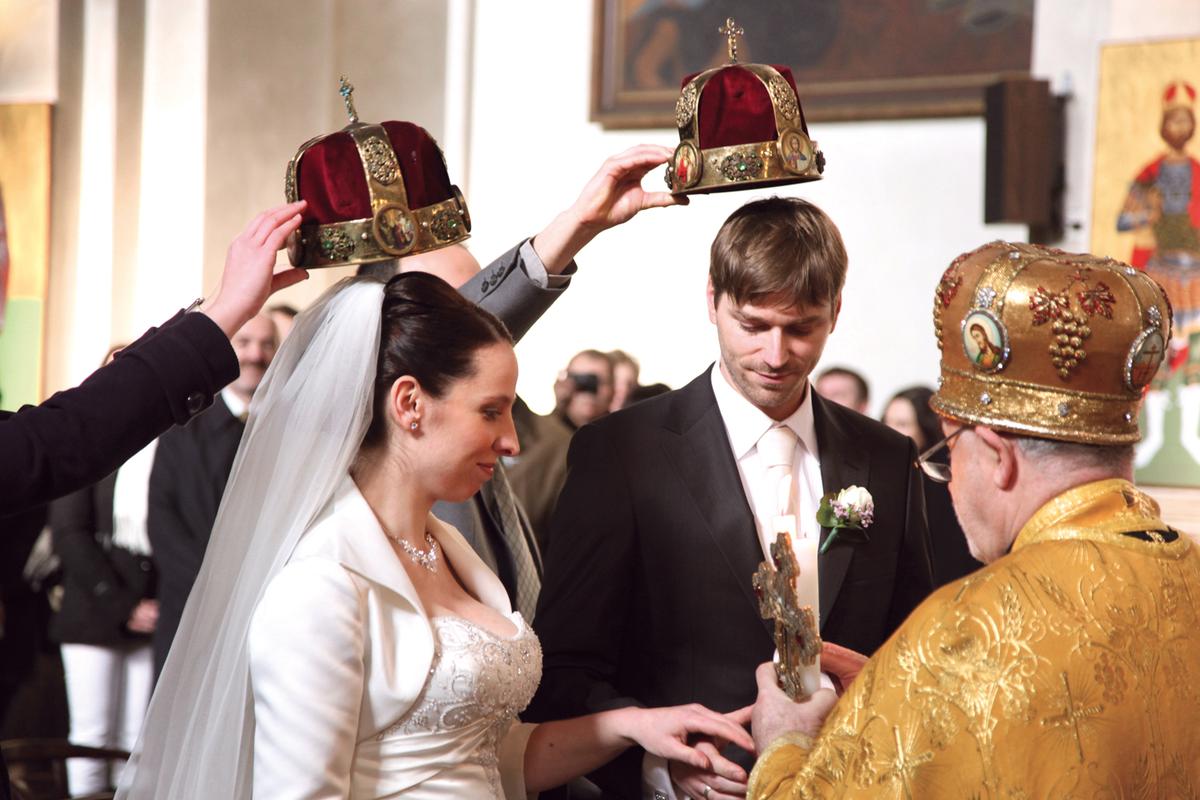 Eastern Orthodox marriageThe Byzantine Rite ceremony where a priest crowns the couple to seal their union in Christ.
Good reading and sources
- Turoń on WikipediaEncyclopedia
- More photos on Wikimedia CommonsPhotos and video
- Wikidata recordOpen data
The facts on this page come from the Wikipedia article "Turoń", written by its contributors and used under the CC BY-SA 4.0 licence, and from its Wikidata record (CC0). EveryShaadi rewrote the text in its own words, with AI assistance, and compares every page with the article to make sure no passage is copied. It may be reused under the same CC BY-SA 4.0 licence with a link back.
It may contain mistakes. Wedding customs differ from one family, village and community to the next, and the people who keep them know them best. If something is wrong, tell us. Last refreshed 2026-10-05.
More from Poland
All the traditions of Poland
🇩🇪 Germany and 5 morePolterabend
The evening before the wedding when guests break porcelain to bring luck and test the couple's teamwork.Blessing · The eve
🇵🇱 PolandSto lat
A Polish song sung to wish a person long life and good health at weddings and other gatherings.Performance · The wedding feast
 🇵🇱 Poland and 1 morePolonaisePolonez
A stately Polish partner dance in triple metre that opens weddings and formal celebrations.Performance · Procession and arrival
🇵🇱 Poland and 1 morePolonaisePolonez
A stately Polish partner dance in triple metre that opens weddings and formal celebrations.Performance · Procession and arrival
 🇭🇺 Hungary and 5 moreCsárdás
A Hungarian folk dance that begins slowly and ends with a fast spin.Performance · Reception, dance and gifts
🇭🇺 Hungary and 5 moreCsárdás
A Hungarian folk dance that begins slowly and ends with a fast spin.Performance · Reception, dance and gifts
The same idea elsewhere
The wedding procession and the arrival compared 🇮🇳 IndiaGaye holudগায়ে হলুদ
The turmeric ceremony that prepares the Bengali bride and groom for marriageRite · The weeks before
🇮🇳 IndiaGaye holudগায়ে হলুদ
The turmeric ceremony that prepares the Bengali bride and groom for marriageRite · The weeks before
 🇪🇬 Egypt and 5 moreArab weddingزفاف or فرح or عرس
A series of family-centered rites and processions that mark marriage across the Arab world.Rite · Finding a match
🇮🇳 IndiaZoroastrian wedding
A Zoroastrian marriage ceremony featuring hand-fastening, rice sprinkling, and shared meals.Rite · Engagement and betrothal
🇪🇬 Egypt and 5 moreArab weddingزفاف or فرح or عرس
A series of family-centered rites and processions that mark marriage across the Arab world.Rite · Finding a match
🇮🇳 IndiaZoroastrian wedding
A Zoroastrian marriage ceremony featuring hand-fastening, rice sprinkling, and shared meals.Rite · Engagement and betrothal
 🇰🇭 Cambodia and 4 moreRomvongរាំវង់ (Khmer)
A circular folk dance across Southeast Asia where couples hold hands and step in time with drums.Performance · Reception, dance and gifts
🇰🇭 Cambodia and 4 moreRomvongរាំវង់ (Khmer)
A circular folk dance across Southeast Asia where couples hold hands and step in time with drums.Performance · Reception, dance and gifts