Wedding dress and clothingEuropeCatholic
Dirndl
The bodice, skirt and apron dress worn by brides in the German-speaking Alps.

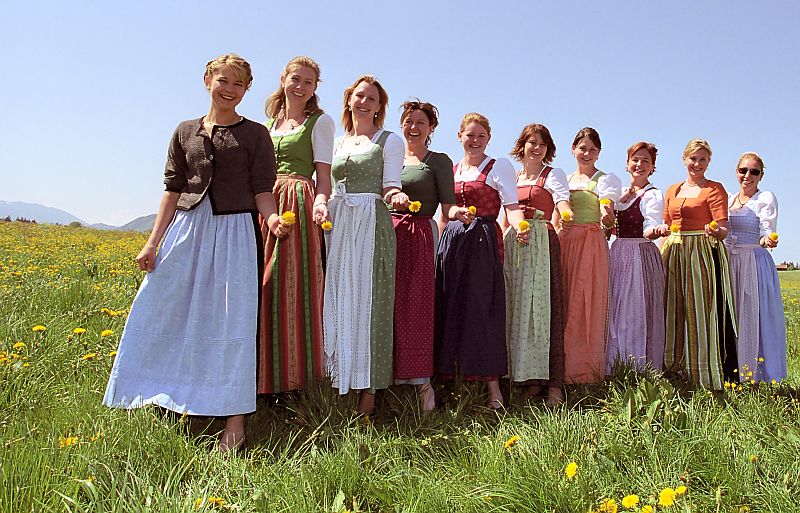
A dirndl is a traditional Alpine dress consisting of a bodice, blouse, full skirt and apron. Brides in Austria, Germany and South Tyrol wear ceremonial versions for their wedding day. The style evolved from rural workwear into a symbol of regional identity and festive celebration.
When is Dirndl kept?
Dirndl is kept on the wedding day.
The dirndl serves as the traditional wedding gown for many women in the Alpine regions of Central Europe. This multi-piece ensemble signals regional pride and marital status through specific styling choices. Brides select high-quality fabrics and intricate embroidery to mark the significance of their union within their local community traditions.
Design and structure
The garment comprises four distinct parts: a fitted bodice, a white blouse, a wide skirt and an apron. The bodice features a deep neckline and closes at the front with buttons or lacing. The skirt gathers at the waist and often includes hidden pockets. A cropped blouse sits beneath the bodice, with sleeve length varying by season. The apron covers only the front of the skirt and ties at the waist. Traditional designs use heavy cotton or wool, while modern versions may employ silk or velvet.
Wedding variations
Bridal dirndls differ from everyday wear through superior materials and elaborate details. Brides typically choose silk, fine cotton or velvet for the bodice and apron. Colours range from ivory and cream to pastel tones, though darker shades appear in winter weddings. Formal elements include lace blouses, decorative aprons and traditional jewellery like chokers or brooches. Some designs feature pieces that drape over the breast to maintain modesty, reflecting Catholic influences in the region.
Regional history
The dirndl began as practical rural clothing before evolving into a recognised folk costume in the late nineteenth century. Upper and middle classes adopted it as fashion, spreading its popularity beyond the Alps. Regional variations indicate the wearer's village or social standing. The garment faced decline after the Second World War but experienced a resurgence from the nineteen nineties onwards. Today it remains a strong symbol of Alpine identity across German speaking countries.
Etiquette and symbols
The placement of the apron knot conveys the wearer's relationship status. A left knot indicates a single woman, while a right knot signals marriage or engagement. Centre knots may denote widowhood or youth. Accessories enhance the bridal look, including floral corsages, silver brooches and hair ornaments. Unmarried women traditionally wear small floral wreaths, while married women may don golden bonnets. These details connect the bride to her community's long standing sartorial heritage.
How Dirndl is kept
The bride wears a high quality dirndl made from silk or fine cotton. She pairs the bodice and skirt with a white blouse and a decorative apron. Jewellery such as chokers or brooches completes the outfit. The apron knot is tied on the right side to show she is married. Hair ornaments or bonnets are added based on local custom. The ensemble reflects regional traditions and marks her new status within the community.
When and where
The dirndl is worn during the wedding ceremony itself. It replaces standard Western bridal gowns in many Alpine areas. The choice of fabric and colour depends on the season and local family customs. Winter weddings may feature darker colours and heavier materials, while summer ceremonies allow for lighter pastels.
This custom is strongest in Austria, southern Germany and South Tyrol in Italy. Cities like Munich and Vienna host many weddings featuring this attire. The practice extends to Liechtenstein and Switzerland where Alpine traditions remain strong. Diaspora communities also wear dirndls for cultural celebrations abroad.
What Dirndl means
The dirndl represents regional identity and continuity. Specific designs signal the wearer's village of origin or social background. The apron knot communicates availability or marital status to observers. High quality materials and embroidery honour the importance of the wedding day. The garment connects the bride to generations of women who wore similar styles in their communities.
Who takes part
- the bride: wears the ceremonial dirndl and adjusts the apron knot
- the guests: observe the apron knot to understand the bride's status
If you are a guest
Guests notice the apron knot to determine if the bride is married. They may wear traditional tracht themselves to honour the occasion. Floral accessories or simple jewellery complement the formal atmosphere. Guests respect the regional nature of the attire by avoiding overly casual or plastic garments.
Then and now
Modern designers create contemporary interpretations using diverse fabrics. Fusion styles like the African dirndl blend traditional cuts with new patterns. Younger brides may choose shorter skirts or different necklines while keeping the core structure. The garment remains popular for festivals and weddings across the Alps.
On the wedding table
Symbols: The ring The veil Gold and jewellery


Questions people ask about Dirndl
When is Dirndl kept?
Dirndl is kept on the wedding day.
What is a dirndl?
It is a traditional Alpine dress consisting of a bodice, blouse, skirt and apron. Brides in German speaking regions wear ceremonial versions for their wedding day. The style originated as rural workwear before becoming a symbol of regional identity.
How do you know if a bride is married?
The apron knot placement indicates relationship status. A knot on the right side means she is married or engaged. A left knot suggests she is single. This tradition helps guests understand the wearer's personal situation without asking.
What materials are used for wedding dirndls?
Bridal dirndls use higher quality fabrics than everyday wear. Silk, fine cotton and velvet are common choices. Colours range from ivory to pastels, though darker shades appear in winter. Embroidery and lace add formal detail to the ensemble.
See also
 Weddings in ancient RomeThe religious ceremonies and attire that marked a union in the city of Rome before the rise of Christianity.
 WimpelA linen sash made from a baby boy's circumcision cloth that binds the Torah scroll.
 PolterabendThe evening before the wedding when guests break porcelain to bring luck and test the couple's teamwork.
Good reading and sources
- Lederhosen and dirndl dresses make a comebackBBC, Article
- Lederhosen in the Amazon: an Austro-German enclave in Peru keeps traditions aliveThe Guardian, Article
- Lederhosen and dirndl dresses make a comebackBBC, Article
- Lederhosen in the Amazon: an Austro-German enclave in Peru keeps traditions aliveThe Guardian, Article
- Dirndl on WikipediaEncyclopedia
- More photos on Wikimedia CommonsPhotos and video
- Wikidata recordOpen data
The facts on this page come from the Wikipedia article "Dirndl", written by its contributors and used under the CC BY-SA 4.0 licence, and from its Wikidata record (CC0). EveryShaadi rewrote the text in its own words, with AI assistance, and compares every page with the article to make sure no passage is copied. It may be reused under the same CC BY-SA 4.0 licence with a link back.
It may contain mistakes. Wedding customs differ from one family, village and community to the next, and the people who keep them know them best. If something is wrong, tell us. Last refreshed 2026-10-05.
More from Austria
All the traditions of Austria 🇩🇪 Hanover, Germany and 5 moreBridal crownBrautkrone
A headdress worn by brides in Central and Northern Europe to symbolize purity and status.Attire · The ceremony
🇩🇪 Germany and 5 morePolterabend
The evening before the wedding when guests break porcelain to bring luck and test the couple's teamwork.Blessing · The eve
🇩🇪 Hanover, Germany and 5 moreBridal crownBrautkrone
A headdress worn by brides in Central and Northern Europe to symbolize purity and status.Attire · The ceremony
🇩🇪 Germany and 5 morePolterabend
The evening before the wedding when guests break porcelain to bring luck and test the couple's teamwork.Blessing · The eve
 🇺🇸 United States and 5 moreSaber Arch
An arch of swords or sabers held over a couple as they exit their wedding ceremony.Rite · The ceremony
🇺🇸 United States and 5 moreSaber Arch
An arch of swords or sabers held over a couple as they exit their wedding ceremony.Rite · The ceremony
 🇦🇹 Vienna, Austria and 2 moreViennese waltzWiener Walzer
The fast rotary ballroom dance that originated in Austria and defines the traditional waltz.Performance · Reception, dance and gifts
🇦🇹 Vienna, Austria and 2 moreViennese waltzWiener Walzer
The fast rotary ballroom dance that originated in Austria and defines the traditional waltz.Performance · Reception, dance and gifts
The same idea elsewhere
The wedding dress and what the couple wear compared 🇬🇭 Ghana and 2 moreKente clothnwentoma
Hand-woven silk and cotton strips from Ghana that mark weddings and graduationsAttire · The ceremony
🇬🇭 Ghana and 2 moreKente clothnwentoma
Hand-woven silk and cotton strips from Ghana that mark weddings and graduationsAttire · The ceremony
 🇮🇩 IndonesiaUlosᯥᯞᯘᯬ᯲
The hand-woven textile that binds Batak couples in marriage and symbolizes warmth.Attire · The ceremony
🇮🇩 IndonesiaUlosᯥᯞᯘᯬ᯲
The hand-woven textile that binds Batak couples in marriage and symbolizes warmth.Attire · The ceremony
 🇮🇩 Palembang, Indonesia and 2 moreSongketᬲᭀᬂᬓᬾᬢ᭄
A hand-woven brocade cloth patterned with gold or silver threads for traditional weddings in Southeast Asia.Attire · Engagement and betrothal
🇮🇩 Palembang, Indonesia and 2 moreSongketᬲᭀᬂᬓᬾᬢ᭄
A hand-woven brocade cloth patterned with gold or silver threads for traditional weddings in Southeast Asia.Attire · Engagement and betrothal
 🇲🇽 Oaxaca, Mexico and 1 moreHuipilhuīpīlli
The traditional tunic worn by indigenous women in Mexico and Central America for weddings and daily life.Attire · The weeks before
🇲🇽 Oaxaca, Mexico and 1 moreHuipilhuīpīlli
The traditional tunic worn by indigenous women in Mexico and Central America for weddings and daily life.Attire · The weeks before