Music, dance and processionMiddle East
Dabke
In its own language: دبكة
A Levantine line dance performed at weddings to celebrate union and community.

Dabke is a folk dance from the Levant, kept by Palestinian, Lebanese, Jordanian, and Syrian communities. It combines line and circle movements and appears during wedding receptions as a communal celebration of joy.
When is Dabke kept?
Dabke is kept during wedding receptions and celebrations.
Dabke is a lively folk dance from the Levant. People perform it at weddings to mark joy and strengthen community bonds. The dance involves synchronized stomping and line formations that bring guests together in shared rhythm and movement.
What the dance is
Dabke blends line dancing with circle movements. Dancers link hands or shoulders and move in a line that grows from right to left. A leader guides the group, facing both the audience and the other dancers. The steps are rhythmic and grounded, often involving stomps that echo the word's meaning of stamping feet. This structure allows many people to join the line as the music plays.
Origins and history
Scholars offer different views on where dabke began. Some trace it to ancient Phoenician dances. Others suggest it grew from Canaanite agricultural rituals meant to protect crops. A practical theory says stomping helped compact mud roofs before cracks formed. Over time, this work motion turned into a performance art used for festivals and family gatherings across the region.
How it is kept
The dance starts with a solo instrument, often a mijwiz or yarghoul. Singers accompany the melody while dancers form a semicircle. The leader signals changes in rhythm and footwork. Guests join the line as the tempo builds. Different regional styles exist, such as Al-Shamaliyya in Palestine, which focuses on precision and improvisation by the leader. Other types vary in speed and formation.
Music and instruments
Dabke relies on specific instruments to drive its rhythm. The mijwiz is a double reed clarinet that provides the main melody. Percussion comes from the tablah, a hand drum played under the arm or between the legs. The daff adds jingles like a tambourine. Songs often follow the Bayati musical mode and include popular genres like Dal Ouna, which features consistent rhythms despite changing lyrics.
Today and change
Dabke remains central to Levantine weddings and cultural events. It is performed in community centers abroad and at university festivals. In Syria, it has also appeared in political demonstrations. Large groups have set world records for the longest human chain dancing the style. The dance adapts to modern stages while keeping its traditional roots and communal spirit.
How Dabke is kept
Musicians begin with a solo on a wind instrument like the mijwiz. Dancers link hands and form a line led by a skilled performer. The leader calls out steps and rhythms. Guests join the line as the song continues. The group moves in synchronized stomps and turns. Different styles change the speed and formation. The dance ends when the music stops or the leader signals completion.
When and where
It happens during wedding receptions and joyous family gatherings. The dance usually follows the meal and speeches. It serves as a high-energy moment to celebrate the couple. Dates are not fixed to a calendar month but depend on the wedding schedule.
It is strongest in Palestine, Lebanon, Jordan, and Syria. Communities keep it alive in villages and cities alike. Diaspora groups in America and Canada also perform it at cultural festivals and conventions.
What Dabke means
The dance represents unity and resilience. Stomping connects dancers to the earth and their ancestors. It marks joy and shared identity. For some, it is a statement of national personality. The communal nature reinforces social bonds among families and friends.
Who takes part
- The leader: Guides the line and signals step changes
- The musicians: Play melodies and rhythms on wind and percussion instruments
- The singers: Perform vocal tracks that match the dance rhythm
- The dancers: Link hands and follow the leader's steps in unison
- The guests: Join the line to participate in the celebration
If you are a guest
Guests watch the initial performance and then join the line. They hold hands with neighbors and follow the leader's steps. No special attire is required, though festive clothing is common. Guests clap along and encourage the dancers with cheers.
Then and now
The dance adapts to modern stages and global audiences. Universities and cultural centers host competitions. It appears in political contexts in some regions. Despite changes, it remains a core part of wedding celebrations in the Levant.
On the wedding table


Questions people ask about Dabke
When is Dabke kept?
Dabke is kept during wedding receptions and celebrations.
What is dabke?
Dabke is a Levantine folk dance combining line and circle movements. It is performed at weddings and festivals by Palestinian, Lebanese, Jordanian, and Syrian communities. The dance features synchronized stomping and guided by a leader.
Who leads the dabke dance?
A skilled dancer called the lawweeh leads the line. He signals rhythm changes and performs improvisations. His role requires quickness and accuracy to guide the group through complex steps.
What instruments are used?
Common instruments include the mijwiz, a double reed clarinet, and the tablah, a hand drum. Singers provide vocals in traditional modes. These elements create the recognizable rhythm for the dance.
See also
 MantillaA lace or silk veil worn over the head and shoulders by women in Spain and Latin America
 MayianThe turmeric paste ceremony held the day before Punjabi weddings in India and Pakistan.
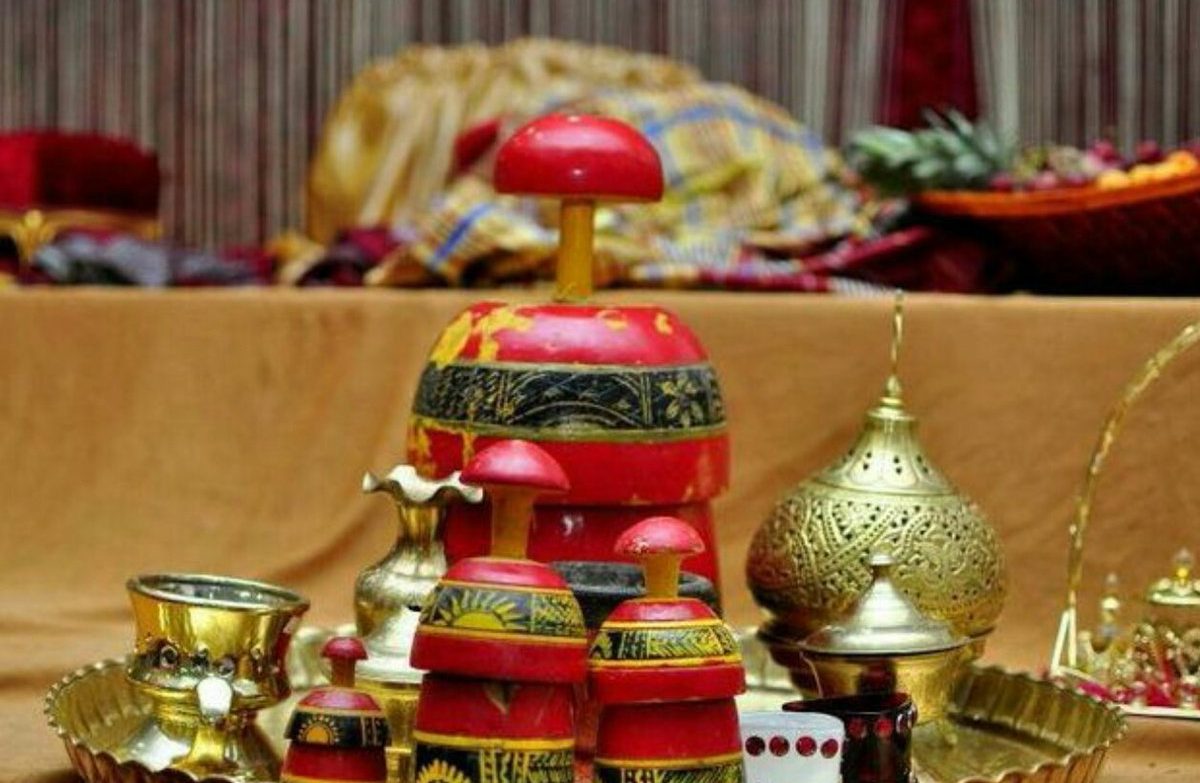 JirtigA Sudanese inauguration ritual where the groom is symbolically crowned as a king.Nikah mut'ahA private contract for a fixed-term marriage practiced in Twelver Shia Islam.
Good reading and sources
- Dabke on WikipediaEncyclopedia
- More photos on Wikimedia CommonsPhotos and video
- Wikidata recordOpen data
The facts on this page come from the Wikipedia article "Dabke", written by its contributors and used under the CC BY-SA 4.0 licence, and from its Wikidata record (CC0). EveryShaadi rewrote the text in its own words, with AI assistance, and compares every page with the article to make sure no passage is copied. It may be reused under the same CC BY-SA 4.0 licence with a link back.
It may contain mistakes. Wedding customs differ from one family, village and community to the next, and the people who keep them know them best. If something is wrong, tell us. Last refreshed 2026-10-05.
More from Palestine
All the traditions of Palestine 🇪🇬 Egypt and 5 moreMizmarمزمار (mizmār)
A loud double reed instrument played at weddings and festivals across Egypt and the Levant.Performance · Procession and arrival
🇪🇬 Egypt and 5 moreMizmarمزمار (mizmār)
A loud double reed instrument played at weddings and festivals across Egypt and the Levant.Performance · Procession and arrival
 🇪🇬 Egypt and 5 moreArab weddingزفاف or فرح or عرس
A series of family-centered rites and processions that mark marriage across the Arab world.Rite · Finding a match
🇪🇬 Egypt and 5 moreArab weddingزفاف or فرح or عرس
A series of family-centered rites and processions that mark marriage across the Arab world.Rite · Finding a match
The same idea elsewhere
Wedding music and the dance floor compared 🇲🇦 Imilchil, MoroccoImilchil Marriage FestivalAgdoud N'Oulmghenni
A Berber marriage festival in Morocco where tribes gather to arrange unions and celebrate with music and dance.Betrothal · Finding a match
🇲🇦 Imilchil, MoroccoImilchil Marriage FestivalAgdoud N'Oulmghenni
A Berber marriage festival in Morocco where tribes gather to arrange unions and celebrate with music and dance.Betrothal · Finding a match
 🇬🇧 United Kingdom and 5 moreWedding superstitions
Traditional beliefs about luck and omens that shape wedding rituals across culturesAttire · The weeks before
🇬🇧 United Kingdom and 5 moreWedding superstitions
Traditional beliefs about luck and omens that shape wedding rituals across culturesAttire · The weeks before
 🇱🇹 Lithuania and 1 moreLithuanian wedding songsvestuvinės dainos
The polyphonic songs and weeping rituals that mark a Lithuanian bride's transition to her new family.Performance · Engagement and betrothal
🇱🇹 Lithuania and 1 moreLithuanian wedding songsvestuvinės dainos
The polyphonic songs and weeping rituals that mark a Lithuanian bride's transition to her new family.Performance · Engagement and betrothal
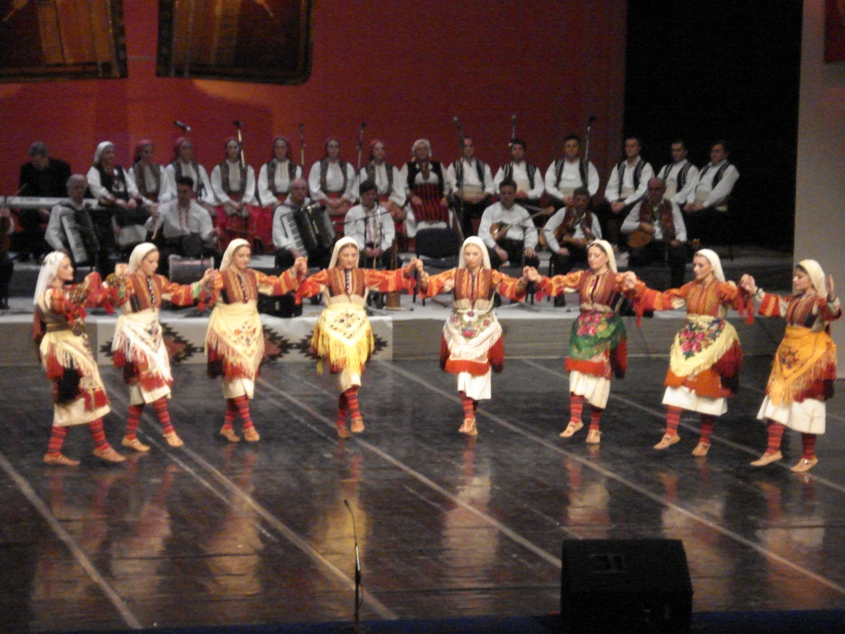 🇷🇴 Romania and 7 moreHorahora (Romanian), horo (Bulgarian), oro (Macedonian), horah (Hebrew)
A circle dance held at weddings across Southeast Europe and among Jewish communities worldwide.Performance · Reception, dance and gifts
🇷🇴 Romania and 7 moreHorahora (Romanian), horo (Bulgarian), oro (Macedonian), horah (Hebrew)
A circle dance held at weddings across Southeast Europe and among Jewish communities worldwide.Performance · Reception, dance and gifts