Wedding dress and clothingEurope
Bridal bouquet
The handheld flower arrangement carried by the bride during her wedding ceremony.

A bridal bouquet is a creative arrangement of cut flowers held by the bride. It serves as a decorative accessory and carries symbolic meaning through the language of flowers. The custom dates back to the Renaissance and remains a central part of many Western weddings today.
When is Bridal bouquet kept?
Bridal bouquet is kept during the wedding ceremony and reception.
The bridal bouquet is a handheld collection of flowers that accompanies the bride on her wedding day. Historically used to mask odors, it now symbolizes beauty and luck. The custom evolved from ancient floral arrangements into a specific wedding tradition with distinct shapes and meanings.
Origins and history
Floral arrangements have deep roots in global culture. Ancient Egyptians decorated spaces with sacred lotuses and herbs around 2500 BCE. In China, Buddhist monks developed refined art forms based on respecting plant life. Japan adopted these techniques, creating ikebana, which emphasizes simplicity. The practice reached Europe through Dutch painters and aristocratic homes. By the Victorian era, bouquets became gifts conveying specific messages through the language of flowers.
Symbolism and language
Different flowers carry distinct meanings. In China, white plums represent winter while lotuses signify summer. The language of flowers allowed lovers to send coded sentiments. Chamomile meant patience, and goldenrod indicated indecision. Brides often chose blooms to reflect their feelings or hopes. This symbolic layer adds depth to the visual beauty of the arrangement. The choice of flowers remains a personal expression for modern couples.
Shapes and styles
Brides select bouquets based on current trends or personal taste. A posy is a small, round, simple arrangement easy to carry. Cascading bouquets taper downward and gained fame in the 1980s. Presentation bouquets feature long stems cradled in the arms. Ramo Buchon is a dome-shaped rose bouquet wrapped in paper. These styles offer variety for different wedding aesthetics and practical needs during the ceremony.
Ceremony traditions
Traditionally, the bride holds the bouquet during the vows. The maid of honor may hold it at certain moments. After the ceremony, the bride tosses the bouquet over her shoulder. Guests catch it, and legend says the catcher will be the next to marry. This ritual connects to myths like the Golden Apple of Discord. It serves as a fun moment for single friends at the reception.
How Bridal bouquet is kept
The bride carries the bouquet throughout the ceremony. She may hand it to the maid of honor temporarily. During the reception, she throws it to a group of guests. The catcher is believed to be next in line for marriage. The style varies from small nosegays to large cascading designs. Flowers are chosen for scent, color, and symbolic meaning.
When and where
It is held during the ceremony and tossed at the reception. The date depends on the wedding schedule. Modern couples choose dates based on availability and season.
Common in Western weddings and globally influenced cultures. Popular in the United Kingdom, United States, and parts of Asia. Urban centers see diverse styles due to trend exposure.
What Bridal bouquet means
Flowers represent beauty, fertility, and new beginnings. The language of flowers allows silent communication. Specific blooms convey wishes for patience, love, or prosperity. The act of tossing shares good luck with friends. It marks the transition from ceremony to celebration.
Who takes part
- the bride: carries the bouquet during the ceremony and tosses it afterward
- the maid of honor: may hold the bouquet during parts of the ceremony
- single guests: catch the tossed bouquet to claim future marriage luck
If you are a guest
Single guests gather near the bride for the toss. They reach up to catch the flowers. Catching the bouquet is considered a lucky omen. Guests do not wear special attire for this part. They simply participate in the fun tradition.
Then and now
Trends shift toward simpler, hand-tied bouquets. Cascading styles saw a resurgence recently. Eco-friendly practices use local or potted plants. Some couples skip the toss entirely. Personalization remains key in modern choices.


Questions people ask about Bridal bouquet
When is Bridal bouquet kept?
Bridal bouquet is kept during the wedding ceremony and reception.
What is a bridal bouquet?
It is a handheld arrangement of flowers carried by the bride. It serves as a decorative accessory and symbolizes beauty. Styles range from small posies to large cascades. It is a central element of many wedding ceremonies.
Do flowers have meanings?
Yes, the language of flowers assigns specific sentiments. Roses mean love, while chamomile means patience. Couples choose blooms to convey messages. This tradition started in the Victorian era and remains popular.
Who holds the bouquet?
The bride holds it during the main ceremony. The maid of honor may take it temporarily. The bride keeps it until the toss. It is passed to her attendants if needed.
See also
 XiuhefuA modern two-piece Chinese bridal outfit inspired by Qing dynasty styles and popularized by a 2001 television drama.
 Wedding dressThe ceremonial garment worn by the bride during her marriage rite.
 Care clothA linen or silk cloth held over the heads of a bride and groom during a Christian wedding blessing.
 White weddingA formal Western ceremony marked by a white bridal gown and traditional Christian rituals.
Good reading and sources
- Flower bouquet on WikipediaEncyclopedia
- More photos on Wikimedia CommonsPhotos and video
- Wikidata recordOpen data
The facts on this page come from the Wikipedia article "Flower bouquet", written by its contributors and used under the CC BY-SA 4.0 licence, and from its Wikidata record (CC0). EveryShaadi rewrote the text in its own words, with AI assistance, and compares every page with the article to make sure no passage is copied. It may be reused under the same CC BY-SA 4.0 licence with a link back.
It may contain mistakes. Wedding customs differ from one family, village and community to the next, and the people who keep them know them best. If something is wrong, tell us. Last refreshed 2026-10-05.
More from the United Kingdom
All the traditions of the United Kingdom
🇬🇧 United Kingdom and 3 moreWedding dress
The ceremonial garment worn by the bride during her marriage rite.Attire · The ceremony
🇬🇧 United Kingdom and 2 moreWhite wedding
A formal Western ceremony marked by a white bridal gown and traditional Christian rituals.Attire · Engagement and betrothal
🇬🇧 United Kingdom and 3 moreCare cloth
A linen or silk cloth held over the heads of a bride and groom during a Christian wedding blessing.Attire · The ceremony
 🇬🇧 United Kingdom and 5 moreWedding superstitions
Traditional beliefs about luck and omens that shape wedding rituals across culturesAttire · The weeks before
🇬🇧 United Kingdom and 5 moreWedding superstitions
Traditional beliefs about luck and omens that shape wedding rituals across culturesAttire · The weeks before
The same idea elsewhere
The wedding dress and what the couple wear compared 🇲🇽 Oaxaca, Mexico and 1 moreHuipilhuīpīlli
The traditional tunic worn by indigenous women in Mexico and Central America for weddings and daily life.Attire · The weeks before
🇵🇦 PanamaTamborito
A Panamanian courtship dance performed in a circle with drums and female chorusPerformance · The wedding feast
🇲🇽 Oaxaca, Mexico and 1 moreHuipilhuīpīlli
The traditional tunic worn by indigenous women in Mexico and Central America for weddings and daily life.Attire · The weeks before
🇵🇦 PanamaTamborito
A Panamanian courtship dance performed in a circle with drums and female chorusPerformance · The wedding feast
 🇪🇹 Addis Ababa, Ethiopia and 1 moreZuria
The ankle-length dress with woven hem bands worn by Tigrinya and Amhara women for weddings and holidays.Attire · The weeks before
🇪🇹 Addis Ababa, Ethiopia and 1 moreZuria
The ankle-length dress with woven hem bands worn by Tigrinya and Amhara women for weddings and holidays.Attire · The weeks before
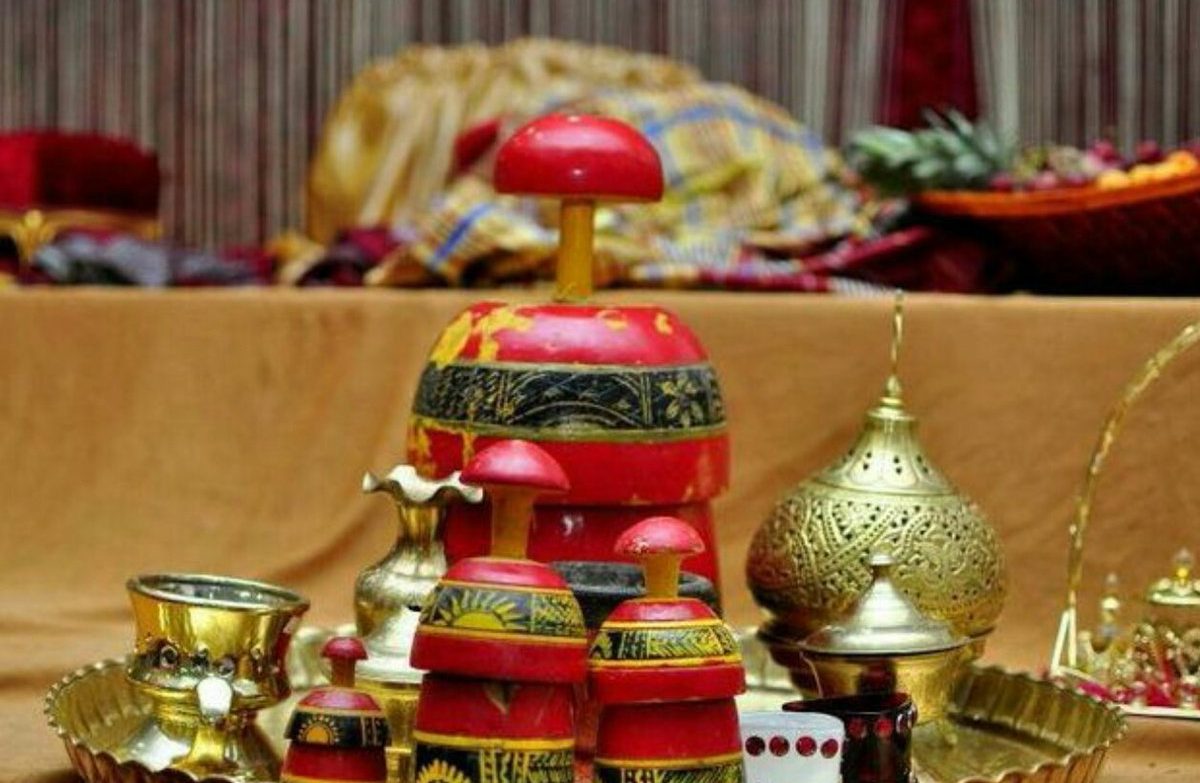 🇸🇩 Khartoum, SudanJirtigالجَرْتِقْ (Arabic)
A Sudanese inauguration ritual where the groom is symbolically crowned as a king.Rite · The weeks before
🇸🇩 Khartoum, SudanJirtigالجَرْتِقْ (Arabic)
A Sudanese inauguration ritual where the groom is symbolically crowned as a king.Rite · The weeks before