Ceremony and sacred ritesMiddle EastZoroastrian and ParsiMuslim
Iranian wedding
In its own language: مراسم عروسی در ایران
A multi-stage ceremony rooted in Zoroastrianism and Islam that binds families through courtship, feasts, and sacred vows

Iranian weddings are a series of rituals practiced across Iran by diverse ethnic groups. They blend ancient Zoroastrian customs with Islamic traditions to formalize marriage. The process begins with family courtship and culminates in the Sofreh Aghd vow ceremony.
When is Iranian wedding kept?
Iranian wedding is kept on throughout the wedding cycle from courtship to honeymoon.
Iranian weddings weave together Zoroastrian heritage and Islamic faith into a complex social ritual. Families guide the couple through stages of courtship, engagement, and celebration. These traditions emphasize community bonds, religious devotion, and mutual respect between households.
Courtship and promise
The journey begins with Khastegāri, where the man's family visits the woman's home to propose. Representatives bring flowers and sweets while tea is served. Both parties discuss the match before proceeding. If agreed, the Baleh Boroon ceremony follows. This event marks the official engagement. Elders gather to confirm the union. The groom's family presents a ring to the bride as a sign of commitment. Modern couples often initiate this process themselves, seeking parental blessing rather than strict arrangement.
Preparation and gifts
Before the main event, families exchange significant gifts. The Jahāz Barān involves transporting the bride's dowry on decorated trays carried by men. In cities like Tehran, vehicles may be used instead. The couple also selects elaborate gold jewelry sets and wedding rings. Silver mirrors and candle holders are purchased by the groom's side. These items symbolize prosperity and light. The preparations ensure both households contribute to the new life being built together.
The henna night
One day before the wedding, the Hanā Bandān takes place at the bride's home. Women gather for a festive evening centered around henna. A married woman with living parents kneads the henna paste. It is applied to the bride's hands after coins or gold are placed inside her palms. This act invites wealth and good fortune. Guests receive henna as well. Folk songs and hymns fill the air. The bride wears a veil adorned with red flakes during this intimate gathering.
The sacred table
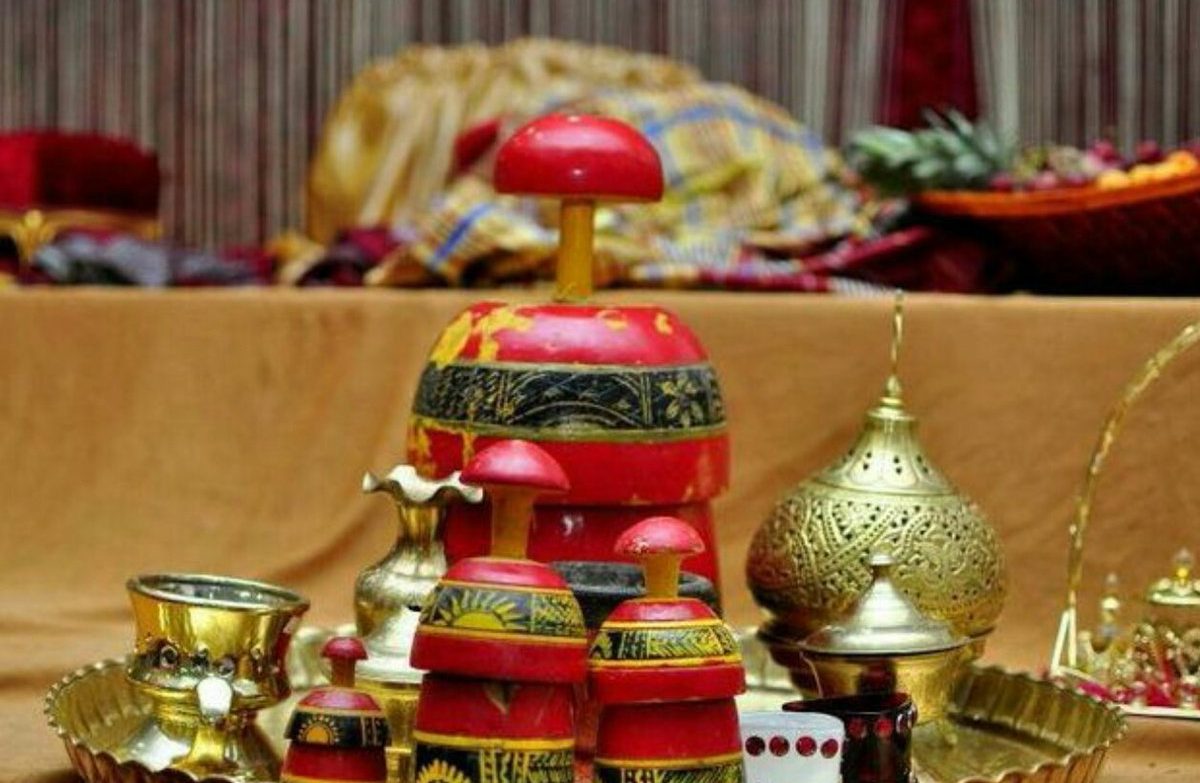
The Sofreh Aghd is an elaborate floor spread featuring symbolic items. Herbs, rice, salt, and frankincense represent purity and sustenance. Sweets like Noghl and Baklava signify a sweet life ahead. A mirror reflects the couple's future, flanked by candles. Bread, cheese, and greens stand for basic needs. Coins denote wealth. Sacred texts such as the Qur'an or Avesta are placed centrally. Unmarried women hold a silk scarf over the couple's heads while sugar cones are crushed above them to shower blessings.
Celebrations and travel
After the vows, festivities continue with Pātakhti, resembling a bridal shower where relatives give gifts. Pagoshā ceremonies involve open-armed welcomes at various family homes over several weeks. The Mādarzan Salām sees the groom visiting his mother-in-law with a gift. Finally, the Mah-e Asal honeymoon begins. Couples often travel to northern Iranian provinces like Mazanderan or Turkish destinations like Antalya for their vacation.
How Iranian wedding is kept
Families lead the courtship through Khastegāri visits. The engagement is sealed at Baleh Boroon with ring exchanges. The bride hosts a Henna Night filled with music and dye application. The core ceremony occurs at the Sofreh Aghd table under a held scarf. Post-wedding events include gift-giving showers and family visits. The cycle ends with a honeymoon trip to popular regional destinations.
When and where
It spans months from initial courtship to the honeymoon. Key events occur in sequence: proposal, engagement, pre-wedding henna night, and the main vow ceremony. Dates are set by family agreement rather than fixed calendar days.
Primarily practiced in Iran across various ethnic groups. Cities like Tehran and Tabriz host modern variations. Turkish cities like Antalya serve as common honeymoon spots due to visa policies.
What Iranian wedding means
Items on the Sofreh Aghd carry deep meaning. Rice and herbs symbolize fertility and health. Sugar represents a sweet marriage. Mirrors and candles reflect light and truth. The held scarf protects the couple. Gold and coins promise financial stability. The entire ritual reinforces family unity and spiritual grounding within Persian culture.
Who takes part
- Man's family: Initiates courtship and brings proposals
- Woman's family: Receives visitors and serves refreshments
- Groom's parents: Present engagement gifts and jewelry
- Bride: Hosts henna night and receives vows
- Unmarried women: Hold the silk scarf over the couple
- Married woman: Kneads henna and crushes sugar cones
If you are a guest
Guests attend various stages, from courtship visits to the main ceremony. At the Sofreh Aghd, they witness the vows and share sweets. During Henna Night, women participate in singing and receiving dye. Gifts are brought to pre-wedding showers. Guests dress formally and celebrate with dancing and socializing throughout the extended festivities.
Then and now
Modern practices adapt traditional steps. Couples often initiate courtship themselves rather than relying solely on family arrangements. Urban settings use vehicles for dowry transport instead of head-carrying. International travel for honeymoons has increased, particularly to Turkey. Despite changes, the core symbolic elements remain central to Persian identity.
On the wedding table
- Bamiyeh: Light doughnut balls served during engagement sweets sharing
- Noghl: Traditional almond candy placed on the sacred table
- Baklava: Sweet pastry representing a sugary life ahead
- Naan-e Berenji: Rice flour cookies shared with guests
- Bread and Cheese: Basic sustenance symbols on the wedding spread
- Nuts and Dried Fruit: Served alongside tea during celebratory gatherings
Symbols: The ring The veil Henna Candles and lamps Mirrors Bread Water and washing Salt Sweets, sugar and honey
Questions people ask about Iranian wedding
When is Iranian wedding kept?
Iranian wedding is kept on throughout the wedding cycle from courtship to honeymoon.
What is the most important part of an Iranian wedding?
The Sofreh Aghd ceremony is the core event. It involves sitting before a symbolic table filled with herbs, sweets, and sacred texts. The couple recites vows under a held scarf to seal their marriage legally and spiritually.
Who pays for the wedding expenses?
Costs are traditionally divided. The groom's family typically covers the jewelry set, engagement ring, and silver decorations. The bride's family often provides the dowry and household items transported during the Jahāz Barān ceremony.
Is the henna night mandatory?
It is a widespread tradition but not strictly mandatory. Many brides choose to host a Hanā Bandān for female relatives. The ceremony focuses on applying henna for luck and celebrating with folk songs before the main wedding day.
How do modern Iranians handle courtship?
While family involvement remains key, many couples now initiate the Khastegāri process themselves. They seek parental approval after mutual agreement, blending personal choice with traditional respect for family opinions.
See also
 MayianThe turmeric paste ceremony held the day before Punjabi weddings in India and Pakistan.
 JirtigA Sudanese inauguration ritual where the groom is symbolically crowned as a king.
 IhiThe Newar rite in which a girl is married to Vishnu, shown by a golden figure
Good reading and sources
The facts on this page come from the Wikipedia article "Iranian wedding", written by its contributors and used under the CC BY-SA 4.0 licence, and from its Wikidata record (CC0). EveryShaadi rewrote the text in its own words, with AI assistance, and compares every page with the article to make sure no passage is copied. It may be reused under the same CC BY-SA 4.0 licence with a link back.
It may contain mistakes. Wedding customs differ from one family, village and community to the next, and the people who keep them know them best. If something is wrong, tell us. Last refreshed 2026-10-05.
More from Iran
All the traditions of Iran 🇮🇷 Iran and 1 moreNikahnikāḥ (Arabic: نِكَاح)
The Islamic marriage contract that establishes a binding union between two people.Vow · Engagement and betrothal
🇮🇷 Shiraz, Iran and 5 moreUlulation
A high-pitched trilling sound made by women to celebrate weddings and share good news across many cultures.Performance · Procession and arrival
🇮🇳 India and 3 moreNikah halalaنکاح حلالہ
A second marriage required for a woman to remarry her first husband after triple talaq.Vow · After the wedding
🇮🇷 Iran and 1 moreNikahnikāḥ (Arabic: نِكَاح)
The Islamic marriage contract that establishes a binding union between two people.Vow · Engagement and betrothal
🇮🇷 Shiraz, Iran and 5 moreUlulation
A high-pitched trilling sound made by women to celebrate weddings and share good news across many cultures.Performance · Procession and arrival
🇮🇳 India and 3 moreNikah halalaنکاح حلالہ
A second marriage required for a woman to remarry her first husband after triple talaq.Vow · After the wedding
 🇮🇷 Iran and 1 moreNoghlنقل (Persian) / نقل (Dari)
Sugar-coated almonds served at Iranian and Afghan weddings as a sweet treat and showered confetti.Feast custom · The wedding feast
🇮🇷 Iran and 1 moreNoghlنقل (Persian) / نقل (Dari)
Sugar-coated almonds served at Iranian and Afghan weddings as a sweet treat and showered confetti.Feast custom · The wedding feast
The same idea elsewhere
Arranged marriage, matchmaking and choosing a partner compared 🇺🇦 UkraineTraditional Ukrainian weddingТрадиційне українське весілля
A multi-day sequence of folk rites, bread baking and church vows that marks the transition from maidenhood to married liRite · Finding a match
🇮🇳 IndiaTelugu Hindu weddingతెలుగు వివాహ వేడుక
A multi-day Telugu Hindu marriage marked by seven vows around fire and family rituals.Rite · Finding a match
🇺🇦 UkraineTraditional Ukrainian weddingТрадиційне українське весілля
A multi-day sequence of folk rites, bread baking and church vows that marks the transition from maidenhood to married liRite · Finding a match
🇮🇳 IndiaTelugu Hindu weddingతెలుగు వివాహ వేడుక
A multi-day Telugu Hindu marriage marked by seven vows around fire and family rituals.Rite · Finding a match
 🇦🇿 AzerbaijanAzerbaijani wedding traditionsAzərbaycanın toy adətləri
The multi-step family rituals of Azerbaijani weddings, from matchmaking to the henna night.Rite · Finding a match
🇦🇿 AzerbaijanAzerbaijani wedding traditionsAzərbaycanın toy adətləri
The multi-step family rituals of Azerbaijani weddings, from matchmaking to the henna night.Rite · Finding a match
 🇮🇳 IndiaOdia Hindu weddingBahaghara (ଓଡ଼ିଆ ବାହାଘର)
The traditional Hindu marriage ceremony of the Odia people in Odisha, India.Rite · Engagement and betrothal
🇮🇳 IndiaOdia Hindu weddingBahaghara (ଓଡ଼ିଆ ବାହାଘର)
The traditional Hindu marriage ceremony of the Odia people in Odisha, India.Rite · Engagement and betrothal