Matchmaking, courtship and engagementSoutheast Asia
Harana
A traditional Filipino courtship serenade where a suitor sings beneath a woman's window at night.
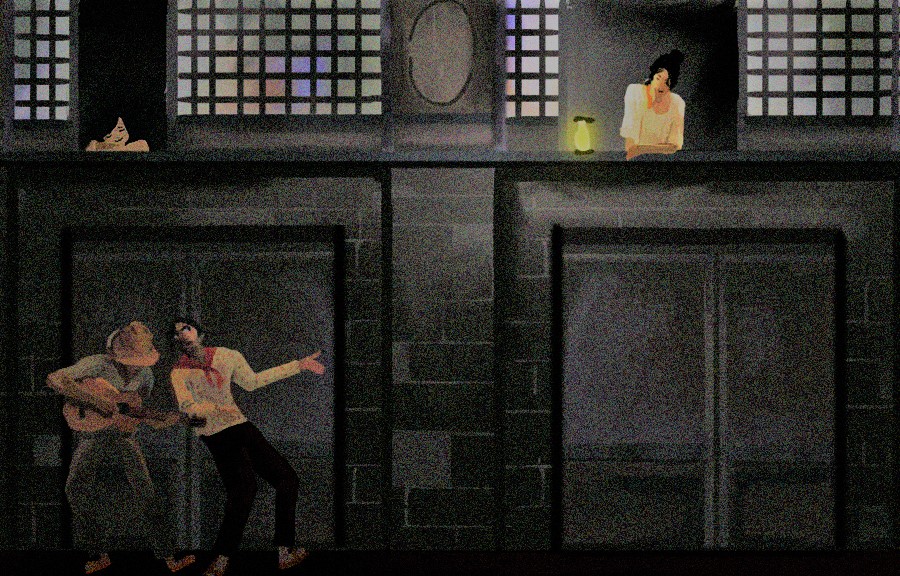
The harana is a formal courtship ritual in the Philippines. A young man sings to a woman at her home, usually by her window, to express his romantic interest. The practice blends indigenous poetry with Spanish musical influences and follows a structured three-part performance.
When is Harana kept?
Harana is kept at night, traditionally before modern curfews.
The harana is a traditional Filipino courtship ritual where a man serenades a woman to express his romantic intentions. Originating during the Spanish colonial era, it combines indigenous poetic forms with Hispanic musical styles. A suitor performs outside a woman's home, typically at night, using song to demonstrate his sincerity and admiration for her character.
The structure of the serenade
The ritual follows a strict three-part protocol known as pagatawag, pagtug-an, and pagtubag. First, the suitor calls out to the woman. Next, he sings his confession or poem, often accompanied by friends playing guitar or providing backup vocals. Finally, the woman responds to his advances. This response determines whether the courtship continues or ends. If she accepts him, her family may invite the group inside for refreshments. Rejection is common, and the community often teases the couple regardless of the outcome.
Musical style and lyrics
Songs are typically performed in major keys with rhythms inspired by the habanera. The lyrics are written conversationally and focus on deep sentiment. Poets praise the sanctity of women, comparing them to flowers or natural elements that bring healing. Some songs portray the suitor praying to the moon for guidance, while others express fear of losing their beloved more than death itself. The music aims to elevate the woman, painting her in an angelic light through raw emotional expression.
Historical origins and decline
The tradition gained popularity during the Spanish Philippines period, drawing influence from Mexican mariachi sounds and the annual serenade of the Virgin of Guadalupe. It also retains traces of pre-colonial indigenous musical styles. Since the 1980s, the practice has declined significantly. The spread of electricity introduced new music genres like disco, while martial law imposed curfews that disrupted nightly courtship. Today, the harana survives mainly in school performances and cultural programs rather than active romantic pursuits.
How Harana is kept
A suitor visits the home of a woman he wishes to woo, usually at night. He stands near her window and sings, often accompanied by friends playing guitars or providing vocal support. The performance follows a set sequence: calling out, singing the confession, and waiting for the woman's reply. If she accepts, the group may be invited inside for food and drink. If rejected, the suitor leaves, and the incident often becomes a subject of local gossip.
When and where
It occurs at night, historically before modern curfews were enforced. The timing allows for private communication between the suitor and the woman without disturbing the household day activities.
The custom is practiced throughout rural areas of the Philippines. It remains culturally significant in regions like Cebu, where specific folk singers have preserved the tradition through popular recordings.
What Harana means
The harana symbolizes sincere romantic intent and respect for the woman. By singing praises that compare her to flowers or celestial bodies, the suitor demonstrates his admiration for her purity and character. The act transforms courtship into a public yet intimate performance of devotion.
Who takes part
- The suitor: Sings poems and confessions of love beneath the woman's window
- The woman: Listens from her home and decides whether to accept or reject the advance
- Companions: Play instruments like guitars or provide backup vocals for the suitor
- The family: Observes the performance and may invite accepted suitors inside for hospitality
If you are a guest
Community members often witness the serenade and discuss the outcome. They may tease the participants regardless of whether the courtship succeeds or fails, treating the event as a shared social moment.
Then and now
The practice has declined since the 1980s due to Western media influence and martial law curfews. It now appears primarily in cultural performances and educational settings rather than as a living courtship method.

Questions people ask about Harana
When is Harana kept?
Harana is kept at night, traditionally before modern curfews.
What is the harana?
The harana is a traditional Filipino courtship ritual where a man serenades a woman at her home to express romantic interest. It involves singing specific poems and waiting for her response.
Is the harana still practiced today?
Active courtship via harana has declined significantly since the 1980s. It is now mostly performed in cultural shows, schools, and heritage programs rather than as a real-life dating method.
See also
 Courtship in the PhilippinesA traditional Filipino courtship marked by serenade, service, and family involvement.Tu B'AvA minor Jewish holiday in Israel that serves as a popular day for weddings and matchmaking.SambandamThe traditional matrilineal marriage alliance of Kerala's Nairs and Nambudiris.
Good reading and sources
- Harana (serenade) on WikipediaEncyclopedia
- More photos on Wikimedia CommonsPhotos and video
- Wikidata recordOpen data
The facts on this page come from the Wikipedia article "Harana (serenade)", written by its contributors and used under the CC BY-SA 4.0 licence, and from its Wikidata record (CC0). EveryShaadi rewrote the text in its own words, with AI assistance, and compares every page with the article to make sure no passage is copied. It may be reused under the same CC BY-SA 4.0 licence with a link back.
It may contain mistakes. Wedding customs differ from one family, village and community to the next, and the people who keep them know them best. If something is wrong, tell us. Last refreshed 2026-10-06.
More from the Philippines
All the traditions of the Philippines
🇵🇭 Cebu, PhilippinesCourtship in the Philippines
A traditional Filipino courtship marked by serenade, service, and family involvement.Betrothal · Finding a match
 🇵🇭 Quezon City, PhilippinesBinukot
A Visayan custom of secluding young noblewomen to preserve their purity and elevate their marriage value.Betrothal · The weeks before
🇵🇭 Quezon City, PhilippinesBinukot
A Visayan custom of secluding young noblewomen to preserve their purity and elevate their marriage value.Betrothal · The weeks before
 🇪🇸 Madrid, Spain and 5 moreTwelve Grapeslas doce uvas (de la suerte)
Eating one grape per midnight bell strike to welcome the New Year with good luckFeast custom · After the wedding
🇪🇸 Madrid, Spain and 5 moreTwelve Grapeslas doce uvas (de la suerte)
Eating one grape per midnight bell strike to welcome the New Year with good luckFeast custom · After the wedding
The same idea elsewhere
Auspicious dates, seasons and days to avoid compared 🇰🇷 South KoreaBlack DayBlack Day (Korean: 블랙데이)
A South Korean day for singles to gather and eat black bean noodles after missing Valentine's and White Day gifts.Feast custom · The weeks before
🇰🇷 South KoreaBlack DayBlack Day (Korean: 블랙데이)
A South Korean day for singles to gather and eat black bean noodles after missing Valentine's and White Day gifts.Feast custom · The weeks before
 🇪🇬 Egypt and 4 moreWaist beads
Strands of glass or seed worn around the hips to mark womanhood and track body changes in West and North Africa.Adornment · Engagement and betrothal
🇪🇬 Egypt and 4 moreWaist beads
Strands of glass or seed worn around the hips to mark womanhood and track body changes in West and North Africa.Adornment · Engagement and betrothal
 🇸🇿 Ludzidzini Royal Village, Eswatini and 1 moreUmhlanga
The annual Swazi and Zulu gathering where young women cut reeds to preserve chastity and offer tribute labour.Rite · The eve
🇸🇿 Ludzidzini Royal Village, Eswatini and 1 moreUmhlanga
The annual Swazi and Zulu gathering where young women cut reeds to preserve chastity and offer tribute labour.Rite · The eve
 🇮🇪 Ireland and 1 moreHandfastingceangal na lámh (Irish); pòsadh-bliadhna (Scottish Gaelic)
A pledge ceremony where a couple joins hands to make a binding marriage contract or engagement.Rite · Engagement and betrothal
🇮🇪 Ireland and 1 moreHandfastingceangal na lámh (Irish); pòsadh-bliadhna (Scottish Gaelic)
A pledge ceremony where a couple joins hands to make a binding marriage contract or engagement.Rite · Engagement and betrothal