Wedding dress and clothingEast Asia
Jokduri
In its own language: 족두리
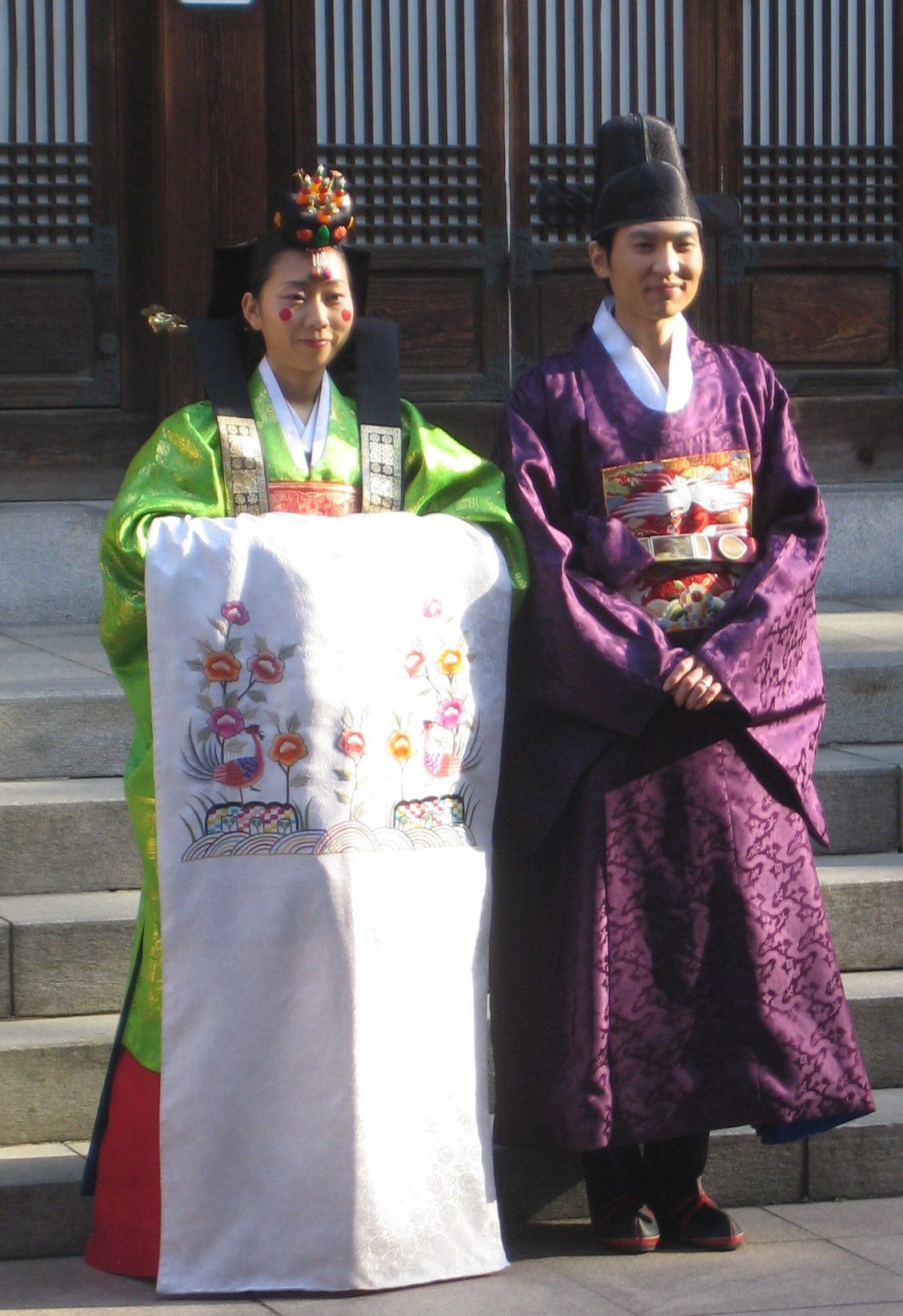
A traditional Korean coronet worn by women during weddings and other special occasions.

The jokduri is a small, structured crown worn by Korean women for formal events like weddings. It features a black silk exterior and an inner core of cotton and paper. The piece displays social status through gold or silver ornaments.
When is Jokduri kept?
Jokduri is kept during weddings and special occasions.
The jokduri serves as a traditional Korean headpiece designed specifically for women to wear at significant life events. This coronet acts as a symbol of elegance and social standing within the community. Brides and female guests often choose this item to complete their formal attire. The design reflects centuries of cultural evolution and royal influence.
Structure and materials
This headgear consists of an outer shell covered in black silk. Inside, the structure relies on layers of hard paper and cotton for support. The shape narrows toward the base, creating a cylindrical bottom that sits securely on the head. The top section takes on a vague hexagonal form. Decorative cloisonné ornaments adorn the upper surface. Crafters may add accessories made from precious metals like gold or silver to indicate the wearer's rank.
Historical origins
Scholars trace the roots of this coronet to the late Goryeo period. It likely evolved from the Mongolian gogori cap used for outdoor activities. Intermarriages between the Goryeo kingdom and the Yuan dynasty facilitated this exchange. Early versions were notably larger and taller than later iterations. The style shifted significantly during the Joseon dynasty, becoming smaller and more uniform in shape.
Royal decrees and fashion
King Gwanghaegun mandated the use of black silk for the exterior covering. Purple silk became standard for the inner lining. As popularity grew, the jokduri transformed into a widespread fashion trend. Later monarchs King Yeongjo and Jeongjo banned heavy wigs called gache. They encouraged women to adopt the jokduri instead. A decree in 1788 restricted excessive decoration and regulated fabric choices to maintain modesty.
How Jokduri is kept
Women place the jokduri on their heads after arranging their hair. The piece rests securely atop the hairstyle, framing the face. It complements formal hanbok robes worn for the ceremony. The wearer adjusts the fit to ensure stability throughout the event. Gold or silver accents catch the light during processions. The coronet remains on until the formal proceedings conclude.
When and where
It appears during weddings and other major ceremonial occasions. The timing aligns with the bride's entrance and formal reception segments.
This custom originates in Korea. It remains prominent in South Korea and North Korea. Historical records link its development to interactions with China and Mongolia.
What Jokduri means
The jokduri signals high social status and refined taste. Precious metal decorations distinguish wealthy families from others. The strict regulations imposed by kings highlight the importance of order and hierarchy. Wearing it connects the individual to a long lineage of Korean royal tradition and feminine grace.
Who takes part
- the bride: wears the jokduri as part of her wedding ensemble
- female guests: may wear similar headgear to show respect and status
- monarchs: issued decrees regulating the materials and decorations allowed
If you are a guest
Guests observe the bride wearing the structured crown. They note the intricate cloisonné details and metallic ornaments. The headpiece stands out against the flowing lines of the hanbok robe. Attendees recognize the significance of the black silk and the precise fit.
Then and now
Traditional usage persists among those preserving cultural heritage. Modern brides may choose historical replicas for authentic ceremonies. The strict sumptuary laws of the past no longer apply, allowing creative variations in design while maintaining the core silhouette.
On the wedding table
Symbols: Gold and jewellery

Questions people ask about Jokduri
When is Jokduri kept?
Jokduri is kept during weddings and special occasions.
What is a jokduri?
It is a traditional Korean coronet worn by women. The piece features a black silk exterior and an inner core of cotton and paper. It serves as formal headgear for weddings and special events.
How does it differ from other crowns?
Unlike large ceremonial crowns, the jokduri is compact and narrow at the base. It originated from Mongolian outdoor caps and was refined through Korean royal decrees to become a distinct national style.
See also
 Blessing ceremony of the Unification ChurchA large-scale marriage rededication or new union ceremony that engrafts couples into a sinless lineage.
 TengkolokA folded songket headcloth worn by Malay and Indonesian grooms at weddingsMadisarThe nine-yard sari drape worn by Tamil Brahmin women during weddings and religious rites.
 MantillaA lace or silk veil worn over the head and shoulders by women in Spain and Latin America
Good reading and sources
- Jokduri on WikipediaEncyclopedia
- More photos on Wikimedia CommonsPhotos and video
- Wikidata recordOpen data
The facts on this page come from the Wikipedia article "Jokduri", written by its contributors and used under the CC BY-SA 4.0 licence, and from its Wikidata record (CC0). EveryShaadi rewrote the text in its own words, with AI assistance, and compares every page with the article to make sure no passage is copied. It may be reused under the same CC BY-SA 4.0 licence with a link back.
It may contain mistakes. Wedding customs differ from one family, village and community to the next, and the people who keep them know them best. If something is wrong, tell us. Last refreshed 2026-10-05.
More from South Korea
All the traditions of South Korea 🇰🇷 South KoreaDangui당의
A long upper garment worn by Korean brides over a chima and jeogori during the Joseon period.Attire · The ceremony
🇰🇷 South KoreaDangui당의
A long upper garment worn by Korean brides over a chima and jeogori during the Joseon period.Attire · The ceremony
 🇰🇷 South KoreaHwarot활옷
The embroidered Korean gown worn by brides during the pyebaek ceremony.Attire · Reception, dance and gifts
🇰🇷 South Korea and 5 moreBlessing ceremony of the Unification ChurchHoly Marriage Blessing Ceremony (축복결혼식)
A large-scale marriage rededication or new union ceremony that engrafts couples into a sinless lineage.Rite · Engagement and betrothal
🇰🇷 South KoreaHwarot활옷
The embroidered Korean gown worn by brides during the pyebaek ceremony.Attire · Reception, dance and gifts
🇰🇷 South Korea and 5 moreBlessing ceremony of the Unification ChurchHoly Marriage Blessing Ceremony (축복결혼식)
A large-scale marriage rededication or new union ceremony that engrafts couples into a sinless lineage.Rite · Engagement and betrothal
 🇰🇷 South Korea and 1 morePyebaek폐백
A Korean post-ceremony ritual where the couple bows to the groom's parents and shares symbolic foods.Blessing · After the wedding
🇰🇷 South Korea and 1 morePyebaek폐백
A Korean post-ceremony ritual where the couple bows to the groom's parents and shares symbolic foods.Blessing · After the wedding
The same idea elsewhere
The wedding dress and what the couple wear compared 🇮🇳 IndiaShankha
White conch shell bangles worn by Bengali Hindu married women as a symbol of their husband's well-being.Adornment · Engagement and betrothal
🇮🇳 IndiaShankha
White conch shell bangles worn by Bengali Hindu married women as a symbol of their husband's well-being.Adornment · Engagement and betrothal
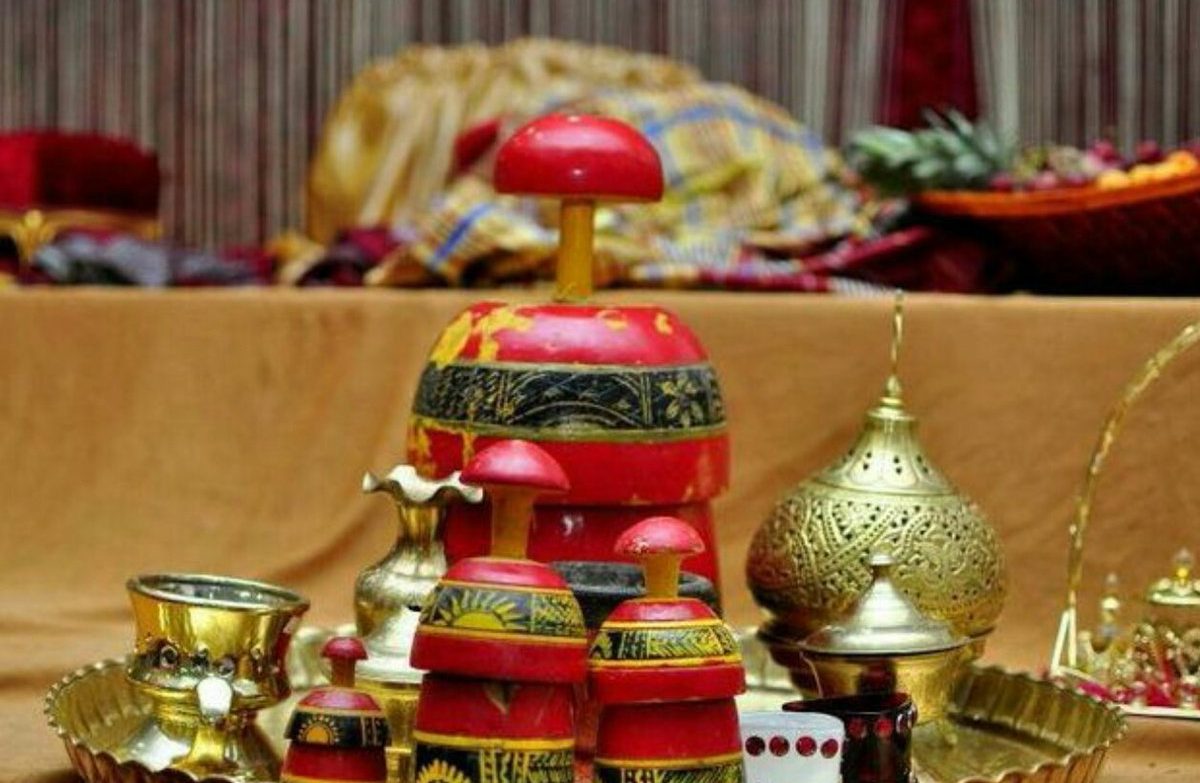 🇸🇩 Khartoum, SudanJirtigالجَرْتِقْ (Arabic)
A Sudanese inauguration ritual where the groom is symbolically crowned as a king.Rite · The weeks before
🇸🇩 Khartoum, SudanJirtigالجَرْتِقْ (Arabic)
A Sudanese inauguration ritual where the groom is symbolically crowned as a king.Rite · The weeks before