Henna, jewellery and body artSouth AsiaHinduBuddhist
Khata
A ceremonial scarf offered to show respect and welcome at weddings and other gatherings in Tibet and Nepal.

The khata is a traditional ceremonial scarf used by Tibetan, Nepalese, and Bhutanese communities. It is presented during weddings to honour the couple and their families. The white silk or cotton cloth symbolises purity and compassion.
When is Khata kept?
Khata is kept at weddings and receptions.
The khata is a ceremonial scarf exchanged to show deep respect and welcome. It plays a key role in Tibetan Buddhist and Tengriist traditions. Couples and guests receive these scarves during wedding celebrations. The gesture marks a moment of honour and spiritual connection between families.
Origins of the scarf
The tradition began when Tibetan people gifted animal skins due to a lack of silk. Historical records from the Bon faith mention that sheep wool was worn around the neck during religious rituals under the ninth king, Degong Jayshi. Over time, this practice evolved into the use of woven scarves. Silk eventually replaced plain wool, becoming the standard material for these respectful gifts.
Meaning and colours
The scarf represents purity, compassion, and a pure heart. White khatas are common in Tibet, while yellow-gold versions also appear. In Mongolia, blue scarves symbolise the sky. Some designs feature the ashtamangala symbols. When given to arriving guests, it signals welcome. A farewell khata wishes a safe journey. The colour and design vary by region and community.
Wedding customs
In Nepal, guests present khata scarves to hosts and couples at wedding receptions. Both Hindus and Buddhists in the region participate in this exchange. The act honours the couple and their families. It is also used at graduations and electoral victories. The scarf is often tied around the neck of the recipient as a sign of high regard and good wishes.
How Khata is kept
Guests and family members prepare white, gold, or blue scarves before the event. During the reception, they approach the couple or hosts. They gently place the scarf around the neck of the recipient. This happens multiple times throughout the gathering. The gesture replaces verbal greetings in many contexts. It signifies a bond of respect and shared joy among the attendees.
When and where
It is presented during wedding receptions and other major life events. The timing varies based on the schedule of the celebration. It is not tied to a specific calendar month but occurs whenever such gatherings take place.
The custom is strongest in Tibet, Nepal, and Bhutan. It is also practiced by Mongolian communities. The scarf appears in monasteries, temples, and private homes during ceremonies.
What Khata means
The khata embodies purity and compassion. It reflects the pure heart of the giver. Offering the scarf shows deep respect for the recipient. It creates a spiritual link between people. The gesture fosters harmony and acknowledges the importance of the relationship being celebrated.
Who takes part
- Guests: Present the scarf to the couple or host
- Couple: Receive the scarf with gratitude
- Host: Accept the gift at the reception
If you are a guest
Guests bring a khata scarf to the wedding. They place it around the neck of the couple or hosts. This action shows respect and offers good wishes. Guests may wear traditional clothing to match the occasion. They participate in the exchange with quiet dignity.
Then and now
Modern materials like cotton and polyester now replace silk. The tradition remains strong in Nepal and Tibet. Younger generations continue to offer scarves at weddings. The practice adapts to contemporary settings while keeping its core meaning of respect.
On the wedding table
Symbols: The colour white Gold and jewellery

Questions people ask about Khata
When is Khata kept?
Khata is kept at weddings and receptions.
What is a khata?
A khata is a ceremonial scarf used in Tibetan and Nepalese cultures. It is made of silk, cotton, or polyester. The scarf symbolises purity and respect. It is exchanged during weddings and other important gatherings.
What do the colours mean?
White represents a pure heart. Gold is also common in Tibet. Blue scarves are used in Mongolia to symbolise the sky. These colours carry specific cultural meanings related to spirituality and nature.
See also
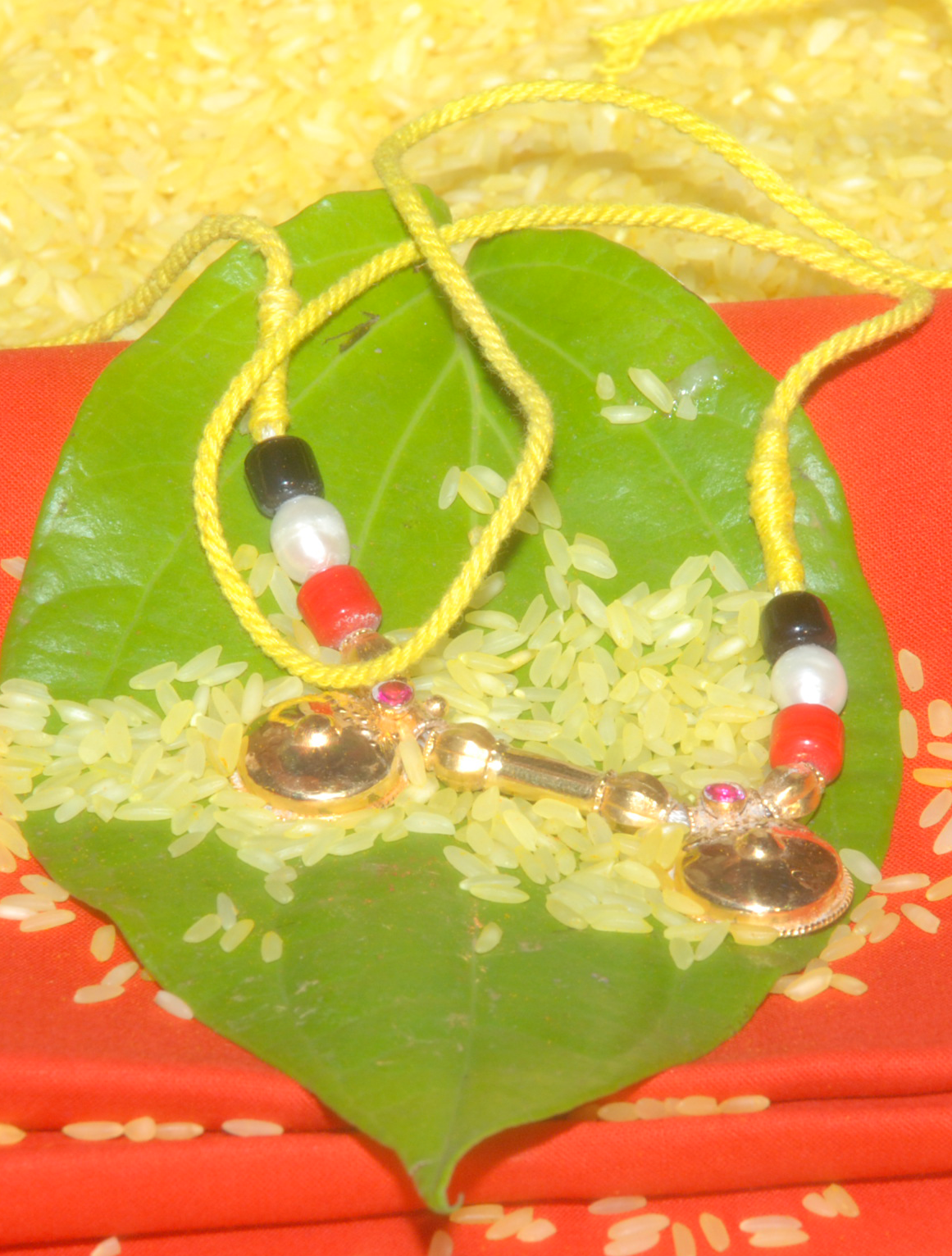 MangalsutraThe sacred necklace tied around the bride's neck to mark her marriage.
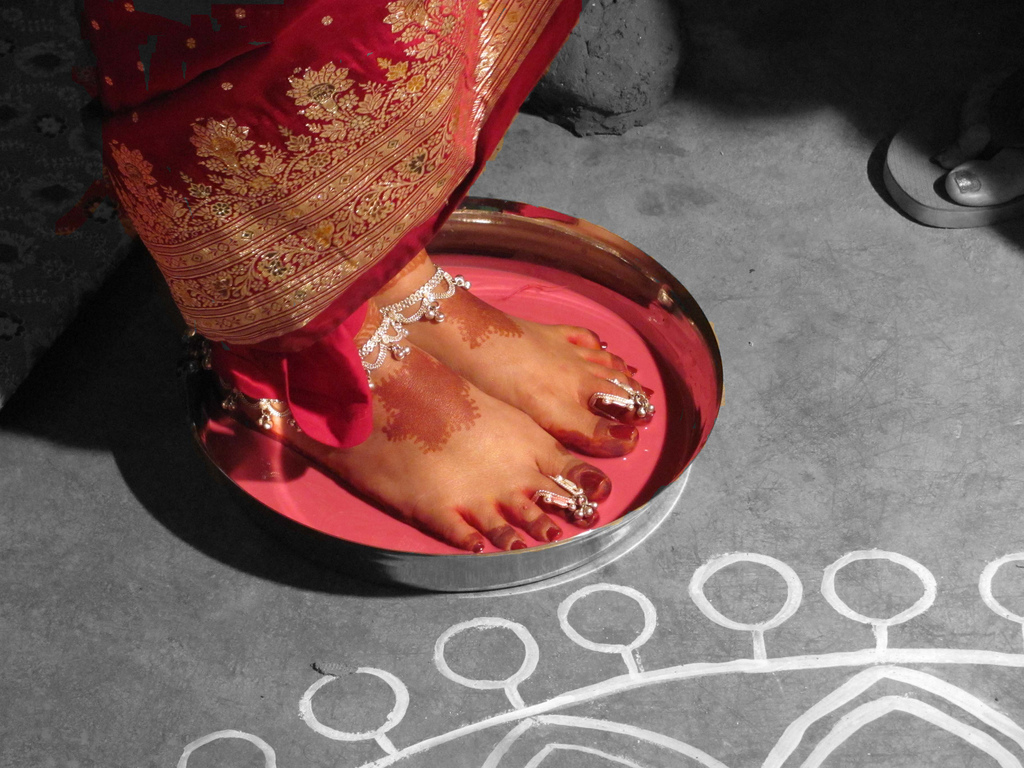 AltaA red dye applied to hands and feet as an auspicious adornment in South Asian weddings and festivals.
 Maithil VivahThe arranged Hindu marriage of Maithils in the Mithila region, guided by Vedic texts and local customs.
 MandapaThe pillared pavilion that serves as the stage for Hindu wedding rituals and temple gatherings.
Good reading and sources
- Khata on WikipediaEncyclopedia
- More photos on Wikimedia CommonsPhotos and video
- Wikidata recordOpen data
The facts on this page come from the Wikipedia article "Khata", written by its contributors and used under the CC BY-SA 4.0 licence, and from its Wikidata record (CC0). EveryShaadi rewrote the text in its own words, with AI assistance, and compares every page with the article to make sure no passage is copied. It may be reused under the same CC BY-SA 4.0 licence with a link back.
It may contain mistakes. Wedding customs differ from one family, village and community to the next, and the people who keep them know them best. If something is wrong, tell us. Last refreshed 2026-10-05.
More from Nepal
All the traditions of Nepal
🇮🇳 India and 2 moreAltaআলতা (Bengali)
A red dye applied to hands and feet as an auspicious adornment in South Asian weddings and festivals.Adornment · The weeks before
🇮🇳 India and 2 moreMangalsutraमङ्गलसूत्रम् (maṅgalasūtram)
The sacred necklace tied around the bride's neck to mark her marriage.Adornment · The ceremony
 🇮🇳 India and 2 moreNose jewelNath
A nose piercing ornament that signals marital status and social standing in South Asia and beyond.Adornment · The weeks before
🇮🇳 India and 1 moreMaithil Vivahमैथिल विवाह
The arranged Hindu marriage of Maithils in the Mithila region, guided by Vedic texts and local customs.Betrothal · Finding a match
🇮🇳 India and 2 moreNose jewelNath
A nose piercing ornament that signals marital status and social standing in South Asia and beyond.Adornment · The weeks before
🇮🇳 India and 1 moreMaithil Vivahमैथिल विवाह
The arranged Hindu marriage of Maithils in the Mithila region, guided by Vedic texts and local customs.Betrothal · Finding a match
The same idea elsewhere
Luck, omens and protection on the day compared 🇳🇪 In-Gall, Niger and 2 moreGuérewol
A week-long courtship dance where Wodaabe men display their beauty to win the attention of marriageable women.Rite · The weeks before
🇳🇪 In-Gall, Niger and 2 moreGuérewol
A week-long courtship dance where Wodaabe men display their beauty to win the attention of marriageable women.Rite · The weeks before
 🇩🇪 Hamburg, Germany and 3 moreWimpelווימפל
A linen sash made from a baby boy's circumcision cloth that binds the Torah scroll.Adornment · The weeks before
🇩🇪 Hamburg, Germany and 3 moreWimpelווימפל
A linen sash made from a baby boy's circumcision cloth that binds the Torah scroll.Adornment · The weeks before
 🇺🇦 Ukraine and 2 moreRushnykрушник (Ukrainian), ручнік (Belarusian), ручник/рушник (Russian)
The embroidered linen cloth that marks life stages and guides the couple through the wedding ceremony in East Slavic culAdornment · The weeks before
🇺🇦 Ukraine and 2 moreRushnykрушник (Ukrainian), ручнік (Belarusian), ручник/рушник (Russian)
The embroidered linen cloth that marks life stages and guides the couple through the wedding ceremony in East Slavic culAdornment · The weeks before
 🇸🇿 Ludzidzini Royal Village, Eswatini and 1 moreUmhlanga
The annual Swazi and Zulu gathering where young women cut reeds to preserve chastity and offer tribute labour.Rite · The eve
🇸🇿 Ludzidzini Royal Village, Eswatini and 1 moreUmhlanga
The annual Swazi and Zulu gathering where young women cut reeds to preserve chastity and offer tribute labour.Rite · The eve