Henna, jewellery and body artSouth AsiaHindu
Alta
In its own language: আলতা (Bengali)
A red dye applied to hands and feet as an auspicious adornment in South Asian weddings and festivals.
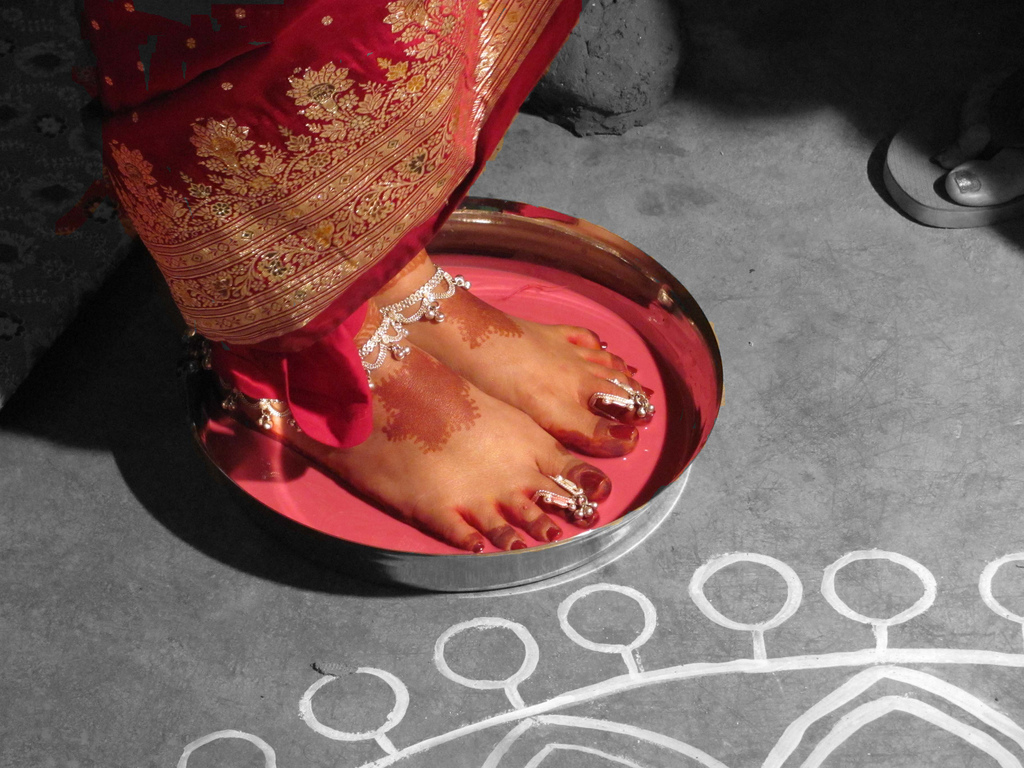
Alta is a traditional red dye used across India, Bangladesh, and Nepal to decorate the hands and feet of women. It serves as a key element of solah-shringar, the sixteen adornments of a bride, and marks purity and fertility within Hindu culture. The practice extends beyond weddings to include major religious festivals and classical dance performances.
When is Alta kept?
Alta is kept during wedding ceremonies and spring festivals.
Alta is a vibrant red dye applied to the palms and soles of women to signify auspiciousness and marital status. Rooted in ancient texts, it represents fertility and divine connection. Brides wear it as part of their traditional adornment, while dancers use it to enhance their movements during cultural performances.
Origins and history
The practice traces back to the Upanishads, where it was called lakshaya rasa. This term describes a pigment made from red lac resin. It forms one of the solah-shringar, or sixteen adornments required for a woman's ceremonial dress. In Hindu Vedas, the dye connects to deities like Lakshmi, Durga, and Krishna. The color red symbolizes fertile soil and spiritual purity, anchoring the custom in deep religious tradition.
Cultural significance
Women in Bengal, Bihar, and Odisha apply alta regardless of specific religious beliefs. It appears at weddings and festivals like Pohela Baishakh and Durga Puja. The Raja festival celebrates womanhood, and alta marks this occasion on the feet. In southern India, it is known as parani or vasantam. Classical dancers in Bharatanatyam and Kuchipudi wear it to highlight hand gestures and footwork during performances.
Production and application
Natural alta comes from red lac, though synthetic versions are common today. Women apply it using cotton swabs or small brushes. The dye stains the skin bright red, creating a striking visual contrast. It is worn by both women and children during festive seasons. In Nepal, the practice is called alah and remains central to wedding rituals and religious observances throughout the country.
How Alta is kept
Brides and female relatives apply the red dye to their fingertips, palms, and soles before the ceremony. Dancers use it to accentuate mudras and steps. The application happens during pre-wedding preparations or festival mornings. Cotton swabs ensure precise lines on the skin. The stain lasts for several days, serving as a visible mark of celebration and blessing.
When and where
It is applied during the pre-wedding phase and on specific festival days. Spring festivals like Vasantam see heavy usage. The Raja festival occurs over three days in early summer. Weddings follow local calendar dates, often avoiding inauspicious periods.
The custom is strongest in eastern India, particularly West Bengal and Odisha. It is also common in Bihar and parts of South India. Bangladesh and Nepal maintain the tradition in rural and urban settings alike. Cultural centers and temples host the largest gatherings where the practice is displayed.
What Alta means
Red signifies fertility, prosperity, and the earth. It marks the wearer as married or celebrating a sacred occasion. The dye connects the individual to divine feminine energy. For dancers, it enhances the visibility of movement. It serves as a protective charm and a sign of joy during life transitions.
Who takes part
- The bride: Receives the dye on her hands and feet as part of bridal preparation
- Female elders: Apply the alta to younger women using cotton swabs
- Classical dancers: Wear the dye to highlight hand gestures and footwork in performances
- Festival participants: Adorn themselves during Pohela Baishakh and Durga Puja celebrations
If you are a guest
Guests observe the bright red stains on the bride's hands and feet as a sign of her readiness for marriage. They may offer blessings or gifts related to the ceremony. No specific attire is mandated for guests regarding the dye itself.
Then and now
Synthetic dyes have largely replaced natural lac-based alta due to cost and availability. Younger generations sometimes skip the practice in favor of modern beauty standards. However, it remains a vital symbol of cultural identity in traditional communities and classical arts.
On the wedding table
Symbols: The colour red


Questions people ask about Alta
When is Alta kept?
Alta is kept during wedding ceremonies and spring festivals.
What is alta?
Alta is a red dye used to tint the hands and feet of women. It is a traditional adornment in South Asian weddings and festivals, symbolizing purity and fertility.
Is alta legal?
Yes, alta is a cultural and religious practice with no legal restrictions. It is widely accepted and celebrated across India, Bangladesh, and Nepal.
What is the difference between alta and henna?
Alta is a red dye applied to skin for decoration. Henna is a brown paste used for intricate patterns. Both are adornments but differ in color and application method.
See also
 AlpanaRice flour floor paintings that bless homes and mark wedding celebrations in Bengal.
 Toe ringA silver band worn on the second toe to mark a woman as married in India.
 ShankhaWhite conch shell bangles worn by Bengali Hindu married women as a symbol of their husband's well-being.
 MehndiThe henna body art applied to brides and guests before a South Asian wedding ceremony.
Good reading and sources
- Alta (dye) on WikipediaEncyclopedia
- More photos on Wikimedia CommonsPhotos and video
- Wikidata recordOpen data
The facts on this page come from the Wikipedia article "Alta (dye)", written by its contributors and used under the CC BY-SA 4.0 licence, and from its Wikidata record (CC0). EveryShaadi rewrote the text in its own words, with AI assistance, and compares every page with the article to make sure no passage is copied. It may be reused under the same CC BY-SA 4.0 licence with a link back.
It may contain mistakes. Wedding customs differ from one family, village and community to the next, and the people who keep them know them best. If something is wrong, tell us. Last refreshed 2026-10-05.
More from India
All the traditions of India
🇮🇳 India and 1 moreToe ring
A silver band worn on the second toe to mark a woman as married in India.Adornment · The ceremony
🇮🇳 IndiaShankha
White conch shell bangles worn by Bengali Hindu married women as a symbol of their husband's well-being.Adornment · Engagement and betrothal
🇮🇳 India and 1 moreAlpanaআলপনা (Bengali)
Rice flour floor paintings that bless homes and mark wedding celebrations in Bengal.Adornment · The weeks before
 🇮🇳 IndiaGana
A sacred red thread tied to wrists for protection during wedding rituals in parts of India.Adornment · The weeks before
🇮🇳 IndiaGana
A sacred red thread tied to wrists for protection during wedding rituals in parts of India.Adornment · The weeks before
The same idea elsewhere
Henna, turmeric and the decorated bride compared 🇦🇿 AzerbaijanAzerbaijani wedding traditionsAzərbaycanın toy adətləri
The multi-step family rituals of Azerbaijani weddings, from matchmaking to the henna night.Rite · Finding a match
🇦🇿 AzerbaijanAzerbaijani wedding traditionsAzərbaycanın toy adətləri
The multi-step family rituals of Azerbaijani weddings, from matchmaking to the henna night.Rite · Finding a match
 🇪🇬 Egypt and 5 moreArab weddingزفاف or فرح or عرس
A series of family-centered rites and processions that mark marriage across the Arab world.Rite · Finding a match
🇪🇬 Egypt and 5 moreArab weddingزفاف or فرح or عرس
A series of family-centered rites and processions that mark marriage across the Arab world.Rite · Finding a match
 🇮🇷 Tehran, Iran and 1 moreIranian weddingمراسم عروسی در ایران
A multi-stage ceremony rooted in Zoroastrianism and Islam that binds families through courtship, feasts, and sacred vowsRite · Finding a match
🇮🇷 Shiraz, Iran and 5 moreUlulation
A high-pitched trilling sound made by women to celebrate weddings and share good news across many cultures.Performance · Procession and arrival
🇮🇷 Tehran, Iran and 1 moreIranian weddingمراسم عروسی در ایران
A multi-stage ceremony rooted in Zoroastrianism and Islam that binds families through courtship, feasts, and sacred vowsRite · Finding a match
🇮🇷 Shiraz, Iran and 5 moreUlulation
A high-pitched trilling sound made by women to celebrate weddings and share good news across many cultures.Performance · Procession and arrival