Henna, jewellery and body artSouth Asia
Nose jewel
In its own language: Nath
A nose piercing ornament that signals marital status and social standing in South Asia and beyond.

The nath is a nose piercing ornament worn by women to mark their married state. It features a jeweled ring linked by a chain to the hair. The custom spread across South Asia from the tenth century onward, though earlier references exist in the Middle East and the Americas.
When is Nose jewel kept?
Nose jewel is kept during wedding preparations and ceremonies.
The nath serves as a visible marker of marriage for women in South Asia. This nose piercing ornament connects a ring to the hair via a delicate chain. Its presence indicates that the wearer has entered wedlock. The style carries deep roots in regional history and displays family wealth through its materials.
Origins and history
References to nose ornaments appear in ancient texts from the Middle East. A golden nose ring called a Shanf appears in biblical accounts as a marriage gift. In the Americas, pre-Columbian carvings show nose piercing rituals that signified high social rank. Colonial observers recorded distinct styles among Maya and Toltec groups. In South Asia, historians note that nose piercings likely arrived between the eighth and thirteenth centuries. Some scholars link this introduction to Muslim influence after the twelfth century. By the fifteenth century, the practice became widespread across the region.
Design and materials
The full nath consists of a jeweled ring attached to a hairpiece by a chain. Wealthier families use gold set with pearls, sapphires, or other gems. Others wear simpler silver versions. The size and shape of the bead often denote specific societies or regions. British Museum collections hold many examples donated by researchers. These pieces highlight the economic status of the wearer while serving as a sacred marital token.
Cultural significance
Wearing the nath marks a woman's transition into married life. It functions as a public declaration of her new role within the community. The ornament also reflects the financial standing of her family. Different placements and stone choices carry specific meanings tied to local traditions. The custom remains a powerful symbol of identity and belonging for those who keep it.
How Nose jewel is kept
The bride wears the nath during her wedding ceremony. The piece includes a ring in the nostril connected by a chain to her hair. Families choose materials based on their means, using gold and gems or silver. The jewelry stays in place throughout the event to display her married status clearly to all guests.
When and where
The nath is worn during the wedding ceremony itself. It may be prepared in the weeks leading up to the event. The timing aligns with the formal announcement of the marriage.
This custom is strongest in India, Pakistan, and Nepal. It originated in South Asia but has historical ties to the Middle East and the Americas. Urban centers preserve these traditions alongside rural communities.
What Nose jewel means
The nath signifies marital status and social elevation. It acts as a badge of honor for the bride. The materials used reflect family wealth and prestige. The connection between the nose and hair symbolizes unity and binding vows.
Who takes part
- The bride: Wears the nath to signal her married state
- The groom's family: Provides the jewelry as part of the marriage offering
- The jeweler: Crafts the ring and chain using precious metals and stones
If you are a guest
Guests observe the nath to recognize the bride's new status. They may comment on the quality of the jewelry as a sign of respect for the families involved. No specific gifts are required for the nose jewel itself.
Then and now
Modern brides sometimes choose smaller or simpler versions of the nath. Some opt for studs instead of the full chain-and-ring design. The custom persists as a key element of traditional South Asian weddings despite changing fashion trends.
On the wedding table
Symbols: Gold and jewellery The ring Crowns and wreaths

Questions people ask about Nose jewel
When is Nose jewel kept?
Nose jewel is kept during wedding preparations and ceremonies.
What does the nath represent?
The nath represents a woman's marital status. It shows she is married and highlights her family's social standing through the materials used.
Where did the custom originate?
The custom likely originated in South Asia around the ninth to tenth centuries. Earlier references exist in the Middle East and the Americas.
See also
 Toe ringA silver band worn on the second toe to mark a woman as married in India.
 ShankhaWhite conch shell bangles worn by Bengali Hindu married women as a symbol of their husband's well-being.
 DejhoorA hexagonal ear ornament worn by Kashmiri Pandit women to mark their marriage.
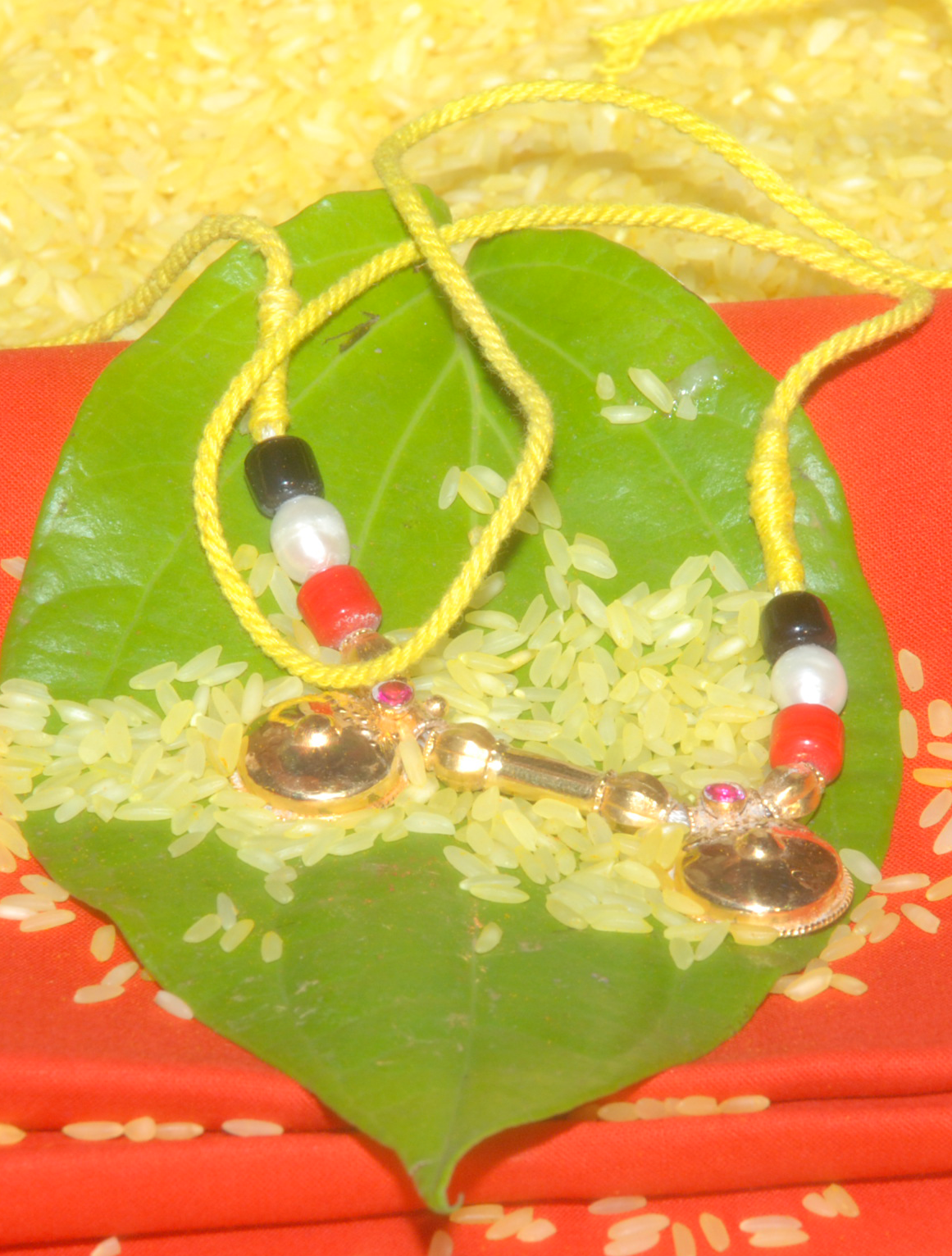 MangalsutraThe sacred necklace tied around the bride's neck to mark her marriage.
Good reading and sources
The facts on this page come from the Wikipedia article "Nose-jewel", written by its contributors and used under the CC BY-SA 4.0 licence, and from its Wikidata record (CC0). EveryShaadi rewrote the text in its own words, with AI assistance, and compares every page with the article to make sure no passage is copied. It may be reused under the same CC BY-SA 4.0 licence with a link back.
It may contain mistakes. Wedding customs differ from one family, village and community to the next, and the people who keep them know them best. If something is wrong, tell us. Last refreshed 2026-10-06.
More from India
All the traditions of India
🇮🇳 IndiaShankha
White conch shell bangles worn by Bengali Hindu married women as a symbol of their husband's well-being.Adornment · Engagement and betrothal
🇮🇳 India and 1 moreToe ring
A silver band worn on the second toe to mark a woman as married in India.Adornment · The ceremony
🇮🇳 India and 2 moreMangalsutraमङ्गलसूत्रम् (maṅgalasūtram)
The sacred necklace tied around the bride's neck to mark her marriage.Adornment · The ceremony
 🇮🇳 Delhi, India and 4 moreSindoorसिंदूर (Hindi)
The vermilion powder a Hindu husband applies to his wife's hair parting to mark her marriage.Adornment · Engagement and betrothal
🇮🇳 Delhi, India and 4 moreSindoorसिंदूर (Hindi)
The vermilion powder a Hindu husband applies to his wife's hair parting to mark her marriage.Adornment · Engagement and betrothal
The same idea elsewhere
Rings, knots and tokens of promise compared 🇪🇬 Egypt and 4 moreWaist beads
Strands of glass or seed worn around the hips to mark womanhood and track body changes in West and North Africa.Adornment · Engagement and betrothal
🇪🇬 Egypt and 4 moreWaist beads
Strands of glass or seed worn around the hips to mark womanhood and track body changes in West and North Africa.Adornment · Engagement and betrothal
 🇷🇺 RussiaRussian wedding traditionsРусская свадьба
A multi-day celebration blending Orthodox crowning, ransom games, and lively toasting in Russia.Rite · Engagement and betrothal
🇷🇺 RussiaRussian wedding traditionsРусская свадьба
A multi-day celebration blending Orthodox crowning, ransom games, and lively toasting in Russia.Rite · Engagement and betrothal
 🇬🇧 United Kingdom and 5 moreWedding superstitions
Traditional beliefs about luck and omens that shape wedding rituals across culturesAttire · The weeks before
🇬🇧 United Kingdom and 5 moreWedding superstitions
Traditional beliefs about luck and omens that shape wedding rituals across culturesAttire · The weeks before
 🇯🇵 Tokyo, JapanMizuhiki水引
The knotted paper cord that adorns Japanese wedding gifts and envelopesAdornment · Engagement and betrothal
🇯🇵 Tokyo, JapanMizuhiki水引
The knotted paper cord that adorns Japanese wedding gifts and envelopesAdornment · Engagement and betrothal