Games, humour and mock resistanceSub-Saharan Africa
Larakaraka
An Acholi courtship dance where young men display agility to attract a partner.

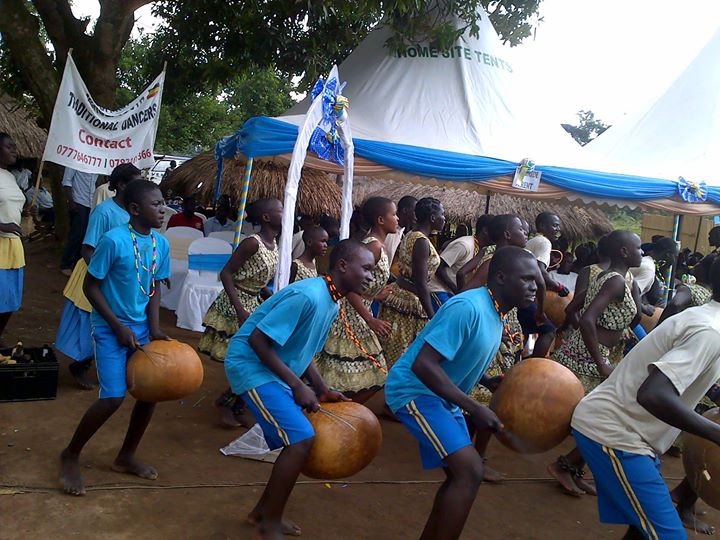
Larakaraka is a traditional courtship dance of the Acholi people in Uganda. It serves as a rite of passage for unmarried youth, allowing them to demonstrate physical prowess and vitality to find a life partner during weddings and communal gatherings.
When is Larakaraka kept?
Larakaraka is kept at weddings and communal festivities.
Larakaraka is a courtship dance practiced by the Acholi people of Uganda. Young men perform dynamic acrobatics and graceful movements to show their strength and agility. This display helps them attract potential spouses during weddings and community events, serving as a traditional way to meet partners.
Courtship and meaning
The dance functions as a social platform for unmarried individuals. Young men use the performance to exhibit vitality, endurance, and bravery. These traits are viewed as essential qualities for a prospective spouse within Acholi culture. The dance acts as a rite of passage, marking the transition into adulthood through public demonstration of personal worth and physical capability.
Performance style
Dancers execute high jumps, spins, and mid-air motions that highlight their skill. The routine is accompanied by traditional music played on drums, harps, flutes, and calabashes. Both men and women participate, though the focus often remains on male displays of artistry. The energetic atmosphere creates a space for cultural expression and romantic interest.
Cultural context
This tradition belongs to the Acholi community in the Northern Region of Uganda. It is one of more than fifty dances in their repertoire. The practice appears at weddings and other communal festivities. Historically, it provided a structured environment for interaction between genders, facilitating the search for long-term partners through shared cultural celebration.
How Larakaraka is kept
Young men and women gather at weddings or community events. Musicians play drums, harps, and flutes. Dancers perform acrobatic jumps and spins. Men showcase their agility and strength. Women observe and respond to the display. The performance allows participants to interact and assess potential partners based on physical capability and cultural adherence.
When and where
It occurs at weddings and communal festivities. The timing aligns with social gatherings where unmarried youth can meet. It does not follow a specific calendar month but depends on community events.
The dance originates from the Acholi people in the Northern Region of Uganda. It is performed within Acholi communities during local celebrations and wedding ceremonies.
What Larakaraka means
The dance symbolizes readiness for marriage. Physical strength and agility represent a man's ability to provide and protect. Bravery in movement reflects personal and social worth. The performance validates the dancer's maturity and suitability as a life partner.
Who takes part
- Young men: Perform acrobatic jumps and spins to display strength and agility
- Musicians: Play drums, harps, flutes, and calabashes to accompany the dance
- Unmarried women: Watch the performance and assess potential partners
- Community members: Attend weddings and festivities to witness the cultural display
If you are a guest
Guests attend weddings or community gatherings. They watch the dancers perform acrobatic routines. The atmosphere is celebratory and focused on cultural expression. Guests may observe the interaction between dancers and potential partners without direct involvement in the performance itself.
Then and now
The dance remains a significant part of Acholi heritage. It continues to be performed at weddings and communal events. The tradition preserves cultural identity while adapting to modern social contexts within Uganda.


Questions people ask about Larakaraka
When is Larakaraka kept?
Larakaraka is kept at weddings and communal festivities.
What is Larakaraka?
It is a traditional courtship dance of the Acholi people in Uganda. Young men perform acrobatic moves to show their strength and attract potential spouses during weddings and community events.
Why do men dance this way?
Men perform jumps and spins to display vitality, endurance, and bravery. These qualities are valued in prospective spouses and demonstrate the dancer's personal and social worth.
See also
 GroomsmanA male attendant who supports the groom and assists guests at a wedding.Polygamy in UgandaThe legal practice of a man having multiple wives simultaneously in Uganda and neighboring nations.
 Kyz kuuA horse race where a man chases a woman to win a kiss or faces her whip if he failsLa víbora de la marA wedding game where the couple stands on chairs while guests form a snake to test their unity.
Good reading and sources
- Dance, Manhood and Warfare Amongst the Acholi People of Northern UgandaLibrary of Congress, Article
- Dance, Manhood and Warfare Amongst the Acholi People of Northern UgandaLibrary of Congress, Article
- Larakaraka on WikipediaEncyclopedia
- More photos on Wikimedia CommonsPhotos and video
- Wikidata recordOpen data
The facts on this page come from the Wikipedia article "Larakaraka", written by its contributors and used under the CC BY-SA 4.0 licence, and from its Wikidata record (CC0). EveryShaadi rewrote the text in its own words, with AI assistance, and compares every page with the article to make sure no passage is copied. It may be reused under the same CC BY-SA 4.0 licence with a link back.
It may contain mistakes. Wedding customs differ from one family, village and community to the next, and the people who keep them know them best. If something is wrong, tell us. Last refreshed 2026-10-06.
More from Uganda
All the traditions of Uganda
🇬🇧 United Kingdom and 5 moreGroomsman
A male attendant who supports the groom and assists guests at a wedding.Family role · Finding a match
🇺🇬 Uganda and 3 morePolygamy in Uganda
The legal practice of a man having multiple wives simultaneously in Uganda and neighboring nations.Family role · Engagement and betrothal
🇺🇬 UgandaGaze
A traditional dance of the Lugbara people in Northern Uganda performed at weddings and festivalsPerformance · Engagement and betrothal
 🇺🇬 UgandaEkitaguriro
A traditional Ankole dance celebrating cattle and community milestones like marriage.Performance · The wedding feast
🇺🇬 UgandaEkitaguriro
A traditional Ankole dance celebrating cattle and community milestones like marriage.Performance · The wedding feast
The same idea elsewhere
Wedding music and the dance floor compared 🇺🇦 Ukraine and 7 moreVechornytsiвечорниці
A Ukrainian courtship gathering where young people meet, dance and practice matchmaking rituals before the wedding seasoBetrothal · The weeks before
🇺🇦 Ukraine and 7 moreVechornytsiвечорниці
A Ukrainian courtship gathering where young people meet, dance and practice matchmaking rituals before the wedding seasoBetrothal · The weeks before
 🇩🇪 GermanyLandshut WeddingLandshuter Hochzeit
A four-year historical pageant in Bavaria re-enacting the 1475 royal marriage of George and Hedwig.Setting · Engagement and betrothal
🇷🇴 RomaniaDragobete
A Romanian spring festival where young people exchange flowers and seek romantic bonds.Betrothal · The weeks before
🇩🇪 GermanyLandshut WeddingLandshuter Hochzeit
A four-year historical pageant in Bavaria re-enacting the 1475 royal marriage of George and Hedwig.Setting · Engagement and betrothal
🇷🇴 RomaniaDragobete
A Romanian spring festival where young people exchange flowers and seek romantic bonds.Betrothal · The weeks before
 🇲🇲 MyanmarMarriage in Myanmar
A blend of Buddhist rites, astrological timing, and family negotiations that defines union across Myanmar's diverse ethnRite · Finding a match
🇲🇲 MyanmarMarriage in Myanmar
A blend of Buddhist rites, astrological timing, and family negotiations that defines union across Myanmar's diverse ethnRite · Finding a match