Matchmaking, courtship and engagementEurope
Dragobete
A Romanian spring festival where young people exchange flowers and seek romantic bonds.
Dragobete is a Romanian holiday observed on February 24 to welcome spring and encourage courtship. Young men and women gather early flowers and sing together to find love or strengthen existing relationships.
When is Dragobete kept?
Dragobete is kept on the morning of February 24.
This Romanian celebration marks the arrival of spring and the beginning of the mating season for birds. Young people gather in groups to sing songs and collect early blooms like snowdrops. The festival serves as a traditional opportunity for courtship, where participants hope to secure good fortune in romance for the coming year.
Origins of the festival
The name comes from a figure described as the son of Baba Dochia. This character represents the end of winter and the return of warmer weather. Some accounts suggest that the Virgin Mary appointed him as the guardian of love because of his gentle nature. The holiday aligns with the natural world, as birds begin building nests and pairing up during this time.
Courtship rituals
Young men and women venture into the woods to pick vernal flowers. They sing together while gathering these plants. Boys often pursue girls playfully after returning home. A girl accepts a kiss only if she likes the boy. Participants believe that stepping over a partner's foot grants dominance in the relationship. Those who do not find a match may face bad luck for the rest of the year.
Protective customs
Maidens historically collected snow from the ground and melted it for use in magic potions. These remedies were intended to protect against illness, particularly fevers, throughout the year. The festival is viewed as a day for lovers, similar to Valentine's Day. Customs vary across different regions of the country.
How Dragobete is kept
Boys and girls go into the woods to pick early spring flowers like snowdrops. They sing together and gather in groups. Boys chase girls to kiss them upon returning. Girls accept kisses only from boys they favor. Maidens melt snow to create protective potions against illness.
When and where
It falls on February 24, marking the first day of spring locally. It coincides with the time birds start nesting and mating.
The custom is observed throughout Romania. Practices differ between various regions and rural areas.
What Dragobete means
The festival celebrates the transition from winter to spring. It honors the natural cycle of bird mating and human courtship. Gathering snow and singing are believed to bring protection from sickness and ensure romantic success.
Who takes part
- Young men: Pursue girls and offer kisses
- Young women: Collect snow and choose which boys to kiss
- Birds: Begin nesting and mating rituals
If you are a guest
Guests observe the festivities or participate by joining flower gatherings. They may sing traditional songs. The atmosphere focuses on community bonding and romantic possibility.
Then and now
The tradition remains a recognized part of Romanian culture. It is celebrated as a day for lovers. Regional variations persist in how the customs are performed today.
Questions people ask about Dragobete
When is Dragobete kept?
Dragobete is kept on the morning of February 24.
What is Dragobete?
It is a Romanian holiday on February 24 that welcomes spring and encourages courtship among young people through flower picking and singing.
What is the main ritual?
Young people gather in the woods to pick early flowers and sing. Boys chase girls to kiss them, and acceptance depends on mutual interest.
Is it legal?
Yes, it is a cultural holiday with no legal restrictions. It is a voluntary social celebration.
See also
 CălușariA traditional Romanian spring dance and male society known for acrobatic leaps and ritual healing.PerinițaA Romanian circle dance where a pillow marks the last partner dance for unmarried youth before a wedding.MărțișorThe red and white string charm worn in early spring to welcome the new year.
 MartenitsaWhite and red yarn charms worn in the Balkans to welcome spring and wish for good health.
Good reading and sources
- Dragobete on WikipediaEncyclopedia
- More photos on Wikimedia CommonsPhotos and video
- Wikidata recordOpen data
The facts on this page come from the Wikipedia article "Dragobete", written by its contributors and used under the CC BY-SA 4.0 licence, and from its Wikidata record (CC0). EveryShaadi rewrote the text in its own words, with AI assistance, and compares every page with the article to make sure no passage is copied. It may be reused under the same CC BY-SA 4.0 licence with a link back.
It may contain mistakes. Wedding customs differ from one family, village and community to the next, and the people who keep them know them best. If something is wrong, tell us. Last refreshed 2026-10-06.
More from Romania
All the traditions of Romania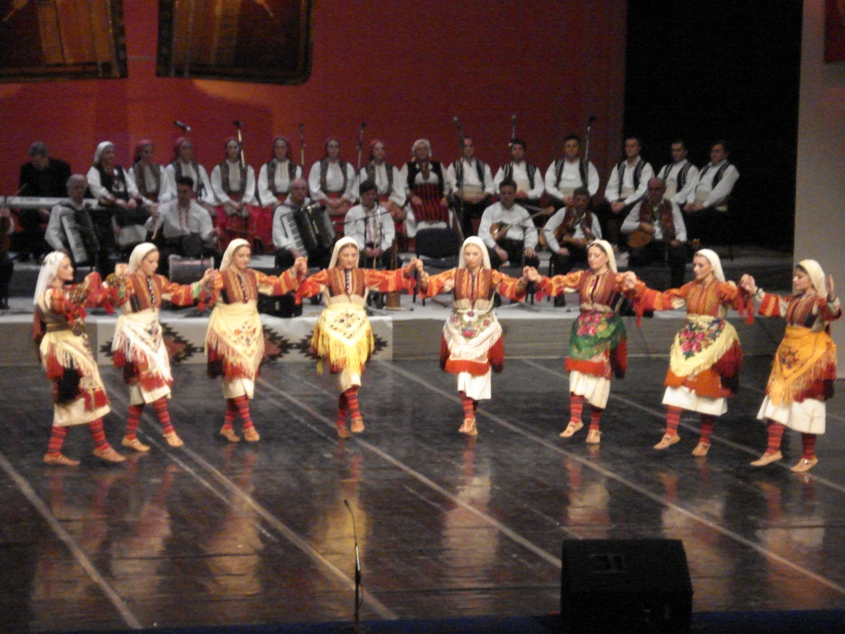 🇷🇴 Romania and 7 moreHorahora (Romanian), horo (Bulgarian), oro (Macedonian), horah (Hebrew)
A circle dance held at weddings across Southeast Europe and among Jewish communities worldwide.Performance · Reception, dance and gifts
🇷🇴 Romania and 7 moreHorahora (Romanian), horo (Bulgarian), oro (Macedonian), horah (Hebrew)
A circle dance held at weddings across Southeast Europe and among Jewish communities worldwide.Performance · Reception, dance and gifts
 🇵🇱 Poland and 6 moreKolachколач (kolach), калач (kalach), kołacz, colac, kalács
A braided or ring-shaped bread that marks weddings and major holidays across Eastern Europe.Feast custom · Engagement and betrothal
🇵🇱 Poland and 6 moreKolachколач (kolach), калач (kalach), kołacz, colac, kalács
A braided or ring-shaped bread that marks weddings and major holidays across Eastern Europe.Feast custom · Engagement and betrothal
 🇬🇧 United Kingdom and 5 moreRing fingerdigitus annularis
The fourth digit of the hand where wedding and engagement rings are traditionally worn.Attire · The ceremony
🇷🇴 Romania and 4 moreCălușariCălușarii
A traditional Romanian spring dance and male society known for acrobatic leaps and ritual healing.Performance · The weeks before
🇬🇧 United Kingdom and 5 moreRing fingerdigitus annularis
The fourth digit of the hand where wedding and engagement rings are traditionally worn.Attire · The ceremony
🇷🇴 Romania and 4 moreCălușariCălușarii
A traditional Romanian spring dance and male society known for acrobatic leaps and ritual healing.Performance · The weeks before
The same idea elsewhere
Auspicious dates, seasons and days to avoid compared 🇮🇳 IndiaOdia Hindu weddingBahaghara (ଓଡ଼ିଆ ବାହାଘର)
The traditional Hindu marriage ceremony of the Odia people in Odisha, India.Rite · Engagement and betrothal
🇮🇳 IndiaOdia Hindu weddingBahaghara (ଓଡ଼ିଆ ବାହାଘର)
The traditional Hindu marriage ceremony of the Odia people in Odisha, India.Rite · Engagement and betrothal
 🇲🇲 MyanmarMarriage in Myanmar
A blend of Buddhist rites, astrological timing, and family negotiations that defines union across Myanmar's diverse ethnRite · Finding a match
🇲🇲 MyanmarMarriage in Myanmar
A blend of Buddhist rites, astrological timing, and family negotiations that defines union across Myanmar's diverse ethnRite · Finding a match
 🇳🇪 In-Gall, Niger and 2 moreGuérewol
A week-long courtship dance where Wodaabe men display their beauty to win the attention of marriageable women.Rite · The weeks before
🇳🇪 In-Gall, Niger and 2 moreGuérewol
A week-long courtship dance where Wodaabe men display their beauty to win the attention of marriageable women.Rite · The weeks before