Henna, jewellery and body artSouth AsiaHindu
Shankha
White conch shell bangles worn by Bengali Hindu married women as a symbol of their husband's well-being.

Shankha are white bangles carved from marine conch shells. Bengali Hindu married women wear them alongside sindoor and other bangles to signify their marital status and pray for their husband's prosperity. The ornaments are traditionally gifted by the bride's parents or purchased by the groom during the wedding ceremonies.
When is Shankha kept?
Shankha is kept on throughout marriage.
Shankha are white bangles made from conch shells. Bengali Hindu women wear them to show they are married. They believe the shells bring good luck to their husbands. Parents usually give them at weddings. Grooms often buy them too. If a husband dies, the woman stops wearing them.
What shankha are
These ornaments are bangles shaped like the spiral of a sea conch. They are made from the hard white shell of marine creatures. Women wear them on their wrists every day after marriage. They form a key part of the traditional Bengali Hindu bridal look. The white color stands out against other jewelry pieces.
How they are given
The tradition involves specific family roles during the wedding. The bride's parents typically present two pairs to their daughter. This gift marks her new status in life. The groom also plays a role by buying these shells for his new wife. This exchange happens as part of the broader wedding rituals.
Meaning and belief
Wearing these shells is tied to deep religious beliefs. Many women think the conch protects their husband's health and brings prosperity. It is a daily reminder of their vows. The practice varies slightly depending on the local region. Some families follow it strictly while others do not.
How Shankha is kept
Bengali Hindu women wear white conch bangles on their wrists. They pair them with red bangles called pola and golden ones called noa. A mark called sindoor is also applied to the hair parting. The bride receives the shells from her parents before the ceremony. The groom may purchase additional sets for her. She wears them daily until her husband passes away.
When and where
Women wear them throughout their marriage. The shells are exchanged during the wedding ceremonies. Parents give them as gifts before the main rites. The groom buys them as part of the wedding preparations.
This custom is found among Bengali Hindus. It is most common in Bengal. Practices may differ across various regions within this cultural area.
What Shankha means
The shells represent the well-being of the husband. Wearing them is believed to ensure his prosperity and safety. The white color symbolizes purity and marital status. Removing or breaking them signifies widowhood and the end of that protective bond.
Who takes part
- Bride's parents: Gift two pairs of shankha to the bride
- Groom: Buy shankha for his bride
- Married woman: Wear the bangles daily
Then and now
The practice is not mandatory everywhere. Some regions have relaxed the rules. Modern women may choose whether to wear them. The tradition remains strong but varies by locality.
On the wedding table
Symbols: The colour white


Questions people ask about Shankha
When is Shankha kept?
Shankha is kept on throughout marriage.
What are shankha?
They are white bangles made from conch shells. Bengali Hindu married women wear them on their wrists. They are a key part of traditional bridal attire.
Who gives them to the bride?
The bride's parents usually gift two pairs. The groom also often buys them. This happens during the wedding ceremonies.
Why do women wear them?
They believe the shells bring prosperity and health to their husbands. The act is rooted in religious belief and cultural identity.
Is it required to wear them?
It is not mandatory in all regions. Some communities view it as essential while others see it as optional.
See also
 MehndiThe henna body art applied to brides and guests before a South Asian wedding ceremony.MadisarThe nine-yard sari drape worn by Tamil Brahmin women during weddings and religious rites.UlulationA high-pitched trilling sound made by women to celebrate weddings and share good news across many cultures.
 MayianThe turmeric paste ceremony held the day before Punjabi weddings in India and Pakistan.
Good reading and sources
- Shankha (ornament) on WikipediaEncyclopedia
- More photos on Wikimedia CommonsPhotos and video
- Wikidata recordOpen data
The facts on this page come from the Wikipedia article "Shankha (ornament)", written by its contributors and used under the CC BY-SA 4.0 licence, and from its Wikidata record (CC0). EveryShaadi rewrote the text in its own words, with AI assistance, and compares every page with the article to make sure no passage is copied. It may be reused under the same CC BY-SA 4.0 licence with a link back.
It may contain mistakes. Wedding customs differ from one family, village and community to the next, and the people who keep them know them best. If something is wrong, tell us. Last refreshed 2026-10-05.
More from India
All the traditions of India 🇮🇳 India and 1 moreToe ring
A silver band worn on the second toe to mark a woman as married in India.Adornment · The ceremony
🇮🇳 India and 1 moreToe ring
A silver band worn on the second toe to mark a woman as married in India.Adornment · The ceremony
 🇮🇳 India and 1 moreAlpanaআলপনা (Bengali)
Rice flour floor paintings that bless homes and mark wedding celebrations in Bengal.Adornment · The weeks before
🇮🇳 IndiaMehndi
The henna body art applied to brides and guests before a South Asian wedding ceremony.Adornment · The weeks before
🇮🇳 India and 1 moreAlpanaআলপনা (Bengali)
Rice flour floor paintings that bless homes and mark wedding celebrations in Bengal.Adornment · The weeks before
🇮🇳 IndiaMehndi
The henna body art applied to brides and guests before a South Asian wedding ceremony.Adornment · The weeks before
 🇮🇳 IndiaGana
A sacred red thread tied to wrists for protection during wedding rituals in parts of India.Adornment · The weeks before
🇮🇳 IndiaGana
A sacred red thread tied to wrists for protection during wedding rituals in parts of India.Adornment · The weeks before
The same idea elsewhere
The wedding dress and what the couple wear compared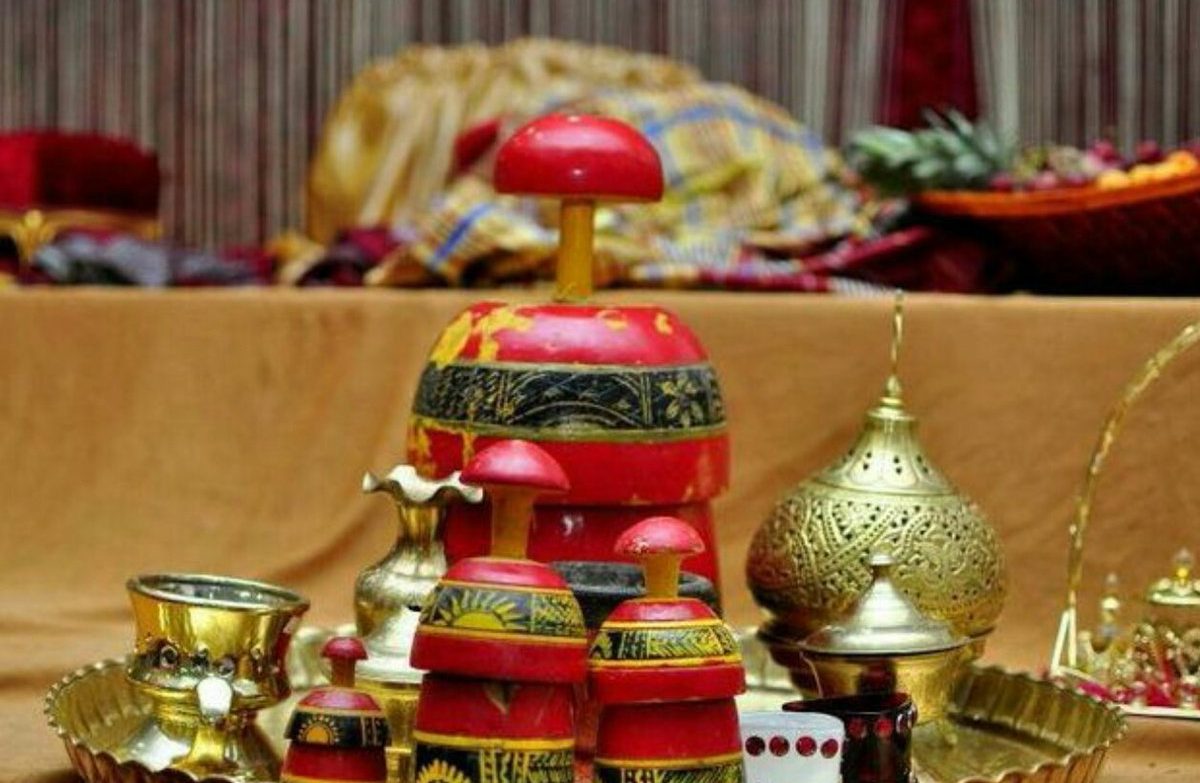 🇸🇩 Khartoum, SudanJirtigالجَرْتِقْ (Arabic)
A Sudanese inauguration ritual where the groom is symbolically crowned as a king.Rite · The weeks before
🇸🇩 Khartoum, SudanJirtigالجَرْتِقْ (Arabic)
A Sudanese inauguration ritual where the groom is symbolically crowned as a king.Rite · The weeks before
 🇯🇵 Tokyo, JapanShinto wedding神前結婚 (Shinzen kekkon)
A Shinto purification ritual featuring sake sharing and kimono attire held at a shrine or venue.Rite · The ceremony
🇯🇵 Tokyo, JapanShinto wedding神前結婚 (Shinzen kekkon)
A Shinto purification ritual featuring sake sharing and kimono attire held at a shrine or venue.Rite · The ceremony
 🇨🇳 China and 2 moreChinese pre-wedding customs三書六禮 (sàam syù luhk láih)
The traditional betrothal rituals of the Book of Rites that prepare a Chinese marriage.Betrothal · Finding a match
🇨🇳 China and 2 moreChinese pre-wedding customs三書六禮 (sàam syù luhk láih)
The traditional betrothal rituals of the Book of Rites that prepare a Chinese marriage.Betrothal · Finding a match