Henna, jewellery and body artSouth AsiaHindu
Toe ring
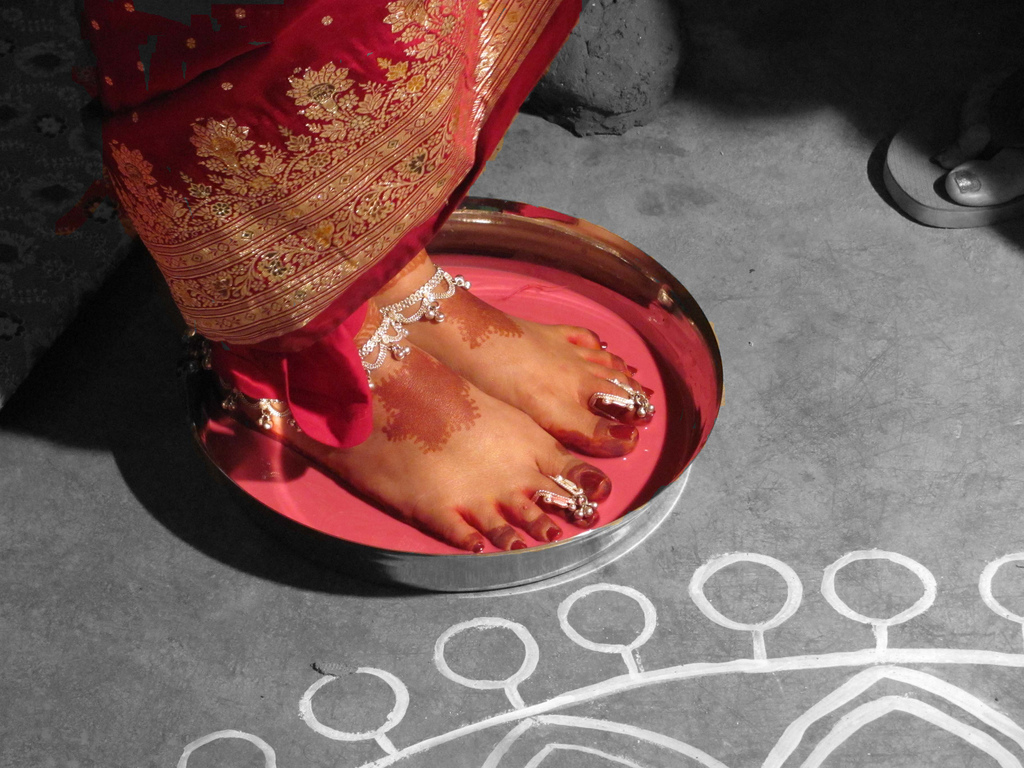
A silver band worn on the second toe to mark a woman as married in India.

A toe ring is a piece of jewelry placed on one or more toes. In India, it serves as a clear symbol of marriage for Hindu women and is traditionally made from silver. Outside of South Asia, the item functions primarily as a decorative fashion accessory without cultural weight.
When is Toe ring kept?
Toe ring is kept on throughout married life.
The toe ring acts as a visible marker of marital status for many Hindu women in India. A husband typically places these silver bands on his wife's second toes during their wedding ceremony. The practice carries deep cultural meaning regarding health and fertility within traditional communities.
Cultural significance
In India, the toe ring holds profound importance for married women. Ancient texts like the Ramayana reference the item when Sita discards hers to help Lord Rama locate her. Today, the jewelry signifies that a woman is wed. Different regions use distinct local names for the accessory. For instance, Hindi speakers call it bichiya, while Malayalam speakers refer to it as minji. Tamil communities use the term metti, and Bengali speakers say angot. These linguistic variations highlight the widespread nature of the tradition across the subcontinent.
Materials and design
Traditional Indian toe rings are crafted from silver rather than gold. This choice stems from religious beliefs that view gold as too sacred to be worn below the waist. Couples often receive matching pairs for both feet. While ornate designs remain popular, modern brides also choose simpler styles. Some sets include rings for multiple toes, excluding the smallest one. Adjustable versions feature a gap at the bottom for easy sizing. Contemporary markets also offer options made from rubber or non-precious metals for casual wear.
Health beliefs
Ayurvedic medicine suggests that wearing toe rings offers physical benefits. Practitioners believe the pressure on the second toe helps regulate the menstrual cycle. This regulation is thought to improve uterine health and increase conception chances. Some traditions claim the rings also reduce pain during intercourse. Unmarried girls sometimes wear them on the third toe to ease menstrual discomfort. These health claims remain part of folk wisdom and lack formal scientific verification.
Global usage
Outside India, the toe ring lacks symbolic weight. In the United States, both men and women wear them purely as fashion statements. Retailers sell them at tourist spots and state fairs. Fitting techniques vary, with some shops using sprays to ensure a snug fit. In parts of Africa, the custom arrived via Indian influence. Men in Tamil culture also wear simpler rings for comfort while walking barefoot. Historically, these helped women identify married men by sight.
How Toe ring is kept
During the wedding ceremony, the groom places silver rings on the second toe of each foot of his bride. She wears these bands daily for the rest of her marriage. The rings serve as a constant public declaration of her marital status. In Western contexts, individuals simply purchase rings from stores and wear them for aesthetic reasons without any ritualistic component.
When and where
The rings are put on during the wedding ceremony and worn continuously afterward. There is no specific seasonal timing for the practice itself, though they are standard attire for married women year-round.
The custom is strongest in India among Hindu communities. It appears in various forms across different states due to regional naming differences. In the United States and parts of Africa, the item exists only as a fashion trend rather than a cultural rite.
What Toe ring means
For Hindu women, the toe ring represents the bond of marriage. It signals to the community that she is wed. Ayurvedic traditions link the metal pressure to reproductive health and fertility. The silver material connects to purity and religious respect, distinguishing it from the more sacred gold.
Who takes part
- The groom: Places the silver rings on the bride's second toes during the ceremony
- The bride: Wears the rings daily to signify her married status
- Retailers: Provide fitted or adjustable rings for fashion consumers outside India
Then and now
Modern designs have emerged to suit contemporary tastes. Some couples now choose gold or diamond versions despite traditional restrictions. Casual materials like rubber allow for everyday wear beyond ceremonial occasions. The practice remains strong in India but has lost all cultural meaning in Western fashion markets.
On the wedding table
Symbols: The ring

Questions people ask about Toe ring
When is Toe ring kept?
Toe ring is kept on throughout married life.
What does a toe ring mean in India?
It marks a woman as married. Hindu husbands place silver bands on their wives' second toes during the wedding ceremony. The rings stay on throughout the marriage to signal this status to the community.
Why are Indian toe rings made of silver?
Gold is considered too sacred to be worn below the waist in Hindu tradition. Silver serves as the appropriate metal for this jewelry. It balances religious respect with daily wearability.
Do toe rings have health benefits?
Ayurveda claims they regulate menstruation and aid fertility. The pressure on the second toe supposedly improves uterine health. These claims are traditional beliefs and lack scientific proof.
Are toe rings worn in Western countries?
Yes, but only as fashion accessories. They hold no marital or cultural significance there. Both men and women wear them for decoration at beaches or festivals.
See also
 AlpanaRice flour floor paintings that bless homes and mark wedding celebrations in Bengal.
 ShankhaWhite conch shell bangles worn by Bengali Hindu married women as a symbol of their husband's well-being.
 MehndiThe henna body art applied to brides and guests before a South Asian wedding ceremony.UlulationA high-pitched trilling sound made by women to celebrate weddings and share good news across many cultures.
Good reading and sources
- Toe ring on WikipediaEncyclopedia
- More photos on Wikimedia CommonsPhotos and video
- Wikidata recordOpen data
The facts on this page come from the Wikipedia article "Toe ring", written by its contributors and used under the CC BY-SA 4.0 licence, and from its Wikidata record (CC0). EveryShaadi rewrote the text in its own words, with AI assistance, and compares every page with the article to make sure no passage is copied. It may be reused under the same CC BY-SA 4.0 licence with a link back.
It may contain mistakes. Wedding customs differ from one family, village and community to the next, and the people who keep them know them best. If something is wrong, tell us. Last refreshed 2026-10-05.
More from India
All the traditions of India
🇮🇳 India and 1 moreAlpanaআলপনা (Bengali)
Rice flour floor paintings that bless homes and mark wedding celebrations in Bengal.Adornment · The weeks before
🇮🇳 IndiaShankha
White conch shell bangles worn by Bengali Hindu married women as a symbol of their husband's well-being.Adornment · Engagement and betrothal
 🇮🇳 IndiaGana
A sacred red thread tied to wrists for protection during wedding rituals in parts of India.Adornment · The weeks before
🇮🇳 IndiaMehndi
The henna body art applied to brides and guests before a South Asian wedding ceremony.Adornment · The weeks before
🇮🇳 IndiaGana
A sacred red thread tied to wrists for protection during wedding rituals in parts of India.Adornment · The weeks before
🇮🇳 IndiaMehndi
The henna body art applied to brides and guests before a South Asian wedding ceremony.Adornment · The weeks before
The same idea elsewhere
Rings, knots and tokens of promise compared 🇪🇬 Egypt and 4 moreWaist beads
Strands of glass or seed worn around the hips to mark womanhood and track body changes in West and North Africa.Adornment · Engagement and betrothal
🇪🇬 Egypt and 4 moreWaist beads
Strands of glass or seed worn around the hips to mark womanhood and track body changes in West and North Africa.Adornment · Engagement and betrothal
 🇱🇦 Laos and 1 moreBaciບາສີ (Lao); บายศรี (Thai)
The wrist-tying ceremony that calls the soul back to restore balance and good luck.Blessing · The ceremony
🇱🇦 Laos and 1 moreBaciບາສີ (Lao); บายศรี (Thai)
The wrist-tying ceremony that calls the soul back to restore balance and good luck.Blessing · The ceremony
 🇩🇪 Hamburg, Germany and 3 moreWimpelווימפל
A linen sash made from a baby boy's circumcision cloth that binds the Torah scroll.Adornment · The weeks before
🇺🇦 UkraineSong about the RushnykПісня про рушник (Pisnia pro rushnyk)
A Ukrainian song that celebrates the embroidered cloth used in weddings and family life.Performance · The ceremony
🇩🇪 Hamburg, Germany and 3 moreWimpelווימפל
A linen sash made from a baby boy's circumcision cloth that binds the Torah scroll.Adornment · The weeks before
🇺🇦 UkraineSong about the RushnykПісня про рушник (Pisnia pro rushnyk)
A Ukrainian song that celebrates the embroidered cloth used in weddings and family life.Performance · The ceremony