Ceremony and sacred ritesEast AsiaShinto, Taoist and folk Chinese
Shinto wedding
In its own language: 神前結婚 (Shinzen kekkon)
A Shinto purification ritual featuring sake sharing and kimono attire held at a shrine or venue.

Shinzen kekkon is a Japanese marriage rite performed before the kami, the spirits of Shinto. It centers on the san-san-ku-do sake ceremony and formal kimono worn by the couple. The practice began in the early twentieth century and remains a sacred option for couples seeking a traditional blessing.
When is Shinto wedding in 2027?
Shinto wedding 2027 runs from 15 March to 30 May 2027. The date follows the moon or a local calendar, so it can move by a day. Other years: 2026, 15 March to 30 May 2026; 2028, 15 March to 30 May 2028.
The Shinto wedding, known as shinzen kekkon, is a marriage ceremony conducted before the kami, the spiritual entities of the Shinto faith. This rite emphasizes purification and the binding of two families through shared rituals. Couples exchange sake in a specific sequence to symbolize unity and fertility. The event typically involves formal attire and prayers invoking ancient deities for a harmonious home.
Ceremony structure
The ritual usually lasts twenty to thirty minutes and focuses on purification. A priest leads the service while a shrine maiden stands nearby. The couple places offerings like salt, water, rice, and fruit at an altar alongside their rings. The central act is the san-san-ku-do, where three cups of sake are exchanged. The groom drinks first, then the bride, followed by repeated pourings that represent three oaths taken three times. Families join in drinking the sake to seal the union. The priest concludes the rite by offering evergreen branches to show gratitude to the spirits.
Historical origins
This modern tradition emerged in the late nineteenth century when state-sponsored shrines declined. Early records from 1872 mention weddings in manuals, but they were rare family gatherings without deep religious weight. The practice gained prominence after the 1900 marriage of Crown Prince Yoshihito at the Imperial Palace. This event aligned with Meiji-era laws that redefined marriage as a balanced partnership. Initially limited to elites in Tokyo, the custom spread to Osaka and Kyoto. After World War II, democratization allowed more families to access these ceremonies through commercial venues.
Attire and symbols
Brides traditionally wear layered kimono, often choosing a white shiromuku or a colorful uchikake over-kimono. These garments derive from samurai dress and feature intricate embroidery. Brides may also wear a tsunokakushi cloth to hide metaphorical horns of jealousy or a wataboshi hood to veil their face until the end. Grooms might wear a Western suit or formal kimono. The colors white, red, and black hold auspicious meaning. Rings are exchanged during the final portion of the ceremony, marking the legal and spiritual commitment between the partners.
Modern trends
Shinto weddings are currently declining in popularity among Japanese couples. Fewer people marry overall, and those who do often prefer Western-style chapel ceremonies regardless of their personal faith. The number of Shinto rites has dropped significantly since the 1990s. While priests still oversee the rituals, many now take place in hotels or specialized venues rather than traditional shrines. Despite this shift, the core elements of sake sharing and family blessing remain central to the cultural understanding of a proper wedding.
How Shinto wedding is kept
A priest and shrine maiden lead the couple and close family at an altar laden with offerings. The groom and bride perform the san-san-ku-do, drinking sake from three cups in a set order to signify unity. Vows are read, often thanking a matchmaker or nakodo. Families drink together and offer evergreen branches. The couple exchanges rings. The bride wears a formal kimono, such as a shiromuku or uchikake, sometimes with a veil. The ceremony ends with prayers for harmony and children.
When and where
The ceremony occurs during the main wedding event, typically lasting twenty to thirty minutes. It does not follow a fixed calendar month but is scheduled based on availability. The date is chosen by the couple and their families, often coordinating with the reception timeline.
The custom originates in Japan and is strongest there. Ceremonies historically took place at shrines in Tokyo, Kyoto, and Osaka. Today, they frequently occur in hotels or dedicated wedding venues designed to accommodate the ritual requirements and guest lists.
What Shinto wedding means
The sake exchange represents the sharing of joys and sorrows between the spouses. The numbers three and nine suggest fertility and the cycle of birth. Prayers invoke Izanagi and Izanami, the first married gods, to ensure balance. The bride's veil hides her ego, showing resolve to become a gentle partner. Evergreen offerings express gratitude to the kami for blessing the new union.
Who takes part
- The priest: Leads the purification and recites prayers to the kami
- The shrine maiden: Assists the priest and stands beside the altar
- The couple: Exchange sake and rings while standing at the center
- The nakodo: Acts as a matchmaker or witness thanked in the vows
- The families: Provide offerings and participate in the sake drinking
If you are a guest
Close family members stand behind tables holding sake and fruit during the ceremony. They participate in the drinking ritual and cheer with the couple. Friends and extended guests usually attend the reception rather than the intimate shrine rite. Guests observe the formal attire and silent reverence required during the priest's prayers.
Then and now
The practice is shrinking as fewer Japanese people marry. Those who do often choose Christian-style chapel weddings instead. The shift reflects changing social norms and the rise of commercial wedding industries. Traditional shrine ceremonies are being replaced by hotel events, though the core sake ritual persists in many celebrations.
On the wedding table
- Sake: Drunk by the couple and families during the san-san-ku-do ritual to seal the union
- Rice: Placed on the ceremonial altar as a traditional offering to the spirits
- Salt: Left at the altar as a purifying element during the ceremony
- Water: Offered at the altar alongside other natural items to honor the kami
- Fruit: Displayed on family tables and the altar as part of the ceremonial setup
Symbols: Rice and grain Salt Water and washing The ring The colour white The colour red Gold and jewellery


Shinto wedding dates: 2026, 2027, 2028
| Year | Shinto wedding date |
|---|---|
| 2026 | 15 March to 30 May 2026 |
| 2027 | 15 March to 30 May 2027 |
| 2028 | 15 March to 30 May 2028 |
This date follows the moon or a local calendar and can move by a day, so check with a local source nearer the time.
Questions people ask about Shinto wedding
When is Shinto wedding in 2027?
Shinto wedding 2027 runs from 15 March to 30 May 2027. The date follows the moon or a local calendar, so it can move by a day. Other years: 2026, 15 March to 30 May 2026; 2028, 15 March to 30 May 2028.
What is a Shinto wedding?
It is a Japanese marriage ceremony performed before the kami, the spirits of the Shinto faith. The rite focuses on purification and includes the san-san-ku-do sake exchange. It typically takes place at a shrine or a venue with a priest leading the service.
What do the couple wear?
Brides typically wear layered kimono, such as a white shiromuku or a colorful uchikake. They may also wear a veil like the tsunokakushi or wataboshi. Grooms often wear formal suits or matching kimono. The attire reflects historical samurai styles and auspicious colors.
Is the practice still common?
Shinto weddings are declining in Japan. Many couples now prefer Western-style chapel ceremonies. The percentage of Shinto rites has dropped significantly since the 1990s, though the tradition remains a respected option for those seeking a spiritual blessing.
See also
 MiaiA traditional Japanese matchmaking meeting where a man and woman consider marriage with the help of a go-between.
 MayianThe turmeric paste ceremony held the day before Punjabi weddings in India and Pakistan.
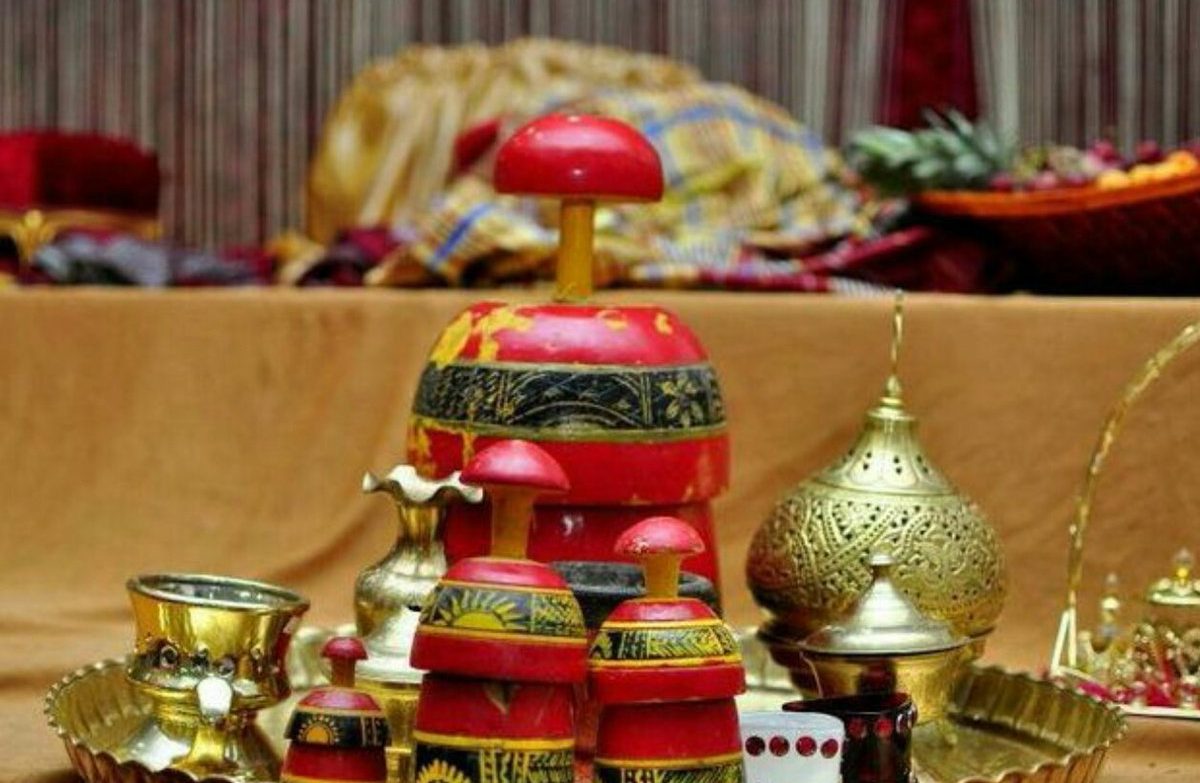 JirtigA Sudanese inauguration ritual where the groom is symbolically crowned as a king.
 IhiThe Newar rite in which a girl is married to Vishnu, shown by a golden figure
Good reading and sources
- Shinto wedding on WikipediaEncyclopedia
- More photos on Wikimedia CommonsPhotos and video
- Wikidata recordOpen data
The facts on this page come from the Wikipedia article "Shinto wedding", written by its contributors and used under the CC BY-SA 4.0 licence, and from its Wikidata record (CC0). EveryShaadi rewrote the text in its own words, with AI assistance, and compares every page with the article to make sure no passage is copied. It may be reused under the same CC BY-SA 4.0 licence with a link back.
It may contain mistakes. Wedding customs differ from one family, village and community to the next, and the people who keep them know them best. If something is wrong, tell us. Last refreshed 2026-10-05.
More from Japan
All the traditions of Japan 🇰🇷 Seoul, South Korea and 3 moreBlessing ceremony
The large-scale marriage rite of the Unification Church where couples are matched and blessed by their leaders.Rite · The ceremony
🇰🇷 Seoul, South Korea and 3 moreBlessing ceremony
The large-scale marriage rite of the Unification Church where couples are matched and blessed by their leaders.Rite · The ceremony
 🇯🇵 JapanTamagushitamagushi (玉串)
A decorated sakaki branch offered to kami during Shinto wedding ceremonies and other rites.Rite · The ceremony
🇯🇵 JapanTamagushitamagushi (玉串)
A decorated sakaki branch offered to kami during Shinto wedding ceremonies and other rites.Rite · The ceremony
 🇰🇷 South Korea and 5 moreBlessing ceremony of the Unification ChurchHoly Marriage Blessing Ceremony (축복결혼식)
A large-scale marriage rededication or new union ceremony that engrafts couples into a sinless lineage.Rite · Engagement and betrothal
🇰🇷 South Korea and 5 moreBlessing ceremony of the Unification ChurchHoly Marriage Blessing Ceremony (축복결혼식)
A large-scale marriage rededication or new union ceremony that engrafts couples into a sinless lineage.Rite · Engagement and betrothal
 🇯🇵 Tokyo, JapanMizuhiki水引
The knotted paper cord that adorns Japanese wedding gifts and envelopesAdornment · Engagement and betrothal
🇯🇵 Tokyo, JapanMizuhiki水引
The knotted paper cord that adorns Japanese wedding gifts and envelopesAdornment · Engagement and betrothal
The same idea elsewhere
The wedding dress and what the couple wear compared 🇮🇳 IndiaOdia Hindu weddingBahaghara (ଓଡ଼ିଆ ବାହାଘର)
The traditional Hindu marriage ceremony of the Odia people in Odisha, India.Rite · Engagement and betrothal
🇮🇳 IndiaOdia Hindu weddingBahaghara (ଓଡ଼ିଆ ବାହାଘର)
The traditional Hindu marriage ceremony of the Odia people in Odisha, India.Rite · Engagement and betrothal
 🇺🇦 UkraineTraditional Ukrainian weddingТрадиційне українське весілля
A multi-day sequence of folk rites, bread baking and church vows that marks the transition from maidenhood to married liRite · Finding a match
🇺🇦 UkraineTraditional Ukrainian weddingТрадиційне українське весілля
A multi-day sequence of folk rites, bread baking and church vows that marks the transition from maidenhood to married liRite · Finding a match
 🇮🇱 Jerusalem, Israel and 3 moreJewish wedding
The ceremony and laws that bind a couple in Jewish marriage, from the canopy to the glass.Rite · Engagement and betrothal
🇮🇱 Jerusalem, Israel and 3 moreJewish wedding
The ceremony and laws that bind a couple in Jewish marriage, from the canopy to the glass.Rite · Engagement and betrothal
 🇮🇷 Tehran, Iran and 1 moreIranian weddingمراسم عروسی در ایران
A multi-stage ceremony rooted in Zoroastrianism and Islam that binds families through courtship, feasts, and sacred vowsRite · Finding a match
🇮🇷 Tehran, Iran and 1 moreIranian weddingمراسم عروسی در ایران
A multi-stage ceremony rooted in Zoroastrianism and Islam that binds families through courtship, feasts, and sacred vowsRite · Finding a match